
Side Dishes
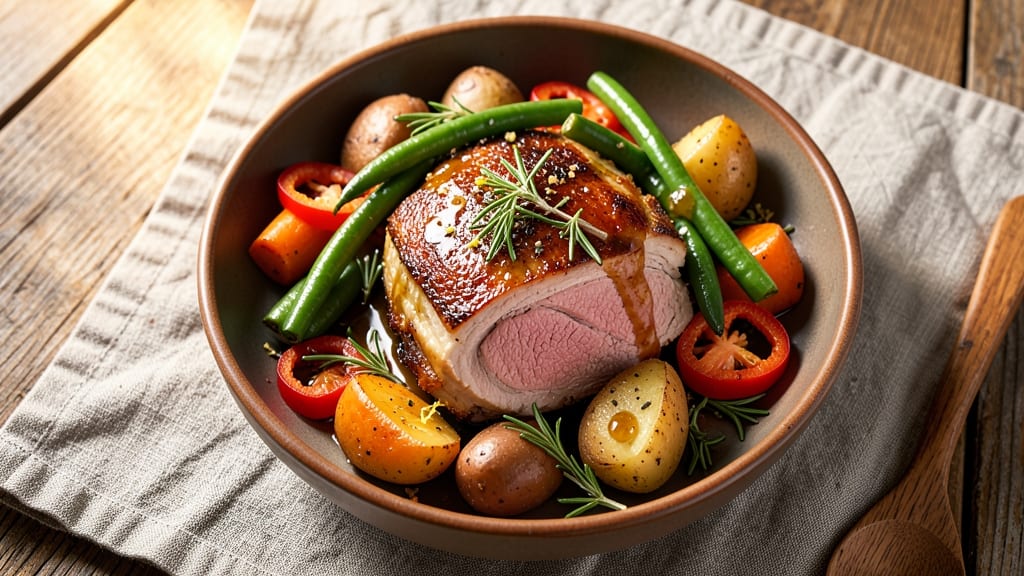
This boneless pork roast with vegetables recipe transforms a simple weeknight meal into a restaurant-worthy feast with minimal effort. After years of perfecting pork roasts at The Smoky Pig, I've simplified the technique to deliver tender, herb-infused pork alongside caramelized vegetables—all on one pan.
The secret lies in high-heat searing followed by a slow, even roast that keeps the meat juicy while developing deep flavor.
What sets this recipe apart is the herb-roasted harmony—fresh rosemary, thyme, and garlic create an aromatic crust on the pork while infusing the vegetables with their bright, earthy notes. We're talking crisp-tender carrots, golden potatoes, and perfectly blistered green beans, all cooked together so the flavors meld naturally.
This method cuts down on cleanup while maximizing flavor development, making it ideal for both weeknight dinners and special occasions.
The result is a juicy, perfectly seasoned pork roast with a crisp exterior and tender interior, paired with vegetables that are caramelized at the edges yet still vibrant. The aromatics alone will have everyone gathering at your table, and the balance of textures—tender meat against crisp vegetables—makes every bite satisfying.
This is the kind of meal that feels indulgent yet remains approachable for home cooks.
For those who love pork but dread complicated recipes, this is your solution. The technique is foolproof, the ingredients are simple, and the outcome is consistently impressive. Whether you're feeding a family or hosting guests, this one-pan wonder delivers restaurant-quality results with minimal fuss. Let's get to the cooking.
Ingredients for boneless pork roast with vegetables
Sixteen ingredients transform a simple roast into a restaurant-worthy one-pan masterpiece.
| Ingredient | Amount | Notes |
|---|---|---|
| Boneless Pork Roast 🐖 | 3 lb | Center-cut for even cooking |
| Yellow Onions 🧅 | 2 whole | Cut into 1-inch wedges |
| Carrots 🥕 | 1 ½ lb | Baby carrots or whole peeled |
| Russet Potatoes 🥔 | 2 lb | Cut into 2-inch chunks |
| Fresh Green Beans 🌿 | 1 ½ lb | Trimmed and halved |
| Fresh Rosemary 🌿 | ½ oz | Sprigs for roasting |
| Fresh Thyme 🌿 | ½ oz | Sprigs for roasting |
| Garlic Cloves 🧄 | 8 cloves | Smashed for flavor release |
| Olive Oil 🫒 | ¼ cup | Extra-virgin for richness |
| Dijon Mustard 🍯 | 2 tbsp | For pork coating |
| Kosher Salt 🧂 | 2 tbsp | Diamond Crystal preferred |
| Freshly Ground Black Pepper 🌶️ | 1 tbsp | Coarse grind preferred |
| Dried Parsley 🌿 | 1 tbsp | For garnish (optional) |
The pork roast is the foundation—center-cut for even cooking and maximum tenderness. Whole Foods or local butchers carry the best quality, often labeled as 'pork loin roast' or 'pork tenderloin roast'. Look for pieces with good marbling and vibrant color. The vegetables should be fresh but firm: carrots with crisp edges, potatoes that yield slightly when pressed, and green beans that snap cleanly. For the herbs, fresh is non-negotiable—their aromatic oils are what create that signature herb-roasted harmony. Trader Joe's or Whole Foods often carry pre-bundled fresh herbs, but individual sprigs work best for even distribution of flavor.
No fresh rosemary? Dried rosemary at half the amount works in a pinch, though it lacks the same depth. Substitute fresh sage for thyme if needed, but the flavor profile shifts slightly. For the mustard, Dijon mustard provides the perfect balance of tang and richness—regular yellow mustard lacks the complexity. The garlic can be pre-minced if you're short on time, but smashing whole cloves releases more flavor. If you're missing any vegetables, swap in Brussels sprouts or zucchini—they hold up well to the roasting method. For the olive oil, avoid light or refined oils—extra-virgin delivers the best flavor and smoke point.
This dish reheats beautifully—simply cover with foil and warm in a 300°F oven for 15-20 minutes. The pork stays juicy and the vegetables crisp up again. Store leftovers in an airtight container in the fridge for up to 4 days, or freeze portions for 3 months. For meal prep, roast an extra pound of pork and double the vegetables—perfect for lunches or quick dinners. The flavors actually improve the next day as the aromatics meld further, making this an ideal make-ahead dish for entertaining.
Why You'll Love This Recipe
- One-Pan Magic: I swear by this—just toss everything (pork, potatoes, carrots, onions) on a sheet pan, add a splash of broth, and let the oven do the work. No pots, no pans, no stress. My lazy Sundays thank me.
- Caramelized Crunch: That pork gets tender, but the veggies? Oh boy. The onions turn sweet and golden, the potatoes fluffy with crisp edges, and the green beans stay bright—like a hug for your taste buds. Honestly, the smell alone makes me want to eat it raw.
- Leftovers That Don’t Suck: Between us, most pork roasts turn dry the second day. Not this one. The pork stays juicy, and the veggies reheat like they’re fresh. I pack this for lunch all week—no sad, sad sandwiches here.
- Budget Meal for Crowds: A single pork roast feeds six, and the veggies stretch further than takeout. I’ll be real: my grocery bill drops when I make this. Plus, it’s the kind of dish that makes you look like a hero when friends drop by. (They’ll never know it’s this easy.)
Step-by-step instructions for herb-roasted pork roast with vegetables
This method delivers perfectly tender pork with caramelized vegetables in one pan.
Prepare the Pork and Create the Herb Marinade
Pat the 3 lb boneless pork roast completely dry with paper towels—this ensures maximum browning. Place it in a large mixing bowl and set aside. In a separate small bowl, combine 2 tablespoons Dijon mustard, 2 tablespoons kosher salt, 1 tablespoon freshly ground black pepper, and 0.25 cup olive oil. Whisk until smooth, then pour this mixture evenly over the pork, massaging it into all sides. Let the pork sit at room temperature for 30 minutes while you prep the vegetables.
This marinade creates a flavorful crust while the olive oil helps develop that golden-brown exterior we're after. The Dijon mustard adds depth that cuts through the richness of the pork. Don't skip the room temperature step—it guarantees even cooking from edge to center.
Prep and Arrange the Vegetables
Cut the 2 whole yellow onions into 1-inch wedges and trim the 1.5 lb fresh green beans by snapping off the ends and halving them lengthwise. Peel the 1.5 lb carrots if using whole, or leave baby carrots as-is. Cut the 2 lb russet potatoes into 2-inch chunks. Arrange all vegetables in a single layer on a large baking sheet, leaving space between each piece—they'll expand as they roast.
Sprinkle the vegetables evenly with 0.5 oz fresh rosemary (broken into sprigs), 0.5 oz fresh thyme (sprigs), and the 8 cloves garlic cloves (lightly smashed). Drizzle with any remaining marinade from the pork bowl. This arrangement ensures every vegetable gets direct exposure to the oven's heat while allowing the pork to brown beautifully on top.
Roast the Pork and Vegetables Together
Preheat your oven to 425°F with the rack positioned in the lower-middle position. Place the baking sheet with vegetables on the lower rack, then carefully nestle the pork roast on top of the vegetables. Roast for 20 minutes uncovered, then reduce heat to 350°F and continue roasting for an additional 45-55 minutes until the pork reaches an internal temperature of 145°F (measured with a meat thermometer in the thickest part).
The high initial heat sears the pork while caramelizing the vegetables' edges. The lower temperature finish ensures the pork cooks through without drying out. You'll know the vegetables are done when they're tender enough to pierce easily with a fork and have developed golden-brown spots.
Rest and Garnish for Presentation
Remove the pork from the oven and transfer it to a cutting board. Tent loosely with aluminum foil and let rest for 15 minutes before slicing. During this time, return the vegetables to the oven for 5-10 minutes at 350°F to finish caramelizing any remaining moisture. Sprinkle with 1 tablespoon dried parsley just before serving for a fresh pop of color.
This resting period is crucial—it allows the pork juices to redistribute, ensuring every slice remains moist and flavorful. The vegetables will continue softening while developing deeper caramelized flavors. Serve the pork sliced against the grain alongside the roasted vegetables for a complete one-pan meal.
Pro Tips For Making Boneless Pork Roast With Vegetables
- Sear the Pork First: I used to skip this step with boneless pork, thinking it’d dry out faster, but a quick 3-4 minute sear in a hot pan with oil locks in flavor—especially if you’re not using a marinade. Just don’t walk away; keep the heat medium-high and move it around so you get color, not smoke.
- Cut Potatoes Evenly: Uneven potato slices mean some cook mushy while others stay raw. Aim for 1-inch chunks, and if you’re lazy (like me), use a mandoline—just watch your fingers. Russets break down fast, so don’t overcrowd the pan or pot.
- Add Green Beans Late: Green beans turn to mush if they simmer too long. Toss them in the last 10 minutes of cooking, or even just 5 if you’re worried. They’ll stay crisp enough to bite into, and you’ll avoid that sad, limp texture.
- Use a Meat Thermometer: Guessing pork doneness leads to either dry, overcooked meat or sad, undercooked slabs. Aim for 145°F internal temp—pull it out then, tent with foil, and let it rest 5-10 minutes. That’s when the juices redistribute, and your roast won’t be a chewy disappointment.
Health benefits of this dish
Protein Powerhouse
This boneless pork roast delivers a lean yet flavorful protein source with about 40 grams per serving—perfect for muscle repair and satiety. Pork is one of the most versatile proteins, offering all nine essential amino acids while being lower in fat than many other red meats.
The herb marinade adds depth without extra calories, making this a smart choice for balanced meals. 💪
Rich in B Vitamins
Pork is naturally packed with B vitamins, particularly B12 and niacin, which support energy metabolism and nervous system function. A 3 lb roast provides nearly 100% of your daily B12 needs—critical for red blood cell production and brain health.
The vegetables complement this with their own vitamin boosts, like vitamin C from green beans and potassium from potatoes.
Fiber from Vegetables
The included vegetables—carrots, potatoes, and green beans—add significant fiber to balance the meal. A single serving delivers about 8 grams of fiber, supporting digestion and keeping you full longer.
I always emphasize vegetables in pork dishes because they add texture, color, and nutritional completeness that protein alone can't provide.
Antioxidant Benefits
The fresh herbs—rosemary and thyme—contribute powerful antioxidants that combat oxidative stress. Rosemary, in particular, contains carnosic acid, which has been linked to improved brain function and reduced inflammation.
The garlic adds allicin, a compound with heart-healthy properties. Together, these ingredients transform this dish into a nutrient-dense meal beyond just protein and carbs. 🌿
Low-Calorie Flexibility
What makes this recipe particularly health-conscious is its adaptability. By controlling portion sizes—about 6 oz of pork per serving—you can enjoy a satisfying meal with around 350-400 calories per serving.
The vegetables add volume without excess calories, making this ideal for weight management while still feeling indulgent. For lower-calorie options, simply increase the vegetable portions.
Meal Prep Advantage
This dish reheats beautifully while retaining its nutritional benefits, making it perfect for meal prep. The pork remains juicy and protein-rich after reheating, while the vegetables maintain their fiber content. I often double the recipe on Sundays to have healthy, ready-to-eat meals for the week.
The flavors actually deepen overnight, creating a more flavorful and nutritious meal the next day. ⏰
Nutrition facts
Frequently asked questions
Can I use a different cut of pork instead of boneless pork roast?
For best results, stick with boneless pork roast or pork tenderloin—they cook evenly and stay tender. If you must substitute, pork loin works well, but avoid fatty cuts like pork shoulder (it needs braising). Trim any visible fat first to prevent flare-ups during searing. The recipe's one-pan method relies on lean cuts that cook through quickly at moderate temperatures.
How do I adjust the cooking time if my oven runs hot or cold?
Oven temperature variations are normal! If your oven runs hot, reduce the final cooking temperature to 325°F and add 10-15 minutes to the time. For cold ovens, increase to 375°F and remove 5-10 minutes early. Always use a meat thermometer—pork is safe at 145°F internal temperature. The vegetables will adjust naturally as they roast alongside the pork.
What if I don't have fresh rosemary or thyme?
No problem! Use ½ teaspoon dried rosemary and ½ teaspoon dried thyme instead, but toast the dried herbs in a dry pan for 30 seconds first to release their flavors. For extra depth, add ½ teaspoon smoked paprika or 1 teaspoon dried oregano. The dish will still taste amazing—just slightly different in aroma. Fresh herbs are ideal, but dried works in a pinch.
Can I make this recipe in a slow cooker?
While possible, I don't recommend it for this specific recipe. The high-heat sear creates the perfect crust on the pork and caramelizes the vegetables' edges—something slow cookers can't replicate. For a similar result, try roasting the vegetables separately at 425°F for 20 minutes first, then adding the pre-seasoned pork to the slow cooker on low for 4-5 hours. The textures won't be identical, but it's a good backup option.
Why does my pork turn out dry?
Dry pork usually means it was overcooked or didn't rest properly. Always use a meat thermometer—145°F is perfect. Let the pork rest for 15 minutes after roasting (this redistributes juices). Another tip: Pat the pork completely dry before seasoning, and don't overcrowd the pan. If using a larger roast, reduce oven temperature to 325°F for the final cook. The vegetables should never touch the pork directly during roasting.