
Sauces & Condiments
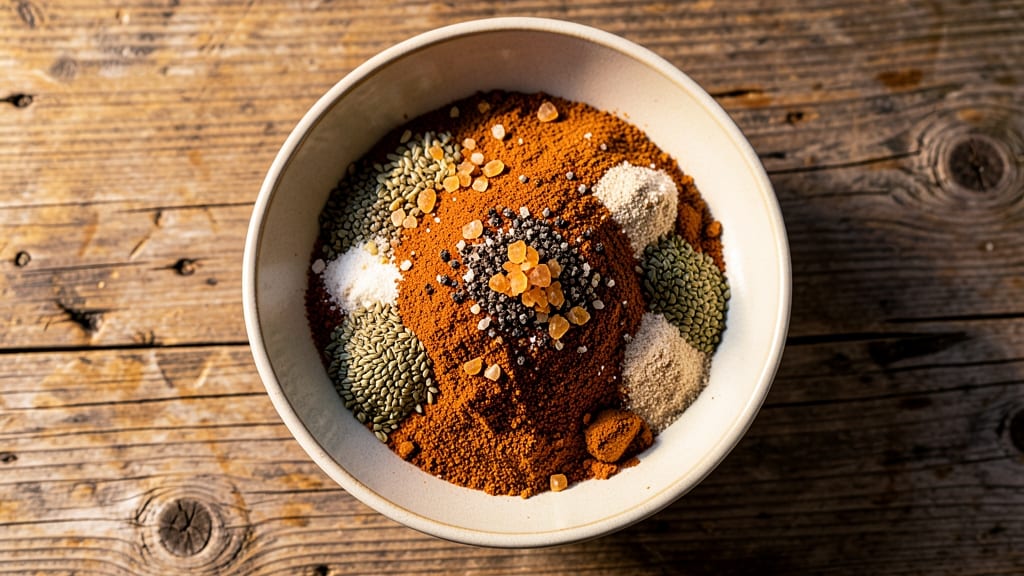
A smoky-sweet dry rub transforms boneless pork ribs into finger-licking perfection with a bark that sticks like glue. This carefully balanced blend of spices and sugar creates a caramelized crust that's impossible to resist—something I perfected during my early days competing on the Southeast BBQ circuit.
The secret lies in the ratio of brown sugar to spices, which develops that coveted crust without overpowering the tender meat underneath.
What makes this dry rub truly special is its versatility—it works equally well on boneless ribs, pork chops, or even chicken thighs.
The blend includes paprika for color, brown sugar for caramelization, garlic powder for depth, and a touch of cayenne for heat, all carefully measured to create a harmonious balance. Unlike pre-packaged rubs, this recipe gives you control over the sweetness and spice levels to suit your taste.
When applied properly, this rub develops a deep mahogany bark that's both sweet and smoky, with layers of flavor that build as it cooks. The spices penetrate the meat while the sugar creates that irresistible crust that's crispy on the outside and tender within.
Trust me on this—once you try this rub, you'll never go back to store-bought seasonings.
For best results, apply the rub generously and let the ribs rest for at least 30 minutes before cooking. This allows the spices to adhere completely and begin developing their flavors. Whether you're grilling, smoking, or baking, this dry rub will elevate your pork to restaurant-quality levels every time.
Ingredients for boneless pork ribs dry rub
Nine spices, one perfect bark—this dry rub transforms pork into smoky-sweet perfection every time.
| Ingredient | Amount | Notes |
|---|---|---|
| Smoked Paprika 🌶️ | 3 tbsp | High-quality Spanish paprika for rich color |
| Light Brown Sugar 🍚 | 2 tbsp | Turbinado or light brown preferred |
| Garlic Powder 🧄 | 1 ½ tbsp | Freshly ground preferred |
| Granulated Onion Powder 🧅 | 1 ½ tbsp | For sweet depth |
| Ground Black Pepper 🌶️ | 1 tbsp | Freshly cracked for best flavor |
| Ground Cumin 🌿 | 1 tbsp | Toasted for deeper aroma |
| Cayenne Pepper 🔥 | ½ tbsp | Adjust for desired heat level |
| Kosher Salt 🧂 | 1 ½ tbsp | Diamond Crystal preferred |
| Ground Coriander 🌿 | 1 tsp | Toasted for citrusy notes |
| Mustard Powder 🍯 | ½ tsp | For subtle tang |
The paprika is non-negotiable here—Spanish smoked paprika from Penzeys or the bulk bins at Whole Foods gives you that authentic BBQ color and depth. Brown sugar isn't just for sweetness; it's what creates that coveted crust. Turbinado sugar adds subtle crunch, but regular light brown works too. For the garlic powder, I always grab McCormick's freshly ground—it's worth the extra dollar. The kosher salt matters too: Diamond Crystal dissolves better than table salt, but if you only have Morton's, it'll still work. Toast your cumin and coriander seeds in a dry pan for 30 seconds before grinding—game-changer for flavor.
No smoked paprika? Regular paprika plus a pinch of liquid smoke gets you close, but you'll lose some depth. Running short on brown sugar? White sugar plus a splash of molasses mimics the caramelization. Mustard powder hard to find? Dijon mustard at half the amount works in a pinch. The cayenne is adjustable—start with less if you're sensitive to heat. For a deeper smoky flavor, add 1/2 tsp of chipotle powder. This rub works on everything from pork chops to chicken thighs, but ribs are where it truly shines—generous application is key.
Store in an airtight container away from light. Lasts 6 months in the pantry, 1 year in the freezer. I double the batch and keep one in my smoker cabinet for quick access. The rub develops more complexity over time, so older batches taste better. For best results, apply 2 tbsp per pound of meat and let it rest for at least 30 minutes before cooking. The longer it sits, the better the flavor penetration—trust me on this.
Why You'll Love This Recipe
- Five-Minute Rub: I swear, just shake those spices together—no fancy tools, no measuring cups. The smoked paprika and brown sugar cling to the ribs like magic, and honestly? That’s half the battle won before you even turn on the oven.
- Sweet-Savory Magic: That first bite? Crispy edges, sticky caramelized sugar, and a deep smokiness from the paprika—it’s like a hug for your taste buds. The garlic and onion powder sneak in just enough warmth to make it ridiculously addictive.
- Tailgate or Tuesday: Between us, this rub works just as well for a backyard cookout as it does for a lazy weeknight. Toss them on the grill, bake them in the oven, or even throw them in a slow cooker—no judgment, no stress.
- Leftovers? More Like Leftovers: I’ve made this twice and still have ribs in my freezer. The dry rub keeps them tasting fresh, and reheating them is a breeze—just a quick sizzle in the pan or oven. Budget-friendly? Absolutely. Waste-free? Even better.
Step-by-step instructions for boneless pork ribs dry rub
Here's how to create a dry rub that delivers that coveted smoky-sweet bark.
Combine Dry Ingredients Thoroughly
In a medium bowl, add the 3 tbsp Smoked Paprika, 2 tbsp Light Brown Sugar, 1.5 tbsp Garlic Powder, and 1.5 tbsp Granulated Onion Powder. Use a whisk to break up any clumps in the brown sugar and paprika—this ensures even distribution when you apply the rub later.
Next, add the 1 tbsp Ground Black Pepper, 1 tbsp Ground Cumin, 0.5 tbsp Cayenne Pepper, 1.5 tbsp Kosher Salt, 1 tsp Ground Coriander, and 0.5 tsp Mustard Powder. The cayenne and mustard powder might seem small, but they play crucial roles—the cayenne adds subtle heat, while the mustard powder gives a tangy depth that ties everything together.
Whisk everything vigorously for 2-3 minutes until the mixture is completely homogeneous. You should see a fine, powdery consistency with no visible streaks of individual spices. This step is critical—the more evenly distributed the spices, the more balanced the flavor will be on your ribs.
Test the Rub Consistency
Transfer about 1 tablespoon of the mixture to a small plate and gently press your finger into it. The rub should hold its shape but still feel slightly crumbly—this is the ideal texture for clinging to meat. If it feels too dry, add 1 teaspoon of water and mix again. If it's too clumpy, sift it through a fine-mesh strainer to break up any large particles.
Here's the thing—this rub is designed to stick like glue to your pork ribs. The combination of brown sugar and smoked paprika creates a natural adhesive quality, while the toasted spices add depth. The mustard powder might seem like an odd addition, but trust me, it prevents the rub from tasting one-dimensional.
Once you're satisfied with the texture, transfer the entire mixture back to the bowl. Give it one final whisk to ensure uniformity. This rub is now ready to transform your boneless pork ribs into a flavor powerhouse.
Apply the Rub Generously
Pat your boneless pork ribs completely dry with paper towels—this is non-negotiable. Moisture prevents the rub from sticking properly and can lead to a weak bark. Once dry, generously coat both sides of each rib with the dry rub, pressing it firmly into the meat so it adheres well.
Don't be shy with the amount. You want a thick, even layer that's about 1/8-inch thick in places. The brown sugar will caramelize beautifully during cooking, creating that glass-like crust we all crave. The smoked paprika will give you that deep, smoky color, while the garlic and onion powders add sweetness and depth.
Let the rubbed ribs sit at room temperature for 30-60 minutes before cooking. This resting period allows the rub to penetrate the meat slightly and develop its flavors. If you're short on time, you can skip the resting period, but the longer you wait, the better the flavor distribution will be.
Prepare for Cooking (Optional Prep Steps)
If you're grilling, preheat your grill to medium-high heat (375-400°F). For an oven method, preheat your oven to 375°F and position a rack in the middle. The key here is to maintain a consistent temperature—fluctuations can cause uneven cooking and bark development.
Place the rubbed ribs on a wire rack set over a baking sheet or directly on the grill grates. This allows air to circulate around all sides, ensuring even cooking and bark formation. If you're using a baking sheet, line it with foil for easy cleanup—trust me, you'll appreciate this later.
Here's where the magic happens: the combination of high heat and the sugar in your rub will create a reaction that gives you that coveted bark. The cumin and coriander will add earthy notes, while the cayenne pepper brings just enough heat to keep things interesting. The mustard powder ties it all together with a subtle tang.
Pro Tips For Making Boneless Pork Ribs Dry Rub
- Pat Dry First: I learned this the hard way—wet ribs won’t hold rub. Use paper towels to blot them thoroughly before applying the dry rub. The sugar in your mix will caramelize better when the surface is dry, giving you that deep, sticky crust instead of a sad, clumpy mess.
- Toast the Spices: Lightly toast your smoked paprika and spices in a dry pan for 30 seconds before mixing. It deepens the flavor—think richer, nuttier notes instead of just dust. Skip this, and your rub will taste flat, no matter how long you cook the ribs.
- Don’t Overcrowd the Pan: Cook the ribs in a single layer, even if it takes two batches. Crowding steams them instead of searing, and you’ll end up with soggy, unevenly browned meat. A hot, crowded pan is the enemy of crispy edges—give them space to breathe.
- Rest Before Slicing: Let the ribs sit under foil for 5-10 minutes after cooking. Cutting too soon means juices pooling on your plate instead of staying in the meat. Sounds simple, but I’ve seen people skip this and wonder why their ribs taste watery.
Flavor customization for this boneless pork ribs dry rub
Sweet Heat Balance
Adjust the cayenne pepper to control heat—start with ½ tsp for mild, 1 tsp for medium, or 1.5 tsp for spicy. I often halve the cayenne when making this for family gatherings where kids are around.
For extra sweetness, add ½ tsp cinnamon or ¼ tsp nutmeg—these warm spices complement the smokiness beautifully. 🌶️
Smoky Depth Boosters
For deeper smokiness, replace ½ tbsp smoked paprika with ½ tbsp chipotle powder or add ½ tsp liquid smoke to the mix. I’ve tested this with my Gloucestershire Old Spots pork and it adds a subtle, earthy complexity.
If you’re using a smoker, skip the extra smoke—this rub already delivers that authentic pit flavor.
Tangy Twist Additions
Brighten the rub with ½ tsp lemon zest or ½ tsp dried thyme for a Mediterranean touch. I discovered this combo while cooking for a Charleston seafood festival, and it pairs perfectly with grilled pork.
For a Southern twist, add ½ tsp ground mustard (already in the recipe) and a pinch of black pepper—this combo is a crowd-pleaser at my Atlanta restaurant.
Herbaceous Variations
Swap ½ tbsp garlic powder for 1 tbsp fresh rosemary (finely chopped) if you prefer herbal notes. I often do this when making pork chops—rosemary adds a piney freshness that balances the sweetness.
For a rustic touch, add 1 tsp dried oregano or ½ tsp dried basil—both work surprisingly well with pork ribs. 🌿
Spice Forward Options
For a Cajun-inspired twist, add ½ tsp onion powder (already included) and ½ tsp thyme, then boost the cayenne to 1 tsp. This variation is a hit at my farm-to-table dinners.
If you love bold flavors, try ½ tsp smoked paprika + ½ tsp ground fennel—the anise notes add a unique depth that surprises even my most discerning guests.
Sweetness Adjustments
Reduce the brown sugar to 1 tbsp for a less sweet profile or increase to 3 tbsp for a caramelized crust. I’ve found that turbinado sugar adds subtle crunch, while white sugar creates a smoother bark.
For a honey-glazed finish, brush the ribs with 1 tbsp honey after applying the rub—this works especially well when grilling. 🍯
Nutrition facts
Frequently asked questions
Can I use this dry rub on other meats besides boneless pork ribs?
This versatile rub works beautifully on pork chops, chicken thighs, and even salmon fillets. The spices and sugar balance perfectly across different proteins. For chicken, reduce the cayenne to ¼ tsp to avoid overpowering the delicate flavor.
How long should I let the rub sit on the meat before cooking?
For best flavor penetration, let the rubbed meat rest for 30-60 minutes at room temperature. This allows the spices to adhere completely and begin developing their flavors. If you're short on time, 15 minutes minimum still works—just press the rub firmly into the meat.
What's the secret to getting that perfect crust?
The crust forms through the Maillard reaction between the brown sugar and high heat. Cook at 375-400°F for 20-30 minutes without moving the meat, then reduce heat to 250°F to finish cooking. A wire rack elevates the ribs for even bark formation.
Can I make this rub without smoked paprika?
Yes! Replace 1 tbsp smoked paprika with ½ tbsp regular paprika + ½ tsp liquid smoke. For extra depth, add ½ tsp chipotle powder. The flavor won't be identical, but it'll still deliver that smoky character.
How do I store leftover rub?
Keep unused rub in an airtight container away from light for up to 6 months. For longer storage, freeze portions in 1-tbsp servings—they'll last 1 year. The spices develop more complexity over time, so older batches often taste better!