
Main Courses
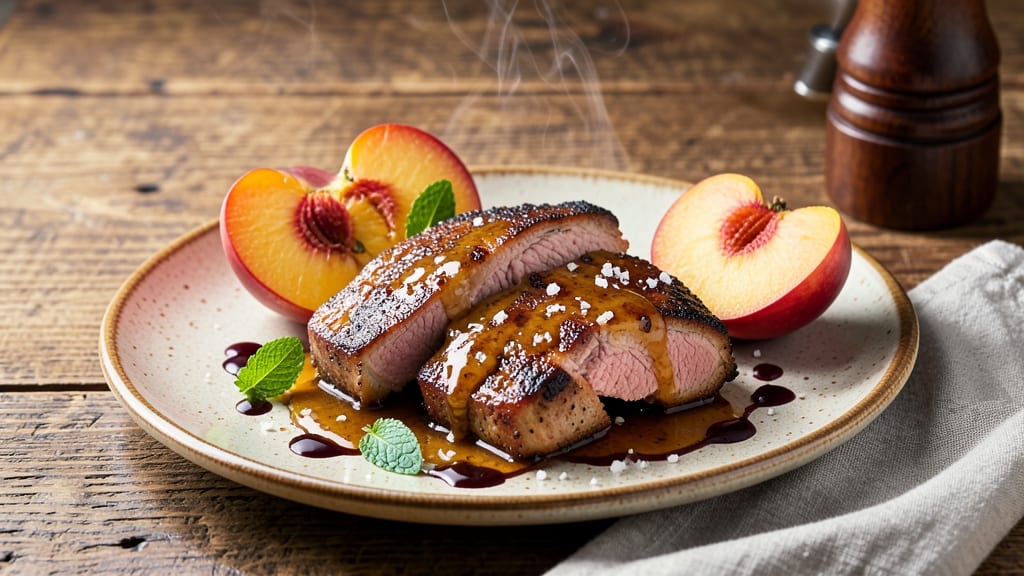
This boneless pork chops and peaches recipe transforms summer's sweetest fruit into a restaurant-worthy main course with tender, caramelized peaches and perfectly seared pork. 🌟 Growing up in Georgia, I learned how peaches could elevate simple pork dishes, and this one-pan method keeps all that Southern charm without the fuss.
The secret lies in balancing sweet and savory—just enough brown sugar and mustard to complement the natural juiciness of the pork while letting the peaches caramelize into a sticky, flavorful glaze.
What makes this recipe special is the foolproof one-pan technique that requires minimal cleanup while delivering maximum flavor. Boneless pork chops cook quickly over medium-high heat, developing a golden crust, while the peaches soften just enough to release their juices.
A splash of apple cider vinegar brightens the dish, cutting through the richness while enhancing the peaches' natural sweetness. This method works equally well on the stovetop or in the oven, making it adaptable to any kitchen.
By the time you finish, you'll have juicy, caramelized peaches clinging to tender pork chops, all bathed in a glossy sauce that's perfect for drizzling over each bite.
The combination of smoky pork and sweet peaches creates a balance that's both comforting and exciting—ideal for summer dinners, family gatherings, or a special weeknight meal. The best part?
Every component comes together in a single pan, leaving you with more time to enjoy the meal than cleaning up after it.
Pair with a simple arugula salad or roasted potatoes to round out the plate, or serve as-is for a complete, satisfying dish. Whether you're cooking for two or feeding a crowd, this recipe delivers restaurant-quality results with minimal effort. Let's get cooking!
Ingredients for boneless pork chops and peaches
Here’s what you need to create this restaurant-worthy boneless pork chops and peaches dish with minimal fuss.
| Ingredient | Amount | Notes |
|---|---|---|
| Boneless Pork Chops 🥩 | 4 whole | About 6 oz each, pounded to even thickness |
| Ripe Peaches 🍑 | 4 whole | Pitted, halved, fresh or frozen (thawed) |
| Extra-Virgin Olive Oil 🫒 | 2 tbsp | For searing pork chops |
| Unsalted Butter 🧈 | 2 tbsp | Full-fat for best flavor |
| Light Brown Sugar 🍚 | 2 tbsp | Packed, for caramelization |
| Dijon Mustard 🌶️ | 1 tbsp | Mild or strong, for tangy depth |
| Apple Cider Vinegar 🍎 | 1 tbsp | For brightness, not white vinegar |
| Fresh Thyme Leaves 🌿 | ¼ cup | Chopped, or 1 tsp dried |
| Garlic Cloves 🧄 | 2 cloves | Minced, for aromatic base |
| Kosher Salt 🧂 | 1 tsp | Diamond Crystal preferred |
| Ground Black Pepper 🌶️ | ½ tsp | Freshly ground for best flavor |
| Fresh Rosemary 🌿 | 1 sprig | Chopped, for herbal aroma |
The pork chops are the foundation—look for center-cut boneless for the best balance of tenderness and flavor. Costco or local butcher shops often carry high-quality cuts, but any grocery store’s pre-packaged boneless chops work in a pinch. Pounding them to even thickness ensures they cook uniformly. Peaches should be ripe but firm—the juicier the better for caramelization. If using frozen peaches, thaw them first and pat dry to prevent excess moisture in the pan. Fresh thyme and rosemary add depth, so grab bunch fresh herbs from the grocery store’s produce section—they’ll last longer than pre-chopped versions.
No Dijon mustard? Yellow mustard at half the amount works, though it’s less refined. Substituting peaches? Plums or nectarines have similar texture, but peaches are ideal for their natural sweetness. The apple cider vinegar is key for brightness—if you only have white vinegar, reduce to 1/2 tbsp to avoid overpowering. For a smokier profile, add 1/4 tsp smoked paprika to the sugar. Brown sugar can be swapped for white sugar, but the molasses in brown sugar adds that caramelized depth that’s hard to replicate. If you’re short on time, pre-minced garlic from a jar is fine, though fresh is always better.
Pork chops cook best when brought to room temperature before searing—30 minutes out of the fridge makes all the difference. Store any leftover peach halves in an airtight container with a paper towel to absorb moisture, keeping them fresh for 3 days in the fridge. The pork chops reheat beautifully—30 seconds in a skillet with a splash of water restores their crispiness. For make-ahead prep, assemble everything but the pork chops, then cook them fresh when ready to serve. The sauce thickens as it cools, so warm it gently before drizzling over the pork.
Why You'll Love This Recipe
- One-Pan Magic: I swear by this recipe when I’m too tired to scrub a million dishes. Just sear the pork chops in olive oil, toss in sliced peaches and butter, and let the sugar caramelize—no flipping, no fuss. The pan does all the work while I sip wine and pretend I’m a fancy chef.
- Sweet-Savory Balance: That first bite? Crispy pork chop with juicy peaches melting under a buttery, brown-sugar glaze—it’s like summer in a plate. The olive oil keeps it rich without being greasy, and the peaches add just enough natural sweetness to cut through the meat’s richness.
- Weeknight to Dinner Party: Honestly, this is my go-to for lazy Tuesdays and when I have company over. Serve it with crusty bread for a casual meal, or plate it with a simple salad for something that feels special. The peaches make it feel fancy, but the prep stays effortless.
- Budget-Friendly Leftovers: Pork chops and peaches are cheaper than you’d think, especially when you’re using ripe (not perfect) fruit. The leftovers reheat like a dream—toss them in a tortilla for breakfast tacos or chop them into a pasta sauce. My wallet and my taste buds thank me every time.
Step-by-step instructions for boneless pork chops and peaches
This one-pan technique delivers perfectly seared pork chops with caramelized peaches in under 30 minutes.
🍳 Step 1: Sear the Pork Chops to Golden Perfection
Heat a large oven-safe skillet over medium-high heat. Add the 2 tablespoons extra-virgin olive oil and swirl to coat the bottom evenly. Place the 4 whole boneless pork chops in the skillet, arranging them in a single layer. Press down gently on each chop with a spatula during the first 1-2 minutes—this prevents curling and ensures even contact with the pan.
Let the chops sear undisturbed for 3-4 minutes per side until they develop a deep golden brown crust. You'll know they're ready to flip when they release easily from the pan. The internal temperature should reach 145°F at this point. Remove the chops and set them aside on a plate, tented loosely with foil to keep warm.
👨🍳 Step 2: Build the Sweet-Savory Base
Reduce the heat to medium and add the 2 tablespoons unsalted butter to the same skillet. Let it melt completely, about 30 seconds, then add the 2 cloves minced garlic and 1 sprig chopped fresh rosemary. Cook for 30 seconds until fragrant—this aromatic base forms the flavor foundation.
Stir in the 2 tablespoons packed light brown sugar and cook for another 1 minute until it begins to caramelize slightly. Add the 1 tablespoon Dijon mustard and 1 tablespoon apple cider vinegar, stirring to combine. This creates the perfect balance of sweet, tangy, and savory flavors that complement the pork.
🥘 Step 3: Caramelize the Peaches
Add the 4 whole ripe peaches (halved and pitted) to the skillet, cut-side down. Cook for 3-4 minutes until the cut sides develop a golden caramelization. Flip the peaches and cook for another 2 minutes to warm through. The peaches should be tender but still hold their shape—overcooking turns them mushy.
Sprinkle the 0.25 cup chopped fresh thyme leaves over the peaches and stir gently to distribute. The thyme adds an herbal depth that pairs beautifully with the sweetness of the peaches and the richness of the pork. Let the mixture cook together for 1 minute to allow the thyme to release its aroma.
🔥 Step 4: Finish and Combine
Return the pork chops to the skillet, arranging them on top of the peaches. Sprinkle with the 1 teaspoon kosher salt and 0.5 teaspoon ground black pepper, then spoon any accumulated juices from the plate over the top. Cover the skillet with a lid and transfer it to a preheated 400°F oven.
Bake for 8-10 minutes until the pork chops reach an internal temperature of 150°F. The residual heat in the skillet and the oven will finish cooking the pork while keeping it juicy. The peaches should be tender and the sauce slightly thickened from the caramelization.
🍽️ Step 5: Rest and Serve
Remove the skillet from the oven and let the pork chops rest for 5 minutes before serving. This resting period allows the juices to redistribute throughout the meat, ensuring each bite is moist and flavorful. The peaches will continue to absorb the sweet-savory sauce during this time.
Serve the pork chops directly from the skillet, spooning the caramelized peaches and sauce over the top. The combination of tender pork, sweet peaches, and herbed sauce creates a harmonious balance of flavors. Pair with crusty bread or a simple green salad to complete the meal.
Pro Tips For Making Boneless Pork Chops And Peaches
- USE A CAST-IRON SKILLET: I learned this the hard way—nonstick pans make the peaches stick like glue when they caramelize. Cast iron handles the heat better and gives those peaches a proper sear without turning into a cleanup nightmare. (Yes, even if you’re impatient like me, wait for it to get ripping hot first.)
- CUT PEACHES IN HALF FIRST: Slicing peaches into wedges mid-cook is a mess. Halve them before they hit the pan—skin on or off, your call—but this keeps the fruit intact and lets the sugar cling better. Bonus: less peach juice splattering when you flip the chops.
- SALT THE PEACHES TOO: I used to skip this, thinking the pork needed all the salt. Wrong. Lightly salting the peach halves (just a pinch) before they hit the pan draws out moisture and helps them caramelize faster. Trust me, the flavor balance changes.
- COOK PEACHES SEPARATELY: Toss the peaches in their own pan for 2-3 minutes first—just until they soften and start releasing juice. Then add them to the pork chops at the end. This keeps the fruit from turning mushy while the chops finish cooking. (Your future self will thank you.)
Storing and reheating this recipe
Fridge Storage Tips
Store leftover pork chops and peaches in an airtight container with parchment paper between layers to prevent sticking. I like using glass Pyrex containers because they keep flavors fresh longer.
The pork chops will stay tender for 3-4 days in the fridge, while the peaches hold up best for 2-3 days if kept dry. 💫
Freezer-Friendly Method
For longer storage, freeze the pork chops and peaches separately. Place them in a single layer on a baking sheet before transferring to a freezer bag—this prevents clumping. Pork chops freeze beautifully for up to 3 months, while peaches are best used within 2 months.
Thaw overnight in the fridge before reheating. I swear by quart-sized freezer bags for portion control.
Reheating Pork Chops
To revive the crispy crust, heat pork chops in a skillet over medium heat for 2-3 minutes per side with 1 tablespoon butter. Add 1 splash of water to prevent drying.
For microwave reheating, use 50% power for 1-2 minutes, then finish in the skillet to restore texture. Always check the internal temperature—it should reach 165°F.
Peach Sauce Revival
Reheat the peach sauce separately in a small saucepan over low heat, stirring occasionally. If it thickens too much, add 1 tablespoon water or apple cider vinegar.
For a quick fix, microwave for 30 seconds with a splash of water. The sauce pairs perfectly with reheated pork chops or even as a topping for pancakes. 🍴
Make-Ahead Assembly
Prep everything except the pork chops up to 24 hours ahead—just store the components separately. When ready to cook, sear the chops fresh and assemble with the prepped peaches and sauce.
This cuts active cooking time to 15 minutes. I do this often when hosting—it’s a game-changer for busy days. The flavors actually develop better overnight!
Leftovers Reinvention
Turn leftover pork chops into peach-glazed tacos with tortillas and avocado. Or shred the pork and mix it with the peach sauce for stuffed peaches. The possibilities are endless—my kids love the sweet-savory combo in breakfast burritos. Don’t waste a bite! 🌟
Nutrition facts
Frequently asked questions
Can I use frozen peaches instead of fresh?
Thaw frozen peaches completely first, then pat them very dry with paper towels to prevent excess moisture in the pan. The texture will be slightly softer than fresh, but they'll still caramelize beautifully. For extra flavor, add 1/4 teaspoon cinnamon to the sugar mixture when building the sauce.
What's the best way to prevent the pork chops from drying out?
Pounding the chops to even thickness is key, but don't overdo it—1/4-inch thickness works perfectly. Use a meat mallet or rolling pin, then let them sit at room temperature for 30 minutes before cooking. The secret is cooking them over medium-high heat until golden (not pale) and finishing them in the oven to carry through the heat gently.
Can I make this recipe without an oven?
Yes! After searing the pork chops, simply continue cooking everything on the stovetop. Once the peaches are caramelized, return the pork chops to the pan, cover with a lid, and cook on low heat for 5-7 minutes, stirring occasionally. Check for doneness with a meat thermometer (150°F internal temp). The sauce will be slightly thinner but still delicious!
How can I make this dish spicier?
Add 1/2 teaspoon smoked paprika to the sugar mixture and 1/4 teaspoon cayenne pepper to the thyme when sprinkling over the peaches. For heat lovers, rub the pork chops with 1/2 teaspoon chipotle powder before searing. Balance the spice with an extra 1/2 tablespoon apple cider vinegar to keep the sweetness in check.
What's the best way to serve this with rice?
Use jasmine or basmati rice for its delicate flavor that won't overpower the dish. Cook the rice separately and serve it as a bed for the pork chops and peaches. For extra flair, drizzle 1 teaspoon toasted sesame oil over the rice before serving. The rice absorbs the sweet-savory sauce beautifully, creating a complete meal.