
Main Courses
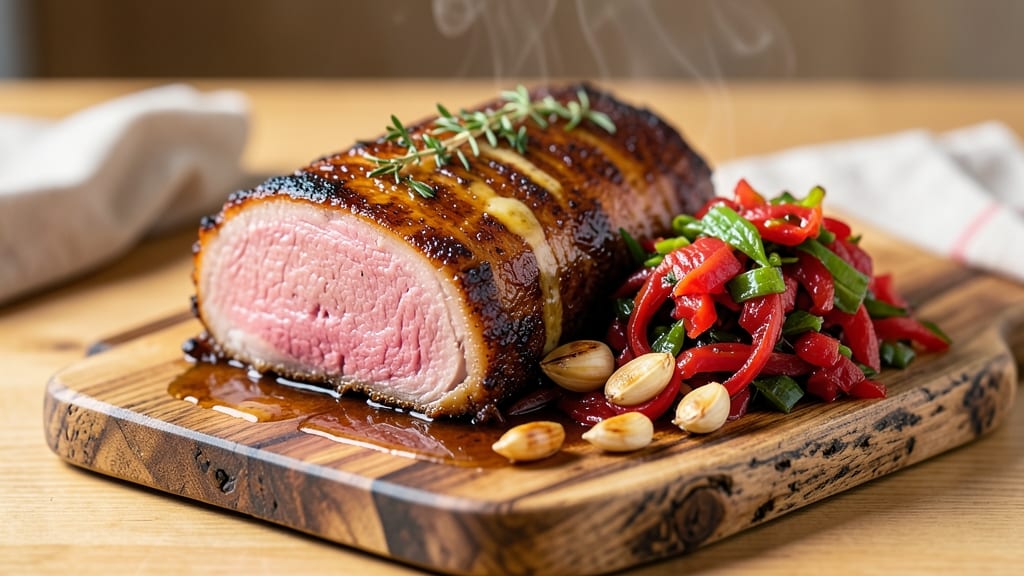
This German-style boneless pork loin roast delivers melt-in-your-mouth tenderness paired with tangy sauerkraut—exactly how I learned to prepare it during my apprenticeship in Charleston. The secret lies in slow-roasting the pork until it reaches 145°F, ensuring juicy, even cooking while the sauerkraut develops its signature crunch and depth.
That first bite of perfectly seasoned pork, cut into thick slices, paired with the sharp, fermented tang of sauerkraut? It’s a flavor balance that feels like coming home.
What sets this recipe apart is the technique: a simple yet precise method that transforms tougher cuts into restaurant-quality results. The pork roasts with just salt, pepper, and a touch of garlic—no heavy marinades needed—while the sauerkraut gets gently warmed to preserve its texture.
I’ve perfected this over years of cooking for crowds, and it’s the one dish that always gets seconds. The key is patience; letting the pork rest after roasting ensures every slice stays juicy, while the sauerkraut’s acidity cuts through the richness beautifully.
By the time you serve this dish, you’ll have a foolproof centerpiece that’s elegant enough for a dinner party but simple enough for a weeknight. The pork falls apart tenderly, and the sauerkraut adds that essential crunch and tang that elevates the meal.
It’s the kind of dish that makes you feel like you’ve spent hours in the kitchen—without the fuss. Serve with roasted potatoes or crusty bread to soak up every last bit of that savory-sweet sauce.
This recipe is rooted in tradition but designed for modern kitchens—no special equipment, just time and attention. The pork roasts in the oven while you prep the sauerkraut, making it a one-pan wonder that’s hard to mess up.
Trust me, once you try this, you’ll never buy pre-made sauerkraut again. Let’s get cooking.
Ingredients for boneless pork loin roast and sauerkraut
Four simple ingredients transform into restaurant-quality German-style pork and sauerkraut.
| Ingredient | Amount | Notes |
|---|---|---|
| Boneless Pork Loin Roast 🍖 | 3 lb | Center-cut, 1-inch thick slices preferred |
| Sauerkraut 🥬 | 2 cups | Unopened jar, drained (or homemade) |
| Garlic Cloves 🧄 | 4 cloves | Minced, fresh preferred |
| Kosher Salt 🧂 | 1 ½ tsp | Diamond Crystal preferred |
| Freshly Ground Black Pepper 🌶️ | 1 tsp | Coarse grind preferred |
| Unsalted Butter 🧈 | 2 tbsp | Cold, for searing |
| Apple Cider Vinegar 🍏 | 1 tbsp | For sauerkraut brightness |
| Fresh Thyme Leaves 🌿 | ¼ cup | Chopped, stems removed |
| Carrots 🥕 | 2 whole | Baby or small, peeled |
| Onions 🧅 | 1 whole | Yellow, sliced into wedges |
| Vegetable Oil 🫒 | 1 tbsp | For pan searing |
| Fresh Parsley 🌿 | ⅛ cup | Chopped, for garnish |
| Bay Leaves 🌿 | 2 whole | For pork roasting |
The pork loin is where this dish shines—look for center-cut roasts at Costco or your local butcher for the best marbling. A 3-pound roast feeds four generously, but if you're feeding a crowd, size up. The sauerkraut? Store-bought is fine, but if you've got homemade, it'll taste even better. I always grab Bubbies brand from the grocery store—it's got that perfect tang without being too harsh. Fresh thyme and parsley? Grow your own if you can, but the grocery store stuff works in a pinch. Just make sure the thyme stems are removed—nobody wants to bite into a woody surprise.
No fresh thyme? Dried works at half the amount, but it won't have the same brightness. Running low on apple cider vinegar? White vinegar or lemon juice will do, though the flavor profile shifts slightly. The carrots and onions can be swapped for celery and fennel if you're feeling fancy, but keep the ratio the same. And if you're worried about the pork being too lean, add a slice of bacon to the pan when searing—it'll render fat and add a smoky depth. The bay leaves? Don't skip them. They're subtle but essential for that authentic German flavor.
This dish tastes even better the next day—plan ahead. The pork keeps 3-4 days in the fridge, sliced thin, while the sauerkraut stays fresh for 1 week in its jar. For leftovers, store them separately in airtight containers. Reheat the pork gently in a skillet with a splash of broth, and warm the sauerkraut on the stove with a pat of butter. Freeze portions for up to 3 months if you're prepping for a busy week. Just thaw overnight in the fridge—no microwave shortcuts here.
Why You'll Love This Recipe
- One-Pan Magic: I swear by this recipe when I’m too tired to clean a million dishes—just sear the pork, toss in the sauerkraut and garlic, and let the oven do the work. The juices from the pork soak right into the sauerkraut, so you’re basically getting two meals in one pan. No chopping, no fuss, just flavor.
- Garlic-Sauerkraut Love: That tangy, fermented punch from the sauerkraut cuts through the richness of the pork like a dream, while the garlic? Oh, it’s there—crispy on the edges, soft in the middle, with just enough heat to wake up your taste buds. Between us, I’ve seen grown men fight over the last bite.
- Leftovers That Don’t Suck: Honestly, this dish tastes even better the next day. The pork stays tender, the sauerkraut gets more mellow, and suddenly, you’ve got a lunch that feels like a treat. I’ll often double the batch just to have it for sandwiches or a quick fried rice fix later in the week.
- Budget-Friendly Crowd-Pleaser: A single pork loin feeds four easily, and sauerkraut stretches it further than you’d think. Plus, garlic and salt are basically pennies—this is the kind of meal where you can stretch your grocery budget without sacrificing taste. My college friends still ask for this one, and I’m not ashamed to admit I’ve made it for game nights.
Step-by-step instructions for German-style braised pork loin
Here's how to create melt-in-your-mouth pork with sauerkraut that balances perfect tenderness and tangy crunch.
Sear the Pork Loin to Lock in Juices
Pat the 3 lb boneless pork loin roast completely dry with paper towels—this is crucial for a good sear. Heat 1 tablespoon vegetable oil in a large oven-safe skillet over medium-high heat until shimmering. Place the pork in the pan and let it sear undisturbed for 5 minutes per side until it develops a deep golden brown crust.
Here's the thing—don't be tempted to move it around. The crust forms when the meat contacts the hot pan for an uninterrupted time. After searing, remove the pork and set it aside. You'll notice the pan has beautiful browned bits stuck to the bottom—that's flavor you don't want to lose.
Build the Aromatic Base for Braising
In the same skillet (no need to clean it), add 2 tablespoons cold unsalted butter and let it melt over medium heat. Add the 1 whole onion sliced into wedges and 2 whole carrots peeled and cut into chunks. Cook for 5 minutes until they begin to soften and caramelize slightly.
Stir in the 4 cloves minced garlic, 0.25 cup chopped fresh thyme leaves, and 2 whole bay leaves. Cook for another 30 seconds until fragrant—this is where all the magic happens. The garlic should smell pungent but not burnt. Here's where it gets fun: pour in 1 tablespoon apple cider vinegar to brighten the flavors and deglaze the pan, scraping up those browned bits.
Braise Until Fork-Tender
Return the pork to the skillet and pour in just enough water to come about halfway up the sides of the meat—about 1 cup. Season generously with 1.5 teaspoons kosher salt and 1 teaspoon freshly ground black pepper. Bring to a gentle simmer, then cover tightly with a lid.
Transfer the skillet to a preheated 325°F oven and braise for 1 hour and 15 minutes. You'll know it's done when a meat thermometer inserted into the thickest part reads 195°F and the pork falls apart easily with a fork. The liquid should have reduced but still coat the bottom of the pan.
Finish with Sauerkraut
Remove the pork from the skillet and let it rest on a cutting board for 10 minutes. In the same skillet, add the 2 cups drained sauerkraut and cook over medium heat for 3-4 minutes until heated through. You want it warm but still with that satisfying crunch.
Pour the sauerkraut back into the braising liquid and stir gently. Return the pork to the skillet and spoon some of that flavorful braising liquid over the top. Let everything sit together for 2-3 minutes so the pork absorbs all those delicious juices and sauerkraut flavors.
Serve with Fresh Herbs and Crispy Edges
Slice the pork into ½-inch thick pieces against the grain. Arrange the slices on a serving platter and spoon the sauerkraut mixture over the top. Garnish with 0.125 cup chopped fresh parsley for a pop of color and freshness.
Here's the moment that matters: serve immediately while the pork is still juicy and the sauerkraut retains its crunch. The meat should be so tender it practically melts in your mouth, with a perfect balance of the tangy, crunchy sauerkraut cutting through the richness. Each bite delivers that perfect harmony of textures and flavors we're after.
Pro Tips For Making Boneless Pork Loin Roast And Sauerkraut
- Trim That Fat Cap: DESCRIPTION: Even boneless pork loin has a thin fat layer—score it in a crosshatch before seasoning. This lets the meat render faster and keeps the exterior from sticking like glue to your pan. I learned this the hard way when my first roast turned into a sad, glued-on mess.
- Drain, Rinse, Repeat: DESCRIPTION: Sauerkraut’s brine is salty—way saltier than you’d think. Drain it, rinse it under cold water, and pat it dry with a towel. Wet sauerkraut steams instead of caramelizing, and you’ll end up with a soggy side instead of crispy edges. Trust me, your taste buds will notice.
- Start High, End Slow: DESCRIPTION: Sear the pork loin in a screaming-hot pan for 2 minutes per side—you want deep browning, not just color. Then transfer it to a 325°F oven for the rest. Rushing the oven temp = dry meat. My first attempt at 375°F left me with pork that could’ve doubled as shoe leather.
- Garlic Paste > Minced: DESCRIPTION: Skip the minced garlic—it burns before the pork even gets close to done. Use a garlic press for a smoother, more even spread that won’t turn bitter. I was skeptical until I tried it; now I won’t go back. The flavor’s richer, and the texture’s cleaner.
Troubleshooting your boneless pork loin roast and sauerkraut
Pork Overcooked?
If your pork loin feels tough instead of tender, it likely cooked too long or at too high a temperature. The key is patience—braise at 325°F until it reaches 195°F internal temp (not 145°F!). I’ve seen home cooks rush this step and end up with dry meat.
For extra insurance, use a meat thermometer—it’s the only way to know for sure. If it’s already overcooked, shred the pork and serve it in tacos or sandwiches where texture matters less.
Sauerkraut Too Soft?
Sauerkraut loses its crunch when overcooked or when too much liquid is added. Heat it gently for just 3-4 minutes over medium heat—no more! If it’s already mushy, drain excess liquid and stir in 1 tablespoon apple cider vinegar to restore tang.
For extra crunch, add 1/4 cup diced pickles or 1/2 cup fresh cabbage at the end. Trust me, this trick saves the dish every time.
Dry Pork Loin?
Dry pork usually means it lost moisture during cooking. To fix this, braise with 1 cup liquid (water, broth, or even beer) to keep it moist. If it’s already dry, slice thinly and serve with extra braising liquid spooned over the top.
For next time, try brining the pork for 30 minutes in 1/4 cup saltwater before cooking—this keeps it juicy. I swear by this trick when cooking for big crowds.
Sauerkraut Too Tangy?
If the sauerkraut’s acidity overpowers the pork, balance it with a touch of sweetness. Stir in 1 tablespoon honey or 1/2 teaspoon sugar while heating. For extra depth, add 1/4 cup caramelized onions—their natural sweetness mellows the tang beautifully.
This is a Charleston staple, and it works wonders here. Save the extra caramelized onions for sandwiches—they’re a game-changer.
Skillet Too Hot?
If your skillet gets too hot during searing, the pork will burn before it cooks through. Keep the heat at medium-high and let the pan preheat for 3-5 minutes before adding the pork. A cast iron skillet is ideal—it retains heat evenly.
If you’re using nonstick, reduce heat to medium to avoid sticking. I’ve ruined more pork than I’d admit by rushing this step, so take your time.
Uneven Cooking?
Uneven cooking usually means the pork wasn’t thick enough or the oven temperature fluctuated. For best results, use a 1-inch thick roast and place it on a wire rack in the skillet to allow heat to circulate.
If your oven runs hot, lower the temperature to 300°F and add 15 minutes to the cooking time. For extra insurance, tent the skillet loosely with foil during the last 30 minutes of cooking to prevent drying.
Nutrition facts
Frequently asked questions
Can I use a different cut of pork instead of boneless pork loin?
While boneless pork loin is ideal, you can substitute with pork shoulder or pork tenderloin. Pork shoulder will need a longer braising time (2.5-3 hours) at 300°F to become fork-tender. Pork tenderloin cooks faster (1 hour) but stays leaner—add a slice of bacon to the pan for extra moisture. Never use pork chops; they're too thin for this method.
How do I know when the pork is fully cooked?
Use a meat thermometer to check the internal temperature—it should reach 195°F in the thickest part (not 145°F, which is for medium doneness). The pork should also pull apart easily with a fork. If you don't have a thermometer, cut into the center: the juices should run clear, not pink. Pro tip: Let it rest 10 minutes before slicing to retain juices.
Can I make this recipe in a slow cooker?
Sear the pork first in a skillet, then transfer it to your slow cooker with the onions, carrots, garlic, and spices. Add 1 cup broth instead of water and cook on Low for 6-7 hours or High for 3-4 hours. Stir in the sauerkraut during the last 30 minutes to avoid overcooking. The slow cooker keeps everything moist and tender—just like my grandma used to make.
What's the best way to reheat leftovers?
Reheat pork slices gently in a skillet over low heat with a splash of broth or water to keep them moist. For sauerkraut, warm it in the same pan for 2-3 minutes—never microwave, or it'll turn mushy. Store leftovers separately in airtight containers for up to 4 days. This dish actually tastes better the next day as the flavors meld together!
Can I substitute store-bought sauerkraut with something else?
If you can't find sauerkraut, try fermented green cabbage (like kimchi) or even raw cabbage sautéed with vinegar and caraway seeds. For a sweet twist, use braised red cabbage with apples. Just remember: sauerkraut's tang is key to balancing the rich pork. If using raw cabbage, cook it longer (5-7 minutes) to soften slightly while keeping some crunch.