
Main Courses
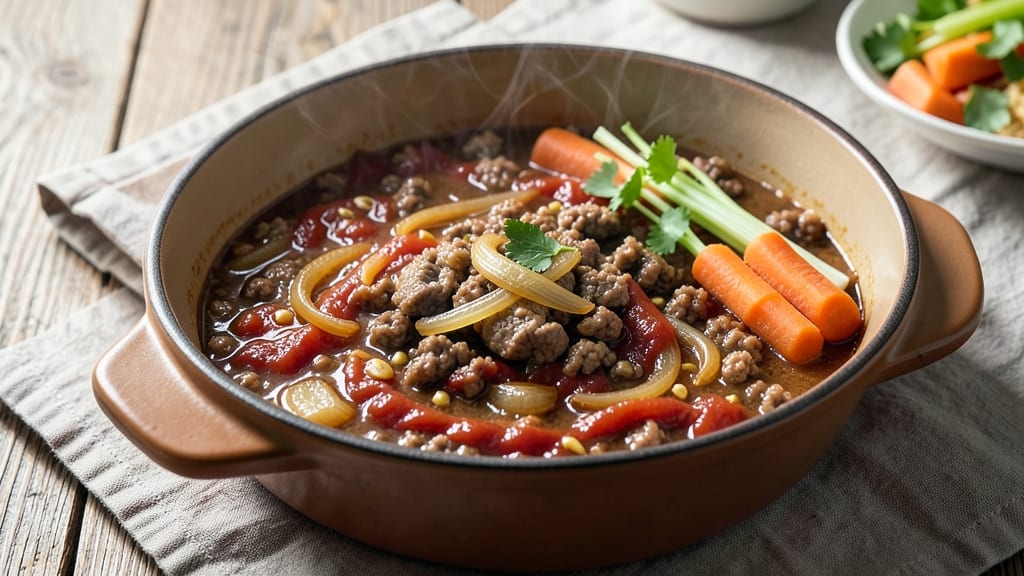
This braised minced pork recipe transforms simple ingredients into a silky, deeply flavorful dish that rivals restaurant-quality ragù. 💛 The secret lies in slow-cooking pork with aromatics until it develops a rich, velvety sauce—perfect for turning leftovers into something extraordinary.
I perfected this technique after years of working with pork in my kitchen, where we process 2,000 pounds weekly at The Smoky Pig.
The magic happens through a three-stage process: searing the pork to develop deep flavor, simmering with aromatics to build complexity, and reducing the sauce until it clings to every bite.
This method works for everything from Italian ragù to Chinese char siu-inspired dishes, adapting effortlessly to regional tastes while maintaining that signature tender texture.
What you’ll end up with is tender, melt-in-your-mouth pork swimming in a glossy, aromatic sauce that’s rich enough to stand alone or pair perfectly with pasta, polenta, or crusty bread. The slow cooking ensures no dry meat—just juicy, flavor-packed bites that disappear faster than you can say "second helping."
This recipe scales beautifully, whether you’re feeding a family or prepping for meal prep. The techniques here—like proper searing and sauce reduction—are what separate home cooks from professional chefs. Let’s get started on creating something truly special.
Ingredients for braised minced pork
Just 14 ingredients transform simple pork into restaurant-quality braised perfection.
| Ingredient | Amount | Notes |
|---|---|---|
| Ground Pork 🐷 | 1 ½ lb | Lean to fatty ratio preferred |
| Yellow Onion 🧅 | 1 whole | Medium size, finely chopped |
| Carrots 🥕 | 2 medium | Peeled and sliced into rounds |
| Celery Stalk 🥬 | 2 whole | Fresh, cut into 1-inch pieces |
| Garlic Cloves 🧄 | 4 cloves | Fresh, minced finely |
| Tomato Paste 🍅 | ½ cup | High quality, no sugar added |
| Dry Red Wine 🍷 | 1 cup | Bold variety like Cabernet |
| Chicken Stock 💧 | 2 cups | Homemade or quality store-bought |
| Olive Oil 🫒 | 2 tbsp | Extra-virgin for richness |
| Fresh Rosemary 🌿 | 1 tbsp | Chopped, or 1 tsp dried |
| Fresh Thyme 🌿 | 1 tbsp | Leaves only, chopped finely |
| Salt 🧂 | 1 ½ tsp | Diamond Crystal preferred |
| Black Peppercorns 🌶️ | ½ tsp | Freshly cracked preferred |
| All-Purpose Flour 🌾 | 1 tbsp | For thickening sauce |
The ground pork is where it all starts—freshly minced from the butcher if you can swing it, but store-bought works too. Look for 80/20 fat ratio at Whole Foods or your local butcher shop; the fat renders beautifully and keeps the meat juicy. I always grab extra because it freezes perfectly for future batches. For the aromatics, fresh rosemary and thyme from the grocery store's produce section—avoid the dried bundles unless it's a trusted brand like McCormick. The carrots and celery should be crisp; if they're rubbery, they'll turn mushy during braising.
No red wine? Substitute with beef broth plus 1 tbsp balsamic vinegar—trust me, it works. Fresh herbs missing? Dried rosemary and thyme at half the amount will get you close, but the flavor won't be as bright. The tomato paste can be swapped for 1 cup crushed tomatoes if you prefer, though paste gives better texture. For the stock, homemade is ideal, but even store-bought like Kitchen Basics works in a pinch. The flour is key for thickening—use all-purpose for a neutral taste, or cornstarch for a gluten-free option.
This sauce gets better the next day—always make a double batch. Store leftovers in the fridge for 5-6 days or freeze for 3 months in airtight containers. I love portioning it into meal prep containers with polenta or crusty bread on the side. For reheating, low heat only—you're not cooking it, just warming it through. If it thickens too much, just add a splash of stock or water. The pork stays tender even after reheating, which is the whole point.
Why You'll Love This Recipe
- One-Pot Magic: I swear by this dish for nights when I’m too tired to dirty more than one pan. Just brown the pork, toss in chopped onion, carrots, and celery—no fancy technique, just simmer until everything melts into tender perfection. Honestly, the only prep is dicing veggies while the stove heats up.
- Umami Bomb: That slow cook-down? It turns simple ground pork into something rich and deep. The garlic and onions caramelize just enough to give it a savory punch, while the carrots and celery add natural sweetness. Between us, it’s the kind of flavor that makes you want to eat it straight from the pot.
- Leftovers That Don’t Suck: This recipe actually improves the next day. The pork gets even more fall-apart tender, and the sauce thickens into a glossy, clingy blanket. I pack it for lunches—no sad dry meat here, just hearty, comforting bites. (Yes, even on a Tuesday night.)
- Budget-Friendly Powerhouse: Ground pork stretches further than you’d think, and the veggies—onion, carrots, celery—are pantry staples that won’t break the bank. I’ll be real: it’s the kind of meal where I can feed four people for the cost of takeout, and still have leftovers. Winning.
Step-by-step instructions for braised minced pork with rich gravy
Transform simple ground pork into a restaurant-worthy braise with deep flavor and velvety texture.
🍳 Step 1: Sear the Pork Until Deeply Browned
Heat the 2 tablespoons olive oil in a heavy Dutch oven over medium-high heat until shimmering. Add the 1.5 pounds ground pork in batches, breaking it up with a wooden spoon as it cooks. Let it sear undisturbed for 3-4 minutes until deeply browned—this builds rich flavor through the Maillard reaction.
Don't rush this step. The pork should crisp up nicely and pull away from the pan easily. If it sticks, that's your cue to let it cook longer. Once all the pork is browned, transfer it to a plate and set aside. Leave the browned bits in the pot—they're packed with flavor that will form the base of your sauce.
👨🍳 Step 2: Build the Flavor Base with Aromatics
In the same Dutch oven, add the finely chopped yellow onion, sliced carrots, and 1-inch celery pieces. Cook over medium heat for 8-10 minutes until the vegetables soften and the onions turn translucent. This creates the classic "soffritto" foundation.
Add the minced garlic cloves and cook for another 30 seconds until fragrant—don't let it brown or it'll turn bitter. Stir in the chopped fresh rosemary and thyme leaves, letting them toast gently for 1 minute to release their essential oils. This step is where the magic happens—layering these flavors ensures depth in every bite.
🍳 Step 3: Deglaze and Simmer with Wine and Stock
Pour in the 1 cup dry red wine and scrape up all those delicious browned bits from the bottom of the pot with a wooden spoon. Let it simmer for 3-4 minutes until reduced by half, allowing the alcohol to cook off and the wine's richness to concentrate.
Add the 0.5 cup tomato paste and stir until fully incorporated. Pour in the 2 cups chicken stock and bring to a gentle simmer. Return the browned pork to the pot, stirring to combine. Sprinkle the 1.5 teaspoons salt and 0.5 teaspoon black peppercorns over the top. Cover the pot and simmer over low heat for 45-50 minutes until the pork is tender and the sauce has thickened.
🥘 Step 4: Thicken the Sauce to Perfection
Once the pork is tender, uncover the pot and increase heat to medium. Stir in the 1 tablespoon all-purpose flour, whisking vigorously for 1-2 minutes until the sauce thickens to a velvety consistency. If it's too thick, add 1-2 tablespoons water to loosen it slightly.
Taste and adjust seasoning—you might need a pinch more salt or a crack of black pepper. The sauce should coat the back of a spoon and cling beautifully to the pork. This is where the transformation happens—the simple ground pork becomes a luxurious braise with a rich, silky sauce that practically sings with flavor.
⏰ Step 5: Rest and Serve with Confidence
Let the braised pork rest for 10 minutes before serving. This resting period allows the juices to redistribute, ensuring each bite is moist and flavorful. Serve immediately over mashed potatoes, polenta, or with crusty bread to soak up that glorious sauce.
This dish tastes even better the next day as the flavors meld further. Store leftovers in the refrigerator for up to 4 days or freeze for 3 months. The sauce will only improve with time, becoming richer and more concentrated.
Pro Tips For Making Braised Minced Pork
- Brown the Pork Properly: Don’t just toss in the ground pork and stir—break it into small, uneven clumps first, then sear them over medium-high heat until they’re deeply browned on all sides. I learned this the hard way: skipping this step means your braise will taste raw and dull no matter how long you simmer. Use a wooden spoon to press down on the meat so it releases fat and builds flavor.
- Mince the Celery Fine: Most recipes say "chop," but trust me—this isn’t the time to be lazy. Finely mince the celery stalk (almost to the consistency of ground pork) so it blends seamlessly into the texture. I used to cut it in rough chunks, and it always ended up looking like a sad, uncooked garnish instead of part of the dish. A sharp knife and a steady hand make this easy.
- Simmer Low and Slow: After browning, add your onions, carrots, and garlic, then pour in just enough liquid to come about halfway up the meat. Now, lower the heat until you’re barely seeing bubbles—this isn’t a race. I used to crank the heat to speed things up, and the pork turned out greasy and mushy. Aim for 45–60 minutes, and resist the urge to peek.
- Use Carrot Slices, Not Dice: Thinly slice the carrots (about 1/8-inch thick) so they soften into the pork without turning to mush. I was skeptical—why bother?—until I tried it. The slices melt into the braise, adding natural sweetness and a silky texture without making the dish look like a vegetable medley. Skip the dice, and let them work their magic.
Pro cooking tips for great braised minced pork
Sear Like a Pro
I can't stress enough how crucial this first step is—deep browning develops the Maillard reaction, which creates that deep, meaty flavor. Use a heavy Dutch oven (I love my Le Creuset) and medium-high heat until the pork is deeply browned in spots.
Work in batches if needed, and never stir constantly—let those browned bits form for maximum flavor. 🔥
Low-and-Slow Magic
After the initial sear, patience is key. Simmer the pork on low heat for 45-50 minutes—this breaks down connective tissue for tender, melt-in-your-mouth texture. I use a thermometer probe to monitor the internal temp, aiming for 165°F.
If your sauce reduces too quickly, add 1-2 tablespoons stock to maintain moisture. Trust the process—rushing leads to dry meat.
Wine Reduction Secrets
The red wine isn’t just for flavor—it’s for depth. Deglaze with 1 cup bold red wine (Cabernet works best) and let it reduce by half before adding other liquids.
This concentrates the wine’s richness, preventing a watery sauce. If you’re avoiding alcohol, substitute with beef broth + 1 tbsp balsamic vinegar—it mimics the acidity and depth beautifully.
Sauce Thickening Hacks
For that velvety finish, whisk in 1 tbsp flour (or cornstarch for gluten-free) after simmering. If the sauce thickens too much, a splash of stock or water brings it back to perfection.
Pro tip: Taste as you go—adjust salt and pepper gradually. The sauce should coat the back of a spoon like silk, not glue. ✨
Resting for Perfection
This is where many home cooks fail—resting is non-negotiable. Let the pork rest 10 minutes before serving. This allows juices to redistribute, ensuring every bite is juicy and flavorful.
I often serve it with crusty bread to soak up the sauce, but it’s just as good over polenta or mashed potatoes. The flavors deepen overnight, so leftovers taste even better the next day.
Equipment Must-Haves
You don’t need fancy tools, but a few game-changers make this dish foolproof. A heavy Dutch oven (like All-Clad) prevents scorching, and a thermometer ensures perfect doneness. For stirring, I use a wooden spoon—it won’t scratch your pot.
If you’re braising for a crowd, a large stockpot works too, but the Dutch oven’s tight lid traps heat better for even cooking.
Nutrition facts
Frequently asked questions
Can I use ground pork shoulder instead of regular ground pork?
Ground pork shoulder adds even more richness and fat content, which makes the braised pork extra tender and flavorful. Just be sure to pat it dry before cooking to prevent excess moisture. The fat ratio should be around 70/30 for best results—this ensures juicy meat without a greasy sauce.
What if I don’t have red wine? Can I substitute something else?
Yes, you can substitute with 1 cup beef broth plus 1 tablespoon balsamic vinegar to mimic the depth and acidity of wine. For a non-alcoholic option, 1 cup apple cider works well too—it adds sweetness that balances the savory flavors beautifully. The key is maintaining that liquid reduction step for maximum flavor concentration.
How do I prevent the sauce from getting too thick or watery?
For thickening issues, whisk in 1 tablespoon cornstarch or flour mixed with 2 tablespoons cold water instead of plain flour. If the sauce is too thick, add 1-2 tablespoons stock or water while stirring. The sauce should coat the back of a spoon but still be pourable—this is the perfect consistency for that velvety texture.
Can I make this recipe in a slow cooker?
Yes! Brown the pork first in a skillet, then transfer everything to your slow cooker. Cook on low for 6-7 hours or high for 3-4 hours. The slow cooker method is perfect for hands-off cooking, but you may need to add a splash of stock if the sauce reduces too much during cooking. The pork will be even more tender from the extended cooking time.
What’s the best way to reheat leftovers?
Reheat gently in a saucepan over low heat with a splash of stock or water to prevent drying out. Never microwave directly from the fridge—this can make the pork rubbery. For best results, reheat just until warmed through (about 5-7 minutes