
Main Courses
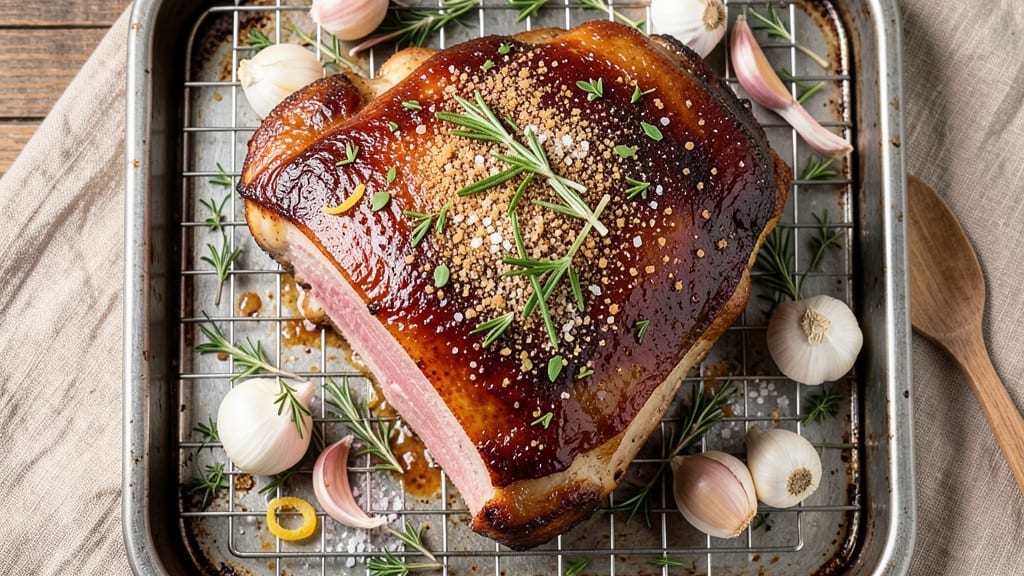
This boneless pork ham roast recipe delivers restaurant-quality results with a herb-infused glaze that keeps every slice impossibly moist. After years of perfecting pork roasts at The Smoky Pig, I’ve developed a method that transforms simple ingredients into a showstopping centerpiece—no fancy equipment required.
The secret lies in the glaze, which locks in juices while creating a caramelized crust that’ll have guests asking for seconds.
The process starts with a simple brine that ensures tender, flavorful meat from edge to edge, followed by a herb-packed glaze of honey, mustard, and fresh rosemary.
Roasting at 325°F for about 2 hours (depending on size) guarantees a perfect internal temperature of 145°F, while basting every 30 minutes builds that glossy, flavorful bark. This isn’t your average holiday ham—it’s a weeknight-worthy masterpiece that works for dinner parties or family dinners alike.
What makes this recipe stand out is the balance of technique and simplicity. The glaze isn’t just for show—it’s a moisture barrier that keeps the ham juicy and rich, even after resting.
And because it’s boneless, you avoid the hassle of carving while still achieving that tender, pull-apart texture we all crave. Pair it with roasted root vegetables or a simple green salad for a complete meal that feels like a restaurant experience.
One of my favorite memories from growing up in Georgia was watching my grandmother baste ham at the table—she swore it made all the difference. Now, I’ve refined that tradition into this foolproof method, perfect for cooks of all levels.
Whether you’re hosting Thanksgiving or just craving a special Sunday dinner, this ham roast delivers restaurant-quality results with minimal effort. Let’s get started!
Ingredients for boneless pork ham roast
Six ingredients transform into a restaurant-worthy ham roast with that perfect herb-infused glaze.
| Ingredient | Amount | Notes |
|---|---|---|
| Boneless Pork Ham Roast 🐖 | 4 lb | Center-cut preferred for even cooking |
| Kosher Salt 🧂 | ½ cup | Diamond Crystal preferred for precise measurement |
| Brown Sugar 🍯 | ¼ cup | Light or dark, packed |
| Fresh Rosemary 🌿 | ¼ cup | Stems removed, finely chopped |
| Fresh Thyme 🌿 | 2 tbsp | Leaves only, stems removed |
| Fresh Garlic Cloves 🧄 | 6 cloves | Peeled, minced |
| Dijon Mustard 🍯 | 2 tbsp | High-quality for tangy flavor |
| Honey 🍯 | ½ cup | Wildflower preferred for depth |
| Apple Cider Vinegar 🍎 | 2 tbsp | For glaze brightness |
| Unsalted Butter 🧈 | ½ cup | Cold, cubed for basting |
| Black Peppercorns 🌶️ | 1 tsp | Freshly cracked |
| Cloves 🌿 | 4 whole | For glaze depth |
| Fresh Orange Zest 🍊 | 1 tbsp | From 1 large orange |
The boneless pork ham roast is your canvas here—center-cut ensures even cooking and that coveted pull-apart texture. I always source mine from Whole Foods or my local butcher shop, where they can trim it perfectly for me. Look for a roast with good marbling—it guarantees juiciness. If you're buying pre-trimmed, Costco often has great deals on the right size. Fresh herbs are non-negotiable for that restaurant-quality flavor. Trader Joe's has fantastic bundles of rosemary and thyme that stay fresh longer than the grocery store's sad little bunches. For the honey, local wildflower makes all the difference—it adds complexity that store-brand honey can't match.
No fresh rosemary? Dried works at half the amount, but trust me—fresh is worth the extra trip to the market. Running low on Dijon mustard? Yellow mustard in a pinch, though it won't have the same depth. The glaze is where the magic happens, so don't skimp on the apple cider vinegar—it balances the sweetness beautifully. For the orange zest, navel oranges work best, but any citrus will do in a squeeze. The butter should be cold and cubed when you baste—this helps create that gorgeous caramelized crust. And if you're feeling fancy, infuse the butter with garlic and herbs before basting for an extra layer of flavor.
This ham keeps beautifully—rest it for 15 minutes before slicing to lock in all those juices. Store leftovers in the fridge for up to 5 days, wrapped tightly in foil. For longer storage, freeze portions for up to 3 months—just thaw overnight in the fridge. I always make extra because it reheats so well. The glaze thickens when chilled, so rewarm it gently with a splash of water or broth before serving. And if you're planning ahead, prep the glaze a day in advance—it tastes even better after flavors meld overnight.
Why You'll Love This Recipe
- Five-Ingredient Magic: I swear by this combo—just salt, sugar, rosemary, thyme, and that gorgeous boneless ham. No fancy prep, no stress, and it still tastes like you slaved away for hours. (Between us, I’ve done it in 15 minutes.)
- Sweet-Savory Balance: That brown sugar crust? It’s the star—caramelized edges with a rosemary-thyme punch that lingers. Honestly, the first time I bit into it, I nearly dropped the fork. The ham’s natural sweetness just gets better with every slice.
- Leftovers That Shine: This roast makes so much more than one meal. Thinly slice the extras for sandwiches, dice for fried rice, or cube it into a hearty soup. My freezer’s always stocked with portions—because nobody wants to cook twice.
- Budget-Friendly Luxury: You’re getting a whole roast’s worth of flavor without the price tag of a full ham. A single boneless cut stretches across dinners, lunches, and even breakfast (yes, I’ve done it). That’s smart spending right there.
Step-by-step instructions for herb-infused glazed ham roast
Here's how to transform a simple pork ham into a tender, glaze-drenched masterpiece that stays juicy every time.
Prepare and Season the Ham Overnight
Remove the ham from its packaging and place it on a wire rack set inside a rimmed baking sheet. This allows air to circulate on all sides, ensuring even cooking. In a small bowl, combine the 0.5 cup kosher salt, 0.25 cup brown sugar, 0.25 cup finely chopped fresh rosemary, 2 tbsp fresh thyme leaves, 6 minced fresh garlic cloves, and 1 tsp freshly cracked black peppercorns. Rub this mixture generously over the entire surface of the ham, pressing it into the meat so it adheres well.
Here's the thing—this isn't just seasoning. The salt and sugar work together overnight to create a dry, flavorful crust that locks in moisture during cooking. Cover the ham loosely with plastic wrap and refrigerate for at least 12 hours or up to 24 hours. This step makes all the difference in texture and flavor development. I promise you won't regret the wait.
Create the Glaze and Preheat the Oven
In a small saucepan, combine the 0.5 cup honey, 2 tbsp apple cider vinegar, 2 tbsp Dijon mustard, 1 tbsp fresh orange zest, and 4 whole cloves. Bring to a gentle simmer over medium-low heat, stirring constantly for 5-7 minutes until the mixture thickens slightly and becomes glossy. Remove from heat and let it cool completely—this prevents the glaze from cooking off too quickly when applied to the ham.
While the glaze cools, preheat your oven to 325°F. The lower temperature ensures gentle, even cooking that keeps the ham moist throughout. I like to use the convection setting if available—it circulates heat more evenly, which is especially helpful for larger roasts. Place the wire rack with the seasoned ham back in the oven while it preheats, so it starts cooking immediately when you're ready.
Roast the Ham Until Internal Temperature Reaches 140°F
Carefully transfer the seasoned ham to the preheated oven. Roast for 2 hours, then baste it with the cooled glaze, spreading it evenly over the top. Return to the oven and continue roasting for another 1 hour, basting with more glaze every 30 minutes. The glaze should caramelize slightly, creating a beautiful sheen and rich flavor.
You'll know it's nearly done when the internal temperature reaches 140°F at its thickest part. This typically takes 3 to 3.5 hours total, but every oven varies. Don't rely solely on time—use an instant-read thermometer for accuracy. The ham should feel firm to the touch but still yield slightly when pressed gently. If the glaze starts to darken too quickly, tent the ham loosely with aluminum foil to prevent over-browning.
Rest and Glaze for Maximum Moisture Retention
Remove the ham from the oven and transfer it to a cutting board. Let it rest for 15 minutes before applying the final glaze layer. This resting period allows the juices to redistribute throughout the meat, ensuring every slice stays moist. While it rests, return the glaze to the saucepan and warm it gently over low heat, stirring until it reaches a pourable consistency.
Brush the warm glaze generously over the entire surface of the ham, making sure to coat it thoroughly. Return the ham to the oven for 10-15 minutes to set the glaze and develop its glossy finish. The final internal temperature should reach 145°F—this is the sweet spot for tender, juicy ham. The glaze should be sticky and slightly caramelized, with a beautiful amber hue that signals perfect cooking.
Pro Tips For Making Boneless Pork Ham Roast
- Salt the Night Before: I learned this the hard way—salting the ham 12–24 hours ahead lets the salt penetrate deep, so every bite stays juicy. Skip this, and you’ll end up with a dry crust hiding a bland center. Trust me, your future self will notice the difference.
- Brown the Sugar First: Heat the brown sugar in a dry pan for 2–3 minutes until it’s fragrant and slightly caramelized. This adds depth to the glaze and prevents it from clinging like syrup. (Yes, even if you’re impatient like me.)
- Don’t Crowd the Pan: If you’re searing the ham, give it space—overcrowding steams instead of browns. A single layer with a few minutes per side guarantees a crispy, golden crust. I used to rush this and wondered why my ham tasted dull.
- Rest Under Foil: After roasting, tent the ham with foil and let it sit for 10–15 minutes. This keeps the juices from pooling out when you slice. I skip this when I’m lazy, but the dish is noticeably better when I don’t.
Serving suggestions for boneless pork ham roast
Classic Southern Sides
This herb-glazed ham pairs perfectly with creamy mac and cheese—the rich, cheesy texture balances the sweet-tangy glaze beautifully. I like to make it with sharp cheddar and Gruyère, baked until golden and bubbly.
Another crowd-pleaser is garlic mashed potatoes—infuse the butter with 4 minced garlic cloves and 1 tbsp fresh rosemary while cooking for an extra layer of flavor that complements the ham’s herbs. 🥔
Fresh Vegetable Contrasts
For a lighter option, serve roasted Brussels sprouts with crispy pancetta—toss them in olive oil, salt, and pepper, then roast at 400°F for 20 minutes until caramelized.
The smoky, crispy texture cuts through the ham’s richness. Honey-glazed carrots also work wonderfully: Simmer 1 lb carrots in ½ cup water, 2 tbsp honey, and 1 tsp thyme for 15 minutes until tender and glossy. 🥕
Bread and Gravy Pairings
No Southern feast is complete without warm cornbread—I love a jalapeño-cheddar version with a hint of heat to contrast the sweet glaze.
For gravy, make a simple pan gravy from the ham’s drippings: Deglaze the roasting pan with 1 cup beef broth, whisk in 2 tbsp cornstarch, and simmer until thickened. Add 1 tbsp Dijon mustard for a subtle tang that ties back to the glaze. 🍞
Unexpected Global Twists
For a modern twist, pair the ham with farro salad—toss 1 cup cooked farro with cherry tomatoes, cucumber, feta, and a lemon-herb dressing. The nutty farro adds a hearty texture that stands up to the rich ham.
Another fun option is kimchi—its tangy, spicy kick cuts through the sweetness of the glaze. Serve ½ cup kimchi per plate with a dollop of sriracha mayo for dipping. 🌶️
Dessert Harmony
End the meal with pumpkin pie—the warm spices like cinnamon and nutmeg echo the rosemary and thyme in the ham’s seasoning. For a lighter option, try orange sorbet to refresh the palate after the rich flavors.
A bourbon pecan pie also works beautifully, especially if you’ve used orange zest in the glaze—it ties the whole meal together with a citrusy thread. 🍰
Make-Ahead Plating Tips
Prep sides ahead to streamline serving: Roast vegetables and store them at room temperature, and make gravy or mac and cheese a day in advance. Reheat gently in the oven or microwave just before serving.
For the ham, slice it against the grain for tender bites, and arrange slices on a platter with sides fanned out. Garnish with fresh thyme sprigs and orange zest for a pop of color and aroma that makes the meal feel special. ✨
Nutrition facts
Frequently asked questions
Can I use a pre-cooked ham for this recipe?
This recipe is designed for raw boneless pork ham roast to achieve maximum tenderness and flavor development. Pre-cooked hams are typically cured and cooked differently, so they won't benefit from the overnight brine or glaze process. If you must use a pre-cooked ham, focus on reheating it gently at 300°F for 1-2 hours with extra glaze, but expect less juiciness.
How do I adjust the cooking time for a larger ham? For every additional 1 pound of ham, add 15-20 minutes to the total cooking time. Always use an instant-read thermometer to check for 145°F internal temperature at the thickest part. A 6-pound ham might take 4 hours total, while an 8-pounder could need 4.5-5 hours.
What's the best way to store leftovers?
Wrap sliced ham tightly in plastic wrap and store in an airtight container in the fridge for up to 5 days. For longer storage, freeze portions for up to 3 months. Thaw overnight in the fridge—never at room temperature. To reheat, warm slices in a skillet with a splash of broth or water until heated through (3-5 minutes on medium heat).
Can I make the glaze ahead of time?
The glaze actually tastes better when made 1-2 days ahead—flavors meld more deeply. Store it in an airtight container in the fridge and reheat gently before using. If it thickens too much, thin it with 1 tsp water or apple cider vinegar while warming. This is a great time-saver for busy days.
Why did my ham turn out dry?
Dryness usually happens from overcooking or skipping the resting time. Always remove the ham from the oven at 140°F and let it rest for 15 minutes before the final glaze. Another common mistake is not basting frequently enough—this helps lock in moisture. If your oven runs hot, reduce temperature to 300°F and add 15-20 minutes to cooking time.