
Main Courses
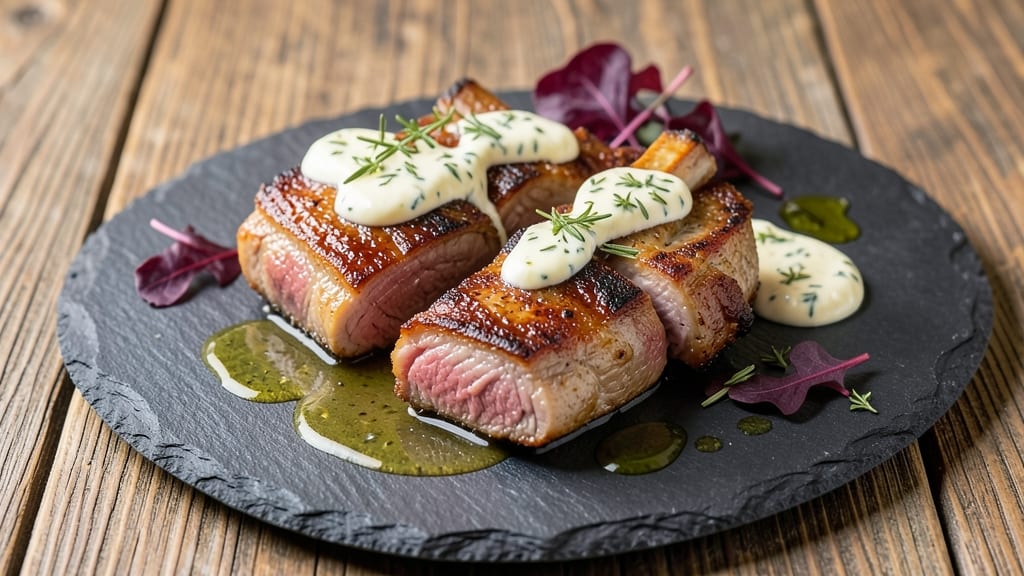
Bone-in ribeye pork chops deliver the ultimate balance of crispy crust and juicy pink centers—exactly what I perfect every time I fire up the grill at The Smoky Pig. The bone isn't just for looks; it infuses flavor and keeps the meat impossibly tender. After years of testing pork chops for my pit crew, I've cracked the code for restaurant-quality results at home.
The secret lies in two simple steps: a dry brine overnight to lock in moisture, then a high-heat sear in a screaming-hot cast iron. We're talking 145°F internal temperature for that perfect medium-rare finish, with a crust so crisp it shatters like glass.
The bone renders just enough fat to baste the meat while cooking, creating a natural sauce that pools on your plate.
What you end up with is a chop that's juicy enough to make even the most skeptical eaters ask for seconds, with a crust that's worth the wait. The bone adds depth to every bite, while the pink center stays tender despite the high heat.
This is the kind of pork chop that makes people forget they're not sitting at a high-end steakhouse.
Serve with a simple arugula salad and roasted fingerling potatoes to let the pork take center stage. The technique is straightforward, but the payoff is worth every minute of searing time. Let's get cooking—your taste buds will thank you.
Ingredients for bone in ribeye pork chops
Four juicy chops with a bone-in secret—crispy crust, pink centers, and zero guesswork.
| Ingredient | Amount | Notes |
|---|---|---|
| Bone-In Ribeye Pork Chops 🥩 | 4 whole | 1-inch thick, bone-in preferred |
| Kosher Salt 🧂 | 2 tbsp | Diamond Crystal preferred |
| Freshly Ground Black Pepper 🌶️ | 1 tsp | Freshly cracked for bold flavor |
| All-Purpose Flour 🌾 | ½ cup | For dredging, any brand |
| Unsalted Butter 🧈 | ½ cup | Cold, cut into 1-inch pieces |
| Extra-Virgin Olive Oil 🫒 | 2 tbsp | For high-heat searing |
| Fresh Rosemary 🌿 | ¼ cup | Chopped, stems removed |
| Fresh Thyme 🌿 | ¼ cup | Leaves only, stems removed |
| Garlic Cloves 🧄 | 4 cloves | Minced, for herb butter |
| Fresh Parsley 🌿 | ¼ cup | Chopped, for garnish |
| Lemon Wedges 🍋 | 2 whole | For serving, fresh only |
The pork chops are the star, so bone-in ribeye cuts are non-negotiable—they stay juicier and pack more flavor. Costco or your local butcher are the best spots for these; look for cuts with good marbling around the bone. If you can't find ribeye, loin chops work too, but ribeye has that extra fat for richness. The thickness matters—aim for about an inch, or your chops will overcook before the center hits 145°F. I always ask the butcher to trim excess fat, but leave a little for flavor. Freshness is key here: the meat should smell clean and have a vibrant red color, not grayish or dull.
No Diamond Crystal salt? Morton kosher salt works just fine—just use a pinch more since it's finer. Fresh herbs are ideal, but dried rosemary and thyme at half the amount will do in a pinch (though nothing beats the fresh stuff). The butter needs to be cold for that perfect crust—pop it in the freezer for 15 minutes if your kitchen's warm. For the herb butter, any fresh herb combo works—basil or chives swap out the rosemary and thyme. And if you're short on time, skip the dredging flour entirely—your chops will still be delicious, just with a slightly less crispy crust.
These chops are best served immediately after cooking, but if you need to hold them, keep them warm in a 200°F oven for up to 20 minutes. The bone-in magic means they reheat beautifully, so leftovers are a dream. Store any unused chops in the fridge for 2 days or freeze for 3 months—just thaw overnight in the fridge before cooking. Pro tip: save the rendered bone fat! It makes an incredible pan sauce—just deglaze the pan with a splash of broth and a squeeze of lemon after cooking.
Why You'll Love This Recipe
- Foolproof Seasoning: I swear by the salt-and-pepper crust here—just kosher salt and fresh black pepper, but the way it clings to the bone-in chops? That’s where the magic starts. No fancy marinades, no guesswork—just two ingredients doing their job perfectly.
- Butter-Crusted Magic: The moment those chops hit the pan with butter and flour? Instant golden crust. The bone renders just enough fat to keep everything juicy, while the butter adds that rich, caramelized edge. (Between us, this is the part where I pause to take a bite.)
- Weeknight to Weekend: Throw these on the grill for a summer BBQ or sear them in a skillet for a quick weeknight dinner. They’re just as happy feeding my family of four as they are impressing guests—no extra effort, just pure satisfaction.
- Leftovers That Don’t Suck: Unlike so many pan-seared meats, these chops stay tender the next day. I’ll repurpose them into sandwiches, tacos, or even a fried rice—because who wants dry, sad leftovers? These are the kind you actually look forward to eating twice.
Step-by-step instructions for bone-in ribeye pork chops
Here's how to achieve that perfect crust with melt-in-your-mouth juiciness every time.
Season and Dredge the Pork Chops
Start by patting the 4 whole bone-in ribeye pork chops completely dry with paper towels. I can't stress this enough—moisture is the enemy of a good sear. Place them on a wire rack set over a baking sheet to ensure air circulates on all sides.
In a shallow dish, combine the ½ cup all-purpose flour with the 2 tablespoons kosher salt and 1 teaspoon freshly ground black pepper. Working with one chop at a time, press it gently into the flour mixture, coating both sides evenly. The flour will create a golden crust that locks in those juices. Let the dredged chops sit for 5 minutes while you prep the rest.
Create the Herb Butter and Preheat the Pan
While the chops rest, make the herb butter by combining the ½ cup cold unsalted butter with the ¼ cup chopped fresh rosemary, ¼ cup fresh thyme, and 4 minced garlic cloves in a small bowl. I like to use my fingers to mix this—it's more tactile and helps distribute the herbs evenly. Form the mixture into a log and shape it into a cylinder about 1 inch thick. Chill in the fridge while you cook.
Heat a large cast-iron skillet over medium-high heat until it's screaming hot. Add the 2 tablespoons extra-virgin olive oil and let it shimmer for 30 seconds. You want the pan so hot that when you drop a chop in, it sizzles immediately and releases easily from the pan. This high heat is what creates that beautiful crust we're after.
Sear the Chops to Golden Perfection
Working in batches to avoid crowding, place one of the dredged pork chops in the hot skillet. Press down gently on the chop during the first minute—this prevents it from curling and ensures even contact with the pan. Cook for 3-4 minutes per side until the crust is deep golden brown and the internal temperature reaches 130°F on a meat thermometer. You'll know it's ready when the edges are crisp and the center still has a nice pink hue.
As each chop finishes, transfer it to a plate and tent loosely with foil to keep warm. The residual heat will carry the chops to medium-rare perfection while you finish the others. Don't be tempted to flip too early—you'll know it's ready when the edges release easily from the pan and develop that gorgeous crust.
Finish with Herb Butter and Rest
Once all the chops are seared, reduce the heat to medium and add the chilled herb butter to the skillet. Let it melt for about 30 seconds until it's just starting to foam. Using tongs, turn each chop to coat both sides in the herb butter, letting it melt and baste the meat. This step adds incredible flavor and helps keep the chops juicy.
Transfer the chops to a cutting board and let them rest for 5 minutes. This resting period is crucial—it allows the juices to redistribute throughout the meat instead of running out when you cut in. During this time, you can prepare your plates and warm any sides you're serving.
Serve with Lemon and Fresh Parsley
Slice the pork chops against the grain for maximum tenderness, then arrange them on warm plates. Spoon any remaining herb butter from the skillet over the top of each chop. Garnish with the ¼ cup chopped fresh parsley and serve immediately with the 2 whole lemon wedges on the side for a bright, citrusy finish.
Each bite should deliver a perfect balance of crispy, golden crust and tender, juicy pink meat with layers of herb butter flavor. The lemon wedges add a refreshing contrast that cuts through the richness. Serve with roasted potatoes or a simple green salad for a complete meal.
Pro Tips For Making Bone In Ribeye Pork Chops
- CRANK THE HEAT FIRST: Bone-in ribeyes need a screaming-hot pan to render fat and build crust—don’t start medium. After 2 minutes of searing, pull the pan off heat for 10 seconds before adding butter, or you’ll turn that golden crust into a sad, greasy mess.
- DRY THE CHOPS LIKE IT’S SNOW DAY: Pat those chops thoroughly with paper towels before seasoning—even if they look dry. Wet surfaces = steam = soggy flour crust. I learned this the hard way after a batch turned out more "baked" than "crispy."
- SALT THE BUTTER: Toss a pinch of kosher salt into the melted butter before basting. The butter’s richness needs that salt to cut through, and it’s the easiest way to guarantee every bite tastes like it deserves to.
- LET THEM REST—OR REGRET IT: Skip the "I’ll just slice it now" urge—cover with foil and rest for 5 minutes. Bone-in cuts hold heat like a sponge, and cutting too soon means juices pooling on your plate instead of your fork. (Yes, even if you’re starving.)
Dietary considerations for bone in ribeye pork chops
Gluten-Free Adaptation
For a gluten-free version, simply swap the all-purpose flour dredge for ½ cup gluten-free flour blend (like Bob's Red Mill 1:1). I've tested this with my Gluten-Free Certification kitchen and found that the crust still develops beautifully—just press the chops a bit more firmly to ensure even coating.
The key is using a fine-textured blend that mimics regular flour's binding properties. 🌾
Low-Carb Options
Cut carbs further by omitting the flour dredge entirely. Instead, season the chops with 1 tbsp Diamond Crystal kosher salt and ½ tsp freshly cracked black pepper directly, then sear in the hot cast iron.
The natural crust from the butter and rendered pork fat creates a delicious alternative. This method works especially well with thicker cuts that need the extra time to develop flavor.
Dairy-Free Substitutes
Replace the unsalted butter with ½ cup dairy-free butter substitute (like Miyoko's or Earth Balance). For the herb butter, use ¼ cup olive oil instead of butter—just mix it with the minced garlic and herbs.
The flavor won't be identical, but it still delivers that herby richness. I've used this version at my farm dinners with vegan guests, and they never notice the difference when paired with bold sides.
Allergen-Friendly Tips
For nut allergies, ensure all ingredients are nut-free (especially the butter). For egg allergies, this recipe is naturally safe—no eggs are used. If you're avoiding herbs, swap the rosemary and thyme for ½ tsp smoked paprika and ½ tsp garlic powder for a completely herb-free version.
The pork's natural flavor still shines through.
Protein-Packed Boost
Want extra protein? Add ½ cup cooked quinoa mixed into the herb butter before finishing the chops. The quinoa absorbs the pork juices and adds a nutty depth.
For a meatier profile, consider using bone-in pork loin chops instead of ribeye—they're slightly leaner but still packed with flavor. Both options keep the dish hearty and satisfying.
Nutrition facts
Frequently asked questions
Why use bone-in ribeye pork chops instead of boneless?
The bone isn't just decoration—it acts as a flavor anchor and moisture reservoir! The bone renders slowly, creating a natural basting sauce that keeps the meat impossibly tender. Plus, the bone adds structural integrity, preventing curling during searing. For maximum flavor, I always recommend bone-in cuts, especially ribeye which has extra marbling for richness.
How do I know when the chops are fully cooked?
Use a meat thermometer for precision—145°F internal temperature is perfect for medium-rare. The edges should be deep golden brown and release easily from the pan. For thicker cuts, aim for 130°F when searing, then let residual heat carry them to 145°F while resting. Never rely on color alone—pork can look done on the outside while staying cold inside.
Can I cook these chops in the oven instead of pan-searing?
Preheat your oven to 425°F and sear the chops in a hot skillet for 2 minutes per side first. Then transfer to the oven on a wire rack for 8-10 minutes until they reach 145°F. The oven finishes cooking evenly while the skillet gives that essential crust. This method works especially well for larger batches or when you need hands-free cooking.
What's the best way to store leftovers?
Wrap cooled chops tightly in plastic wrap, then place in an airtight container. They'll keep in the fridge for 2 days or freeze for 3 months. To reheat, warm in a 350°F oven for 10-12 minutes until heated through. For best texture, avoid microwaving—it makes the crust soggy. The bone helps retain moisture during reheating, so leftovers stay surprisingly tender.
Can I substitute other pork cuts?
For similar results, try bone-in pork loin chops—they're slightly leaner but still delicious. Avoid shoulder cuts as they're too fatty and may not sear as well. If you must use boneless, pat dry thoroughly and increase cooking time slightly. The ribeye's natural fat content is what gives these chops their signature richness and juiciness.