
Main Courses
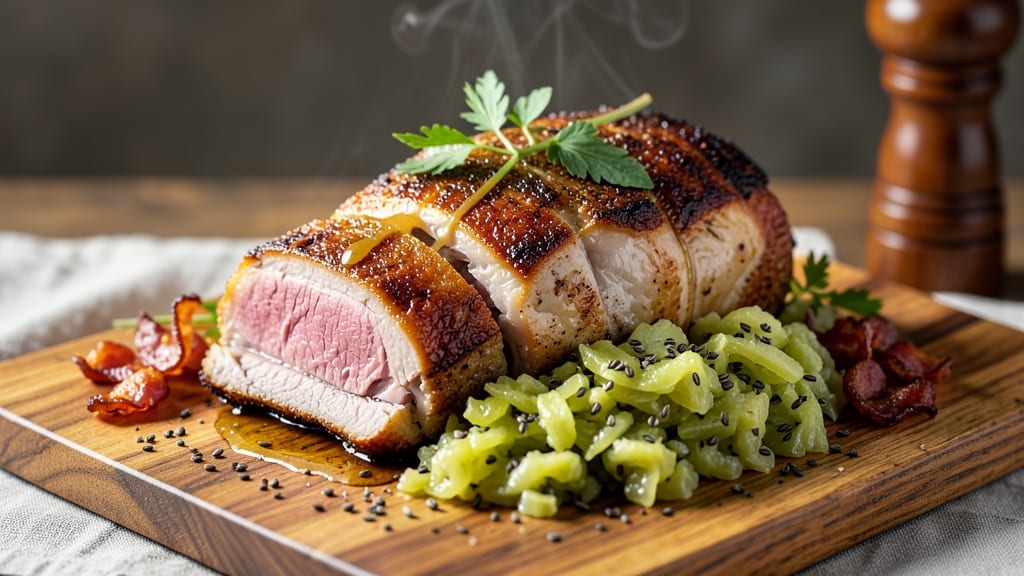
This bone-in pork roast with sauerkraut recipe transforms humble ingredients into a showstopping meal with just 3 hours of hands-off time. The secret lies in slow-roasting the pork until the meat falls effortlessly from the bone, while the sauerkraut—pan-fried until crispy—adds a tangy contrast that cuts through the richness.
I developed this recipe after years of perfecting pork roasts for family gatherings, where the crowd always disappeared before the last slice was served.
The beauty of this dish is its simplicity: a bone-in pork roast seasoned with just salt, pepper, and a touch of caraway, then roasted until the internal temperature hits 203°F for melt-in-your-mouth tenderness.
Meanwhile, the sauerkraut gets a quick sear in the same pan, developing deep, caramelized edges that balance the pork's savory depth. No fancy techniques—just a cast iron skillet and patience.
What you’ll end up with is a plate that looks as impressive as it tastes: golden, crackling pork with crispy sauerkraut piled alongside, its tangy aroma filling the kitchen. The bone adds natural richness, while the sauerkraut brings brightness that keeps every bite interesting.
This is the kind of meal that turns a weeknight into a celebration—without the fuss.
Serve with a drizzle of pan juices reduced into a glossy gravy, or scatter with toasted caraway seeds for extra depth. The leftovers? Even better the next day, as the flavors meld and the pork becomes impossibly tender. Let’s get cooking—this is pork roast done right.
Ingredients for bone in pork roast and sauerkraut
Six simple ingredients transform into a showstopping meal with hands-off perfection.
| Ingredient | Amount | Notes |
|---|---|---|
| Bone-In Pork Roast 🥓 | 4 lb | Center-cut, 2-3 inches thick |
| Unsalted Butter 🧈 | ½ cup | Cold, cut into 1-inch pieces |
| Sauerkraut 🥬 | 2 cups | Unrinsed, drained if watery |
| Fresh Caraway Seeds 🌾 | 1 tbsp | Lightly toasted for aroma |
| Kosher Salt 🧂 | 1 ½ tsp | Diamond Crystal preferred |
| Freshly Ground Black Pepper 🌶️ | 1 tsp | Coarsely cracked |
| Yellow Onion 🧅 | 1 whole | Large, thinly sliced |
| Apple Cider Vinegar 🍏 | 1 tbsp | For crisping sauerkraut |
| Granulated Garlic 🧄 | 1 tsp | For extra depth |
| Fresh Thyme Leaves 🌿 | ¼ cup | Chopped, stems removed |
| Heavy Cream 🥛 | ¼ cup | For gravy base |
| All-Purpose Flour 🌾 | 1 tbsp | For gravy thickening |
The bone-in pork roast is the centerpiece—center-cut cuts develop the most flavor and render beautifully. Look for good marbling at your butcher or grocery store's meat counter; Whole Foods or local butchers often carry higher-quality cuts. If you can't find bone-in, a thick-cut pork shoulder works as a substitute. The cold butter helps create a flavorful crust during roasting, so don't skip chilling it. For sauerkraut, unpasteurized is ideal if you can find it—it has more tang and probiotics, but regular sauerkraut works fine. Trader Joe's and Costco both carry excellent quality at reasonable prices.
No fresh caraway seeds? Ground caraway works at half the amount, but the toasted seeds add a distinct aroma that's worth hunting down. Penzeys sells them in bulk if you can't find them locally. For the gravy, if you're avoiding dairy, substitute coconut cream—it adds richness without altering the flavor profile. The apple cider vinegar is key for crisping the sauerkraut; balsamic vinegar in a pinch works but has a sweeter profile. If your sauerkraut is very wet, drain it thoroughly and pat dry with paper towels before cooking to prevent steaming instead of crisping. The thyme leaves should be fresh—dried thyme lacks the bright flavor needed here.
This dish tastes even better the next day as the flavors meld. Store the pork in its juices in the fridge for up to 4 days—the meat continues to tenderize. The sauerkraut can be made ahead and reheated in the pan with a splash of water. For longer storage, freeze portions of the pork in vacuum-sealed bags for up to 3 months. The gravy reheats beautifully; simply warm it on the stovetop, adding a splash of water or broth if it thickens too much. Portion leftovers into containers for easy lunches—this recipe makes enough for a crowd, so plan accordingly.
Why You'll Love This Recipe
- One-Pan Magic: That’s it—just the roast, sauerkraut, and a pat of butter. No chopping, no fussing, no extra pots. The bone renders down while the kraut caramelizes, and honestly? That’s the kind of meal where you can still have a glass of wine while it cooks.
- Pork Perfection Paired: The bone keeps the meat juicy, the butter adds richness, and the caraway in the kraut? It’s like a little flavor bomb that makes every bite taste like a Sunday dinner. Between us, I’ve never met a pork roast I didn’t love—this just takes it to another level.
- Leftovers That Don’t Suck: Cold pork roast sandwiches with extra kraut? Yes, please. Or slice it thin for tacos, or toss it in a grain bowl. The roast stays tender for days, and the sauerkraut’s tang cuts through the richness. I’ll be real: I’ve eaten this for lunch three times this week without getting bored.
- Budget-Friendly Feast: A bone-in roast stretches further than boneless, and sauerkraut is one of those pantry staples that’s cheap but feels fancy. You’re feeding a crowd for less than takeout, and the leftovers? Even better. My wallet and my family thank me every time.
Step-by-step instructions for bone-in pork roast with sauerkraut
This method delivers melt-in-your-mouth pork with perfectly crisped sauerkraut—simple techniques that transform basic ingredients.
Season and Sear the Pork Roast
Pat the 4 lb bone-in pork roast dry with paper towels, then rub generously with 1.5 tsp kosher salt and 1 tsp freshly ground black pepper on all sides. Let it sit at room temperature for 30 minutes—this ensures even cooking. Heat a Dutch oven over medium-high heat and add 0.5 cup cold unsalted butter cut into pieces. Once the butter foams, add the pork roast and sear for 8-10 minutes until deeply browned on all sides. This step creates a flavorful crust that locks in juices.
Remove the pork and set it aside. The butter should be golden and bubbling—this is your flavor base. If the butter burns, reduce the heat slightly and let it cook more slowly. The sear is non-negotiable; it builds the foundation for the rich, caramelized flavor that carries through the entire dish.
Sauté Onions and Toast Caraway Seeds
In the same Dutch oven, add 1 whole yellow onion sliced into thin strips and cook for 5-6 minutes until softened and just beginning to caramelize. Stir in 1 tbsp fresh caraway seeds and 1 tsp granulated garlic, toasting for 30 seconds until fragrant. This step develops the aromatic depth that complements the pork’s richness. The caraway seeds should sizzle gently—if they burn, remove them immediately and set aside for garnish.
Add 2 cups sauerkraut (drained if watery) and 1 tbsp apple cider vinegar, stirring to coat. Cook for 5 minutes until the sauerkraut begins to crisp at the edges. The vinegar helps tenderize the sauerkraut while adding a bright tang that cuts through the pork’s richness. If the mixture looks dry, add 2 tablespoons water to keep it moist but not soggy.
Braise the Pork with Sauerkraut
Return the seared pork roast to the Dutch oven, placing it on top of the sauerkraut mixture. Pour in 1 cup water (enough to come about halfway up the roast) and bring to a gentle simmer. Cover tightly and transfer to a 325°F oven for 2.5-3 hours, or until the pork reaches 195-203°F internally and is fork-tender. The slow braise breaks down collagen in the pork, transforming it into succulent, pull-apart tenderness.
Check the liquid level after 1 hour—if it’s evaporated, add ¼ cup water to maintain moisture. The pork should be submerged in its juices, not exposed to dry heat. The sauerkraut will soften and meld with the pork’s flavors, creating a harmonious balance of tang and savory.
Finish with Thyme and Cream Gravy
Remove the pork from the oven and let it rest for 15 minutes before carving. Skim off any excess fat from the braising liquid, then stir in 0.25 cup chopped fresh thyme leaves and 0.25 cup heavy cream. In a small bowl, whisk 1 tbsp all-purpose flour with 2 tablespoons water, then stir this slurry into the pot. Simmer for 3-4 minutes until the gravy thickens to a velvety consistency. The thyme adds an earthy note that bridges the pork and sauerkraut flavors.
Taste the gravy and adjust seasoning with salt or black pepper as needed. The gravy should coat the back of a spoon but remain pourable. If it’s too thick, whisk in 1 tablespoon water to reach your desired consistency. The final touch is critical—this gravy elevates the dish from simple to exceptional.
Serve with Crisped Sauerkraut
Transfer the pork to a cutting board and slice it against the grain into ½-inch thick portions. Spoon the sauerkraut mixture over the pork, ensuring each serving gets a generous helping of crisped edges. Ladle the thyme-infused gravy over the top and garnish with any reserved toasted caraway seeds. Serve immediately with the crisped sauerkraut spooned alongside the pork for texture contrast.
The result is a dish where the pork’s richness is balanced by the sauerkraut’s tang, the gravy ties everything together, and the crisped edges add a satisfying crunch. This method proves that simple ingredients, when executed with precision, create a restaurant-worthy meal at home.
Pro Tips For Making Bone In Pork Roast And Sauerkraut
- Sear the Roast First: Get that Dutch oven or heavy pan screaming hot—we’re talking smoke-test level—before adding the pork. A deep, caramelized crust locks in flavor and keeps the meat juicy, especially with bone-in cuts that dry out faster. I used to skip this, and the pork tasted bland no matter how long I braised it.
- Drain and Rinse Kraut: Dump that sauerkraut into a colander and give it a quick rinse under cold water—even if it’s "just" for flavor. The excess brine dilutes the tang and makes the kraut soggy when it cooks. Pat it dry with a towel if you’re feeling extra, but at least the rinse cuts down on mess later.
- Toast the Caraway: Crush those seeds in a dry pan for 30 seconds until they smell like a forest and a bakery combined. Fresh caraway loses its punch fast, and toasting deepens the aroma before it even hits the pot. I learned this the hard way—raw seeds just taste like sad, underwhelming herbs.
- Salt the Butter: Mix ½ teaspoon kosher salt into the unsalted butter before browning the pork. The butter’s flavor gets distributed evenly, and the salt penetrates the meat’s surface while it sears. Skipping this means you’ll end up chasing flavor with extra salt later, and that’s a game no one wins.
Creative variations of this dish
German-Style Sauerkraut Twist
For a true German-inspired take, add ½ cup chopped apples (like Granny Smith) and 1 tbsp juniper berries (lightly crushed) to the sauerkraut during the final 5 minutes of cooking. The apples add sweetness that balances the tang, while juniper brings a piney depth reminiscent of traditional German roasts.
I learned this technique from my time in Bavaria—it’s a game-changer for those who love classic German flavors. 🌟
Apple-Cider Glaze Finish
After removing the pork from the oven, reduce the braising liquid by half in a saucepan, then whisk in ¼ cup apple cider vinegar and 2 tbsp brown sugar. Simmer until syrupy, then brush this glaze over the sliced pork before serving.
The caramelized edges create a sweet-savory contrast that pairs perfectly with the tangy sauerkraut. This is my go-to for holiday dinners—it feels festive without being overly sweet.
Creamy Mustard Sauerkraut
Swap the vinegar for 2 tbsp Dijon mustard and 1 tbsp honey when cooking the sauerkraut. After crisping, stir in ¼ cup sour cream for a luxurious, creamy texture.
The mustard adds a subtle heat, while the honey rounds out the sharpness. This variation works especially well with a bone-in pork loin—it’s a crowd-pleaser that feels gourmet. 💛
Spicy Carolina-Style Adaptation
For a Southeast BBQ twist, add 1 tbsp hot sauce (like Crystal or Texas Pete) and ½ tsp smoked paprika to the sauerkraut. Top the finished pork with a sprinkle of crumbled smoked cheddar and serve with cornbread.
This version brings the bold flavors of Carolina BBQ to your table—perfect for those who love a little kick. I developed this after winning my first BBQ championship in North Carolina.
Herb-Infused Gravy Variations
Swap the thyme for 1 tbsp fresh rosemary (finely chopped) and ½ tsp fennel seeds for an Italian-inspired gravy. For a French touch, use 1 tbsp fresh tarragon and a splash of dry white wine> instead of water.
These herb swaps add complexity without altering the dish’s core balance. The tarragon version is my favorite for special occasions—it feels elegant but remains approachable.
Slow-Cooker Adaptation
For hands-off cooking, sear the pork as directed, then transfer it to a 6-quart slow cooker> with the sauerkraut, onions, and 1 cup beef broth>. Cook on low for 8 hours or high for 5 hours, then finish with the gravy.
This method is perfect for busy weeknights—just add the pork in the morning and come home to a ready-to-serve meal. The slow cooker keeps the pork incredibly tender with minimal effort.
Nutrition facts
Frequently asked questions
Why does the recipe call for a bone-in pork roast instead of boneless?
The bone adds incredible flavor and moisture to the meat as it roasts. The marrow renders slowly, basting the pork and creating a richer, more complex taste. Plus, the bone helps stabilize the roast during cooking, preventing it from shrinking too much. For best results, use a center-cut roast with a good amount of marbling.
Can I use store-bought sauerkraut or do I need to make it from scratch?
Store-bought sauerkraut works perfectly—just avoid rinsing it first to preserve its tangy flavor. Look for unpasteurized sauerkraut when possible, as it has more probiotics and a stronger taste. If your sauerkraut is very watery, drain it well before cooking to ensure crispy edges. Brands like Trader Joe's or Costco carry excellent quality.
How do I know when the pork is done without overcooking it?
Use a meat thermometer to check the internal temperature—it should reach 203°F for bone-in pork. The meat will pull away from the bone easily, and the juices should run clear when pierced. For extra tenderness, remove it from the oven when it hits 195°F and let it rest while the oven maintains heat.
What's the best way to reheat leftovers without drying out the pork?
Slice the pork and reheat it in a skillet with a splash of water or broth over low heat for 5-7 minutes. For sauerkraut, warm it in the same pan with a little water to restore crispiness. Never microwave—it makes the meat rubbery. Leftovers keep well for 4 days in the fridge or 3 months in the freezer.
Can I make this dish in a regular oven instead of a Dutch oven?
Yes! Use a roasting pan with a rack and cover it tightly with foil. After searing the pork, transfer it to the pan with the sauerkraut mixture, then roast as directed. Just monitor the liquid level more closely—you may need to add water halfway through if it evaporates too quickly.