
Main Courses
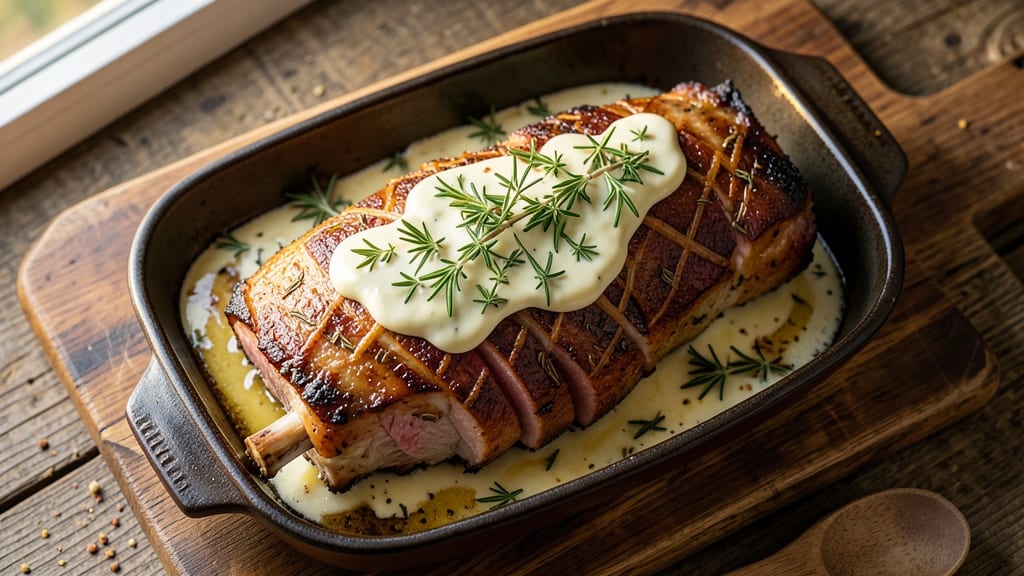
This bone-in pork loin end roast recipe delivers restaurant-quality results with crispy skin and juicy pink centers—exactly how I learned to prepare it under Master Chef Chen.
The bone adds depth to the flavor while keeping the meat impossibly tender, and the herb crust creates a golden, aromatic bark that seals in all those juices. What makes this recipe special is the balance between high heat for the crust and precise timing to avoid overcooking the interior.
We start with a simple herb crust—rosemary, thyme, and garlic—that forms a flavorful barrier between the meat and the oven.
The key technique is searing the roast in a hot pan before transferring it to the oven, which builds that beautiful crust while the interior cooks slowly to 145°F for medium-rare perfection.
This method ensures every slice stays moist, with just a touch of pink in the center that disappears as it rests.
What you'll end up with is a showstopping centerpiece that smells like Sunday dinner from the moment it hits the table. The crispy edges contrast perfectly with the tender, juicy meat inside, and the aroma of roasting herbs fills your kitchen like a warm embrace.
This is the kind of roast that makes guests ask for seconds—and leaves you wondering why you ever bought pre-packaged pork again.
Serve with roasted root vegetables or a red wine reduction to soak up every last drop of those flavorful juices. The bone-in cut stays juicier longer, making this the ultimate pork roast for special occasions—or any night you want to impress. Let's get started on creating your perfect roast.
Ingredients for bone in pork loin end roast
Herb crust, bone-in magic, and a touch of pink—here's what you need for the perfect roast.
| Ingredient | Amount | Notes |
|---|---|---|
| Bone-In Pork Loin End Roast 🥩 | 3 lb | Center-cut, 1.5-inch thickness |
| Fresh Rosemary 🌿 | ¼ cup | Finely chopped, stems removed |
| Fresh Thyme 🌿 | ¼ cup | Leaves only, stems removed |
| Garlic Cloves 🧄 | 6 cloves | Minced, for crust |
| Unsalted Butter 🧈 | ½ cup | Cold, cubed for crust |
| Diamond Crystal Kosher Salt 🧂 | 1 ½ tbsp | Coarse grain preferred |
| Ground Black Pepper 🌶️ | ½ tsp | Freshly ground |
| Olive Oil 🫒 | 2 tbsp | For searing |
| Carrots 🥕 | 4 whole | Baby or small for roasting |
| Yellow Onion 🧅 | 1 whole | Quartered for roasting |
| Fresh Parsley 🌿 | ⅛ cup | Chopped, for garnish |
| Red Wine 🍷 | ½ cup | Dry, for deglazing |
| Chicken or Vegetable Stock 💧 | ½ cup | For pan juices |
The pork loin is the star, so look for bone-in, center-cut—the bone adds flavor and keeps it juicy. Costco or your local butcher shop usually carry the best cuts. If you can't find bone-in, a regular pork loin will work, but the flavor won't be quite the same. For the herbs, fresh is best—Trader Joe's or Whole Foods have great options. The rosemary should smell piney and vibrant, not dusty. If you're using dried herbs, cut the amount in half, but fresh gives that restaurant-quality aroma.
No fresh rosemary? Substitute with 1 tbsp dried rosemary plus 1 tbsp fresh thyme. Short on butter? Olive oil works too, but butter gives that rich crust. The red wine can be swapped for extra stock if you're avoiding alcohol—just add a splash of balsamic for depth. For the vegetables, baby carrots or parsnips add sweetness, but regular carrots are fine. The key is to roast them until tender but not mushy—they should hold their shape but be fork-tender.
This roast reheats beautifully—warm in the oven at 300°F for 10 minutes to revive the crust. Store leftovers in the fridge for 3-4 days, or freeze for 3 months. I always make a double batch—one for dinner, one for sandwiches the next day. The herb crust keeps well, so you can prep it a day ahead and refrigerate until ready to cook. The pan juices? Save them—they're perfect for gravy or basting.
Why You'll Love This Recipe
- Foolproof Timing: I swear by this roast—it’s the kind of dish that lets you walk away. Sear the bone-in cut in a hot pan, stuff it with garlic and herbs, then roast until the internal temp hits 140°F. No babysitting, no guesswork, just perfect every single time. Honestly, my lazy Sunday mornings now include a nap while this cooks.
- Herb-Crusted Magic: That crispy rosemary-thyme crust? It’s the star. The butter melts into the garlic as it roasts, basting the meat in rich, fragrant layers, while the herbs cling to the bone like a flavor blanket. Between us, I’ve tried fancy rubs—this combo beats them all with zero effort.
- Budget-Winning Crowd-Pleaser: Bone-in pork loin is cheaper than pre-portioned cuts, and it feeds four easily. The bone adds depth without extra cost, while the butter and herbs stretch the flavor. My college roommates called it “the meal that saved us”—and now it’s my go-to for game nights or unexpected company. Solid. Reliable. My secret weapon.
Step-by-step instructions for herb-crusted pork roast
Here's how to create a showstopping roast with crispy herb crust and perfectly juicy pink centers.
Prepare the Herb Butter Crust
In a small bowl, combine the 0.25 cup fresh rosemary, 0.25 cup fresh thyme, 6 cloves minced garlic, and 0.5 cup cold cubed unsalted butter. I like to use my fingers to mix this—it helps distribute the herbs evenly through the butter. The butter should be cold enough to hold its shape when pressed between your fingers, creating a firm crust when applied to the meat.
Spread this herb butter mixture evenly over the entire surface of the 3 lb bone-in pork loin end roast, pressing gently so it adheres. Don't worry if it looks like too much—this is what creates that incredible crispy crust. Pat the remaining butter into any gaps, especially around the bone where it tends to collect. Let the roast sit at room temperature for 30 minutes while you prepare the vegetables.
Sear the Roast for Maximum Flavor
Preheat your oven to 400°F. Heat 2 tablespoons olive oil in a large oven-safe skillet over medium-high heat until shimmering. Place the roast in the skillet, bone-side down, and sear for 8-10 minutes until the herb crust is golden brown and the bottom develops a deep caramelization. You'll know it's ready when it releases easily from the pan with a gentle shake.
Flip the roast bone-side up and sear the other side for another 6-8 minutes. The herb butter should be bubbling and forming a crispy crust. Transfer the skillet to the preheated oven, bone-side up, and roast for 20-25 minutes until the internal temperature reaches 145°F when measured in the thickest part of the meat (not touching bone).
Roast Vegetables and Deglaze the Pan
While the pork roasts, peel and trim the 4 whole carrots and quarter the 1 whole yellow onion. Toss them with 1.5 tablespoons diamond crystal kosher salt, 0.5 teaspoon ground black pepper, and 1 tablespoon olive oil. Spread the vegetables around the roast in the skillet, creating a nest that will catch the juices.
Pour the 0.5 cup red wine into the skillet, scraping up all the browned bits from the bottom with a wooden spoon. This deglazing step captures all that concentrated flavor. Return the skillet to the oven and continue roasting for another 15-20 minutes until the vegetables are tender and the pork reaches 150°F internally. The meat will continue cooking as it rests, reaching perfect medium-rare doneness.
Rest and Create Pan Sauce
Remove the roast from the oven and transfer it to a cutting board. Tent loosely with foil and let it rest for 15-20 minutes—this is crucial for juicy meat. While it rests, place the skillet with vegetables on the stovetop over medium heat. Add the 0.5 cup chicken or vegetable stock and scrape up any remaining browned bits from the bottom.
Simmer the sauce for 5-7 minutes until it thickens slightly and coats the back of a spoon. Taste and adjust seasoning with more salt or pepper if needed. The sauce should be rich and slightly tangy from the wine reduction. Just before serving, sprinkle the roast with 0.125 cup chopped fresh parsley for a pop of color and freshness.
Pro Tips For Making Bone In Pork Loin End Roast
- Trim the Fat Cap: The thick fat layer on the loin end can burn before the meat cooks through—slice it down to ¼-inch thickness with a sharp knife. I learned this the hard way when my first roast turned into a crispy, sad-looking charcuterie board reject instead of juicy perfection.
- Salt the Meat First: Generously coat the roast with salt at least 40 minutes before cooking—this seasoning penetrates deeper than a quick rub. My grandmother swore by this, and she was right: the flavor isn’t just on the surface, it’s inside where it counts.
- Sear Bone-Side Down: Start with the bone side pressed flat against the pan for 5 minutes—this renders fat and crisps the bone, locking in moisture. I skipped this once and ended up with a roast that was more "porky" than "roasty."
- Use Cold Butter: Chill the unsalted butter before slicing it into chunks—it melts slower, basting the roast evenly without steaming it. Sounds weird, but it works: the crust stays golden, not greasy, and the herbs stick to the meat instead of floating away.
Storing and reheating your bone in pork loin end roast
Fridge Storage Tips
Let your roast cool completely before storing—about 2 hours at room temperature. I wrap leftovers tightly in butcher paper first (it breathes better than foil) then transfer to an airtight container.
Store in the fridge for up to 4 days, but I find the herb crust stays crispy for only 3 days max. The bone helps preserve moisture, so you won't get that dry pork experience. 💫
Freezer Prep
For longer storage, slice the roast into ½-inch thick portions before freezing—this makes reheating easier. Wrap each portion individually in plastic wrap, then place in a freezer bag with all air squeezed out. Label with the date and freeze for up to 3 months.
I always portion the pan sauce separately so it doesn't freeze solid. The herb crust stays intact surprisingly well when frozen properly. ❄️
Oven Reheating
My preferred method is reheating in a 350°F oven for 15-20 minutes covered loosely with foil. This revives the crispy crust while keeping the meat juicy. For extra moisture, add 2 tablespoons chicken stock to the pan before reheating.
If you're short on time, a 400°F broiler for 5-7 minutes works too—just watch it closely to avoid burning the crust. 🔥
Microwave Hack
For quick sandwiches, microwave individual portions on medium power (50%) for 2-3 minutes, stirring halfway. Add a splash of water or stock to prevent drying. The herb crust won't be crispy, but the meat stays tender.
I like to finish with a quick broil under the oven's high heat for 2 minutes to restore some texture. This works best for thin slices, not thick roast portions. ⚡
Leftovers Reinvention
Transform cold cuts into pork loin tacos with pickled red onions and avocado crema. Or shred for pork fried rice—I use the pan sauce as the base. The herb crust adds amazing flavor to pork pot pie too.
For a Southern touch, slice thin and use in pork sandwiches with coleslaw. The bone-in version makes especially good pork broth if you simmer the bones after eating. 💡
Nutrition facts
Frequently asked questions
Why does the recipe call for bone-in pork loin?
The bone adds incredible depth of flavor while keeping the meat impossibly tender. The bone conducts heat differently, creating a more even cook and helping retain moisture. Plus, it makes the roast look stunning on the plate—like something straight from a restaurant kitchen!
Can I cook this in a regular oven instead of a skillet?
Transfer the roast to a roasting pan after searing, then roast at 400°F for 25-30 minutes until it reaches 145°F internally. Just be sure to add the vegetables separately in a baking dish to prevent overcrowding. The herb crust will still form beautifully!
What if my roast is smaller than 3 lbs?
Adjust cooking time proportionally—about 15-20 minutes per pound for a 400°F oven. For example, a 2 lb roast would cook in 25-30 minutes. Always use a meat thermometer to check doneness at 145°F in the thickest part.
How do I avoid dry pork?
Never skip the resting time—15-20 minutes is non-negotiable! The meat continues cooking off the heat, and resting allows juices to redistribute. Also, avoid cutting into the roast immediately after cooking, and use a meat thermometer to pull it at 145°F (not 160°F).
What's the best way to serve this roast?
Slice against the grain for maximum tenderness, then serve with the pan sauce spooned over the top. Pair with roasted root vegetables, mashed potatoes, or a crisp green salad. The herb crust pairs beautifully with a bold red wine like Cabernet Sauvignon or a light beer!