
Main Courses
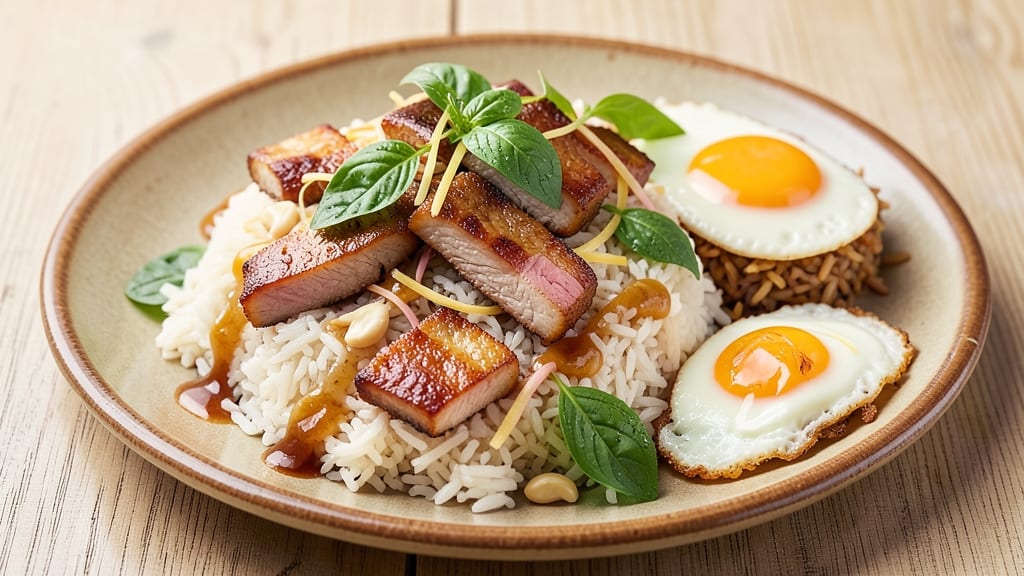
This basil pork fried rice recipe transforms simple ingredients into a fragrant, herb-packed dinner that’s ready in under 30 minutes. The secret lies in perfectly seared pork strips infused with garlic and ginger, tossed with day-old rice and fresh basil that brightens every bite.
I developed this version after craving a dish that balanced rich pork flavors with the fresh, slightly peppery notes of basil—something hearty yet light enough for weeknight meals.
The process starts with stir-frying the pork until golden and tender, then setting it aside while you sauté aromatics and cook the rice in the same pan. This one-pan method cuts cleanup while building layers of flavor—savory pork, nutty rice, and the vibrant aroma of basil.
The key is using day-old rice (or chilled freshly cooked rice) to prevent mushiness, and adding basil at the very end to preserve its freshness and bright green color.
What you’ll end up with is a dish that’s restaurant-quality at home: crisp edges on the pork, fluffy yet slightly sticky rice, and basil leaves that release their aroma with every forkful.
The balance of textures—tender pork, chewy rice, and fresh herbs—makes this a complete meal that’s equally satisfying as a weeknight dinner or a weekend lunch with friends.
For extra depth, consider adding a drizzle of soy-ginger sauce or a sprinkle of sesame seeds before serving. This recipe scales effortlessly for larger groups, and leftovers reheat beautifully. Let’s get cooking!
Ingredients for basil pork rice
Fresh basil, tender pork, and day-old rice—here's what makes this fragrant one-pan dinner shine.
| Ingredient | Amount | Notes |
|---|---|---|
| Day-Old Cooked White Rice 🍚 | 4 cups | Cold or chilled for texture |
| Boneless Pork Shoulder 🥩 | 1 lb | Cut into 1/2-inch strips |
| Fresh Basil Leaves 🌿 | ½ cup | Packed, stems removed |
| Garlic Cloves 🧄 | 6 cloves | Minced for aromatics |
| Fresh Ginger 🌿 | 1 tbsp | Grated, finely chopped |
| Large Eggs 🥚 | 2 whole | Beaten for stir-fry |
| Soy Sauce 🍶 | 3 tbsp | Light or all-purpose |
| Sesame Oil 🫒 | 1 tbsp | For aroma, not cooking |
| Vegetable Oil 🫒 | 2 tbsp | High smoke point |
| Green Onions 🧅 | 3 whole | Thinly sliced, white/light green |
| Salt 🧂 | ½ tsp | Adjust to taste |
| White Pepper 🌶️ | ¼ tsp | Freshly ground |
| Sesame Seeds 🌰 | 1 tbsp | Toasted for garnish |
The pork should be thinly sliced against the grain for tenderness. Ask your butcher to cut it if you're unsure, or freeze it 20 minutes before slicing for easier work. Fresh basil is non-negotiable here—look for vibrant green leaves at the market or grocery store's produce section. The day-old rice is crucial; it should be completely cold before adding to the pan. For extra flavor, use jasmine rice if you can find it. If you're short on time, cook fresh rice and let it chill in the fridge for 30 minutes before using.
No fresh basil? Dried basil at half the amount works in a pinch, though it won't have the same bright flavor. Swap pork shoulder for lean pork tenderloin or chicken thigh if preferred—just reduce cooking time slightly. The sesame oil adds incredible aroma but shouldn't be used for cooking; add it at the very end. For a vegetarian version, replace pork with extra-firm tofu pressed and cubed. The green onions can be subbed with regular onions if needed, though they add a milder, fresher note. Always taste before serving—adjust salt and soy sauce to balance flavors.
Store leftovers in an airtight container for up to 3 days in the fridge. Reheat gently in a pan with a splash of water to restore moisture. This dish freezes beautifully for up to 3 months—portion into single servings first. For best texture, reheat frozen portions in a skillet over medium heat rather than microwaving. The basil wilts when reheated, so always add fresh leaves after warming. Make a double batch; it reheats even better the next day as flavors meld.
Why You'll Love This Recipe
- Uses Day-Old Rice: I swear by this trick—day-old rice absorbs the pork juices like a sponge, turning it into a fragrant, sticky mess that’s way better than fresh rice. No soggy disasters here.
- Pork Gets Tender Magic: That boneless shoulder? It practically melts into shreds while the garlic and ginger sizzle, giving you that perfect balance of chewy edges and buttery pull. (Yes, even on a Tuesday night.)
- Herb-Packed Punch: Fresh basil leaves tossed in at the end? That’s the secret weapon—bright, peppery, and impossible to resist. It cuts through the richness like a cool breeze.
- Budget Meal Stretch: A pound of pork shoulder feeds four, and leftovers reheat like a dream. Honestly, this is my go-to when I need to make dinner stretch without breaking the bank.
Step-by-step instructions for basil pork fried rice
Here's how to transform simple ingredients into a fragrant, herb-packed one-pan dinner with perfect texture every time.
Prep and Cook the Pork Shoulder
Cut the 1 lb boneless pork shoulder into ½-inch strips using a sharp knife. This size ensures even cooking and tender bites. Heat 2 tablespoons vegetable oil in a large skillet or wok over medium-high heat until shimmering. Add the pork strips in a single layer and cook undisturbed for 3-4 minutes until they develop a golden crust.
Stir the pork occasionally to prevent sticking, but resist the urge to move it constantly—this lets the meat brown properly. Once the pork is golden brown and cooked through (internal temperature 160°F), remove it from the skillet and set aside. The rendered pork fat will become the flavor base for your fried rice, so don't wipe out the pan.
Stir-Fry Aromatics and Cook the Eggs
In the same skillet, add 6 cloves minced garlic and 1 tablespoon finely chopped fresh ginger over medium heat. Cook for 30 seconds until fragrant—you should smell that bright, zesty aroma. Add 3 tablespoons soy sauce, 0.5 teaspoon salt, and 0.25 teaspoon white pepper, stirring to combine. This seasoning mixture will infuse the entire dish with deep umami flavor.
Push the aromatics to one side of the skillet and pour the 2 whole beaten eggs into the empty space. Let them cook undisturbed for 15-20 seconds until the edges just begin to set. Then gently scramble with a spatula until just set—soft curds are ideal, not fully cooked. Remove the eggs from the skillet and set aside with the pork.
Combine Rice and Herbs
Add the 4 cups day-old cooked white rice to the skillet, breaking up any clumps with your spatula. Stir-fry for 2-3 minutes over medium heat, allowing the rice to absorb the pork fat and aromatics. The rice should look dry and slightly toasted—this prevents mushiness. Add 1 tablespoon sesame oil and stir to distribute evenly.
Now add the 0.5 cup packed fresh basil leaves and 3 whole thinly sliced green onions. Stir-fry for another 1-2 minutes until the basil wilts slightly and the green onions soften. The basil should release its bright, fresh aroma—this is when you know the flavors are melding perfectly. If the mixture looks dry, add 1-2 tablespoons water to help steam the herbs.
Finish and Garnish
Return the pork and eggs to the skillet, tossing everything together gently. Cook for 1-2 minutes until everything is heated through and well combined. Taste and adjust seasoning—you may need an additional ½ teaspoon soy sauce or salt to balance flavors. The rice should be hot, fragrant, and slightly sticky from the pork fat and sesame oil.
Transfer the fried rice to serving plates and garnish immediately with 1 tablespoon toasted sesame seeds. The sesame seeds add a nutty crunch that contrasts beautifully with the soft rice. Serve while hot, with extra sliced green onions on the side if desired. Each bite should deliver a perfect balance of tender pork, creamy eggs, aromatic herbs, and savory soy sauce.
Pro Tips For Making Basil Pork Rice
- CRISP THE PORK FIRST: Thinly slice the pork shoulder before cooking it—no thicker than ¼-inch. I learned this the hard way: thick slices stay chewy even after braising. If you’re short on time, freeze the sliced pork for 20 minutes first; it’ll hold its shape better when searing.
- USE COLD RICE: Day-old rice isn’t just a suggestion—it’s non-negotiable. Fresh rice turns mushy when reheated, and this dish relies on its texture. Spread leftover rice on a tray to dry out overnight, or chill it in the fridge for 4+ hours. Trust me, the difference is night and day.
- GINGER-GARLIC PASTE MATTERS: Skip the minced garlic and ginger—make a paste with 3 cloves garlic and 1-inch ginger, blended with 1 tablespoon water. It cooks faster, sticks better, and adds depth without burning. (Yes, even if you’re impatient like me.)
- STIR IN BASIL LATE: Toss the basil leaves in at the very end, right when you mix the pork and rice. Cooking them too long turns them bitter, and you want that bright, fresh flavor to shine. A handful of whole leaves looks pretty too—no need to chop unless you’re feeling fancy.
Regional styles of this recipe
Thai-Inspired Basil Pork
In Thailand, this dish becomes pad kra pao neua with a Thai twist—swap fresh basil for Thai basil (horapa) and add red curry paste or fish sauce for depth.
I like using 1 tbsp red curry paste sautéed with the aromatics, plus 1 tsp fish sauce for that signature umami kick. Garnish with crushed peanuts and lime wedges for authentic flair. 🌶️
Italian Risotto Twist
For an Italian-inspired version, replace rice with arborio rice and cook it risotto-style with 2 cups chicken broth added gradually. Stir in ½ cup grated Parmesan and 1 tbsp butter at the end, then fold in the pork and ¼ cup chopped sun-dried tomatoes.
Finish with fresh basil and a sprinkle of Pecorino Romano. This version feels luxurious yet stays true to the herb-packed concept. 🍷
Vietnamese Caramelized Style
Vietnamese home cooks often caramelize the pork first with 1 tbsp brown sugar and 1 tsp fish sauce before stir-frying. Use jasmine rice and add shredded lemongrass to the aromatics.
After cooking, drizzle with a hoisin sauce reduction made from 1 tbsp hoisin sauce + 1 tsp water simmered for 2 minutes. The sweet-savory balance is addictive. 🥢
Korean Kimchi Fried Rice
For a Korean-inspired take, add ½ cup chopped kimchi and 1 tsp gochujang (Korean chili paste) to the rice while stir-frying. Use gochugaru (Korean chili flakes) instead of white pepper, and top with fried egg and sesame seeds.
The tangy, spicy kimchi cuts through the richness of the pork beautifully. 🌶️
Japanese Teriyaki Fusion
In Japan, you might see this as teriyaki pork fried rice with a glossy glaze. After cooking the pork, set aside ¼ cup and mix the rest with 2 tbsp soy sauce, 1 tbsp mirin, and 1 tsp sugar to make a quick teriyaki sauce.
Toss the rice in this sauce before adding the pork back in. Garnish with shredded nori and extra sesame seeds for an umami boost. 🍣
Spicy Cajun Creole
Bring it to Louisiana with a Cajun kick! Add 1 tsp Cajun seasoning and ½ tsp smoked paprika to the pork while browning. Use long-grain white rice and stir in 1 tbsp Creole mustard with the soy sauce.
Top with green onions and a dash of hot sauce for serving. The smoky, spicy notes pair surprisingly well with basil’s brightness. 🌶️
Nutrition facts
Frequently asked questions
Why does the recipe call for day-old rice instead of fresh?
Day-old rice is crucial because it's drier and firmer than fresh rice, preventing mushiness when stir-fried. Freshly cooked rice releases too much moisture, turning your fried rice into a soggy mess. If you only have fresh rice, spread it on a tray and chill in the fridge for 30 minutes before using. This mimics the texture of day-old rice perfectly!
Can I substitute pork with chicken or tofu?
For chicken, use 1 lb boneless thigh meat (darker meat stays juicier) and reduce cooking time to 2-3 minutes per side. For tofu, press 1 block extra-firm tofu for 20 minutes, cube it, and pan-fry until golden before adding to the rice. Both work beautifully—they just need slightly different cooking approaches to maintain texture.
What if my basil wilts completely before the rice is done?
Add the basil just before serving if needed—it wilts quickly but releases its aroma even when wilted. For extra freshness, stir in 1 tbsp chopped basil at the end and reserve 2 tbsp whole leaves to garnish on top. This keeps the vibrant color and bright flavor in every bite while still letting you finish cooking the rice properly.
How do I make this dish spicier? Add ½ teaspoon red pepper flakes when sautéing the aromatics, or stir in 1 teaspoon sriracha with the soy sauce. For heat lovers, include 1 tbsp chopped Thai chilies with the basil.
Can I make this ahead of time?
Yes! Cook the pork and rice separately, then store them in airtight containers in the fridge for up to 3 days. When ready to serve, reheat the pork and rice separately over medium heat with a splash of water, then combine and add fresh basil at the end. The flavors actually improve overnight as everything melds together—just add fresh herbs before serving.