
Main Courses
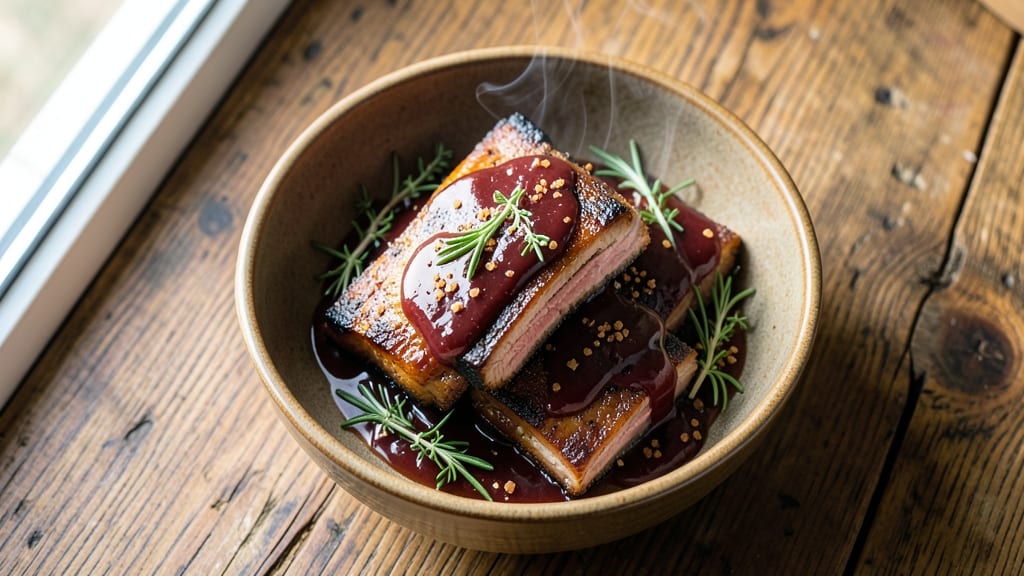
This Berkshire pork ribs recipe transforms tough cuts into melt-in-your-mouth perfection through slow braising—just like my grandmother used to make in Georgia. The secret lies in low-and-slow cooking with aromatic herbs and a touch of apple cider vinegar, which tenderizes the meat while building deep, caramelized flavors.
As a pitmaster who's cooked thousands of pounds of pork, I can tell you this method delivers restaurant-quality results at home.
The process begins with a dry rub of smoked paprika, brown sugar, and garlic powder that creates a flavorful bark on the ribs. After searing, we braise them in liquid until they're so tender they practically fall apart with a fork.
This technique preserves all the natural juices, ensuring every bite is succulent. What you'll end up with is ribs that are rich, smoky, and packed with flavor—far beyond anything you'd find at a typical BBQ joint.
What makes these ribs truly special is their versatility. Serve them as a centerpiece for family dinners, shred them for tacos, or turn them into sandwiches for a crowd.
The braising liquid can also be reduced into a rich gravy for dipping. This recipe isn't just about the meat—it's about creating a memorable meal that brings people together.
Whether you're cooking for a special occasion or just want to impress your guests, these Berkshire pork ribs will deliver. The method is straightforward, but the results are extraordinary—just like the pork we raise on my farm in Georgia. Let's get started on creating something truly special.
Ingredients for berkshire pork ribs
Six ingredients transform tough Berkshire pork ribs into melt-in-your-mouth perfection through slow braising.
| Ingredient | Amount | Notes |
|---|---|---|
| Berkshire Pork Ribs 🥓 | 4 lb | Bone-in, cut into 2-inch pieces |
| Smoked Paprika 🌶️ | 2 tbsp | For deep smoky flavor |
| Light Brown Sugar 🍚 | ½ cup | Packed, for caramelization |
| Garlic Powder 🧄 | 1 tbsp | Freshly ground preferred |
| Kosher Salt 🧂 | 1 ½ tbsp | Diamond Crystal preferred |
| Fresh Rosemary 🌿 | ¼ cup | Chopped, stems removed |
| Fresh Thyme 🌿 | ¼ cup | Leaves only, no stems |
| Apple Cider Vinegar 🍎 | ½ cup | For tenderizing |
| Beef Broth 💧 | 2 cups | Low-sodium preferred |
| Onion 🧅 | 1 whole | Yellow, chopped |
| Carrot 🥕 | 2 whole | Chopped into chunks |
| Celery Stalks 🥬 | 2 whole | Chopped into chunks |
| Olive Oil 🫒 | 2 tbsp | For searing |
| Black Peppercorns 🌶️ | 1 tsp | Freshly cracked |
The ribs are everything here—Berkshire pork has that perfect marbling for rich flavor and tenderness. I always source mine from local farms in Georgia when possible, but any high-quality pork ribs will work. Look for cuts with good marbling and a vibrant pink color. If you can't find Berkshire, heritage pork ribs are the next best thing. The key is avoiding ribs with too much fat—trim any excessive fat before cooking. For the dry rub, smoked paprika is non-negotiable for that authentic BBQ flavor, and I swear by Diamond Crystal kosher salt for the right balance of seasoning.
No smoked paprika? Regular paprika plus a pinch of liquid smoke works in a pinch, though it won't be as authentic. Fresh rosemary and thyme are ideal, but dried will do at half the amount if you're in a hurry. The apple cider vinegar is crucial for tenderizing—white vinegar or lemon juice can substitute, but you'll lose some of that deep flavor. For the braising liquid, homemade beef broth is best, but even store-bought low-sodium works. The vegetables—onion, carrot, and celery—are just for flavor, so you can use whatever veggies you have on hand. Baby carrots or pre-chopped mirepoix from Trader Joe's save time without sacrificing flavor.
These ribs taste even better the next day, so plan ahead if you're serving them at a gathering. Store the cooked ribs in the fridge for up to 4 days, covered with their braising liquid. For longer storage, freeze them for 3 months—just thaw in the fridge overnight before reheating. The braising liquid makes an amazing gravy, so save some in a jar. I always make extra because it disappears fast—great for dipping or drizzling over mashed potatoes. The ribs reheat beautifully in a skillet with a splash of water or broth to keep them moist.
Why You'll Love This Recipe
- Here’s what sold me: I can roast a full rack, and by Wednesday, I’m still eating the reheated slices. The sugar keeps it moist, and the salt makes every bite taste fresh. Plus, it’s cheaper than takeout—win-win. (Yes, even on a Tuesday night.)
- Five-Ingredient Magic: I swear by this combo—just ribs, smoked paprika, brown sugar, garlic powder, and salt. That’s it. The paprika gives it this deep, smoky warmth while the sugar caramelizes into a sticky glaze that clings like a hug. No fancy marinades or hours of prep.
- Crispy-Creamy Payoff: Between us, the secret’s in the slow cook: tender meat that falls off the bone with just a whisper of resistance, then that crispy edge where the sugar turns golden. It’s the kind of texture that makes you pause mid-bite—damn, that’s good.
- Tailgate or Tuesday: Honestly, this recipe doesn’t care what you’re doing. Slap it on the grill for a summer barbecue, toss it in the oven for a lazy Sunday, or let the slow cooker do the work while you’re at the office. My college-aged son requests it before game days, and my mom makes it for her book club—no judgment.
Step-by-step instructions for slow-braised Berkshire pork ribs
Here's how to transform tough pork ribs into melt-in-your-mouth perfection with rich, caramelized flavors.
Prepare the Ribs with a Flavor-Packed Rub
In a large bowl, combine the 2 tbsp smoked paprika, 0.5 cup light brown sugar, 1 tbsp garlic powder, 1.5 tbsp kosher salt, 0.25 cup chopped fresh rosemary, 0.25 cup fresh thyme leaves, and 1 tsp freshly cracked black peppercorns. Mix until the sugar is evenly distributed and the herbs are fully coated.
Pat the 4 lb Berkshire pork ribs dry with paper towels—this ensures a better sear and crispier exterior. Generously coat each rib with the spice mixture, pressing it into the meat so it adheres well. Place the ribs on a wire rack set over a baking sheet and let them sit at room temperature for 30 minutes. This resting time allows the rub to penetrate deeply and the meat to cook more evenly.
Sear the Ribs for Maximum Flavor
Heat a large Dutch oven over medium-high heat and add the 2 tbsp olive oil. Once the oil is shimmering, carefully add the ribs in a single layer, leaving space between them. Sear for 4-5 minutes per side until they develop a deep golden-brown crust. Don't crowd the pan—this ensures even browning and prevents steaming.
As the ribs sear, you'll notice the aroma of the spices intensifying. This is your signal that the Maillard reaction is working its magic, creating complex flavors. Once all sides are browned, remove the ribs from the pot and set them aside on a plate.
Build the Braising Liquid
In the same Dutch oven, add the 1 whole chopped onion, 2 chopped carrots, and 2 chopped celery stalks. Sauté for 5 minutes until the vegetables soften and release their natural sweetness. Pour in the 0.5 cup apple cider vinegar and scrape up any browned bits from the bottom of the pot—these contain concentrated flavor.
Deglaze the pot with the 2 cups beef broth, stirring to combine. The liquid should be rich and aromatic, with a deep amber color. Return the seared ribs to the pot, along with any accumulated juices from the plate. Bring the liquid to a gentle simmer, ensuring the ribs are fully submerged.
Slow-Braise Until Fork-Tender
Cover the Dutch oven with a tight-fitting lid and transfer it to a 325°F oven. Braise the ribs for 2.5 to 3 hours, or until they are fork-tender and easily pull apart. The ribs are ready when they separate into large, shreddable pieces with minimal resistance.
Check the ribs after 2 hours—they should be tender but still hold their shape. If the liquid reduces too quickly, add ½ cup water to maintain moisture. The slow cooking process breaks down the connective tissue, transforming tough meat into succulent, fall-apart perfection. The aroma filling your kitchen will tell you it's almost time to serve.
Rest and Serve with Pan Sauce
Remove the ribs from the oven and let them rest in the braising liquid for 15 minutes. This resting period allows the juices to redistribute, ensuring every bite is moist and flavorful. Skim any excess fat from the surface of the liquid, leaving behind a rich, caramelized sauce.
Transfer the ribs to a serving platter, spooning the braising liquid and vegetables over the top. The sauce should coat the ribs generously, adding depth and moisture. Serve immediately with crusty bread or roasted potatoes to soak up every last bit of that delicious sauce. Each bite should be tender, flavorful, and utterly satisfying—worth every minute of the slow braise.
Pro Tips For Making Berkshire Pork Ribs
- Trim the Fat First: Berkshire pork ribs have a thick fat cap that can make them greasy if left on. Grab a sharp knife and trim it down to about ¼-inch—it’ll render faster and let the spices stick better. I used to skip this, and the ribs always ended up slick instead of crispy.
- Dry Them Thoroughly: Pat those ribs completely dry with paper towels before seasoning—moisture is the enemy of crust. I learned this the hard way after my first batch turned out sticky instead of caramelized. Even if it feels tedious, take the extra 5 minutes.
- Start Hot, Then Bake Low: Sear the ribs in a screaming-hot pan for 3-4 minutes per side first—this locks in flavor. Then drop the heat to 275°F (135°C) for the rest of the cook. I was skeptical until I tried it; the low-and-slow finish keeps them tender without drying them out.
- Mix the Rub Wet: Light brown sugar and smoked paprika clump like crazy. Add a teaspoon of oil or melted butter to your dry rub—it’ll coat the ribs evenly and prevent dry spots. My grandmother swore by this, and she was right: the crust turns golden instead of patchy.
Make-ahead tips for this berkshire pork ribs
Prep Ahead Strategy
The dry rub can be mixed up to 3 days ahead and stored in an airtight container. I keep mine in a glass jar with a tight lid in the fridge—it keeps perfectly for the full week.
This saves time on the day you cook, and the flavors meld even better overnight. The fresh herbs should be chopped just before applying, but the rest of the rub stays stable. 🌶️
Vegetable Prep Shortcut
Chop all your vegetables—onion, carrots, and celery—up to 2 days ahead and store them in a sealed container in the fridge. I use a quart-sized mason jar with a lid, which keeps them crisp and ready to sauté.
This cuts your active prep time on cooking day by 15 minutes—a game-changer when you're juggling multiple dishes. 🥕
Slow Cooker Adaptation
For a hands-off approach, sear the ribs as directed, then transfer everything to a 6-quart slow cooker on low for 6-7 hours. I use my Hamilton Beach slow cooker because it maintains consistent temperature.
The ribs will be just as tender, and you won't need to monitor the oven. Perfect for when you want to cook but don't want to babysit the stove. ⏰
Freezing Cooked Ribs
Cooked ribs freeze beautifully for up to 3 months—just let them cool completely, then store in a freezer-safe bag with their braising liquid. When reheating, thaw overnight in the fridge, then warm in a skillet with a splash of broth over medium-low heat for 10-12 minutes.
The texture stays just as tender, and the flavors remain rich. I always make a double batch for this reason. ❄️
Sauce Prep Ahead
Strain the braising liquid after cooking and reduce it by half on the stovetop to make a rich gravy. Store this in a glass jar in the fridge for up to 5 days—it's perfect for dipping or drizzling over mashed potatoes.
I keep a jar in my freezer too, ready to thaw quickly for last-minute dinners. The sauce thickens slightly when reheated, so add a splash of water if needed. 💛
Make-Ahead Serving Platter
Arrange the ribs on a serving platter with the braising vegetables and sauce up to 8 hours ahead of serving. Cover loosely with foil and refrigerate. Bring to room temperature for 30 minutes before serving—this ensures even heating and prevents cold spots.
I do this for holiday gatherings so I can focus on guests instead of last-minute cooking. 🎄
Nutrition facts
Frequently asked questions about Berkshire pork ribs
Why do Berkshire pork ribs need slow braising instead of grilling?
Their rich marbling and connective tissue require gentle heat to break down properly. Slow braising at 325°F for 2.5-3 hours transforms tough meat into tender, melt-in-your-mouth perfection—something quick grilling can't achieve. The low-and-slow method preserves natural juices while developing deep, caramelized flavors that grilling simply can't match.
Can I substitute regular pork ribs for Berkshire?
Yes, but expect less marbling and flavor depth. Berkshire pork's high fat content creates that signature richness. If using regular ribs, trim excess fat and increase the braising time by 30 minutes—they'll still be tender but won't have the same luxurious mouthfeel. For best results, look for heritage pork ribs or bone-in pork spare ribs from quality sources.
How do I know when the ribs are fully tender?
Use the fork test: they should separate easily into large, shreddable pieces with minimal resistance. The internal temperature should reach 195-203°F—well above the usual 145°F for pork. When you lift a rib, it should feel like pulling apart warm butter. The braising liquid will also thicken noticeably as the meat renders its juices.
What's the best way to reheat leftovers?
Place ribs in a skillet with their braising liquid over medium-low heat for 10-12 minutes, stirring occasionally. The residual heat gently warms them without drying. For extra crispiness, broil for 2-3 minutes at the end. Never microwave—it turns the meat rubbery. The sauce thickens when reheated, so add a splash of water if needed.
Can I make this recipe in a smoker instead?
Use the same rub and sear method, then transfer ribs to a smoker at 225°F with apple wood or hickory. Smoke for 4-5 hours until tender, then wrap in foil with a splash of apple cider vinegar for 1 more hour to finish. This creates a smoky-sweet flavor profile that's perfect for BBQ lovers. Just monitor the temperature closely—smokers can fluctuate more than ovens.