
Sauces & Condiments
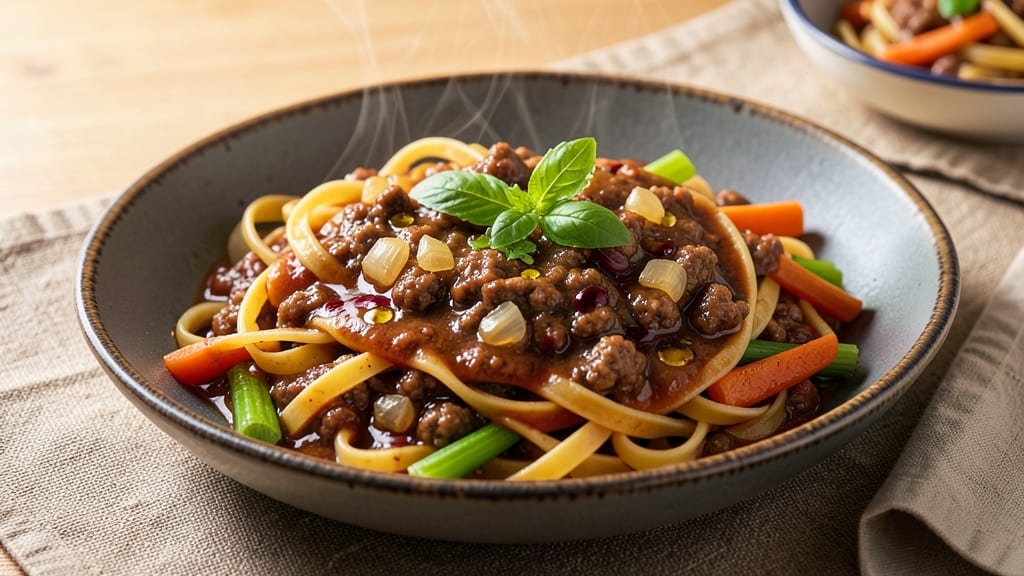
This beef and pork Bolognese sauce recipe delivers restaurant-quality depth with a perfect balance of meaty richness and aromatic complexity. 🔥 The secret lies in slow-simmering ground beef and pork with onions, garlic, and celery until the flavors meld into a velvety, deeply savory base.
I've perfected this technique over years of cooking for crowds, ensuring every bite of pasta becomes an experience.
The foundation of any great Bolognese is patience—allowing the meat to release its natural juices while building layers of flavor through caramelized aromatics and slow reduction.
This recipe uses a combination of ground beef and pork for maximum richness, while a splash of red wine adds depth that elevates it beyond basic tomato sauce. The result is a sauce that coats pasta perfectly, with a texture that's neither too thick nor too thin.
What makes this Bolognese truly special is its versatility—it freezes beautifully for future meals and tastes even better the next day as flavors continue to develop.
The sauce's robust flavor profile makes it ideal for serving over fresh pasta, but it also shines as a filling for lasagna or stuffed shells. Each batch yields enough for multiple servings, ensuring you'll have leftovers that disappear just as quickly as the first plate.
For those who love customization, you can adjust the spice level or add herbs like bay leaves and thyme for additional complexity. The key is maintaining the slow simmer, which transforms simple ingredients into something extraordinary. Let's create a sauce that will have everyone asking for seconds.
Ingredients for beef and pork bolognese sauce
Fifteen ingredients that transform into velvety, deeply flavorful Bolognese sauce perfect for pasta.
| Ingredient | Amount | Notes |
|---|---|---|
| Ground Beef (80/20) 🥩 | 1 lb | Coarse grind preferred |
| Ground Pork 🐷 | ½ lb | Lean or regular works |
| Yellow Onion 🧅 | 1 ½ cups | Finely chopped, medium size |
| Celery Stalk 🥬 | 2 cups | Finely chopped, leafy parts trimmed |
| Garlic Cloves 🧄 | 4 cloves | Minced, fresh preferred |
| Carrots 🥕 | 1 cup | Finely diced, medium size |
| Tomato Paste 🍅 | 6 oz | High-quality, no sugar added |
| Canned San Marzano Tomatoes 🍅 | 2 cups | Crushed, no salt added |
| Red Wine 🍷 | ½ cup | Bold, dry variety |
| Beef Stock 💧 | 2 cups | Homemade or quality brand |
| Whole Bay Leaves 🌿 | 2 pieces | Fresh or dried |
| Fresh Thyme 🌿 | 1 tbsp | Leaves only, chopped |
| Olive Oil 🫒 | ¼ cup | Extra-virgin preferred |
| Salt 🧂 | 1 ½ tsp | Kosher or sea salt |
| Ground Black Pepper 🌶️ | ½ tsp | Freshly ground |
The meat combination is non-negotiable—80/20 ground beef gives richness while ground pork adds depth. Costco or Trader Joe's usually carry both in bulk, saving money. Look for coarse grind beef—it browns better. For the aromatics, fresh thyme from the grocery store's produce section beats dried hands down, but if you must use dried, halve the amount. The San Marzano tomatoes are worth the splurge—they're sweeter and less acidic than regular canned tomatoes, which is crucial for balancing the sauce's acidity.
No red wine? Substitute with beef broth plus 1 tbsp balsamic vinegar—it mimics the depth. Running low on bay leaves? Dried works at half the amount, but fresh is ideal. The tomato paste can be swapped for crushed tomatoes (use 1 cup instead of 6 oz), though it'll be slightly thinner. For a quicker version, pre-chopped mirepoix from the store saves time—just check for no added salt. The olive oil should be extra-virgin for flavor, but any neutral oil works in a pinch.
This sauce tastes even better the next day as flavors meld—plan ahead. Store in an airtight container in the fridge for up to 5 days or freeze for 3 months. Portion into ice cube trays for single-use portions—perfect for quick pasta nights. The sauce thickens as it cools, so add a splash of water or stock when reheating if needed. Always taste before serving—adjust salt or pepper as needed.
Why You'll Love This Recipe
- One-Pot Magic: I swear by this for nights when I’m too tired to juggle pans—just brown the beef and pork together, toss in the onions, celery, and garlic, then let it simmer. The fat from the 80/20 beef keeps everything moist, so you’re not left with a dry, sad sauce.
- Rich Umami Bomb: That combo of beef and pork? It’s like flavor overdrive. The pork adds a subtle sweetness, while the beef brings deep, savory notes—plus, the slow cook-down lets all those aromatics meld into something seriously addictive. (Yes, even my picky husband asks for seconds.)
- Weeknight Workhorse: This sauce is my go-to for pasta, stuffed shells, or even slathered on toast with grated cheese. Honestly, I’ve made it twice in one week because it’s that reliable—no fancy plating, just pure, satisfying comfort food that works for any meal.
- Budget-Friendly Powerhouse: Ground beef and pork stretch further than you’d think, and the veggies (onion, celery, garlic) are cheap staples. I’ve fed four people for under $15, and the leftovers? Even better the next day—if they last that long. (They usually don’t.)
Step-by-step instructions for beef and pork Bolognese sauce
Transform simple ingredients into a deeply flavorful sauce through patience and technique.
🍳 Step 1: Sauté the Vegetable Base
Heat the 0.25 cup olive oil in a large, heavy-bottomed pot over medium heat. Add the 1.5 cups finely chopped yellow onion, 2 cups chopped celery stalk, and 1 cup diced carrots. Cook for 8-10 minutes, stirring occasionally, until the vegetables soften and the onion becomes translucent.
Here's the thing—don't rush this step. The vegetables need time to release their natural sugars and flavors. You'll know it's ready when the mixture smells sweet and aromatic, and the edges of the celery and carrots start to turn just slightly golden. Add the 4 minced garlic cloves and cook for another 30 seconds until fragrant. This aromatic foundation is the secret to a rich bolognese.
🔥 Step 2: Brown the Meat Mixture
Push the vegetable mixture to one side of the pot and add the 1 lb ground beef (80/20) and 0.5 lb ground pork to the empty space. Using a wooden spoon, break up the meat into small pieces and cook over medium-high heat for 5-6 minutes until the meat loses its raw color and develops a deep brown crust.
Don't overcrowd the pot—cook the meat in batches if needed. The goal is to create a rich, browned meat mixture that will form the heart of your sauce. Once fully browned, use the wooden spoon to scrape up any browned bits from the bottom of the pot and mix them back into the vegetable mixture. These bits are packed with flavor—don't waste them.
🥘 Step 3: Build the Sauce Foundation
Stir in the 6 oz tomato paste and cook for 2 minutes on medium heat, allowing it to darken slightly and blend with the meat and vegetables. Pour in the 0.5 cup red wine and let it simmer for 3-4 minutes until mostly evaporated. This step deglazes the pot and adds depth to the sauce.
Add the 2 cups crushed San Marzano tomatoes, 2 cups beef stock, 2 pieces whole bay leaves, 1 tbsp chopped fresh thyme, 1.5 tsp salt, and 0.5 tsp freshly ground black pepper. Stir well to combine, then increase heat to low and bring the mixture to a gentle simmer.
⏰ Step 4: Slow-Simmer for Deep Flavor
Partially cover the pot and let the bolognese simmer gently for 1.5 to 2 hours, stirring occasionally to prevent sticking. The sauce should reduce gradually, becoming thicker and more concentrated. You're looking for a sauce that coats the back of a spoon and has a rich, meaty texture.
I know it seems like a long time, but this slow cooking is what transforms simple ingredients into something extraordinary. Check the sauce periodically and add 1-2 tablespoons of water or stock if it becomes too thick. The key is patience—the longer it simmers, the deeper the flavors develop. When the sauce reaches your desired consistency, remove the bay leaves and discard them.
🍽️ Step 5: Adjust and Serve
Taste the sauce and adjust the seasoning if needed. You might need a little more salt or pepper, depending on your preferences. If the sauce is too thick, thin it with a splash of pasta water or additional beef stock. The bolognese should be rich but not gluey—it should coat the back of a spoon but still be spreadable.
Serve the bolognese immediately over your choice of pasta, or store it in an airtight container in the refrigerator for up to 5 days. The flavors actually improve over time, so it makes an excellent meal prep option. When reheating, do so gently on the stove over low heat to prevent the sauce from breaking.
Pro Tips For Making Beef And Pork Bolognese Sauce
- CRUSH THE SOFFRITO: Take your time with the onion, celery, and garlic—cut them into ¼-inch dice (not too fine, or they’ll turn to mush) and cook them on medium-low heat until the onion is translucent but not brown. I learned this the hard way: rushing this step means your sauce will taste raw and watery, no matter how long you simmer later.
- SALT THE MEAT BEFORE BROWNING: Toss the raw ground beef and pork with ½ teaspoon salt per pound before breaking it into the pan. The salt draws out moisture, giving you better searing and a deeper flavor. I used to skip this, and my sauce always felt flat—like something was missing.
- DON’T OVERCROWD THE PAN: Split the meat into two batches if your pan is crowded, or you’ll steam it instead of brown it. A good sear releases those caramelized flavors that make Bolognese sing. I was skeptical until I tried it—now I swear by it.
- DEGLAZE WITH RED WINE (OR SKIP IT): If you’re using red wine, add it right after the meat browns—the heat will cook off the alcohol fast. No wine? A splash of broth works, but don’t skip it entirely—scraping up those browned bits is the thing that matters most. (Yes, even if you’re impatient like me.)
Flavor customization for this beef and pork bolognese sauce
Classic vs Spicy
For a classic Bolognese, stick to the original recipe with just ½ teaspoon black pepper and 1 teaspoon salt—this balances the meaty richness perfectly. But if you crave heat, add 1 teaspoon crushed red pepper flakes or ½ teaspoon cayenne when simmering.
I’ve found that Penzeys brand red pepper flakes add a consistent, medium kick without overpowering. For a smoky twist, swap ½ teaspoon smoked paprika for half the black pepper. 🌶️
Herb Variations
Fresh herbs elevate this sauce—1 tablespoon chopped rosemary adds piney depth, while 1 tablespoon chopped sage brings earthy warmth. For a Mediterranean touch, add 1 teaspoon dried oregano with the thyme.
I love using fresh basil at the end (just before serving) for a bright, aromatic finish. If you’re short on time, 1 teaspoon dried basil works, but fresh is always better.
Wine & Umami Boosters
Swap the ½ cup red wine for ½ cup dry sherry to add nutty complexity, or use ½ cup white wine (like Pinot Grigio) for a lighter profile. For extra umami, stir in 1 tablespoon soy sauce or 1 teaspoon fish sauce during the final 30 minutes of simmering.
I also like adding 1 tablespoon Worcestershire sauce—it rounds out the flavors beautifully. 🍷
Creamy & Tangy Twists
For a creamy Bolognese, stir in ½ cup heavy cream or ¼ cup mascarpone cheese during the last 15 minutes of simmering. To balance the richness, add 1 tablespoon balsamic vinegar or a splash of lemon juice at the end.
This brightens the sauce and cuts through the fat. A tangy twist? Add 1 tablespoon capers or 1 teaspoon Dijon mustard for a subtle kick.
Regional Adaptations
In Southern Italy, Bolognese often includes ½ cup pancetta instead of pork, while Northern Italy versions might use ½ cup ground veal for a lighter texture. For a Southeast BBQ-inspired take, add 1 tablespoon brown sugar and ½ teaspoon liquid smoke during the final 20 minutes of cooking.
This gives it a sweet-smoky depth that reminds me of my time on the BBQ circuit. 🔥
Vegetable Enhancements
Add ½ cup finely diced mushrooms with the carrots for an earthy note, or ½ cup roasted bell peppers for sweetness. For a Georgia-inspired twist, stir in ½ cup collard greens (chopped fine) during the last 30 minutes—they soften beautifully and add a subtle bitterness.
If you love texture, toss in ½ cup sun-dried tomatoes at the end for chewy bursts of flavor.
Nutrition facts
Frequently asked questions
Why does this recipe use both beef and pork?
The combination creates a more complex flavor profile than beef alone. Pork adds juiciness and tender texture, while beef provides richness and heartiness. Together, they create a sauce with both depth and balance—something I perfected during my time cooking for large crowds in Atlanta. The pork also helps maintain moisture during the long simmer.
Can I make this sauce in a slow cooker?
Brown the meat and sauté the vegetables in a skillet first, then transfer everything to a 6-quart slow cooker. Cook on low for 6-8 hours or high for 4-5 hours, stirring occasionally. The slow cooker method actually enhances the sauce's tenderness and flavor development. Just add ½ cup water or stock if it gets too thick during cooking.
What's the best pasta to serve with this sauce?
For traditional pairing, use tagliatelle or fettuccine—their flat surfaces hold the sauce beautifully. For extra heartiness, try pappardelle or rigatoni. I also love serving it over polenta for a rustic twist, especially when the sauce has been simmered longer. The key is to cook the pasta al dente and toss it with the sauce right before serving.
How do I prevent the sauce from breaking when reheating?
Reheat the sauce gently over low heat on the stove, stirring frequently. Never microwave it directly—this causes the sauce to separate. If it does break, stir in 1-2 tablespoons of pasta water or beef stock to help re-emulsify it. For best results, reheat only what you need and store the rest in the fridge. The sauce actually tastes better reheated than fresh!
Can I make this sauce without wine?
Yes! Substitute the ½ cup red wine with ½ cup beef broth plus 1 tablespoon balsamic vinegar. This combination mimics the wine's depth and acidity. For a non-alcoholic version, use ½ cup apple cider vinegar or ½ cup tomato juice instead. The sauce will still develop great flavor—it's just a different profile that works beautifully with hearty bread or polenta.