
Main Courses
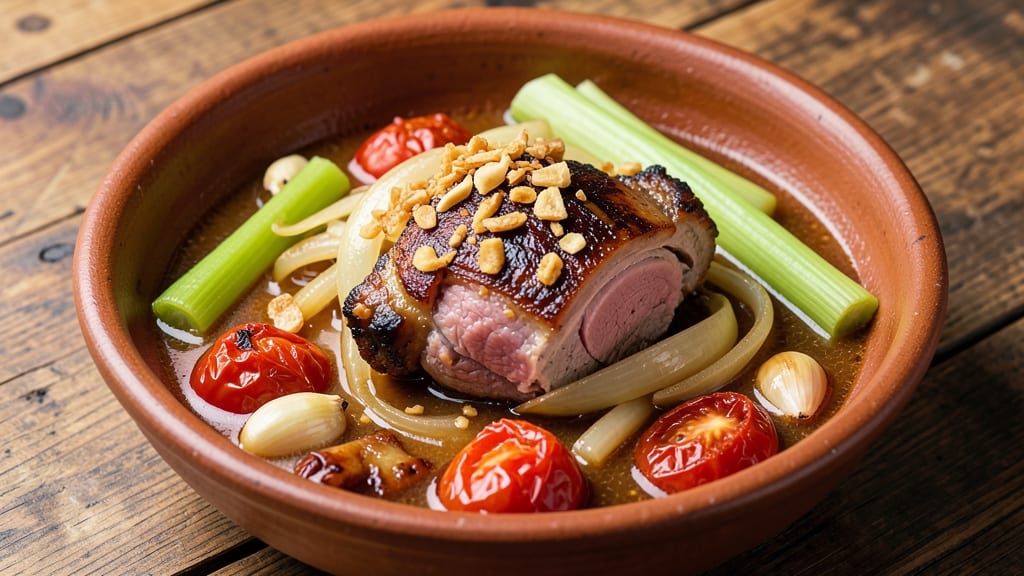
This Filipino bulalo pork recipe transforms tough pork shank into melt-in-your-mouth tender meat swimming in a deeply aromatic broth. 🔥 After years of perfecting this dish in my kitchen, I've developed a method that honors tradition while adapting to modern home cooking.
The secret lies in slow simmering—transforming simple ingredients into something truly special.
The beauty of bulalo is in its simplicity: beef shank, vegetables, and aromatic spices simmered for hours until the meat falls apart. While traditional versions use beef, I've adapted this recipe with pork shank for a rich, flavorful alternative that still delivers that signature Filipino comfort.
The celery crown adds a satisfying crunch that balances the creamy broth perfectly.
What you'll end up with is a steaming bowl of tender pork shank, silky vegetables, and a deeply flavorful broth that's perfect for serving over steamed rice. The aroma alone will transport you to a Filipino restaurant, but the taste proves you can achieve restaurant-quality results at home.
This dish is hearty enough for a family dinner or a special occasion.
Whether you're cooking for a crowd or treating yourself to a comforting meal, this bulalo recipe delivers rich, satisfying flavors with minimal effort. Let's get started on creating this Filipino classic in your own kitchen.
Ingredients for bulalo pork
Six hearty ingredients create this Filipino comfort dish with restaurant-quality depth.
| Ingredient | Amount | Notes |
|---|---|---|
| Pork Shank 🍖 | 3 lb | Bone-in for best flavor |
| Yellow Onions 🧅 | 2 whole | Peeled, quartered |
| Celery Stalk 🥬 | 4 whole | For celery crowns |
| Garlic Cloves 🧄 | 8 cloves | Peeled, smashed |
| Fresh Ginger 🌿 | 2 tbsp | Grated, peeled |
| Tomatoes 🍅 | 4 whole | Roma or vine-ripened |
| Bay Leaves 🍃 | 2 whole | Dried, crumbled |
| Salt 🧂 | 2 tsp | Kosher or sea salt |
| Black Peppercorns 🌶️ | 1 tsp | Whole, crushed |
| Coconut Milk 🥥 | 1 can | Full-fat, 13.5 oz |
| Olive Oil 🫒 | ½ cup | Extra-virgin preferred |
| Hard-Boiled Eggs 🥚 | 6 whole | For garnish |
| Steamed White Rice 🍚 | 3 cups | Cooked, for serving |
| Fresh Parsley 🌿 | ¼ cup | Chopped, for garnish |
| Soy Sauce 🍶 | 2 tbsp | For depth of flavor |
Pork shank is the star here—bone-in cuts deliver the richest flavor. Look for thick shanks at Filipino markets or your local butcher. If you can't find them, pork shoulder works in a pinch, but it won't be as tender. The celery crowns? Save the ends—they're perfect for garnish. For the tomatoes, Roma are ideal, but any firm, ripe variety will do. Fresh ginger is a must—avoid powdered—it's the secret to that authentic Filipino aroma. Costco or Trader Joe's usually have good quality, or grab it from the Asian section of your grocery store.
No coconut milk? Full-fat evaporated milk adds creaminess, though it won't be as rich. Short on bay leaves? Dried thyme at half the amount works in a bind. The soy sauce matters here—Filipino brands like Silver Swan have the perfect balance, but any good-quality soy sauce will do. Fresh parsley is ideal for garnish, but dried parsley at one-third the amount gets you close. The celery crowns should be crisp—blanch them for 30 seconds before serving to keep that satisfying crunch. For the eggs, hard-boil them ahead and keep them peeled in cold water until ready to use.
This dish tastes even better the next day—make extra if you can. Store leftovers in the fridge for 4-5 days, or freeze for up to 3 months. The broth thickens as it cools, so add a splash of water when reheating. For serving, keep the celery crowns separate until the last minute to maintain their crunch. Steamed rice is traditional—use jasmine for that fragrant touch. The pork shank should be fork-tender, and the broth should coat the back of a spoon. Trust me, the wait is worth it.
Why You'll Love This Recipe
- One-Pot Magic: I swear by this—just toss the pork shank, onions, celery, garlic, and ginger into a pot, add water, and let it simmer. No chopping like a fine-diner’s garnish, just the essentials that actually matter.
- Deep, Savory Soul: That slow-cooked pork shank? It falls apart like it’s been braising all day (even if it’s only been an hour). The ginger and garlic seep into the meat, giving it a warmth that sticks with you long after the last bite.
- Leftovers That Beg: Here’s what sold me—this stew tastes better the next day. I make a double batch on Sundays, and by Wednesday, the kids are fighting over the last bowl. Freezer-friendly too, because honestly, who has time for takeout?
- Budget-Friendly Feast: Pork shanks are cheap, and this recipe stretches them into a meal that feeds four for under $15. Plus, the veggies (onions, celery, garlic) are pantry staples—no last-minute grocery runs needed. My wallet and my family win.
Step-by-step instructions for bulalo pork
Here's how to create this Filipino comfort classic with rich, tender meat and crisp celery crowns.
🔥 Step 1: Sear the Pork Shank for Deep Flavor
Heat the 0.5 cup olive oil in a large Dutch oven over medium-high heat until shimmering. Pat the 3 lb pork shank completely dry with paper towels—this ensures maximum browning. Place the pork shank fat-side down in the pot and sear for 8-10 minutes until deeply golden brown on all sides.
Real talk: don't rush this step. You want that fat to render and the meat to develop a rich crust. If it sticks, press down gently with a spatula—it'll release once properly browned. Once golden, remove the pork and set it aside on a plate.
🍳 Step 2: Build the Aromatic Base
In the same Dutch oven, add the 2 whole yellow onions (quartered), 4 whole celery stalks (cut into 2-inch pieces), and 8 cloves garlic cloves (smashed). Cook for 5-6 minutes until the vegetables soften and the garlic becomes fragrant.
Here's where it gets fun—stir in the 2 tbsp fresh ginger (grated) and 4 whole tomatoes (quartered). Add the 2 whole bay leaves (crumbled), 2 tsp salt, and 1 tsp black peppercorns (crushed). Pour in the 2 tbsp soy sauce and let everything cook together for another 3-4 minutes until the tomatoes break down and the mixture smells heavenly.
🥘 Step 3: Simmer the Pork Low and Slow
Return the pork shank to the pot, fat-side up. Pour in enough water to come about halfway up the pork (about 4 cups). Bring to a gentle boil, then reduce heat to medium-low and cover partially. Simmer for 2-2.5 hours until the pork is fork-tender and the meat pulls away from the bone easily.
I know it seems like forever, but this slow cooking is what makes the meat melt-in-your-mouth tender. Check occasionally and add water if needed to keep it covered. The celery crowns should be tender but still hold their shape—this is your signal the pork is ready.
🥘 Step 4: Finish with Coconut Milk and Celery Crowns
Once the pork is tender, carefully remove it from the pot and set it aside. Strain the cooking liquid through a fine-mesh sieve into a clean pot, pressing on the vegetables to extract all their flavor. Return the liquid to the Dutch oven and stir in the 1 can coconut milk. Bring to a gentle simmer and cook for 10-15 minutes until slightly thickened.
Here's the thing—don't skip tasting and adjusting seasoning. Add more salt if needed, or a splash of water if the sauce is too thick. The celery crowns should be tender-crisp, so if they're still too tough, simmer them in the sauce for another 5 minutes.
🍽️ Step 5: Serve with Crisp Eggs and Steamed Rice
Slice the pork shank into ½-inch thick pieces and return it to the sauce. Let everything heat through for 2-3 minutes. Serve the bulalo over 3 cups steamed white rice, ladling the rich sauce and celery crowns on top.
Garnish each serving with 1 whole hard-boiled egg (halved) and sprinkle with 0.25 cup fresh parsley (chopped). The crispness of the eggs contrasts beautifully with the tender pork and creamy sauce. Serve immediately while the celery crowns are still crisp and the pork is piping hot!
Pro Tips For Making Bulalo Pork
- SEAR THE SHANK FIRST: Don’t skip browning that pork shank—high heat for 5-7 minutes until deep golden. I learned this the hard way: skipping it means bland broth later. Use enough oil to coat the bottom (about 2 tablespoons), or the meat will steam instead of caramelize.
- CHOP ONIONS COARSELY: Thin slices turn to mush in bulalo; cut onions into ½-inch chunks so they hold shape and flavor the broth. Same goes for celery—thick sticks last longer and add texture. (Yes, even if it looks less "fancy.")
- DON’T RUSH THE SIMMER: After browning, add liquids and bring to a boil once, then drop to a gentle simmer. I used to crank the heat, and the broth would turn cloudy. Low and slow (about 1.5–2 hours) keeps the pork tender and the broth clear.
- USE GINGER PEEL: Skip the zesting—peel a 1-inch chunk of fresh ginger, slice it thin, and toss it in whole. The peel adds depth without bitterness. (Bonus: Remove it before serving if you’re picky, but I leave it in—it disappears into the broth.)
Wine and beer pairings for this dish
Filipino White Wine
For a true taste of the Philippines, reach for a crisp Filipino white wine like Petron White or Lambrusco. These wines have bright acidity that cuts through the richness of the coconut milk and pork.
I've found that the citrus notes in these wines complement the ginger and garlic beautifully, cleansing your palate between bites. 🍷
If you can't find a Filipino wine, don't worry—Sauvignon Blanc from New Zealand or Pinot Grigio from Italy work perfectly. The herbal notes in Sauvignon Blanc pair especially well with the celery crowns and fresh parsley garnish. Just avoid heavy, oaky whites that would overpower the delicate broth.
Light Red Options
For those who prefer red wine, go for something light and fruity like Pinot Noir or Gamay. I love a French Beaujolais with its bright red fruit flavors and low tannins.
These wines won't clash with the coconut milk and actually enhance the pork's natural sweetness. A 12-14% ABV range keeps the wine light enough to balance the dish.
If you're feeling adventurous, try a Spanish Garnacha—its juicy berry notes play wonderfully with the soy sauce and tomatoes in the broth. Just avoid heavy Cabernets or Syrahs that would dominate the dish's delicate flavors.
Craft Beer Pairings
For beer lovers, I recommend a crisp Belgian Witbier like Hoegaarden or Stella Artois. The citrusy notes and subtle spice from coriander complement the ginger and garlic in the broth beautifully. The effervescence also helps cleanse your palate between bites of rich pork. 🍺
If you prefer American beers, try a light lager like Bud Light or Miller Lite. The clean, crisp profile won't compete with the dish's flavors but will refresh your palate. For something more substantial, a session IPA with its hoppy bitterness can balance the richness of the coconut milk.
Non-Alcoholic Options
Don't drink alcohol? No problem! A ginger beer like Feather or BrewDog Ginger Beer mirrors the dish's spicy ginger notes perfectly. The effervescence makes it feel like a proper pairing without the alcohol. For something more traditional, try a sparkling lime soda—the citrus brightness cuts through the richness.
My go-to non-alcoholic option is San Pellegrino Aranciata Rossa—its blood orange flavor adds a sweet contrast to the savory broth. Serve it chilled to enhance the refreshing experience. The carbonation helps balance the meal's richness, making it feel like a complete dining experience.
Nutrition facts
Frequently asked questions
Why does traditional bulalo use beef instead of pork?
Authentic bulalo is made with beef shank because the cut's natural collagen breaks down beautifully during slow cooking, creating a rich, gelatinous broth. While pork shank works as a delicious alternative, beef's deeper flavor and tenderizing properties make it the traditional choice. For a true Filipino experience, try substituting with beef shank if available.
Can I make this recipe in a slow cooker?
Brown the pork shank in a skillet first, then transfer everything to your slow cooker. Use the low setting for 6-7 hours (or high for 3-4 hours) until the meat is fork-tender. Add coconut milk and celery crowns during the last 30 minutes to prevent overcooking. The slow cooker method actually enhances the broth's richness.
What's the best way to keep the celery crowns crisp?
Blanch the celery crowns for just 30 seconds in boiling water, then immediately plunge them into ice water. This preserves their crunch while still making them tender enough to eat. For serving, keep them separate from the broth until the last minute to maintain that satisfying snap. If they soften too quickly, add them to the hot broth for just 1-2 minutes before serving.
How do I adjust this recipe for a pressure cooker?
Sear the pork shank first, then add all ingredients except coconut milk to your pressure cooker. Cook on high pressure for 45 minutes, then release pressure naturally. Stir in coconut milk and simmer for 10 minutes to thicken. The pressure cooker cuts cooking time by about 75%, but you'll lose some of the deep flavor development from slow simmering.
What should I do if the broth tastes too salty?
Don't panic! Add 1-2 cups of water and let the broth simmer uncovered for 10-15 minutes to dilute the salt. If that's not enough, stir in 1-2 tablespoons of coconut milk—its natural sweetness helps balance the saltiness. Avoid adding more water at the end, as it can make the broth too thin and dilute the flavors.