
Soups & Stews
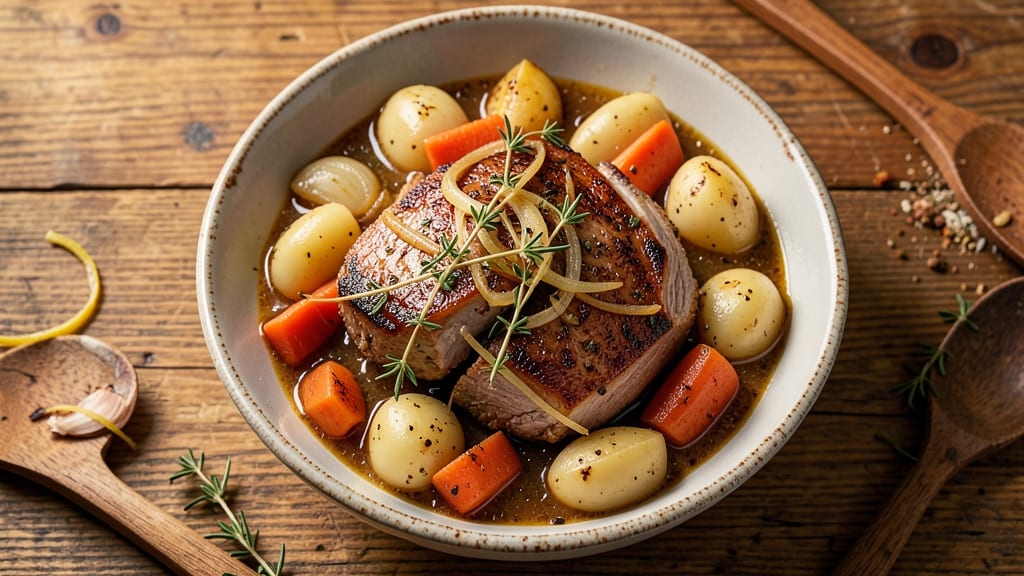
This basic pork stew recipe transforms tough cuts into melt-in-your-mouth tenderness through slow simmering and caramelized roots. Growing up in Georgia, I learned that pork's true magic happens when given time to develop deep, savory flavors—exactly what this recipe delivers.
The key lies in proper browning and layering ingredients to build complexity without fuss.
We start with a simple foundation: pork shoulder cut into chunks, aromatic vegetables, and a rich broth. The secret weapon is browning the meat in batches—this creates a flavorful crust that dissolves into the stew, creating layers of depth.
As it simmers, the vegetables soften while absorbing the pork's natural juices, resulting in a dish that's both comforting and deeply satisfying.
What you'll end up with is a hearty stew where each bite delivers tender pork, caramelized onions, and potatoes that practically fall apart. The aromatics—garlic, thyme, and bay leaf—infuse the broth with warmth, while the slow cooking process transforms simple ingredients into something restaurant-quality.
This is the kind of dish that tastes even better the next day.
The beauty of this recipe is its versatility—serve it with crusty bread to soak up every last drop, or pair it with buttered noodles for a more substantial meal.
The leftovers keep well for days, making it perfect for meal prep or feeding a crowd. Let's get started on creating this timeless comfort dish.
Ingredients for basic pork stew
Six aromatic vegetables, tender pork, and slow-simmered depth transform simple pantry staples into restaurant-quality comfort.
| Ingredient | Amount | Notes |
|---|---|---|
| Pork Shoulder 🐖 | 3 lb | Bone-in, cut into 1.5-inch chunks |
| Yellow Onions 🧅 | 2 whole | Medium, sliced into half-moons |
| Carrots 🥕 | 4 whole | Medium, peeled and cut into chunks |
| Russet Potatoes 🥔 | 2 lb | Peeled and cut into 1-inch cubes |
| Garlic Cloves 🧄 | 4 cloves | Minced for depth of flavor |
| Fresh Thyme 🌿 | 2 tbsp | Leaves only, stems removed |
| Bay Leaves 🌿 | 2 whole | Dried or fresh for aromatic base |
| Beef Broth 💧 | 4 cups | Low-sodium preferred for balance |
| Red Wine 🍷 | 1 cup | Dry, like Cabernet Sauvignon |
| Tomato Paste 🍅 | 2 tbsp | Smooth, for richness |
| Olive Oil 🫒 | 2 tbsp | Extra-virgin for browning |
| Salt 🧂 | 1 ½ tsp | Kosher or sea salt |
| Black Pepper 🌶️ | ½ tsp | Freshly ground for heat |
| All-Purpose Flour 🌾 | 2 tbsp | For thickening if needed |
The pork shoulder is what makes this stew sing—bone-in cuts stay juicier and develop deeper flavor during the long cook. Look for well-marbled pork at your butcher or grocery store's meat counter; Costco or Whole Foods often carry excellent cuts. If you're prepping ahead, brown the meat immediately and refrigerate it in the broth to keep it moist. The onions and carrots should be bright and firm—avoid any with soft spots or wilted tops. For the potatoes, Russets or Yukon Golds hold up best to the long simmer without turning mushy.
No red wine? Dry sherry or extra beef broth works in a pinch, though wine adds that subtle acidity. Fresh thyme is ideal, but dried thyme at half the amount gets you close. The tomato paste can be substituted with 1/4 cup crushed tomatoes if you prefer, though paste gives a deeper, more concentrated flavor. For the flour, all-purpose works fine, but if you're gluten-free, swap for cornstarch—just mix it with a little cold water first to avoid clumping. The bay leaves? Don't skip them—they're the backbone of the aromatic base.
This stew tastes even better the next day as flavors meld. Store it in an airtight container in the fridge for up to 5 days, or freeze portions for 3 months. For meal prep, double the recipe and freeze half—perfect for busy weeknights. The potatoes and carrots will soften further when reheated, so consider adding a splash of broth when warming. If the stew thickens too much, just stir in a little water or broth. Leftovers reheat beautifully on the stovetop or in the microwave.
Why You'll Love This Recipe
- One-Pot Magic: I swear by this recipe because it’s literally one pot—no chopping boards full of mess, no extra dishes. Toss in the pork shoulder, onions, carrots, and potatoes, add water, and let it simmer. That’s it. Honestly, I’ve made it while scrolling through my phone.
- Deep, Rich Flavor: The pork shoulder gets incredibly tender, and the caramelized onions? They’re the star. Add a few crushed garlic cloves and a pinch of salt, and you’ve got a flavor that’s simple but dangerously satisfying—no fancy spices required.
- Leftover Goldmine: This stew only gets better the next day. I’ll be real: my family fights over the leftovers, and I’ve repurposed it into tacos, sandwiches, or even a quick hash. It’s my secret weapon for lazy mornings.
- Budget-Friendly Staple: Pork shoulder is affordable, and the veggies stretch across multiple meals. Between us, this recipe has fed my whole family for under $15—plus, it’s the kind of dish that makes you feel like you’re serving something special, even if it’s just weeknight comfort.
Step-by-step instructions for slow-simmered pork stew
Here's how to build deep, caramelized flavors layer by layer.
Brown the Pork Shoulder for Rich Foundation
Heat the 2 tablespoons olive oil in a large Dutch oven over medium-high heat until shimmering. Working in batches, add the 3 lb pork shoulder cut into 1.5-inch chunks, arranging them in a single layer. Let them sear undisturbed for 4-5 minutes until a deep golden-brown crust forms on all sides.
This initial browning creates the Maillard reaction that forms the stew's rich, meaty depth. Don't crowd the pan—working in batches ensures proper browning. Once all pork is browned, transfer it to a plate and set aside temporarily.
Develop the Aromatic Base
In the same Dutch oven, add the sliced 2 whole yellow onions and 4 whole carrots cut into chunks. Cook for 8-10 minutes until the onions become translucent and the carrots begin to soften slightly. Add the 4 cloves minced garlic and cook for an additional 30 seconds until fragrant.
Here's where the flavor foundation takes shape. The onions should caramelize slightly at the edges, adding sweetness to balance the savory pork. If the vegetables stick, add a splash of beef broth to deglaze and scrape up the browned bits from the bottom.
Build the Stew Base with Wine and Broth
Pour in the 1 cup red wine and scrape up any browned bits from the bottom of the pot. Let it simmer for 3-4 minutes until reduced by half. Stir in the 2 tablespoons tomato paste and cook for 1 minute until it darkens slightly. Add the 4 cups beef broth, 1.5 teaspoons salt, and 0.5 teaspoon black pepper, then return the pork to the pot.
The wine reduction concentrates the flavors while the tomato paste adds depth. This liquid should just cover the pork—if it looks too thin, you can sprinkle in the 2 tablespoons all-purpose flour and stir to thicken slightly. Bring the mixture to a gentle simmer.
Slow Cook Until Tender
Cover the Dutch oven and transfer to a preheated 325°F oven (or use a stovetop on low heat). Cook for 2 hours, stirring occasionally, until the pork is fork-tender. Add the 2 lb russet potatoes cut into 1-inch cubes, 2 tablespoons fresh thyme leaves, and 2 whole bay leaves, then continue cooking for another 45-60 minutes until the potatoes are tender.
This slow cooking process transforms tough pork into melt-in-your-mouth tenderness while allowing the vegetables to absorb all the rich flavors. The potatoes should be easily pierced with a fork, and the stew should have thickened slightly from the natural release of starches.
Adjust Seasoning and Finish
Remove the bay leaves and adjust the seasoning if needed. Taste the stew and add more salt or pepper as necessary. For a glossy finish, simmer uncovered for 5-10 minutes to allow any excess liquid to reduce slightly, intensifying the flavors.
Serve the stew hot, ladling generous portions over crusty bread or with a side of steamed greens. The pork should pull apart easily, the vegetables tender yet holding their shape, and the sauce rich with layers of caramelized, herby, and wine-infused flavors.
Pro Tips For Making Basic Pork Stew
- SEAR THE PORK FIRST: High heat. Seriously, crank it up until the pork shoulder browns in patches—this isn’t about cooking through, it’s about flavor. I used to skip this, and the stew always tasted like it was missing something. A cast-iron skillet or heavy pot makes this easier, but even a nonstick will work if you don’t walk away.
- CUT POTATOES LARGE: No small cubes here—aim for 2-inch chunks. They’ll hold their shape better and absorb the stew’s richness without turning to mush. I learned this the hard way after serving a stew where the potatoes disintegrated into the gravy. (Yes, even if it looks rustic, it’s worth the extra knife work.)
- ADD GARLIC LATE: Toss the minced garlic in during the last 10 minutes of cooking. Raw garlic burns fast, and you’ll end up with bitter bits instead of mellow flavor. I was skeptical until I tried it—I now add it with the potatoes, and the aroma finishes the dish perfectly.
- SKIP THE CROWDED POT: If your pot looks packed, pull out half the veggies and finish them separately. Overcrowding steams the pork instead of browning it, and the stew turns out watery. I used to ignore this, but now I adjust the recipe for my pot’s size—even if it means making two smaller batches. (Your future self will thank you.)
Wine and beer pairings for this dish
Red Wine Pairings
I always reach for a medium-bodied red wine like Cabernet Sauvignon or Merlot when serving this stew—their tannins complement the pork's richness while the fruit notes echo the caramelized onions.
A 2018 Chilean Cabernet with its dark berry flavors and subtle oak is my go-to, but any dry Bordeaux works beautifully. The wine's acidity cuts through the stew's richness, cleansing your palate between bites. 🍷
Light Beer Options
A crisp German Helles Lager or Belgian Witbier like St. Bernardus Wit adds a refreshing contrast to the hearty stew. The wheat beer's citrus notes brighten the dish, while the light body prevents it from overpowering the pork's depth.
For something more robust, try a German Dunkel—its malty sweetness balances the stew's savory profile. Serve chilled to let the beer's effervescence refresh your palate.
Regional Beer Specialties
If you're in the Southeast, look for local craft beers like Atlanta's Three Taverns IPA or Charleston's Blackbeard Brewing Co.'s Brown Ale. The IPA's hop bitterness stands up to the stew's richness, while the brown ale's caramel notes mirror the caramelized onions.
For a true Southern pairing, a bourbon barrel-aged stout adds a smoky depth that enhances the pork's natural flavors.
Non-Alcoholic Pairings
Don't overlook sparkling apple cider or ginger beer for a refreshing, alcohol-free option. The apple cider's acidity cuts through the stew's richness, while the ginger beer's spice adds a warming contrast. For something more substantial, try a chilled hibiscus iced tea—its tartness balances the pork's savory notes beautifully.
These options work especially well during summer months when you might want to skip the wine.
Wine and Beer Storage Tips
Store your red wine in a cool, dark place (like a wine fridge) until ready to serve—this stew deserves a properly chilled bottle. For beer, keep it in the fridge until the last minute to preserve its carbonation.
If you're prepping ahead, I recommend opening the wine 2-3 hours before serving to let it breathe, enhancing its flavor profile. For beer, open it just before serving to maintain freshness.
Nutrition facts
Frequently asked questions
Can I use a different cut of pork for this stew?
Pork shoulder is ideal for its fat content and tenderness when slow-cooked, but you can substitute pork butt or pork shank. Avoid lean cuts like tenderloin—they dry out during long cooking. For shank, increase simmering time by 30-45 minutes to ensure tenderness.
How can I make this stew gluten-free?
Replace the 2 tablespoons all-purpose flour with 2 teaspoons cornstarch mixed with 1 tablespoon cold water. Stir this slurry into the stew during the final 10 minutes of cooking to thicken naturally. Check all broth labels to ensure they're gluten-free too.
What if my stew is too thin after cooking?
Don't worry—this happens often! Remove the lid and simmer uncovered for 10-15 minutes to reduce the liquid. For instant thickening, mix 1 tablespoon cornstarch with 2 tablespoons cold water, stir into the stew, and cook for 2-3 minutes until thickened.
Can I prepare this stew in a slow cooker?
Brown the pork as directed, then transfer everything to your slow cooker. Cook on low for 7-8 hours or high for 4-5 hours, adding potatoes and herbs in the last 1-2 hours. The slow cooker's gentle heat ensures tender pork without drying it out.
What's the best way to reheat leftovers?
Gently reheat on the stovetop over low heat for 5-10 minutes, stirring occasionally and adding a splash of broth if needed. Microwave in 30-second intervals, stirring between each, to prevent drying. Leftovers taste even better the next day as flavors meld!