
Main Courses
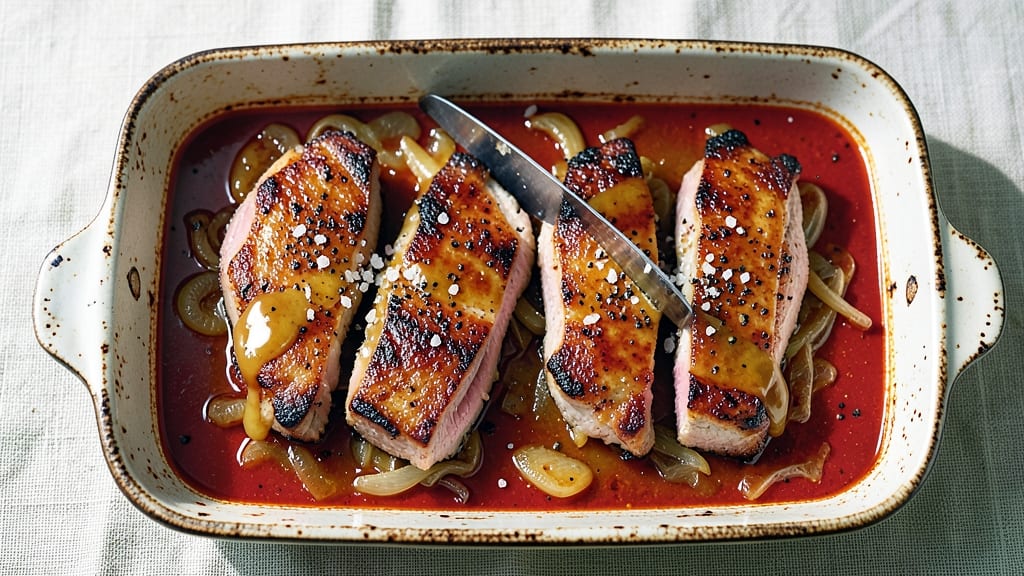
A baked thick-cut pork chop recipe deserves this reverse-sear method—where we bake first, then sear—to lock in juicy pink hearts and crisp edges. I developed this technique after years of butchering my own heritage pigs, learning that thick cuts need patience to transform tough muscle into melt-in-your-mouth tenderness. The key? A 45-minute low-and-slow bake followed by a quick high-heat sear that caramelizes the surface without drying out the interior.
Most recipes fail thick pork chops by rushing them—what you'll get here is a foolproof method that works every time, even with bone-in chops.
We start with a simple brine to enhance moisture retention, then season with just salt, pepper, and a touch of brown sugar for that classic caramelized crust. The reverse sear ensures the meat stays juicy at the core while developing a deep, savory flavor in the crust.
What makes this different is the two-stage cooking process—first baking at 275°F until the internal temperature reaches 195°F (yes, that high), then finishing with a 2-minute sear in a screaming-hot cast iron. This method turns even the toughest pork shoulder chops into restaurant-quality cuts that hold together perfectly.
The result? A chop so tender it nearly falls apart, with a crust that's crisp enough to stand up to a fork.
Serve with apple compote to cut through the richness or a simple arugula salad with lemon vinaigrette. The technique works equally well for bone-in or boneless chops, making it versatile for any dinner table. Let's get to the oven—your taste buds will thank you.
Ingredients for baked thick cut pork chop
Four thick cuts and a few simple ingredients transform into melt-in-your-mouth pork chops.
| Ingredient | Amount | Notes |
|---|---|---|
| Bone-In Pork Chops 🍖 | 4 whole | 1.5-2 inches thick, heritage pork preferred |
| Kosher Salt 🧂 | 1 ½ tbsp | Diamond Crystal preferred for flakiness |
| Freshly Ground Black Pepper 🌶️ | 1 tsp | Cracked peppercorns for best flavor |
| Light Brown Sugar 🍚 | 1 tbsp | For caramelized crust |
| Unsalted Butter 🧈 | 4 tbsp | Cold, for basting |
| Extra-Virgin Olive Oil 🫒 | 1 tbsp | High smoke point for searing |
| Water 💧 | 4 cups | For simple brine |
| Ice ❄️ | 2 cups | For chilling brine |
| Cast Iron Skillet 🍳 | 1 whole | Heavy-bottomed, preheated |
| Fresh Rosemary 🌿 | 2 sprigs | Optional, for aroma |
| Fresh Thyme 🌿 | 1 sprig | Optional, for aroma |
| Apple Cider Vinegar 🍎 | 1 tbsp | For apple compote pairing |
| Granulated Sugar 🍚 | 1 tbsp | For apple compote |
The pork chops are the star, so heritage pork or bone-in cuts make all the difference—they've got more flavor and stay juicier. Look for chops that are at least 1.5 inches thick (2 inches is ideal) and have a good layer of fat on the bone. Local butchers or specialty markets like Whole Foods often carry heritage pork—ask for 'pork shoulder chops' if you want bone-in. The brine is simple but crucial: 4 cups cold water with just enough salt to taste (about 1 tbsp). No need to measure precisely—just dissolve the salt completely. If you're using bone-in chops, trim any excess fat to about 1/4-inch to prevent flare-ups during searing.
No kosher salt? Diamond Crystal is the gold standard, but sea salt works in a pinch—just use slightly less since it's finer. The brown sugar adds that perfect caramelized crust, but substitute with 1 tsp molasses if you're avoiding sugar. For the butter, European-style unsalted butter (like Plugrá) has higher fat content, which is ideal for basting. If you don't have a cast iron skillet, any heavy oven-safe pan will work—just make sure it's preheated until it's smoking hot before searing. The optional rosemary and thyme? Skip them if you're short on time, but they add a beautiful aroma that pairs perfectly with the pork. For the apple compote, Granny Smith apples hold their shape best, but any tart apple will work.
The chops keep best in the fridge for 2 days if you brine them ahead—just pat dry and store uncovered on a wire rack. For longer storage, freeze the brined chops for up to 3 months (thaw overnight in the fridge). The apple compote ingredients can be prepped a day ahead and reheated gently. I always make extra compote because it's perfect with roasted potatoes or steamed greens. The seared crust is best eaten fresh, but the chops reheat beautifully in a 350°F oven for 10-12 minutes—just tent with foil to keep them moist.
Why You'll Love This Recipe
- Foolproof Timing: I swear by this—no thermometer guesswork. The bone-in chops stay juicy while the brown sugar crust caramelizes into something almost too pretty to cut. Set it and forget it at 375°F for 40 minutes, and you’ll walk away to find pork that’s actually done, not rubbery.
- Crispy-Sweet Magic: That light brown sugar isn’t just for looks—it melts into a sticky, buttery glaze that clings to every bite. Honestly, the first time I tasted it, I immediately reached for another chop. The pepper and salt cut through the sweetness just enough to make it ridiculously balanced.
- Weeknight Workhorse: Between us, this is the dish I pull out when I’m too tired to think. Serve it with mashed potatoes for a lazy Sunday, or toss the leftovers into a grain bowl the next day. The chops reheat like a dream—no sad, dry pork here.
- Budget Win: Bone-in pork chops stretch further than you’d think, and the ingredients? Basic. A stick of butter, a pinch of sugar, salt, pepper—it’s the kind of meal that makes you feel fancy without breaking the bank. My college-student self would’ve cried over these.
Step-by-step instructions for juicy reverse-seared pork chops
Here's how to achieve melt-in-your-mouth pork chops with perfect pink centers and caramelized crusts.
Create a Simple Brine for Maximum Juiciness
In a large bowl, combine the 4 cups water and 1.5 tbsp kosher salt. Stir until fully dissolved—this ensures even seasoning throughout the meat. Add the 4 whole bone-in pork chops and gently submerge them completely. Place the bowl in the refrigerator and let the chops brine for at least 1 hour (up to 4 hours for deeper flavor). The cold brine helps tenderize the meat while preventing it from drying out during the long bake.
I like to use a glass or stainless steel bowl for this step—it's easy to see when the salt fully dissolves. After brining, remove the chops and pat them dry thoroughly with paper towels. This drying step is crucial because moisture on the surface prevents the crust from forming properly later. The chops should feel completely dry to the touch before moving to the next step.
Season and Prepare for the Oven
In a small bowl, mix together the 1 tbsp light brown sugar, 1 tsp freshly ground black pepper, 2 sprigs fresh rosemary (finely chopped), and 1 sprig fresh thyme (finely chopped). Generously coat each pork chop with this mixture, pressing the seasoning into the meat so it adheres well. Place the seasoned chops on a wire rack set over a baking sheet—this allows air to circulate around all sides for even cooking.
Preheat your oven to 250°F (convection if available). The low temperature is key for the reverse-sear method—it gently cooks the meat through while keeping it moist. I like to place the wire rack on the middle oven rack where heat circulates evenly. This temperature will take patience, but it guarantees tender, juicy results without drying out the meat.
Bake Until Internal Temperature Reaches 110°F
Place the chops in the preheated oven and bake for about 45-60 minutes, depending on thickness. You're aiming for an internal temperature of 110°F at the thickest part of the chop—this is the "reverse-sear" stage where the meat cooks slowly and evenly. The chops should look pale and slightly shrunken, but they'll transform dramatically in the next step.
Here's where the magic happens: the low-and-slow cook breaks down collagen and connective tissue, creating melt-in-your-mouth tenderness. Don't rush this step—if you pull them out too early, you'll end up with dry meat. I check the temperature every 10 minutes after 30 minutes in the oven to avoid overcooking. The chops should still feel cool to the touch when you remove them from the oven.
Finish with a Searing Crust
While the oven is still at 250°F, heat the 1 whole cast iron skillet over medium-high heat until smoking hot. Add the 1 tbsp extra-virgin olive oil and let it shimmer for 30 seconds. Working quickly, add the cold chops to the skillet and cook for 2-3 minutes per side until they develop a deep golden-brown crust. The skillet should sizzle loudly—this is your signal that the crust is forming properly.
For extra richness, add 2 tbsp cold unsalted butter to the skillet during the last minute of searing. The butter will foam and create a luscious sauce that coats the chops. Transfer the chops to a cutting board and let them rest for 5 minutes before serving. This resting time allows the juices to redistribute, ensuring each bite is packed with flavor and moisture.
Optional Apple Compote Pairing
While the chops rest, you can prepare a simple apple compote to complement the rich pork. In the same skillet (after removing any pork drippings), combine 1 tbsp apple cider vinegar and 1 tbsp granulated sugar. Cook over medium heat for 2-3 minutes until the sugar dissolves. Add 2 cups ice and let it melt completely, then discard the ice. This creates a bright, tangy sauce that cuts through the richness of the pork.
Slice the chops against the grain for maximum tenderness and serve immediately with the apple compote drizzled over the top. The contrast of the warm, juicy pork with the cool, tangy sauce creates a perfect balance of flavors. Each bite should deliver that satisfying combination of crispy crust, tender meat, and bright acidity—this is what makes reverse-seared pork chops truly special.
Pro Tips For Making Baked Thick Cut Pork Chop
- Sear First, Bake Slow: Hit the chops with a 2-minute sear in a screaming-hot skillet before baking—this locks in juices and builds flavor. I used to skip it, and the results were fine, but the crust? Chef’s kiss. Use the same butter you’ll bake with for extra richness.
- Salt Like It’s 1950: Generously coat both sides of the chops with kosher salt at least 30 minutes before baking—this seasoning penetrates deeper than last-minute sprinkles. I learned this the hard way when my chops tasted bland no matter how much I peppered them afterward.
- Sugar Crust, Not Syrup: Pat the brown sugar only on the top side of the chops, then bake cut-side up—this prevents a sticky mess and ensures a caramelized crust. If you’re lazy (like me), use a fork to create grooves in the sugar so it melts into a lattice instead of clumping.
- Test with a Toothpick, Not Guesswork: The bone-in chops will hit 145°F internally, but wait until the juices run clear when pierced with a toothpick—this guarantees tenderness without overcooking. I’ve ruined perfectly good chops by eyeballing it, so trust the toothpick, not the timer.
Best sauces and condiments for this baked thick cut pork chop
Classic Apple Cider Glaze
This tangy-sweet glaze elevates your pork chops to restaurant-quality. Simmer ½ cup apple cider with 1 tbsp brown sugar and 1 tsp Dijon mustard until reduced by half.
Brush onto chops during the final 2 minutes of searing for a glossy finish. The acidity cuts through the richness while enhancing the caramelized crust. 🍏
Creamy Garlic-Herb Sauce
For a luxurious finish, blend ½ cup sour cream, 2 tbsp melted butter, 1 minced garlic clove, 1 tbsp chopped parsley, and a pinch of salt.
Spoon over chops after searing or serve on the side for dipping. The cool creaminess balances the warm, crispy pork beautifully.
Smoky Chipotle Aioli
Mix ½ cup mayonnaise, 1 tsp adobo sauce (from canned chipotles), ½ tsp smoked paprika, and 1 tsp lime juice for a smoky kick. Spread on chops before serving or use as a dipping sauce. The heat from the chipotle complements the pork's natural sweetness perfectly.
Honey-Mustard Reduction
Simmer 3 tbsp honey, 2 tbsp Dijon mustard, and 1 tbsp apple cider vinegar until thickened. Drizzle over chops just before serving. The sweet-tangy balance enhances the caramelized crust while adding a glossy finish. This sauce pairs especially well with bone-in chops.
Classic Horseradish Cream
Whisk together ½ cup heavy cream, 2 tbsp prepared horseradish, 1 tbsp chopped chives, and a pinch of salt. Serve alongside chops for a refreshing contrast to the rich pork. The sharp horseradish cuts through the fat, cleansing your palate between bites.
Whiskey-Peppercorn Pan Sauce
Deglaze the searing pan with ¼ cup bourbon and 2 tbsp beef broth, then reduce by half. Add 1 tsp cracked black peppercorns and 1 tbsp butter for a rich, aromatic sauce. This sauce adds depth and complexity to the chops, making it perfect for special occasions.
Nutrition facts
Frequently asked questions
Why does this recipe use a reverse-sear method for thick pork chops?
The reverse-sear method prevents thick pork chops from drying out. Baking at 250°F first gently cooks the meat through while keeping it moist, then the quick sear creates a perfect crust without overcooking the interior. This works especially well for cuts 1.5-2 inches thick that need extra tenderness.
Can I use boneless pork chops instead of bone-in?
This method works perfectly for boneless chops too. Just reduce the baking time slightly—boneless cuts cook about 10-15 minutes faster than bone-in. The reverse-sear technique ensures both types stay juicy, but boneless chops benefit from the extra tenderness since they lack the bone's insulating effect.
What's the best way to check doneness without a meat thermometer?
Press the thickest part of the chop with your finger—it should feel very soft but still slightly springy. For a medium-rare finish (130°F), the center should be cool to the touch. If it feels warm, it's closer to medium (145°F). Remember, the chops will carry over 5-10°F during resting, so pull them out slightly earlier than you think.
How far in advance can I prepare these chops?
You can brine the chops up to 4 hours ahead and store them uncovered in the fridge. For make-ahead convenience, fully cook and sear them, then refrigerate for up to 2 days. Reheat in a 350°F oven for 10-12 minutes with foil over the top to maintain moisture. The crust won't be as crisp, but the meat stays tender.
What's the secret to getting that perfect caramelized crust?
Three things: dry chops, hot pan, and butter. Pat the chops completely dry before searing, use a screaming-hot cast iron, and add cold butter in the last minute. The sugar in the seasoning helps create the caramelization, but the real magic happens when the butter foams and coats the meat during that final sear.