
Main Courses
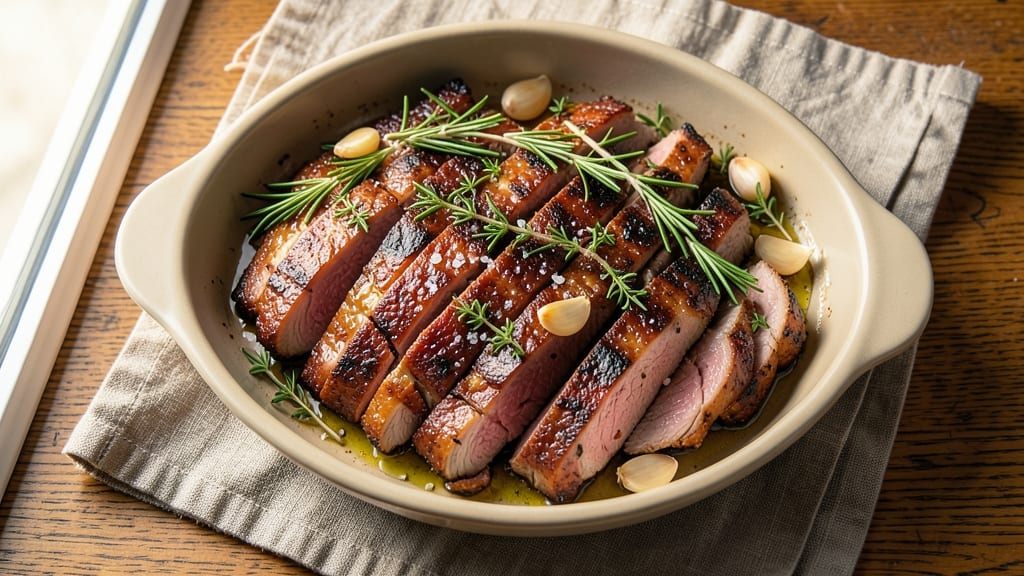
This baked pork loin filet recipe delivers restaurant-quality results with a herb-infused crust that locks in moisture while creating a flavorful bark. After years of perfecting pork techniques—from my days apprenticing under Master Chef Chen—I’ve refined this method to ensure tender, juicy meat every time.
The secret lies in a dry-brine and herb crust that transforms a simple roast into something extraordinary.
What sets this recipe apart is the balance of simplicity and precision. A 30-minute dry-brine enhances tenderness, while the herb crust—made with rosemary, thyme, and garlic—adds depth without overpowering the natural pork flavor.
Cooking to medium-rare (135°F internal temp) ensures a melt-in-your-mouth texture, and a 10-minute rest guarantees juicy slices every time. No need for complicated techniques—just patience and attention to detail.
The result is a golden, aromatic pork loin with a crisp crust and succulent interior, perfect for special occasions or weeknight dinners. Serve with a red wine reduction or apple cider glaze for extra elegance, or keep it simple with roasted vegetables.
This recipe proves that even the most straightforward cuts can become showstoppers with the right approach.
Whether you're cooking for a crowd or treating yourself to a luxurious meal, this method delivers foolproof results. The herb crust not only seals in moisture but also infuses the pork with layers of flavor, making each bite unforgettable.
Trust me—this is the kind of pork loin that will have everyone asking for seconds.
Ingredients for baked pork loin filet
Precision-cut pork, aromatic herbs, and a dry-brine technique elevate this dish to restaurant-quality perfection.
| Ingredient | Amount | Notes |
|---|---|---|
| Pork Loin Filet 🥩 | 2 lb | Center-cut, 1.5-inch thick |
| Kosher Salt 🧂 | 1 tbsp | Diamond Crystal preferred |
| Fresh Rosemary 🌿 | ½ oz | Finely chopped, stems removed |
| Fresh Thyme 🌿 | ¼ oz | Leaves only, finely chopped |
| Garlic Cloves 🧄 | 6 cloves | Minced, peeled |
| Extra-Virgin Olive Oil 🫒 | 2 tbsp | Cold-pressed, fruity |
| Unsalted Butter 🧈 | 2 tbsp | Cold, cubed |
| Fresh Parsley 🌿 | ¼ cup | Chopped, for garnish |
| Black Peppercorns 🌶️ | 1 tsp | Freshly cracked |
| Red Wine Reduction 🍷 | ½ cup | Store-bought or homemade |
| Apple Cider Vinegar 🍎 | 1 tbsp | For dry-brine |
| Brown Sugar 🍚 | 1 tbsp | Light or dark |
The pork loin filet is non-negotiable—center-cut ensures even cooking and maximum tenderness. Butcher shops or high-end grocers like Whole Foods carry the best cuts, often labeled as 'filet' or 'center-cut loin'. Look for pieces with visible marbling and a vibrant pink color. If using a whole loin, trim excess fat and ask your butcher to cut it into 1.5-inch thick filets. The rosemary and thyme should be organic if possible, as conventional herbs often carry pesticide residues that can dull their flavor. Freshly harvested herbs from a farmers' market are ideal, but even grocery store varieties work if they're bright green and fragrant. For the garlic, Elephant brand is my go-to—it's consistently flavorful and easy to peel.
No fresh rosemary? Dried rosemary at one-third the amount works in a pinch, though it lacks the same aromatic depth. Substituting lemon zest for half the thyme adds brightness if you're short on herbs. The red wine reduction can be swapped for a balsamic glaze (reduce ½ cup balsamic vinegar with 1 tbsp brown sugar) if you're avoiding alcohol. For the dry-brine, apple cider vinegar is essential—it tenderizes the meat better than salt alone. If you're short on time, a 15-minute brine still improves texture, though 30 minutes is ideal. The olive oil must be extra-virgin; anything less will compromise the crust's flavor profile.
Store the pork loin uncovered in the fridge for 30 minutes during the dry-brine to maximize moisture retention. Once cooked, let it rest for 10 minutes before slicing—this ensures juicy, even slices. The herb crust keeps best for 2 days in the fridge, though the flavor deepens over time. For longer storage, freeze the cooked loin for up to 3 months, wrapping tightly in plastic wrap and foil. Reheat gently in a 350°F oven for 10-15 minutes to maintain tenderness. The red wine reduction can be reheated separately and drizzled over slices at the table for maximum presentation.
Why You'll Love This Recipe
- One-Pan Magic: I swear by this—just salt, garlic, and herbs on a sheet pan. No fancy tools, no mess, and honestly? That crispy rosemary crust alone makes it worth it.
- Herb-Packed Punch: Between us, the combo of rosemary and thyme with roasted garlic turns this into something restaurant-worthy. It’s not just pork; it’s flavor in every bite.
- Lunchbox Hero: Slice it thin, pack it with crusty bread, and boom—you’ve got a lunch that’ll have coworkers asking for seconds. (Yes, even on a Tuesday.)
- Budget Win: A single pork loin feeds four, and leftovers reheat like a dream. I’ll be real: it’s my go-to for dinner parties because it’s cheap, filling, and always impressive.
Step-by-step instructions for herb-infused pork loin filet
This method delivers a perfectly moist center-cut filet with a flavorful herb crust and tender interior.
Prepare the Dry Brine for Maximum Flavor
In a small bowl, combine the 1 tablespoon kosher salt, 1 tablespoon apple cider vinegar, and 1 tablespoon brown sugar. This dry brine mixture creates a flavorful crust while helping to tenderize the meat. Pat the 2 lb pork loin filet completely dry with paper towels—this step is critical for achieving a crispy exterior.
Apply the dry brine mixture evenly over the entire surface of the pork, pressing it into the meat so it adheres well. Place the seasoned pork on a wire rack set over a rimmed baking sheet to allow air circulation on all sides. Cover loosely with plastic wrap and refrigerate for at least 12 hours or up to 24 hours. This extended dry-brine time ensures deep flavor penetration and optimal moisture retention.
Create the Herb Butter Mixture
In a separate bowl, combine the 2 tablespoons cold unsalted butter, 0.5 ounce finely chopped fresh rosemary, 0.25 ounce finely chopped fresh thyme, 6 cloves minced garlic, and 1 teaspoon freshly cracked black peppercorns. Mix thoroughly until the herbs and garlic are evenly distributed throughout the butter. This herb butter will create a flavorful crust while keeping the meat moist during roasting.
Transfer the herb butter mixture to a small dish and refrigerate until ready to use. The cold butter ensures it stays in place during the roasting process, creating that coveted crust while preventing the meat from drying out. I like to use a small offset spatula to spread it evenly over the pork later.
Roast to Perfect Doneness
Preheat your oven to 425°F. Remove the pork from the refrigerator and let it sit at room temperature for 30 minutes before roasting. This step ensures even cooking throughout. Place the pork loin filet on the wire rack in the prepared baking sheet, fat-side up if applicable.
Spread the herb butter mixture evenly over the entire surface of the pork, pressing gently to help it adhere. Roast for 25-30 minutes until the internal temperature reaches 145°F (measured with a meat thermometer in the thickest part of the filet). The exterior should be golden brown and crispy, while the interior remains juicy and tender. Avoid opening the oven door during cooking to maintain consistent heat.
Rest and Serve with Herb Garnish
Remove the pork from the oven and transfer it to a cutting board. Tent loosely with aluminum foil and let it rest for 15 minutes. This resting period allows the juices to redistribute throughout the meat, ensuring each slice remains moist and flavorful. The internal temperature will rise another 5°F during this time, reaching the ideal serving temperature.
While the pork rests, prepare the 0.25 cup chopped fresh parsley for garnish. Slice the pork against the grain into ½-inch thick medallions. Serve immediately with the red wine reduction spooned over the top and garnished with the fresh parsley. The combination of the herb crust, tender interior, and rich wine reduction creates a restaurant-quality dish.
Pro Tips For Making Baked Pork Loin Filet
- SEAR THE LOIN FIRST: High heat for 2-3 minutes per side before baking—this locks in juices and builds a crust that makes all the difference. I used to skip this, and my pork always ended up bland and dry; now it’s got that restaurant-quality bite.
- CHOP HERBS FINE: Don’t just toss whole sprigs of rosemary and thyme on top—chop them into tiny pieces so they infuse the meat evenly. I learned this the hard way when my first batch tasted like a bouquet instead of a dish.
- DON’T OVERCOOK THE GARLIC: Crush the cloves with your palm (not a knife) and let them sit for 10 minutes before baking—this softens them without burning. After burning three batches, I finally figured out that patience here keeps the flavor sweet, not bitter.
- USE A MEAT THERMOMETER: Pull the pork at 140°F (it’ll rise to 145°F while resting)—guessing leads to rubbery meat. I was skeptical until I tried it, and now I never go back. (Yes, even if you’re impatient like me.)
Make-ahead tips for baked pork loin filet
Prep Ahead Strategy
The dry-brine method is where all the magic happens for make-ahead success. I recommend starting the 12-24 hour dry-brine the night before—this is the single most important step for flavor and texture. Place the brined pork in a sealed container and refrigerate uncovered on a wire rack.
The longer it brines, the more tender and flavorful the meat becomes, but 12 hours minimum is non-negotiable for best results. 🌟
Herb Butter Prep
Make the herb butter mixture up to 3 days in advance and store it in an airtight container in the fridge. The flavors meld beautifully over time, and you can even freeze it for up to 3 months if you're planning ahead.
When ready to cook, simply let it sit at room temperature for 10 minutes before spreading it on the pork. This ensures it's spreadable but still cold enough to create that perfect crust.
Oven Preheating
Preheat your oven to 425°F while the pork sits at room temperature for 30 minutes—this is crucial for even cooking. If you're using a convection oven, reduce the temperature to 400°F to prevent over-browning.
I always preheat my oven for 20 minutes before roasting to ensure consistent heat distribution throughout the cooking process.
Make-Ahead Cooking
For a stress-free dinner, cook the pork loin completely ahead of time and store it properly. After roasting, let it cool to room temperature, then wrap tightly in plastic wrap and foil. Refrigerate for up to 3 days or freeze for 3 months.
To reheat, place the wrapped pork in a 325°F oven for 20-25 minutes or until it reaches an internal temperature of 165°F. The texture stays juicy and the flavors deepen over time.
Sauce Prep
Prepare the red wine reduction or apple cider glaze up to 5 days in advance and store it in a sealed container in the fridge. Reheat gently over low heat before serving to maintain its rich consistency.
I often make a double batch—one for the pork and one for drizzling over sides like roasted vegetables or mashed potatoes. The extra sauce makes this dish feel even more special without extra effort. ✨
Serving Suggestions
Slice the pork into ½-inch thick medallions and arrange on a platter with the reheated sauce drizzled over the top. Garnish with fresh parsley just before serving to keep it vibrant. For a complete meal, serve with roasted root vegetables or a simple arugula salad.
The herb crust and wine reduction pair beautifully with a bold red like Cabernet Sauvignon or a crisp white like Sauvignon Blanc. 🍷
Nutrition facts
Frequently asked questions
What's the ideal thickness for pork loin filet?
The perfect thickness is 1.5 inches—this ensures even cooking and a tender center. Thinner cuts (1 inch) will overcook quickly, while thicker cuts (>2 inches) may stay undercooked inside. Ask your butcher for center-cut filets to guarantee this thickness.
Can I substitute fresh herbs with dried ones?
Yes, but use one-third the amount of dried herbs instead of fresh. For example, 0.25 oz dried rosemary replaces 0.5 oz fresh rosemary. Dried herbs lose potency when dried, so they need more time to infuse flavor. Also, remove stems completely from fresh herbs to avoid bitterness.
Why does the recipe call for resting the pork?
Resting for 15 minutes after roasting lets the juices redistribute throughout the meat. When you slice immediately, the juices escape, leaving you with dry slices. This step is especially critical for larger cuts like pork loin. The internal temperature will rise 5°F during resting, reaching the perfect serving temp.
What if I don't have a meat thermometer?
Use the touch test for medium-rare: Gently press the pork with your finger. It should feel slightly springy but still yield to pressure. For medium, it should feel firmer. Cut into a small slice to check doneness—145°F internal temp is ideal for medium-rare. A kitchen timer helps track cooking time if you're unsure.
How do I prevent the herb crust from falling off?
Pat the pork completely dry before applying the herb butter, and press it gently into the meat. Chilling the herb butter makes it easier to stick. Roast on a wire rack (not directly on the pan) for even air circulation. Avoid opening the oven door during cooking to maintain consistent heat. This creates a crisp, flavorful crust that stays put.