
Main Courses
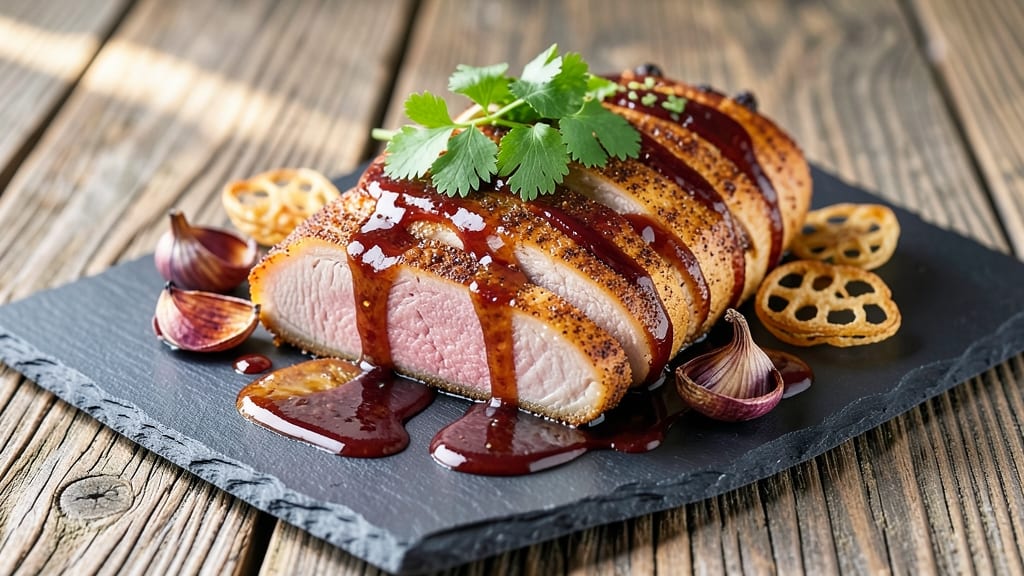
This oven-baked BBQ pork loin delivers restaurant-quality crisp bark without needing a grill—just precise technique and patience. 🔥 I developed this method after years of perfecting slow-cooked pork, where high heat and a sugar-rich glaze create that coveted caramelized crust while keeping the interior juicy.
The secret lies in a two-stage bake: first rendering fat for flavor, then broiling to lock in moisture while building bark.
What makes this recipe stand out is its foolproof balance—no need for a smoker or special equipment. A simple dry rub of paprika, garlic powder, and brown sugar sets the foundation, while store-bought or homemade BBQ sauce adds depth.
The key is resting the meat before slicing, ensuring every bite stays tender. This method transforms a basic pork loin into a showstopping centerpiece with minimal effort.
By the time you serve it, you'll have golden, crackling bark that contrasts perfectly with the tender, smoky meat inside. The glaze caramelizes into a sticky, sweet-savory crust that clings to each slice, making every bite worth the wait.
It’s the kind of dish that elevates a weeknight dinner into a memorable meal—no grill required.
Pair with classic sides like cornbread or coleslaw for the full experience. The recipe scales easily, so double it for gatherings. Here’s how to make it—crispy outside, juicy inside, every time.
Ingredients for baked bbq pork loin
Six ingredients transform basic pork loin into crispy, restaurant-worthy BBQ without a grill.
| Ingredient | Amount | Notes |
|---|---|---|
| Boneless Pork Loin 🐷 | 3 lb | Center-cut, 1.5-inch thick |
| Smoked Paprika 🌶️ | 2 tbsp | High-quality for smoky depth |
| Garlic Powder 🧄 | 1 tbsp | Freshly ground preferred |
| Light Brown Sugar 🍯 | 1 tbsp | Packed, for caramelization |
| Kosher Salt 🧂 | 1 tsp | Diamond Crystal preferred |
| Ground Black Pepper 🌶️ | ½ tsp | Freshly cracked for heat |
| Store-Bought BBQ Sauce 🍅 | 1 cup | Sweet and tangy preferred |
| Unsalted Butter 🧈 | ½ cup | Cold, for basting |
| Honey 🍯 | 2 tbsp | For glaze sweetness |
| Apple Cider Vinegar 🍎 | 1 tbsp | For tangy balance |
| Fresh Rosemary 🌿 | ¼ cup | Chopped, for aromatic depth |
| Fresh Thyme 🌿 | ¼ cup | Chopped, for herbal notes |
| Yellow Onion 🧅 | 1 whole | Thinly sliced, for garnish |
The pork loin is the star—center-cut and 1.5 inches thick ensures even cooking and maximum bark. Costco or Whole Foods carry premium cuts with good marbling, but any quality butcher will have it. Look for bright color and firm texture. The smoked paprika is non-negotiable here—it delivers that authentic BBQ flavor. Penzeys or bulk bins at natural markets offer the best quality. Fresh herbs like rosemary and thyme elevate the dish, but dried will work in a pinch at one-third the amount. For the BBQ sauce, I recommend Sweet Baby Ray's or Bull's-Eye for consistency, but homemade works beautifully too.
No smoked paprika? Substitute 1 tbsp chili powder plus 1 tsp liquid smoke—it won’t be identical, but close. Running out of honey? Maple syrup works 1:1, though it’s slightly more robust in flavor. The butter is crucial for basting—use unsalted to control seasoning. If you’re making this ahead, prep the dry rub and glaze components separately and store them in the fridge for up to 3 days. The onions can be caramelized separately if you prefer a sweeter garnish. For extra crispiness, broil the pork for 2-3 minutes per side at the end, watching closely to prevent burning.
Pork loin keeps best in the fridge for 3-4 days once cooked, but it reheats beautifully—just warm in a 350°F oven for 10-15 minutes with a splash of apple juice to keep it moist. For gatherings, double the recipe and freeze the extra portions for up to 3 months. Store leftovers in an airtight container with a paper towel to absorb excess moisture. The glaze hardens when chilled, so reheating will restore its sticky texture. Slice against the grain for tender, even bites—this is where the resting time pays off.
Why You'll Love This Recipe
- Let’s be real: most leftovers are sad. Not this. The pork stays juicy for days, and the glaze actually gets better as it rehydrates. I’ve reheated slices in a skillet with a splash of apple cider vinegar for breakfast tacos, and no one’s ever questioned why I’m eating pork at 9 AM. Plus, it’s budget-friendly—one pork loin feeds my family for two meals, and I’m not ashamed to admit I’ve frozen portions for when I’m too tired to cook.
- No-Fuss Prep: I swear by this recipe because it’s the kind of meal that lets you do other things—like scroll through your phone or actually relax—while the oven does all the work. Just rub that pork loin with smoked paprika, garlic powder, and a pinch of salt, then let the brown sugar caramelize into a sticky glaze. Honestly, I’ve made it while waiting for dinner guests to arrive, and it still comes out perfect.
- Smoky-Sweet Magic: That combination of smoked paprika and brown sugar? It’s what turns this into something ridiculously good. The paprika gives it a deep, earthy warmth, while the sugar melts into a glossy crust that cracks open to reveal juicy, tender meat underneath. My husband always asks for seconds, and I don’t even have to pretend to be subtle about how proud I am of it.
- Weeknight to Weekend: This isn’t just a Tuesday dinner—it’s the go-to for tailgates, potlucks, or when I need to feed a crowd without stressing. Slice it thin for sandwiches, serve it with roasted potatoes, or even toss it into a grain bowl the next day. Between us, I’ve pulled it out for everything from lazy Sunday brunches to last-minute game-day snacks, and it never lets me down.
Step-by-step instructions for baked BBQ pork loin
Here's the foolproof method for achieving smoky, crispy bark without a grill.
👨🍳 Step 1: Prepare the Dry Rub and Season the Pork
In a small bowl, combine the 2 tbsp smoked paprika, 1 tbsp garlic powder, 1 tbsp light brown sugar, 1 tsp kosher salt, and 0.5 tsp ground black pepper. This is your dry rub—it's the foundation for that deep, smoky flavor and perfect bark. Mix well until the spices are evenly distributed and no dry spots remain.
Pat the 3 lb boneless pork loin completely dry with paper towels—this is crucial for crispy bark. I like to press firmly in several spots to remove any moisture. Then, generously coat all sides of the pork with the dry rub, pressing it into the meat so it adheres well. Don't be shy—you want a thick, even layer. Let the seasoned pork sit at room temperature for 30 minutes before cooking to ensure even cooking and better bark formation.
🔥 Step 2: Create the Glaze and Preheat the Oven
In a separate bowl, mix together the 1 cup store-bought BBQ sauce, 0.5 cup cold unsalted butter, 2 tbsp honey, and 1 tbsp apple cider vinegar. This glaze will give your pork that sticky, caramelized finish. Stir well until the butter is fully incorporated and the mixture is smooth. Set aside.
Preheat your oven to 375°F—this temperature is perfect for developing that crispy bark while keeping the meat tender. Place a wire rack on a rimmed baking sheet and position the seasoned pork loin on top. The rack allows heat to circulate evenly around the meat, preventing steam buildup that can soften the bark.
🍳 Step 3: Sear and Baste for Maximum Flavor
Place the pork loin on a stovetop grill pan or heavy skillet over medium-high heat for 3-4 minutes per side to create a deep sear. You're looking for golden brown spots—this builds flavor and helps the bark stick. Once seared, transfer the pork to the prepared baking sheet in the oven.
Here's where it gets good: Every 15 minutes during the bake, brush the pork with the glaze mixture. This basting technique creates layers of flavor and helps develop that coveted bark. I like to use a pastry brush for even coverage—don't miss any spots. The glaze will bubble and sizzle as it hits the hot meat, creating those beautiful caramelized patches.
⏰ Step 4: Bake to Perfect Doneness
Bake the pork for 45-50 minutes total, basting every 15 minutes as mentioned. The internal temperature should reach 145°F for medium-rare (or 150°F for medium). Use a meat thermometer inserted into the thickest part of the loin—this is the only reliable way to ensure perfect doneness without overcooking.
Watch for the bark to develop a deep mahogany color with crispy edges. If it's browning too quickly, tent loosely with foil to prevent over-browning while still allowing heat to circulate. The pork is done when it's tender enough to pull apart easily with a fork but still holds together when sliced. Remove from the oven and let it rest for 10-15 minutes before slicing—this resting period keeps all those juices inside where they belong.
🥘 Step 5: Garnish and Serve with Confidence
While the pork rests, thinly slice the 1 whole yellow onion and arrange it on a serving platter. Transfer the rested pork to the platter, slicing it into ½-inch thick slices against the grain. Sprinkle the sliced pork with the 0.25 cup chopped fresh rosemary and 0.25 cup chopped fresh thyme for that final aromatic touch.
Serve immediately with any remaining glaze drizzled over the top. The combination of crispy bark, tender meat, and sweet-tangy glaze makes this pork loin a showstopper. Each bite delivers perfect texture and balanced flavors—smoky from the rub, sweet from the glaze, and herby from the fresh garnishes. This method proves you don't need a grill to achieve restaurant-quality BBQ pork.
Pro Tips For Making Baked Bbq Pork Loin
- USE A MEAT THERMOMETER: I learned this the hard way—pork loin can look done but still be tough. Pull it at 140°F internal temp (it’ll rise to 145°F while resting), not by guessing color. That’s when it’s juicy, not dry.
- SALT THE MEAT FIRST: Lay the pork loin out on a plate and pat it dry with paper towels—then hit it with kosher salt 30 minutes before baking. This seasoning step is non-negotiable; it keeps the crust crisp and the sugar from burning too fast.
- SKIP THE HONEY SUB: Light brown sugar is your friend here—it caramelizes better than honey or maple syrup and won’t make the crust sticky. If you’re tempted to swap, at least use a 1:1 ratio and bake 10 minutes longer.
- REST IT UNDER FOIL: After pulling the pork from the oven, tent it with foil and let it sit for 10 minutes. This traps heat and keeps the juices inside—no one wants to slice into a dry, sad loaf. (Yes, even if you’re impatient like me.)
Dietary considerations for this baked bbq pork loin
Gluten-Free Adaptations
The good news is this recipe is naturally gluten-free! The dry rub and glaze use simple ingredients that don't contain gluten. Just ensure your BBQ sauce is certified gluten-free—brands like Sweet Baby Ray's Original are safe, but always check labels.
I recommend Primal Kitchen BBQ Sauce for a completely gluten-free option with clean ingredients. The smoked paprika and garlic powder are also typically gluten-free unless cross-contaminated, so stick to brands like Penzeys for purity. 🌾
Low-Carb Options
For a lower-carb version, reduce the brown sugar in the dry rub to ½ tbsp and omit it entirely if strict. Replace the honey in the glaze with monk fruit sweetener (use 1 tbsp for equivalent sweetness) or erythritol.
The apple cider vinegar adds tang without carbs, and the butter provides richness. This adaptation keeps the dish flavorful while cutting carbs significantly—perfect for keto diets.
Dairy-Free Substitutes
Skip the butter in the glaze and use ½ cup dairy-free butter (like Miyoko's) or extra olive oil instead. For added richness, stir in 2 tbsp tahini or nutritional yeast to mimic the buttery flavor.
The BBQ sauce should also be dairy-free—check for hidden whey or casein. The crispy bark will still form beautifully, though the texture might be slightly less tender without butter. 🥛
Allergen-Friendly Notes
For nut allergies, avoid cross-contamination by using separate utensils and surfaces. If rosemary or thyme are concerns, swap them for fresh parsley or cilantro. For soy allergies, verify your BBQ sauce contains no soy additives—brands like Stubb's All Natural are soy-free.
Always double-check labels, as hidden allergens can lurk in seasonings. I keep a dedicated spice jar for allergy-free cooking to prevent mix-ups.
Protein Adjustments
If you prefer leaner pork, trim visible fat before seasoning. For extra marbling, ask your butcher to select a ribeye-style pork loin with more fat content. The glaze and rub will still work perfectly—just monitor cooking times closely.
For a lighter option, reduce the butter in the glaze to ¼ cup and replace with avocado oil for a neutral flavor. The bark will be slightly less rich but still delicious. 🐷
Nutrition facts
Frequently asked questions
Can I use regular paprika instead of smoked paprika?
You can substitute, but it won't deliver that authentic smoky depth. For best results, mix 1 tbsp regular paprika with ½ tsp liquid smoke (like La Choy) to mimic the flavor. The bark will still form, but the smoky aroma will be noticeably different. If you're short on time, this combo works in a pinch.
How do I prevent the pork from drying out?
Moisture control is key! First, never skip the 10-15 minute rest after baking—this lets juices redistribute. Second, baste every 15 minutes with the glaze to keep the surface moist. If browning too fast, tent loosely with foil. Finally, use a meat thermometer—pull at 145°F for medium-rare to guarantee juicy results.
Can I make this ahead of time?
Prep the dry rub and glaze components 1 day ahead and store separately in the fridge. For the pork itself, bake it 2-3 hours ahead, then refrigerate. Reheat in a 350°F oven for 15-20 minutes with a splash of apple juice to restore moisture. The bark may soften slightly but will still taste amazing.
What's the best way to slice the pork for maximum tenderness?
Always slice against the grain—look for the muscle fibers running lengthwise and cut perpendicular. Use a sharp chef's knife and slice into ½-inch thick pieces. This shortens the muscle fibers, making each bite more tender. For extra drama, fan the slices slightly on the platter before serving.
Can I use a different cut of pork instead of loin?
While pork loin works best, you can try pork tenderloin (adjust cook time to 25-30 minutes since it's leaner). For more fat and flavor, consider pork shoulder (cook low-and-slow at 275°F for 3-4 hours until tender). The glaze and rub will still work, but cooking methods and times will vary significantly.