
Soups & Stews
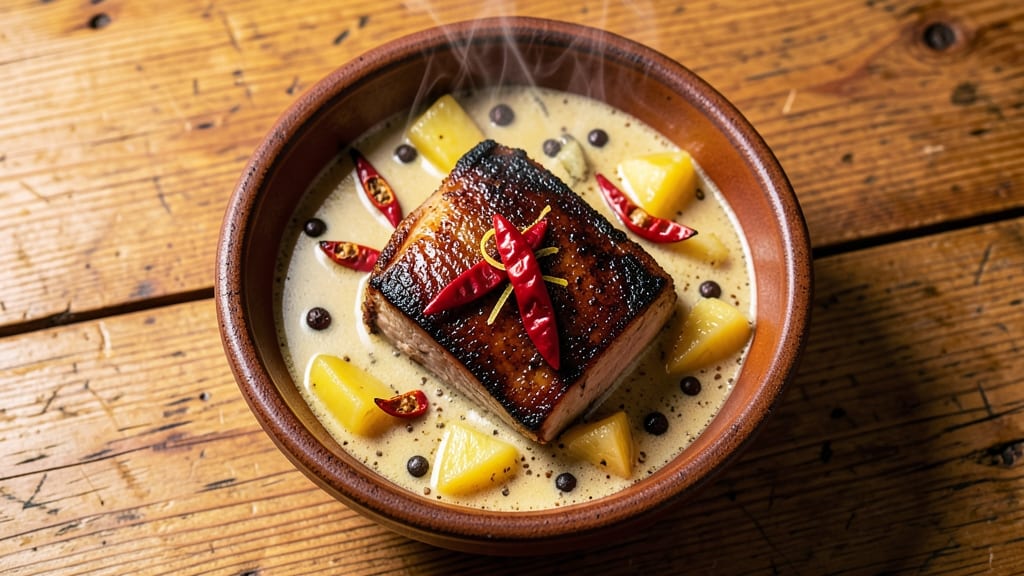
This Bajan pork stew recipe brings the bold flavors of the Caribbean to your kitchen with jerk-spiced pork simmered in a sweet-tangy sauce. 🌟 Growing up in Georgia, I first tasted this dish at a Caribbean festival and knew its rich, smoky depth would become a staple in my cooking repertoire.
The combination of jerk seasoning, pineapple, and traditional ingredients creates a dish that's both comforting and vibrant.
The secret to this recipe lies in the marinade—jerk seasoning, Scotch bonnet peppers, and allspice create layers of flavor that penetrate the meat deeply. I've perfected this method over years of cooking, ensuring the pork remains tender while absorbing those complex Caribbean spices.
The stew simmers slowly, allowing the flavors to meld and develop into a rich, aromatic broth that pairs beautifully with callaloo or plantains.
By the time you're done, you'll have a pot of hearty pork stew with tender meat, caramelized edges, and a sauce that's both sweet and spicy. The aroma alone will transport you to the islands, while the taste delivers that perfect balance of heat and sweetness.
This is the kind of dish that feeds a crowd and leaves everyone asking for seconds.
Serve it with rice, roasted plantains, or crusty bread to soak up every last drop of that flavorful sauce. Let's get cooking—this Bajan pork stew is a celebration of Caribbean flavors that belongs in every home cook's collection.
Ingredients for bajan pork stew
Pantry staples meet Caribbean heat for this bold, flavor-packed pork stew.
| Ingredient | Amount | Notes |
|---|---|---|
| Pork Shoulder 🍖 | 3 lb | Bone-in for best flavor |
| Scotch Bonnet Peppers 🌶️ | 2 whole | Seeds removed for less heat |
| Fresh Pineapple 🍍 | 1 ½ cup | Chopped, fresh or canned |
| Allspice Berries 🌿 | 2 tsp | Ground or whole, toasted |
| Ground Cumin 🌿 | 1 tbsp | Toasted for deeper flavor |
| Ground Ginger 🌿 | 1 tbsp | Freshly grated preferred |
| Garlic Cloves 🧄 | 6 cloves | Peeled, minced |
| Yellow Onion 🧅 | 1 whole | Diced, medium size |
| Tomato Paste 🍅 | ½ cup | Squeeze tube preferred |
| Vegetable Oil 🫒 | ¼ cup | For searing pork |
| Beef Broth 💧 | 2 cups | Low-sodium preferred |
| Brown Sugar 🍚 | ¼ cup | Light or dark |
| Fresh Thyme 🌿 | ¼ cup | Chopped, stems removed |
| Salt 🧂 | 1 ½ tsp | Kosher salt preferred |
| Black Pepper 🌶️ | ½ tsp | Freshly ground |
The Scotch bonnet peppers are non-negotiable for that authentic jerk heat—find them at Latin markets or Caribbean grocery stores. I always grab a few extra to freeze for future recipes. If you can't find fresh, hot sauce like Tabasco in a pinch, but it won't be the same. The pork shoulder? Costco or local butchers usually have the best deals on bone-in cuts—look for good marbling. Toast your spices (cumin, allspice) in a dry pan for 30 seconds before adding to the marinade—that extra step makes all the difference. Fresh ginger and thyme are ideal, but dried works at half the amount.
No Scotch bonnet? Habanero or Thai bird's eye peppers work, but reduce the amount by half. Fresh pineapple? Canned works fine—just drain it well. The tomato paste can be swapped for diced tomatoes (1 cup), but paste gives that deeper, richer base. Short on thyme? Oregano or marjoram in a pinch. For extra sweetness, add a splash of pineapple juice (1/4 cup). The brown sugar caramelizes beautifully, but coconut sugar works too. If you're making this ahead, prep the marinade first—it keeps for 3 days in the fridge.
This stew tastes even better the next day—make a double batch if you can. Keeps for 4-5 days in the fridge, freezes beautifully for 3 months. I like to portion it into containers with some rice and plantains for easy lunches. The sauce thickens as it cools, so add a splash of broth when reheating. Serve with white rice or roasted plantains to soak up all that flavor. Leftovers? Even better—just reheat with a splash of water.
Why You'll Love This Recipe
- One-Pot Magic: I swear by this—just dump everything in a pot, simmer, and walk away. No chopping marathons, no fancy techniques, just pork shoulder breaking down into tender heaven while the pineapple and Scotch bonnet work their flavor spell.
- Flavor Bomb Combo: That smoky cumin, fiery Scotch bonnet, and sweet pineapple? It’s a taste explosion I can’t resist. The allspice berries tie it all together with warmth that lingers—like a hug in every bite.
- Leftovers That Win: This stew tastes even better the next day. I make a double batch on Sundays, freeze half, and pull it out for lazy nights when I need something hearty without extra effort. (Yes, even on a Tuesday night.)
- Budget Crowd-Pleaser: Pork shoulder stretches for miles, and the spices cost pennies. Serve it with rice, dumplings, or even over toast—it’s the kind of dish that makes guests ask for the recipe while keeping my wallet happy.
Step-by-step instructions for Bajan pork stew
Let's build this vibrant stew where smoky jerk spices meet sweet pineapple heat.
🔥 Step 1: Sear the Pork Shoulder for Deep Flavor
Heat the 0.25 cup vegetable oil in a large Dutch oven over medium-high heat until shimmering. Pat the 3 lb pork shoulder completely dry with paper towels—this ensures maximum browning. Working in batches if needed, sear the pork on all sides for 4-5 minutes per side until deeply golden brown.
Here's the thing—I don't move the pork until I see crispy edges forming. That caramelization is where all the rich flavor starts. Once browned, remove the pork and set it aside on a plate. You'll notice the oil will look dark and flavorful—don't wipe it out, we'll use that for the stew base.
👨🍳 Step 2: Build the Spice Base with Onion and Aromatics
In the same Dutch oven, add the 1 whole yellow onion (diced) and cook for 5-6 minutes until softened and translucent. Add the 6 cloves garlic cloves (minced) and cook for another 30 seconds until fragrant—this prevents bitter garlic flavors.
Now add the 2 whole Scotch Bonnet Peppers (seeds removed, chopped), 1 tbsp ground cumin, 1 tbsp ground ginger, 2 tsp allspice berries, 0.25 cup fresh thyme, 1.5 tsp salt, and 0.5 tsp black pepper. Stir constantly for 1-2 minutes until the spices are toasted and aromatic. This step develops the complex jerk flavor profile that makes this stew special.
🍳 Step 3: Develop the Sauce with Tomato and Broth
Stir in the 0.5 cup tomato paste and cook for 2 minutes until it darkens slightly. Pour in the 2 cups beef broth and scrape up any browned bits from the bottom of the pan—this is where all the flavor hides. Return the seared pork to the pot, along with the 1.5 cup fresh pineapple (chopped) and 0.25 cup brown sugar.
Bring everything to a gentle simmer, then reduce heat to low. The liquid should bubble softly—if it's boiling vigorously, turn it down. This slow cook gives the pork time to become fork-tender while absorbing all those amazing flavors. Here's where the magic happens: the sweet pineapple balances the heat from the Scotch Bonnet while the spices meld together.
⏰ Step 4: Simmer Until Fork-Tender
Cover the pot and simmer for 2.5-3 hours on low heat, turning the pork occasionally to ensure even cooking. The stew should reduce slightly, creating a rich, flavorful sauce. You'll know it's done when a meat thermometer inserted into the thickest part of the pork reads 203°F—this ensures it's tender but not falling apart.
I check for doneness by piercing the pork with a fork—it should slide in easily with no resistance. If the sauce seems too thin, uncover and simmer for another 15-20 minutes to thicken it up. The pork should be falling off the bone when pulled apart, with juices that are rich and infused with all the spices.
🍽️ Step 5: Rest and Serve with Confidence
Remove the pork from the stew and let it rest for 10 minutes before shredding it with two forks. Return the shredded pork to the pot and stir gently to combine. Taste and adjust seasoning—you might need a little more salt or brown sugar to balance the flavors.
This stew tastes even better the next day as the flavors continue to develop. Serve it hot over rice or with crusty bread to soak up that delicious sauce. The combination of sweet, spicy, and savory flavors makes this a true taste of the Caribbean that will have everyone asking for seconds!
Pro Tips For Making Bajan Pork Stew
- SEAR THE PORK FIRST: Get that Dutch oven smoking hot—medium-high heat, about 5 minutes per side—before adding the pork shoulder. The crust locks in flavor and keeps the meat from turning into mushy shreds later. (Yes, even if you’re impatient like me, resist the urge to rush this.)
- TOAST THE SPICES: Dry-toast the whole allspice berries and ground cumin in the same pot for 30 seconds before adding liquids. The nutty aroma deepens, and you’ll taste it in every bite. (I used to skip this, and the stew always felt off—now I never do.)
- CONTROL THE SCOTCH BONNET: Remove the peppers after 5 minutes of cooking—they’ll mellow but still pack heat. If you leave them too long, the stew can turn bitter. (And trust me, you don’t want to fight that flavor later.)
- SIMMER LOW AND SLOW: After the initial sear and braise, reduce to a gentle simmer—tiny bubbles, maybe 170°F (77°C) if you’re measuring. Rushing this turns the pork shoulder to sawdust. (I learned this the hard way when I walked away and came back to rubbery meat.)
Common mistakes when making great bajan pork stew
Over-Searing the Pork
I've seen this happen more times than I can count—pork that ends up tough and dry because someone cranked the heat too high. Remember, we're aiming for golden brown, not charcoal black. When searing, keep the heat at medium-high and resist the urge to rush.
If your pork starts smoking excessively or looks like it's burning, pull it back and let it rest for a minute before continuing. The goal is to develop flavor through the Maillard reaction, not create a burnt crust. 🔥
Skipping the Resting Step
This is a big one, folks. After removing the pork from the stew, always let it rest for 10 minutes before shredding. I know it's tempting to dig in immediately, but skipping this step means you'll end up with dry, stringy meat.
The resting period allows the juices to redistribute throughout the pork, keeping it moist and tender. Trust me, that extra 10 minutes makes all the difference in the final texture.
Using Wrong Peppers
Scotch bonnet peppers are non-negotiable for authentic Bajan flavor. I've tried substitutes like jalapeños or serranos, and while they add heat, they lack the complex fruity depth that Scotch bonnets bring. If you can't find them, try habaneros, but reduce the amount by half.
And for heaven's sake, never use cayenne powder—it's a completely different flavor profile. The peppers should be seeds removed for less heat but still provide that signature Caribbean punch. 🌶️
Not Toasting the Spices
Toasting your spices in the dry pan for 30 seconds before adding them to the marinade might seem like a small detail, but it's crucial. This step brings out the essential oils in the spices, intensifying their flavors.
I've made this stew both ways, and the difference is night and day. The toasted spices create that warm, aromatic base that makes the whole dish sing. Don't skip it—it's what transforms good stew into exceptional stew.
Boiling the Stew Too Vigorously
After adding the broth, you want a gentle simmer, not a rolling boil. Boiling too vigorously can make the pork tough and cause the sauce to break. Keep the heat at low, and if you see big bubbles, turn it down.
The stew should bubble softly, allowing the pork to cook slowly and absorb all those beautiful flavors. This is where patience pays off—rushing this step will leave you with less tender meat and a thinner sauce. ⏰
Ignoring the Sauce Reduction
Don't be afraid to let the stew reduce and thicken as it simmers. If your sauce looks too thin, uncover the pot and let it cook longer—15-20 minutes should do the trick. The reduced sauce is what carries all those amazing flavors.
I've had people complain that their stew was "watery," and it was always because they didn't let it reduce properly. The longer it simmers, the richer and more concentrated the flavors become. This is where the magic happens, so give it the time it needs. 💫
Nutrition facts
Frequently asked questions
What makes this Bajan pork stew different from other Caribbean pork dishes?
This recipe captures the signature jerk-spiced heat of the Bahamas with its Scotch bonnet peppers and allspice, but the sweet pineapple and brown sugar create a unique balance. Unlike Jamaican jerk (which often uses more scotch bonnet and less sweetness), this stew incorporates a 2.5-hour slow simmer that develops deeper flavors. The tomato paste base also gives it a richer, more complex sauce than many other island pork dishes.
Can I substitute bone-in pork shoulder with pork loin or tenderloin?
I don't recommend it! Bone-in pork shoulder stays moist and flavorful during the long simmer, while pork loin or tenderloin will dry out. If you're set on using a leaner cut, try pork butt instead—it's similar to shoulder but slightly leaner. For best results, always use a cut with some fat content (at least 15% fat) to keep the meat tender.
How do I adjust the heat level if Scotch bonnet peppers aren't available?
For milder heat, use 1 habanero pepper (seeds removed) or 2 Thai bird's eye peppers—reduce the amount by half. If you need more heat, add 1/4 tsp cayenne powder after cooking (it burns off raw). Never substitute with jalapeños—they lack the fruity depth of Scotch bonnets. The key is balancing the heat with the 1.5 cups pineapple and 1/4 cup brown sugar.
Can I make this stew in a slow cooker or Instant Pot?
For a slow cooker, brown the pork first, then transfer everything to the pot and cook on low for 6-7 hours or high for 3-4 hours. For an Instant Pot, sear the pork, then add all ingredients and cook on high pressure for 45 minutes, followed by a 10-minute natural release. Both methods work well, but the stovetop version gives you more control over the sauce reduction.
What's the best way to reheat leftovers without drying out the pork?
Reheat gently in a pot with 2-3 tablespoons of water or broth over low heat until warmed through (10-15 minutes). Never microwave—it makes the pork rubbery. For extra richness, add a splash of pineapple juice or a pat of butter. The stew actually tastes better the next day as flavors meld further, so make a double batch if possible!