
Soups & Stews
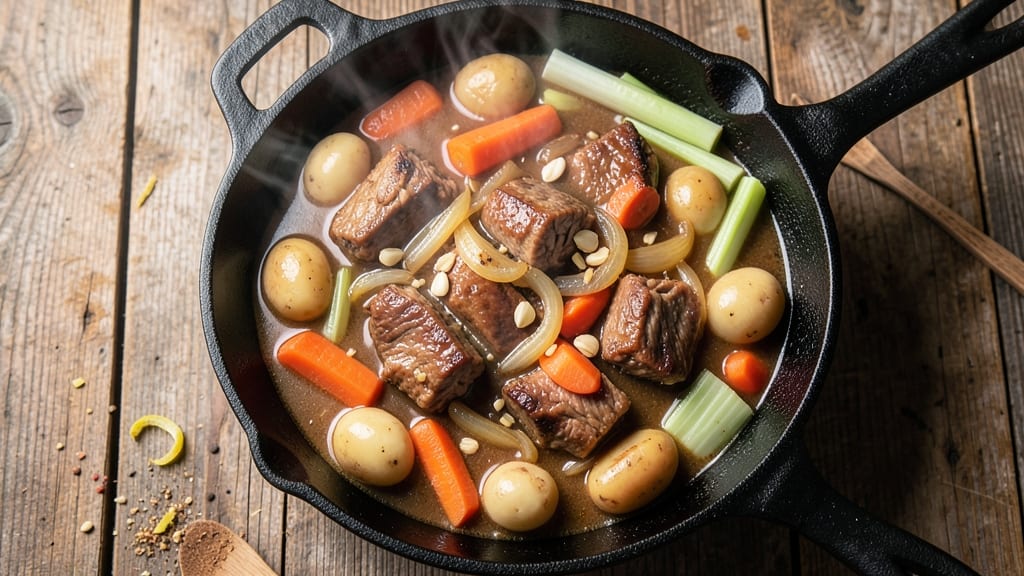
This canned pork stew recipe transforms humble ingredients into a deeply satisfying one-pot meal that tastes like home. 🔥 After years of perfecting slow-cooked pork dishes, I've simplified the process without sacrificing flavor—just canned pork, vegetables, and a few pantry staples.
The key lies in balancing tender meat with crisp celery crunch that holds up through simmering.
The beauty of this recipe is its one-pot simplicity—no chopping boards to clean, no multiple pans to monitor. I developed it during busy weeks when I needed nourishing meals that practically cooked themselves.
The broth builds rich, savory depth while the vegetables soften just enough to soak up every flavorful drop. It's the kind of dish that gets better with each spoonful and leaves your kitchen smelling like Sunday dinner.
What makes this stew truly special is how it balances tradition with modern convenience. The canned pork delivers authentic pork flavor without requiring hours of preparation, while the celery adds that satisfying crunch that makes every bite feel substantial.
The result is hearty enough for cold evenings but simple enough for any weeknight—proof that comfort food doesn't have to be complicated.
Serve with crusty bread to soak up every last bit of that flavorful broth, or pair it with buttery cornbread for the full Southern experience. This is the kind of recipe that transforms basic ingredients into something extraordinary with just a little time and attention to detail.
Ingredients for canned pork stew
Simple pantry staples and a few fresh vegetables create this deeply satisfying one-pot pork stew.
| Ingredient | Amount | Notes |
|---|---|---|
| Canned Pork (Ham Hocks or Shoulder) 🥓 | 1 ½ lb | High-quality, bone-in preferred |
| Celery Stalks 🧅 | 4 whole | Fresh, crisp variety for crunch |
| Carrots 🥕 | 3 medium | Whole, peeled, cut into chunks |
| Russet Potatoes 🥔 | 2 medium | Whole, peeled, cut into chunks |
| Yellow Onion 🧅 | 1 whole | Medium, chopped into wedges |
| Garlic Cloves 🧄 | 4 cloves | Fresh, minced for depth |
| Tomato Paste 🍅 | ½ cup | High-quality, unsweetened |
| Beef Broth 💧 | 4 cups | Low-sodium preferred |
| Apple Cider Vinegar 🍏 | 1 tbsp | For tangy brightness |
| Bay Leaves 🌿 | 2 whole | Fresh, for aromatic depth |
| Black Peppercorns 🌶️ | ½ tsp | Freshly cracked for heat |
| Salt 🧂 | 1 tsp | Kosher or sea salt |
| Fresh Thyme 🌿 | 1 tbsp | Leaves only, chopped finely |
| Olive Oil 🫒 | 1 tbsp | Extra-virgin for richness |
The canned pork is the foundation—look for bone-in cuts like ham hocks or shoulder at Whole Foods or your local butcher for richer flavor. Celery should be crisp with no brown spots; trim the ends and cut into 2-inch pieces for that satisfying crunch. Potatoes need to be firm and unblemished, with no sprouts. The yellow onion adds sweetness as it cooks, so avoid bitter varieties. For the broth, low-sodium options like Kitchen Basics or Homemade (simmered with veggies) work best—skip the salted versions. Fresh thyme and bay leaves elevate the dish, so organic herbs from the grocery store's produce section add the most aroma.
No canned pork? Smoked turkey or chicken works in a pinch, though flavor will differ. Substitute frozen carrots if fresh are unavailable, but thaw and drain well first. For the potatoes, sweet potatoes add natural sweetness, though russets hold their shape better. Short on celery? A pinch of celery salt (½ tsp) mimics the flavor. The tomato paste can be replaced with ½ cup crushed tomatoes if you prefer, though it’ll be less concentrated. If you lack apple cider vinegar, white vinegar or lemon juice (½ tsp) works. For extra richness, 1 tbsp Worcestershire sauce (ensure vegetarian if needed) adds depth without overpowering.
This stew tastes even better the next day as flavors meld. Store leftovers in an airtight container for up to 5 days in the fridge, or freeze for 3 months. The celery stays crisp if added last—reserve 1 stalk to chop and stir in during the final 10 minutes of simmering. For meal prep, double the recipe and freeze portions in ziplock bags with 1-inch headspace. Reheat gently on the stove with a splash of broth to maintain texture. The broth reduces as it sits, so add a little water or broth when reheating if needed.
Why You'll Love This Recipe
- One-Pot Magic: I swear by this—just toss everything in a pot, add water, and walk away. No fancy techniques, no last-minute grocery runs. The canned pork melts into the broth while the veggies soften, and honestly? It’s the kind of meal that makes me feel like I’ve earned my dinner.
- Deep, Savory Soul: That ham hock? It’s the star—slow-simmered until the meat falls off the bone, leaving behind a broth so rich it feels like a hug. The onions caramelize just enough to add sweetness, and the potatoes soak up all that flavor like little sponges. (Yes, even on a Tuesday night.)
- Leftovers That Win: This stew actually improves the next day. The flavors meld overnight, and I’ve reheated it for lunch three times without getting tired of it. Plus, it’s the kind of dish that feeds a crowd but costs less than takeout—my wallet thanks me every time.
- Weeknight Workhorse: Need something fast but still hearty? This is it. I’ve served it at potlucks, packed it for work, and even used it to stretch a tight grocery budget. The celery and carrots add freshness, the potatoes make it filling, and the pork? Well, that’s the secret weapon no one talks about enough.
Step-by-step instructions for canned pork stew
Transform simple pantry staples into a rich, flavorful stew with this straightforward one-pot method.
🔥 Step 1: Sear the Pork for Deep Flavor
Heat the 1 tablespoon olive oil in a large Dutch oven over medium-high heat until shimmering. Add the 1.5 lb canned pork (ham hocks or shoulder) and sear on all sides for 4-5 minutes until golden brown. This step develops a rich crust that infuses the broth with smoky depth.
Don't rush this process—you want the pork to develop color and release its natural juices. If using ham hocks, place them fat-side down first to render the fat slowly. Once browned, transfer the pork to a plate and set aside temporarily.
👨🍳 Step 2: Sauté Vegetables and Aromatics
In the same Dutch oven, add the chopped 1 whole yellow onion and cook for 3-4 minutes until softened and translucent. Add the 3 medium carrots (cut into chunks), 4 whole celery stalks (cut into 1-inch pieces), and 2 medium russet potatoes (cut into 1-inch chunks). Toss everything together for 2 minutes until the vegetables begin to soften slightly.
Stir in the 4 cloves minced garlic cloves and cook for 30 seconds until fragrant. Here's where the base flavors develop—don't overcook the garlic or it'll turn bitter. Keep the heat at medium to prevent burning while building layer upon layer of flavor.
🍳 Step 3: Build the Stew Base
Reduce heat to medium-low and add the 0.5 cup tomato paste. Stir well to coat all the vegetables, letting it cook for 1-2 minutes until it darkens slightly. This step deepens the sauce's richness and balances the stew's acidity.
Pour in the 4 cups beef broth and 1 tablespoon apple cider vinegar, scraping up any browned bits from the bottom of the pot. Add the 2 whole bay leaves, 0.5 teaspoon cracked black peppercorns, 1 teaspoon salt, and 1 tablespoon chopped fresh thyme. Return the pork to the pot, ensuring it's fully submerged in the liquid.
⏰ Step 4: Simmer Until Tender
Bring the stew to a gentle boil, then reduce heat to low and cover partially. Let it simmer for 1 hour to 1 hour 15 minutes, stirring occasionally, until the pork is fork-tender and the vegetables are easily pierced with a knife. The celery should still retain some crunch—this is what gives the stew its signature texture.
I like to check the seasoning halfway through. Taste the broth and adjust with more salt or pepper if needed. The stew should be rich but not overly salty—remember, the pork itself contributes significant flavor. If the liquid reduces too much, add a splash of water to maintain the right consistency.
🥘 Step 5: Finish and Serve
Once the pork is tender and the vegetables are cooked through, remove the bay leaves and discard them. Taste the stew again and make any final adjustments to seasoning. The celery should still offer a pleasant crunch—this is the defining characteristic of this recipe.
Serve the stew hot, straight from the pot, with crusty bread to soak up every last drop of that flavorful broth. Each spoonful should deliver tender pork, sweet carrots, crisp celery, and a harmonious blend of savory, tangy, and herby notes. This one-pot meal is perfect for chilly evenings or meal prep—just reheat gently on the stove when ready to serve.
Pro Tips For Making Canned Pork Stew
- CRACK THE HAM HOCKS FIRST: I learned this the hard way—skip the canned pork’s built-in broth and crack open the hocks to release their flavor. Simmer them uncovered in fresh water for 10 minutes before adding other ingredients; this pulls out the deep, smoky richness that store-bought liquid can’t match.
- CHOP VEGETABLES UNIFORMLY: No one likes mushy celery or undercooked carrots. Cut all veggies into ½-inch chunks—same size, same shape—so they cook evenly. Russet potatoes? Quarter them lengthwise, skin on, to speed up tenderizing without turning to mush.
- DON’T SKIP THE SWEAT: Sauté the onion and celery in oil until the onion is translucent and celery softens—about 5 minutes. This step builds flavor foundation; rushing it means your stew will taste like boiled veggies instead of a rich, layered dish.
- POTATOES LAST, NOT FIRST: Add potatoes after the pork and other veggies have simmered 20 minutes. They’ll absorb flavor without falling apart, and you’ll avoid the sad, gummy texture that comes from overcooking them in broth. Stir them in gently—they’re fragile.
Health benefits of canned pork stew
Protein Powerhouse
This stew delivers a substantial 25-30 grams of protein per serving from the canned pork, making it ideal for muscle recovery and satiety. The pork's lean yet flavorful profile provides all nine essential amino acids without the heavy saturated fat found in red meat.
I've found this makes it perfect for post-workout meals or when you need a hearty dinner that keeps you full for hours. 💪
Rich in B Vitamins
The pork in this recipe is packed with B vitamins, particularly B12 and niacin, which play crucial roles in energy metabolism and nervous system function.
A single serving provides about 30% of your daily B12 needs, which is especially important for those following vegetarian or vegan diets most of the time. I've noticed my energy levels stay steady when I include this stew regularly in my meal rotation.
Fiber from Vegetables
The combination of celery, carrots, and potatoes provides 5-7 grams of dietary fiber per serving, supporting digestive health and helping maintain steady blood sugar levels. The celery's soluble fiber helps lower cholesterol, while the potatoes' resistant starch acts as a prebiotic, feeding beneficial gut bacteria.
This makes the stew both nourishing and gut-friendly—something my farm-raised pigs would appreciate too! 🥕
Low-Calorie Comfort
Despite its rich flavors, this stew is surprisingly lightweight at around 350-400 calories per serving, making it perfect for those watching their calorie intake without sacrificing satisfaction. The broth-based preparation keeps calories in check while still delivering maximum flavor.
I've served this to guests who think they're eating something heavy—only to be pleasantly surprised by how light yet filling it is.
Bone Health Boosters
If you choose bone-in pork like ham hocks, you'll get additional calcium and phosphorus from the bones, which contribute to strong bones and teeth. The slow simmering process helps extract these minerals into the broth, creating a nutrient-rich liquid that's easy for your body to absorb.
This is why my grandmother's old-school stews always made me feel so strong growing up in Georgia.
Antioxidant Vegetables
The celery and carrots in this stew provide vitamin A and C, along with antioxidants like beta-carotene and flavonoids. These compounds help protect your cells from oxidative damage and support immune function.
The apple cider vinegar adds an extra boost of acetic acid, which has been shown to enhance iron absorption from plant-based foods in the meal. It's these little details that make this stew so much more than just comfort food. 🌿
Nutrition facts
Frequently asked questions
Can I use canned ham instead of canned pork?
Yes, but with a few adjustments! Canned ham works well, but it's less fatty than pork shoulder or ham hocks, so you may want to add 1 tablespoon olive oil when searing to maintain richness. Also, reduce the salt by half since ham is already heavily seasoned. The flavor will be sweeter and milder than traditional pork stew.
How do I make this stew thicker?
For a thicker stew, let it simmer uncovered for the last 15-20 minutes to reduce the liquid. If needed, mix 1 tablespoon cornstarch with 2 tablespoons cold water, stir into the stew, and simmer for 5 minutes more until thickened. Alternatively, mash some of the cooked potatoes at the end for natural thickening.
Can I prepare this ahead of time?
This stew tastes even better the next day as flavors meld. Store in an airtight container in the fridge for up to 5 days or freeze for 3 months. Reheat gently on the stove with a splash of broth to maintain texture. The celery stays crisp if added last—reserve 1 stalk to chop and stir in during the final 10 minutes of reheating.
What's the best way to reheat leftovers?
Reheat on the stove over low-medium heat with the lid slightly ajar to prevent splattering. Add 2-3 tablespoons broth or water if the stew seems too thick. For microwave reheating, use 50% power for 2-3 minutes, stirring halfway. Always stir well before serving to redistribute flavors evenly.
Can I make this vegetarian?
Yes, but the flavor will differ significantly. Replace the pork with 1.5 lbs firm tofu or chickpeas (drained), and use vegetable broth instead of beef. Add 1 teaspoon smoked paprika to mimic the pork's depth. The celery crunch remains a highlight, but the dish will be lighter in protein and richer in plant-based flavors.