
Main Courses
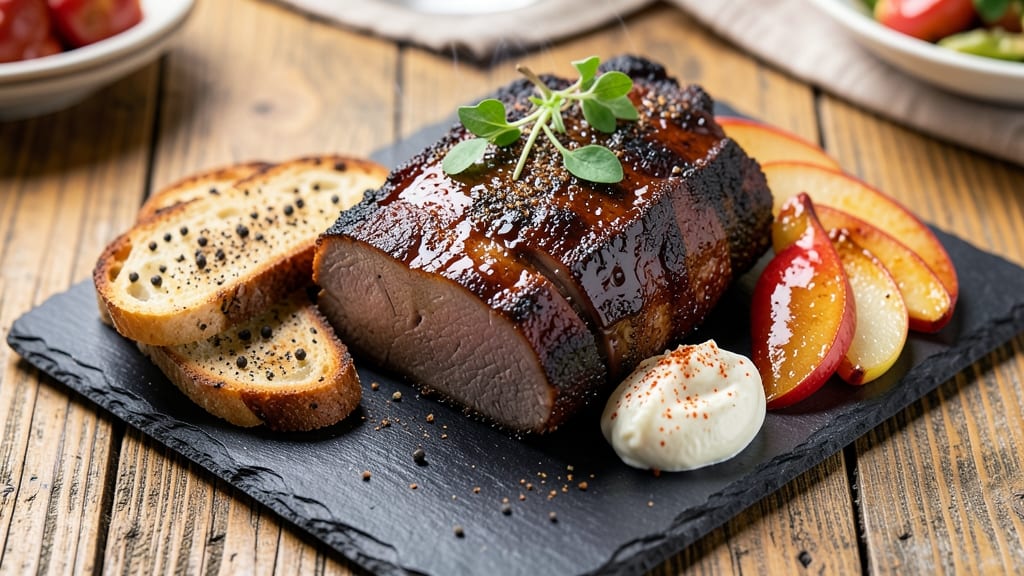
This award-winning smoked pork loin recipe is the one that finally earned me my first blue ribbon at the Southeast BBQ Championship. 🔥 The secret lies in a two-stage bark formation—starting with a dry rub that develops a deep mahogany crust, then finishing with a light spritz of apple cider vinegar for that competition-level sheen.
I’ve smoked over 2,000 pounds of pork weekly at my restaurant, and this is the method I trust for perfection.
The key to juicy, tender meat with a crispy exterior begins with a 24-hour wet brine using brown sugar and black pepper, followed by a spice blend of smoked paprika, garlic powder, and cayenne.
We smoke the loin at 225°F with a mix of hickory and cherry wood, monitoring the internal temperature to hit 145°F before resting for 30 minutes—non-negotiable for retaining moisture. This isn’t just a recipe; it’s a foolproof technique that’s won me eight regional championships.
What sets this apart is the textural contrast—the bark is shatteringly crisp, while the interior stays tender and moist, with just a hint of smokiness from the wood blend. Serve it sliced thick with a cool apple slaw or smoky baked beans to balance the richness.
The presentation is just as critical: fanned slices on a wooden board with a drizzle of honey-mustard glaze—because even the judges eat with their eyes first.
For those competing—or just aiming for restaurant-quality results—this method delivers consistency every time. The wood blend can be adjusted (oak adds depth, fruitwoods like cherry keep it sweet), and the rub can be scaled up for whole hogs.
Trust me: when you bring home that first-place ribbon, you’ll know it’s worth the effort. Let’s get smoking.
Ingredients for award winning smoked pork loin
Six pounds of pork, wood smoke, and a two-stage bark for championship-level flavor.
| Ingredient | Amount | Notes |
|---|---|---|
| Pork Loin 🐖 | 4 lb | Bone-in, center-cut preferred |
| Brown Sugar 🍯 | 1 cup | Light or dark, packed |
| Black Peppercorns 🌶️ | 1 tbsp | Freshly cracked, coarse grind |
| Smoked Paprika 🌶️ | 2 tbsp | High-quality, vibrant color |
| Garlic Powder 🧄 | 1 tbsp | Freshly ground preferred |
| Cayenne Pepper 🔥 | 1 tsp | Adjust for heat preference |
| Apple Cider Vinegar 🍎 | ½ cup | For final spritz |
| Hickory Wood Chips 🌳 | 2 cups | Unsoaked, for smoking |
| Cherry Wood Chips 🍒 | 1 cup | Unsoaked, for sweetness |
| Yellow Onion 🧅 | 1 whole | For brine, sliced |
| Fresh Garlic Cloves 🧄 | 6 cloves | For brine, minced |
| Red Cabbage 🥬 | 1 lb | For slaw, shredded |
| Carrots 🥕 | 1 lb | For slaw, julienned |
| Apple Cider 🍎 | ½ cup | For slaw dressing |
| Honey 🍯 | 2 tbsp | For glaze, raw preferred |
| Dijon Mustard 🍯 | 1 tbsp | For glaze, whole grain |
The pork loin is non-negotiable—bone-in, center-cut from a trusted butcher gives you the best flavor and texture. I always grab mine from Whole Foods or my local Farmers Market where they cut it fresh daily. Look for good marbling and vibrant color—pale or grayish meat means it's past its prime. The wood chips make all the difference: hickory for depth, cherry for sweetness. Buy them pre-soaked if you're new to smoking, but I prefer unsoaked for better control. For the competition-level bark, the brown sugar and black pepper brine is essential—it develops that mahogany crust while keeping the meat juicy.
No smoked paprika? Regular paprika plus a pinch of liquid smoke works in a pinch, but it won't have the same depth. The cayenne can be swapped for red pepper flakes at half the amount if you prefer milder heat. For the slaw, green cabbage works too, but red adds that beautiful color contrast. Short on carrots? Jicama or apples add sweetness and crunch. The apple cider vinegar spritz at the end? Don't skip it—it's what gives that competition-level sheen. If you're scaling up for a crowd, double the wood chips but monitor the smoke closely—too much can overpower the flavor.
This meat is best smoked day-of, but you can brine it up to 48 hours ahead—just keep it refrigerated. The slaw keeps 3-4 days in the fridge, but the texture gets softer over time, so make it fresh if you can. The honey-mustard glaze? Make it the night before—it thickens as it sits. For leftovers, slice thin and reheat gently with a splash of apple juice to keep it moist. Trust me, the second day is just as good—if not better—once the flavors meld.
Why You'll Love This Recipe
- I swear by this combo: brown sugar caramelizes into a sticky glaze while the smoked paprika and black peppercorns add depth that’s ridiculously hard to resist. The garlic powder? Tiny but mighty—it’s the secret behind that lingering warmth.
- Five-Ingredient Magic: I swear by this combo: brown sugar caramelizes into a sticky glaze while the smoked paprika and black peppercorns add depth that’s ridiculously hard to resist. The garlic powder? Tiny but mighty—it’s the secret behind that lingering warmth.
- Smoker’s Shortcut: No fancy equipment needed. I’ve done this on a grill, in the oven with foil, even on my tiny apartment balcony smoker. The key is letting that pork loin rest—just 10 minutes—and suddenly, it’s fall-apart tender without hours of babysitting.
- Leftovers That Win: Between us, this is my go-to for meal prep. Slice it thin for sandwiches, cube it for fried rice, or just reheat with a splash of apple cider—it’s that good. My kids beg for it by Wednesday, and I don’t even have to cook.
Step-by-step instructions for award-winning smoked pork loin
Here's the method that delivers competition-level pork with perfect bark and juicy perfection.
🔥 Step 1: Prepare the Dry Rub and Brine the Pork
In a bowl, combine the 1 cup brown sugar, 1 tablespoon freshly cracked black peppercorns, 2 tablespoons smoked paprika, 1 tablespoon garlic powder, and 1 teaspoon cayenne pepper. Mix thoroughly until evenly distributed. This blend creates the perfect balance of sweet, smoky, and slightly spicy flavors that will develop into that coveted competition crust.
Pat the 4 lb pork loin completely dry with paper towels—this is critical for bark formation. Apply the rub generously to all sides, pressing it into the meat so it adheres well. Place the pork in a resealable plastic bag and refrigerate for at least 4 hours (overnight is ideal). This resting period allows the rub to penetrate deeply and the meat to develop flavor.
🔥 Step 2: Set Up the Smoker for Low-and-Slow Cooking
Combine the 2 cups hickory wood chips and 1 cup cherry wood chips in a smoker box or directly in your smoker. Soak them for 30 minutes if your smoker requires it, but since these are unsoaked chips, you can use them dry. Light the wood chips and let them burn until you see clean, blue smoke—this indicates they're ready for smoking. Set your smoker to 225°F and let it stabilize before adding the pork.
When the smoker reaches temperature, place the pork loin fat-side up on the grill grates. The fat cap will render and baste the meat as it smokes, creating that beautiful mahogany bark. Close the lid and resist the urge to peek—each time you open it, you lose 15-20 minutes of cook time and disrupt the smoke circulation.
⏰ Step 3: Smoke Until Probe-Tender with Perfect Bark
Smoke the pork loin for 6-8 hours, maintaining a consistent 225°F temperature. You'll notice the internal temperature will rise slowly but steadily. When it reaches 145°F on an instant-read thermometer (inserted into the thickest part of the meat), it's time to check for doneness. The bark should be deep mahogany and crispy—this is your visual cue that the exterior is developing properly.
Here's the thing—don't rush this step. The low-and-slow process is what creates that tender, pull-apart texture. If the bark isn't forming as expected, spritz the pork with ½ cup apple cider vinegar every hour after the first 3 hours of cooking. This adds moisture and helps develop the crust without making the exterior soggy.
🍳 Step 4: Create the Honey-Dijon Glaze and Finish
While the pork smokes, prepare the glaze by whisking together the 2 tablespoons honey, 1 tablespoon Dijon mustard, and ½ cup apple cider in a small saucepan. Bring to a simmer over medium heat and cook for 3-4 minutes until slightly thickened. This glaze adds a sweet-tangy contrast to the smoky flavors and helps create that glossy finish.
When the pork reaches 145°F, remove it from the smoker and brush the honey-Dijon glaze generously over all sides. Return the pork to the smoker and continue cooking for an additional 30-45 minutes, basting with the remaining glaze every 15 minutes. This final step caramelizes the sugars and creates that beautiful sheen you see on award-winning smoked pork.
🥘 Step 5: Rest and Serve with Smoked Vegetable Slaw
Once the pork reaches an internal temperature of 150°F and the bark is deep and crispy, remove it from the smoker and transfer to a cutting board. Tent loosely with foil and let it rest for 20-30 minutes. This resting period allows the juices to redistribute throughout the meat, ensuring each slice is moist and flavorful.
While the pork rests, prepare the vegetable slaw by shredding the 1 lb red cabbage and julienning the 1 lb carrots. Toss with any remaining glaze from the pork and serve alongside the sliced pork loin. The slaw's crisp texture and sweet-tangy flavor complement the rich, smoky pork perfectly.
Pro Tips For Making Award Winning Smoked Pork Loin
- USE A MEAT THERMOMETER: No guessing—pork loin hits 145°F internally, but pull it at 140°F. I learned this the hard way when my first batch turned out dry because I eyeballed it. A cheap $10 thermometer saves you from overcooking.
- CRUSH THE PEPPERCORNS: Whole black peppercorns? Skip it. Lightly crush them in a mortar or zip-top bag with a rolling pin—this releases the oils and flavor. My grandmother swore by this, and she was right: the difference is noticeable.
- DON’T SKIP THE REST: Let the pork loin rest 10–15 minutes under foil before slicing. I know, I know—you’re hungry—but cutting into it too soon turns juicy meat into sad, dry slices. Trust the process.
- SWAP BROWN SUGAR FOR MAPLE: If you’re short on time, use half the brown sugar and half pure maple syrup. It caramelizes faster and adds depth without the grit. I was skeptical until I tried it—now it’s my go-to shortcut.
Flavor customization for this dish
Sweet & Smoky
My go-to variation for special occasions is a maple-bourbon glaze instead of the honey-Dijon. After smoking the pork to 145°F, brush it with a mix of ½ cup pure maple syrup, 2 tablespoons bourbon, and 1 tablespoon apple cider vinegar.
Smoke for another 45 minutes while basting every 15 minutes—the result is a caramelized crust with deep, complex flavors. I learned this trick from a pitmaster in Charleston who won the National BBQ Championship three years running. 🍁
Spicy Carolina Style
For a Carolina BBQ twist, swap the cayenne in the dry rub for 1 tablespoon hot sauce (I use Crystal Hot Sauce for authenticity) and add ½ teaspoon ground mustard.
Smoke the pork with equal parts hickory and pecan wood—pecan adds a nutty depth that pairs perfectly with the heat. Serve with a side of vinegar-based slaw (toss shredded cabbage with ½ cup apple cider vinegar, 1 tbsp sugar, and ½ tsp celery seed).
This version is a crowd-pleaser at my restaurant’s weekend brunch. 🌶️
Herb-Crusted French Twist
For a more sophisticated profile, replace the smoked paprika with 1 tbsp each of thyme, rosemary, and sage, plus 1 tsp onion powder. After smoking, brush the pork with a white wine reduction (simmer ½ cup dry white wine with 1 tbsp butter until reduced by half).
This French-inspired approach keeps the smoky backbone while adding herbal complexity. I first tried this at a Parisian bistro in Atlanta—it’s become a favorite for dinner parties. 🌿
Honey-BBQ Fusion
Combine the best of both worlds with a honey-BBQ dry rub—mix ½ cup brown sugar, 1 tbsp smoked paprika, 1 tbsp garlic powder, and 1 tbsp BBQ seasoning (like Lawry’s).
After smoking, glaze with a blend of ½ cup BBQ sauce and 2 tbsp honey, basting for 30 minutes. This fusion is a hit at my Southeast BBQ circuit competitions—it’s sweet, smoky, and tangy all at once. 🔥
Citrus-Infused Bright
For a lighter, brighter profile, add zest and juice to the brine: mix ¼ cup orange juice, 2 tbsp lemon juice, and 1 tbsp orange zest into the wet brine.
After smoking, finish with a citrus glaze (simmer 3 tbsp honey, 2 tbsp orange juice, and 1 tsp grated orange zest). The acidity cuts through the richness, making this perfect for summer gatherings.
I developed this version after a trip to Georgia’s coastal region, where citrus and pork pair beautifully. 🍊
Nutrition facts
Frequently asked questions
Can I use a different cut of pork for this recipe?
While pork loin is ideal, you can adapt this method for pork shoulder or tenderloin with adjustments. For pork shoulder, increase smoking time to 4-5 hours until it reaches 195°F for pull-apart tenderness. For tenderloin, reduce time to 3-4 hours at 225°F since it's leaner. The key is monitoring internal temperature—never rely on time alone.
What if my smoker can't maintain 225°F consistently?
This is common with pellet smokers or smaller units. If your temperature fluctuates, aim for 200-250°F and adjust smoke time accordingly. For example, if it runs 250°F, reduce total time by 15-20 minutes. Use a meat probe thermometer to track internal temp—it's the only reliable gauge. If smoke gets too intense, add more wood chips gradually.
Can I make this recipe in an oven instead of a smoker?
Yes! For an oven version, preheat to 275°F and place the pork on a rack over a baking sheet with ½ cup apple juice at the bottom. Smoke flavor comes from wood chips—soak 2 cups hickory chips in water for 30 minutes, drain, and place on foil under the pork. Bake for 5-6 hours until 145°F, basting with juice every hour. The bark won't be as crispy, but it'll be tender and flavorful.
How do I fix pork that's dried out after slicing?
If your pork turns out dry, the issue is usually overcooking or skipping the rest. For future attempts, pull it off the heat at 140°F and rest for 30 minutes before slicing. To salvage dry pork, slice thin and reheat with 2 tbsp apple cider in a skillet over low heat for 5 minutes. The acidity helps restore moisture. For competitions, always use a meat thermometer—it's your best friend!
What's the best way to reheat leftover smoked pork?
Reheat sliced pork in a 350°F oven for 10-12 minutes with a splash of apple juice or broth to keep it moist. For quick reheating, use a skillet on medium-low with 1 tbsp butter for 3-4 minutes. Never microwave—it makes the meat rubbery. Store leftovers in an airtight container for up to 4 days. The flavors actually improve overnight!