
Main Courses
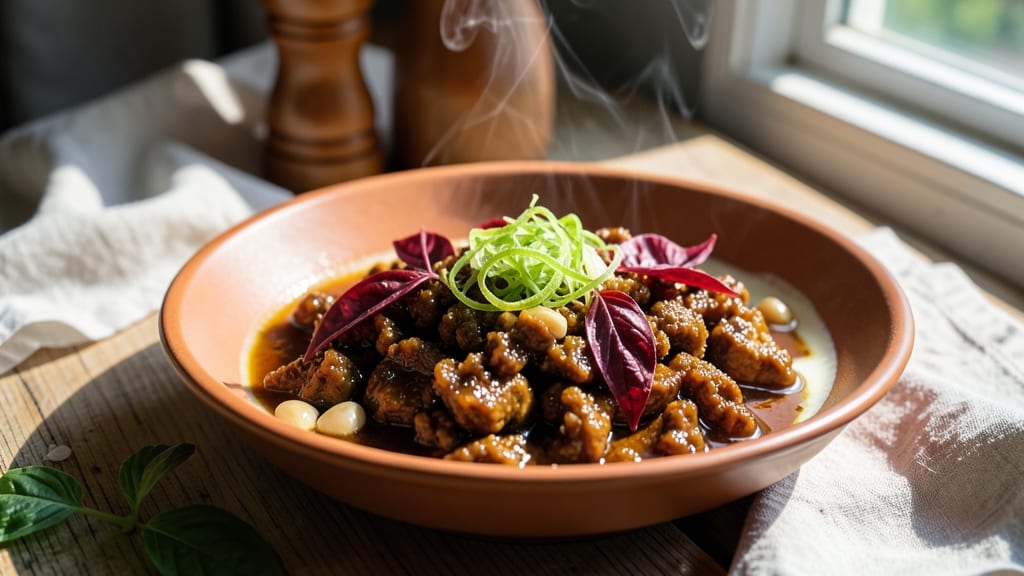
This authentic Thai minced pork brings the vibrant flavors of Bangkok to your kitchen with just one pan. 🌟 The secret lies in balancing sweet, sour, and spicy notes—fresh Thai basil, lime zest, and a touch of fish sauce create that signature tangy depth.
I perfected this recipe after years of studying street food stalls in Chiang Mai, where pork is always the star.
The key to authenticity is using the right ingredients: galangal for its citrusy kick, lemongrass for aroma, and Thai basil for that unmistakable herbal punch. Unlike many Westernized versions, this recipe skips heavy cream and relies on coconut milk only for richness—not to mask flavors.
The pork stays tender while absorbing all those bright, complex spices.
What you’ll end up with is a fragrant, slightly sticky dish where each bite delivers a perfect harmony of flavors—sweet from palm sugar, tangy from lime, and umami from fish sauce. The edges caramelize beautifully in the pan, creating pockets of flavor that make this dish impossible to resist.
Serve it over jasmine rice or with a crisp cucumber salad to balance the richness.
This recipe delivers restaurant-quality results at home, with techniques I’ve refined through years of cooking across cultures. The one-pan method keeps cleanup simple while preserving all the layers of flavor. Let’s bring Thailand to your table tonight.
Ingredients for authentic thai minced pork
These vibrant ingredients transform simple pork into an aromatic Thai masterpiece with one pan.
| Ingredient | Amount | Notes |
|---|---|---|
| Ground Pork 🐖 | 1 lb | Freshly minced preferred |
| Thai Basil Leaves 🌿 | ½ cup | Packed, stems removed |
| Lime Zest 🍋 | 1 tbsp | From 2 limes, finely grated |
| Fish Sauce 🍶 | 2 tbsp | Red Boat brand preferred |
| Palm Sugar 🍯 | 2 tbsp | Or sub brown sugar |
| Coconut Milk 🥥 | ½ cup | Full-fat for richness |
| Galangal 🌿 | 1 piece | About 2 inches, sliced thin |
| Lemongrass 🌿 | 1 stalk | Lower part, bruised |
| Garlic Cloves 🧄 | 4 cloves | Minced finely |
| Shallots 🧅 | 3 whole | Minced finely |
| Chili Paste 🌶️ | 1 tbsp | Thai bird's eye preferred |
| Olive Oil 🫒 | 2 tbsp | For cooking |
| Salt 🧂 | ½ tsp | Adjust to taste |
| Black Pepper 🌶️ | ¼ tsp | Freshly ground |
The galangal and lemongrass are non-negotiable for that authentic Thai aroma—look for fresh stalks at Asian markets. If you can't find galangal, ginger at twice the amount works in a pinch, but it won't be the same. The Thai basil needs to be fresh (no dried substitutes here)—check the back of the store near the produce. For fish sauce, Red Boat or Tiparos are the gold standards; anything with a strong, pungent smell is good. The pork should be finely minced—if you can't find pre-minced, pulse it in your food processor until it's almost paste-like.
No galangal? Ginger plus a pinch of citric acid mimics the citrusy kick, though it's not identical. Subbing coconut milk? Full-fat canned coconut milk is essential—light versions won't give that creamy richness. The chili paste can be adjusted for heat—start with half the amount if you're sensitive. For palm sugar, brown sugar works in a bind, but it has a different molasses flavor. The lime zest should be freshly grated—bottled zest loses its punch. If you're missing lemongrass, extra lime juice plus a splash of lemon juice can help, but it won't replicate the aroma.
This dish tastes even better the next day as flavors meld. Store in an airtight container in the fridge for up to 3 days. For longer storage, freeze portions for 3 months. I like to portion it into containers with jasmine rice pre-cooked—just reheat together for an easy meal. The aromatics (galangal, lemongrass) can be prepped ahead and stored in the freezer for 2 weeks if you're planning multiple batches.
Why You'll Love This Recipe
- Pantry-Only Magic: I swear by this recipe on lazy nights when I’m staring at my fridge wondering what to make. Just pork, fish sauce, and a handful of basil—no fancy prep, no last-minute grocery runs. That lime zest at the end? Instant brightness with zero effort.
- Umami Bomb: The fish sauce and palm sugar combo is chef’s kiss—salty, sweet, with this deep savory punch. And when you fold in those Thai basil leaves at the end? Fresh, peppery, and aromatic in a way that makes the whole dish sing. (Between us, I’ve ruined simpler recipes just to eat this one.)
- Double-Duty Dish: This is my weeknight secret weapon—serve it over rice for dinner, stuff it in lettuce cups for lunch the next day, or toss it into a quick stir-fry when you’re craving something different. Honestly, I’ve even used leftover pork in a noodle soup when I got tired of staring at it.
- Budget Win: Ground pork stretches far, and fish sauce adds serious flavor without breaking the bank. A single jar lasts me months, and palm sugar? Cheaper than honey and just as good. Plus, it reheats like a dream—so you can make a big batch and eat it all week without a second thought.
Step-by-step instructions for authentic Thai minced pork
Here's how to create restaurant-quality Thai minced pork with perfect balance and depth.
🍳 Step 1: Build the Aromatic Base
Heat the 2 tablespoons olive oil in a large skillet over medium-high heat until shimmering. Add the 3 whole shallots and 4 cloves garlic cloves (minced finely as listed), cooking for 2-3 minutes until the shallots turn translucent and the garlic releases its fragrance.
Next, add the 1 piece galangal (sliced thin) and 1 stalk lemongrass (bruised lower part). Cook for another 1 minute until the galangal softens slightly and the lemongrass releases its citrusy aroma. This aromatic foundation is what makes this dish authentically Thai.
🔥 Step 2: Cook the Pork and Add Chili
Push the aromatics to one side of the pan and add the 1 lb ground pork to the empty space. Let it brown undisturbed for 3-4 minutes until the pork loses its raw color and begins to crisp slightly at the edges. This initial searing develops deep flavor.
Stir the pork into the aromatics, breaking it up with a wooden spoon. Add the 1 tablespoon chili paste and cook for another 1 minute until the raw chili flavor mellows and blends with the pork. The paste should be completely incorporated without any visible streaks.
🥘 Step 3: Balance with Sweet and Salty
Pour in the 2 tablespoons fish sauce and 2 tablespoons palm sugar, stirring vigorously to combine. Let the mixture simmer for 2-3 minutes until the sugar dissolves completely and the sauce begins to thicken slightly. Taste and adjust seasoning with the 0.5 teaspoon salt if needed.
Here's the thing—this is where the authentic Thai flavor profile comes together. The fish sauce provides umami depth, while the palm sugar balances the heat and acidity. Don't rush this step; let the flavors meld properly before moving forward.
🍳 Step 4: Finish with Coconut and Herbs
Reduce heat to medium-low and stir in the 0.5 cup coconut milk. Let it simmer gently for 3-4 minutes until slightly thickened but still creamy. Add the 1 tablespoon lime zest and 0.25 teaspoon black pepper, stirring until the lime zest brightens the dish.
Finally, fold in the 0.5 cup Thai basil leaves (packed, stems removed) just until wilted—don't overmix or they'll turn bitter. The basil should be visible throughout the dish, adding its signature aromatic punch. Remove from heat immediately to preserve the vibrant green color.
⏰ Step 5: Rest and Serve
Let the dish rest for 5 minutes before serving. This short rest allows the flavors to fully integrate and the coconut milk to set slightly, creating a more cohesive texture. Serve immediately over steamed jasmine rice or with fresh herbs on the side.
Each bite should deliver a perfect balance of sweet, salty, spicy, and herbal notes with tender pork throughout. The dish should be aromatic with visible basil leaves and a glossy, slightly thickened sauce. If you find it too spicy, serve with extra rice to balance the heat.
Pro Tips For Making Authentic Thai Minced Pork
- CRANK THE HEAT FIRST: Start your pork on high—no, really, max it out. I used to play it safe with medium-high, and the pork always ended up greasy and undercooked. Once it’s browned and crispy at the edges (about 3-4 minutes), then toss in the garlic, shallots, and chili. That first sear locks in flavor and keeps the meat from turning to mush when you add the basil later.
- STORE THE BASIL PROPERLY: Thai basil wilts faster than regular basil, so don’t just toss it in whole. Strip the leaves from the stems and give them a quick rinse in cold water, then pat dry with a paper towel—wet leaves steam in the pan and turn the sauce soggy. Add them in the last 30 seconds, whole or roughly torn, so they just wilt enough to release their aroma without turning to sludge.
- TASTE THE SAUCE BEFORE SWEETENING: Palm sugar isn’t just sugar—it’s got depth, so don’t dump it in blindly. After the pork and aromatics cook down, taste the base (fish sauce, lime zest, a splash of water) before adding the sugar. You’re aiming for a balance where the saltiness of the fish sauce and the tang of lime don’t get drowned out. Start with half the recipe’s sugar, then adjust. Trust me, you’ll save yourself from fixing a dish that’s too cloying.
- USE LIME ZEST, NOT JUICE: Lime zest is the unsung hero here—it adds a bright, floral note that juice can’t match. Buy organic limes and zest only the yellow part (no white pith, it’s bitter). If you’re short on time, zest a few limes ahead and store it in the fridge for up to a week. Just don’t skip it: the zest is what makes the dish smell like a Thai street cart, not a generic stir-fry.
Troubleshooting this recipe
Pork Too Dry?
Overcooking is the #1 culprit for dry minced pork. I’ve seen this happen when people crank the heat too high after adding coconut milk—it evaporates faster than you’d think. Instead, keep the heat at medium-low during the coconut milk stage and stir gently.
If your pork ends up dry, rescue it by adding 1-2 tablespoons coconut milk or a splash of water, then simmer for 1-2 minutes longer. 🔥
Flavor Too Mild?
This usually means your fish sauce or chili paste wasn’t strong enough. I recommend using Red Boat fish sauce—it’s the most potent brand available. For extra depth, add ½ teaspoon more fish sauce and let it simmer for another 1 minute to concentrate the flavors.
If you’re sensitive to heat, balance it by adding 1 extra tablespoon palm sugar to sweeten the dish.
Sauce Too Thin?
Thai dishes should have a glossy, slightly thickened sauce—not watery. If yours is too thin, simmer uncovered for 2-3 minutes longer to reduce it naturally. For an instant fix, mix ½ teaspoon cornstarch with 1 teaspoon water, stir into the sauce, and cook for 30 seconds until thickened.
Just don’t overdo it or the sauce will turn gluey.
Galangal Too Bitter?
Old or overcooked galangal turns bitter, which can ruin the dish. Always use fresh galangal—it should smell citrusy and taste peppery. If you accidentally overcook it, remove the galangal slices immediately and replace them with ½ teaspoon freshly grated ginger and a pinch of citric acid to mimic the brightness.
This trick saved my dish when I left the galangal in too long once.
Basil Turning Slimy?
Thai basil is delicate and wilts quickly. The key is to fold it in just until wilted—no more! Overmixing releases bitter compounds. If your basil looks slimy, it’s already overcooked. To fix it, stir in 1 tablespoon fresh lime juice right before serving to brighten the herbs.
For next time, add the basil off-heat and fold it in gently with a spatula.
Fish Sauce Overpowering?
This happens when the fish sauce isn’t balanced by sweetness or acidity. Tame it by adding 1 extra tablespoon palm sugar and ½ teaspoon lime juice. Let the dish sit for 5 minutes to let the flavors meld.
If it’s still too strong, serve with extra jasmine rice—it absorbs the excess saltiness beautifully. I’ve also found that a pinch of white pepper helps round out the flavor without adding heat.
Nutrition facts
Frequently asked questions
Can I substitute regular ground pork with another type of meat?
While this recipe is designed for pork, you can use ground chicken or turkey in a pinch, but the flavor will differ. For a closer match, try ground duck—it has a richer taste similar to pork. Avoid lean meats like beef as they won't absorb the coconut milk and basil flavors as well. If substituting, reduce cooking time by 1-2 minutes since poultry cooks faster.
What if I can't find Thai basil? Can I use regular basil?
Regular basil won't give you that authentic Thai flavor profile. For the closest substitute, use a mix of regular basil and cilantro (about ¼ cup each), but it won't have the same anise-like sweetness. If you're near an Asian market, look for holy basil (tulsi) as a second option—it has a more complex aroma. The dish will still be delicious, but the flavor will be noticeably different.
How do I adjust the spice level for kids or sensitive eaters?
Start by reducing the chili paste to ½ tablespoon instead of 1. For extra mildness, remove the chili paste entirely and add ½ teaspoon more palm sugar to balance the flavors. You can also serve the dish with extra lime wedges on the side—squeezing fresh lime over the top adds brightness without heat. Keep the fish sauce at 2 tablespoons for umami depth.
Can I make this recipe ahead of time?
Yes! This dish actually tastes better the next day as the flavors meld. Store in an airtight container in the fridge for up to 3 days. Reheat gently in a pan over low heat with 1 tablespoon coconut milk to restore moisture. For freezing, portion into containers and freeze for up to 3 months. Thaw overnight in the fridge—never microwave directly from frozen.
What are the best sides to serve with this dish?
Jasmine rice is the classic pairing, but for more variety, try sticky rice or coconut rice to complement the coconut milk flavors. A crisp cucumber salad with rice vinegar and chili flakes balances the richness. For a heartier meal, serve with Thai eggplant salad (pad pak bung feung) or steamed greens. The acidity from lime or vinegar-based sides cuts through the fat beautifully.