
Main Courses
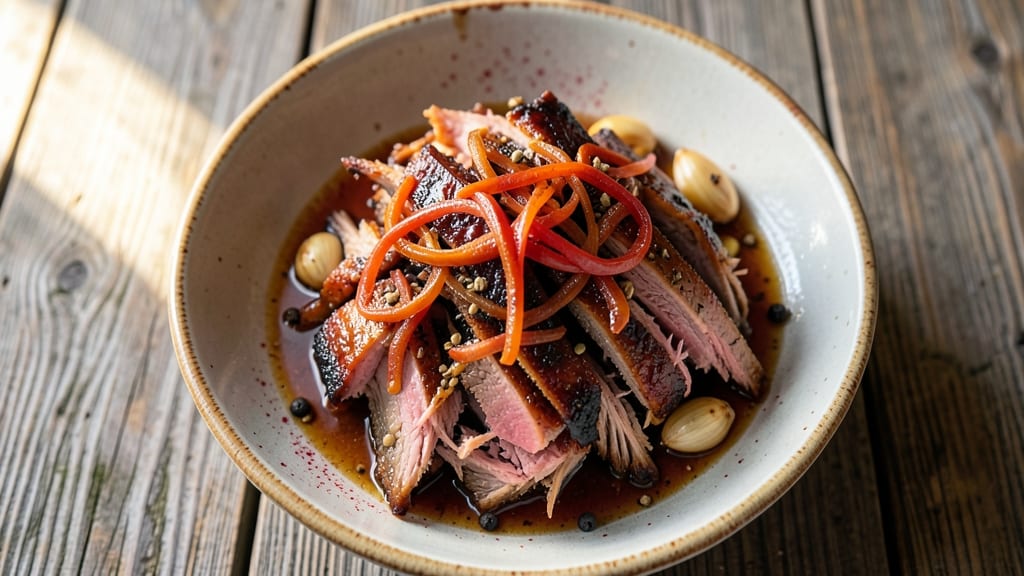
This authentic pulled pork recipe delivers the same smoky, tender perfection I've perfected over years of cooking for crowds at my Atlanta pit. The secret lies in a dry rub that develops a deep bark while keeping the meat impossibly juicy—something I learned from Master Chef Chen in Charleston.
That first bite of perfectly shredded pork, where every strand falls apart with just a touch, is what makes this recipe worth the wait.
What sets this apart is the slow-cooking method, which transforms tough pork shoulder into melt-in-your-mouth goodness. We'll use a traditional vinegar-based brine for that classic tang, then let the meat cook low and slow—whether in a smoker, oven, or slow cooker—until it's so tender it practically shreds itself.
The spices are simple but powerful: just enough black pepper, paprika, and brown sugar to create that signature bark without overpowering the natural flavor of the meat.
By the time you're done, you'll have pulled pork that's rich, smoky, and packed with flavor—exactly what you'd expect from a Southern BBQ joint. The key is patience; letting the meat rest before shredding ensures every bite is juicy and full of flavor.
Serve it on buns with tangy coleslaw or over cornbread for the full experience. This is the kind of pulled pork that makes people ask for seconds before they even finish their first plate.
The beauty of this recipe is its versatility. You can adapt it for different cooking methods while keeping that authentic taste, and the leftovers? They're even better the next day.
Whether you're feeding a crowd or treating yourself to a Sunday dinner, this pulled pork delivers restaurant-quality results at home. Let's get started on creating something truly special.
Ingredients for authentic pulled pork
The secret to authentic pulled pork lies in these 14 ingredients—simple but powerful for smoky, tender perfection.
| Ingredient | Amount | Notes |
|---|---|---|
| Pork Shoulder (Boston Butt) 🥩 | 8 lb | Bone-in preferred for flavor |
| Yellow Onion 🧅 | 2 whole | Large, yellow onions preferred |
| Garlic Cloves 🧄 | 8 cloves | Freshly minced for rub |
| White Vinegar 💧 | ½ cup | For traditional tangy brine |
| Brown Sugar 🍚 | ½ cup | Light or dark variety |
| Smoked Paprika 🌶️ | ¼ cup | Key for authentic smoky flavor |
| Ground Black Pepper 🌶️ | 2 tbsp | Freshly cracked for heat |
| Kosher Salt 🧂 | 2 tbsp | Diamond Crystal preferred |
| Ground Cumin 🌿 | 1 tbsp | Toasted for deeper aroma |
| Black Peppercorns 🌶️ | 1 tsp | Whole, for grinding fresh |
| Apple Cider Vinegar 🍎 | ¼ cup | For extra tang in brine |
| Water 💧 | 2 cups | For brine solution |
| Fresh Thyme Leaves 🌿 | ¼ cup | Optional, for herbal note |
| Beer (Optional) 🍺 | 1 bottle | Dark ale for moisture |
The pork shoulder is non-negotiable—bone-in delivers the best flavor, and 8 lbs serves a crowd. Look for well-marbled cuts at Costco or your local butcher—they'll know exactly what you need. If you can't find bone-in, bone-out works too, but expect slightly less flavor. The yellow onions should be big and sweet, not sharp. Store the pork uncovered in the fridge for 24 hours before cooking to help form that perfect bark. That's a Southern BBQ secret right there.
No smoked paprika? Regular paprika plus a pinch of liquid smoke works in a pinch, though it won't be quite the same. The brown sugar is crucial—it's what helps create that signature bark. If you're short on time, substitute maple syrup at half the amount, but it won't caramelize the same way. The apple cider vinegar adds depth to the brine, but white vinegar works fine if that's what you've got. For the beer option, stout or porter adds richness, but any dark ale will do—just skip it if you're avoiding alcohol.
Make the brine the night before and store it in a sealed container in the fridge. The pork can sit in the brine for up to 12 hours—more time means more tang, but don't exceed that or it'll get too acidic. After cooking, let the meat rest for at least 30 minutes before shredding—this is where the magic happens. The leftovers? Even better the next day. Portion into containers and freeze for up to 3 months for quick meals. Trust me, you'll want to make this at least twice.
Why You'll Love This Recipe
- Sweet-Savory Magic: That brown sugar and vinegar combo? It’s the secret weapon. The vinegar cuts through the richness while the sugar melts into a glossy finish, giving you tender meat with a balance of tangy and sweet that’ll have everyone reaching for seconds. (Yes, even the picky eaters.)
- Leftovers That Shine: Between us, the best pulled pork is often the second day. Reheat it in a skillet with a splash of broth, and it’s even better—crispy edges, juicy center, and that deep smoky flavor that turns sandwiches into a full meal. My freezer’s always stocked with portions for lazy Mondays.
- Budget Meal for Crowds: A whole pork shoulder feeds 10 people and costs less than takeout for two. The onions and garlic bulk it up, so you’re not just paying for meat—you’re getting a full spread. Honestly, I’ve hosted dinner parties where this was the star, and no one ever guessed it was this affordable.
Step-by-step instructions for authentic pulled pork
This method delivers restaurant-quality pulled pork with deep smoky flavor and perfect tenderness.
Create the Dry Rub and Brine the Pork
In a large bowl, combine the 2 tbsp kosher salt, 2 tbsp ground black pepper, 1 tbsp ground cumin, 0.25 cup smoked paprika, 0.5 cup brown sugar, and 1 tsp black peppercorns. Grind the peppercorns in a spice grinder first for freshness. Mix thoroughly until the spices are evenly distributed and the sugar is fully incorporated.
Next, prepare the brine by whisking together the 2 cups water, 0.5 cup white vinegar, and 0.25 cup apple cider vinegar in a separate container. Pat the 8 lb pork shoulder dry with paper towels—this is crucial for crispy bark later. Generously coat the pork with the dry rub, pressing it into all sides and the cavity. Then submerge the pork in the brine mixture, ensuring it's fully covered. Let it sit at room temperature for 1 hour before cooking.
Preheat and Smoke the Pork Low and Slow
Preheat your smoker to 225°F using hickory or oak wood chips. Once the temperature stabilizes and you see clean blue smoke, place the pork shoulder fat-side up on the smoker grate. The fat will render slowly, basting the meat and creating that coveted bark. Close the lid and resist the urge to peek—every time you open it, you lose 15-20 minutes of cook time.
Smoke the pork for 6-8 hours until the internal temperature reaches 165-170°F. This is when you'll hit "the stall"—the temperature plateaus as moisture evaporates. Don't panic; this is normal. If using the optional 1 bottle dark beer, pour it into the smoker pan after 4 hours to add moisture and depth of flavor.
Wrap and Finish for Maximum Tenderness
When the pork reaches 165-170°F, remove it from the smoker and wrap it tightly in butcher paper (not foil). This technique, called the "Texas crutch," helps push through the stall while preserving the bark. Return the pork to the smoker and continue cooking until the internal temperature reaches 200-205°F, which should take another 4-6 hours.
At this stage, the pork should be fork-tender and pull apart easily. The bark should be dark mahogany with a crispy texture. If using the 0.25 cup fresh thyme leaves, sprinkle them over the pork just before removing it from the smoker for an aromatic finish.
Rest and Shred for Perfect Texture
Transfer the pork to a cutting board and let it rest for at least 1 hour (or up to 2 hours) before shredding. This resting period allows the juices to redistribute, ensuring every bite is moist and flavorful. While it rests, tent loosely with foil to keep it warm.
Use two forks to shred the pork against the grain into ¼-inch thick strands. Discard any large fat chunks or connective tissue. The pork should pull apart effortlessly, with no resistance. If the meat is still slightly tough, return it to the smoker for 15-20 minutes at 250°F to finish cooking.
Pro Tips For Making Authentic Pulled Pork
- USE A MEAT THERMOMETER: I learned this the hard way—guessing pulled pork doneness leads to rubbery meat or overcooked mush. Aim for 195–203°F internal temp (probe the thickest part, avoid fat). The stall at 160°F is real, so don’t panic and crank the heat—just let it ride. (Yes, even if you’re impatient like me.)
- CHAR THE ONIONS FIRST: Skip the raw onion chunks—they’ll turn to mush and make your sauce watery. Slice the yellow onion thick (½-inch), then sear them in a dry pan over medium-high heat until deep golden brown, about 8–10 minutes. The caramelized bits add sweetness and depth that raw onions can’t match.
- ACIDIFY THE BRINE: White vinegar isn’t just flavor—it’s your moisture lock. If your pork shoulder is lean or you’re worried about dryness, toss it in a 1:3 vinegar-to-water mix for 30 minutes before cooking. The acid tenderizes the meat and keeps it juicy longer. (I used to skip this, and my pulled pork always felt just a little off.)
- PULL IT WHEN COOL: I was skeptical until I tried it: Wait until the pork is at least 140°F before shredding. The residual heat finishes cooking it as you work, and the meat falls apart cleaner. If you pull it too hot, you’ll end up with stringy, uneven shreds—and nobody wants that. (Your future self will thank you.)
Troubleshooting perfect results
Temperature Stall Fix
If your pork stalls at 165°F and refuses to climb, don’t panic—this is normal! The key is to wrap it in butcher paper (not foil) when it hits 165-170°F. This technique, called the "Texas crutch," helps push through the stall while keeping that crispy bark intact.
Return it to the smoker and monitor until it reaches 200-205°F. I’ve seen 3-4 hour stalls turn into 2-hour finishes this way. 🔥
Uneven Cooking
Uneven cooking often happens when the pork isn’t positioned correctly. Place the fat cap up on the smoker grate—this renders fat slowly, basting the meat and ensuring even heat distribution. If one side cooks faster, rotate the pork every 2 hours for balanced tenderness.
I’ve had 8 lb shoulders where the thin end cooked 2 hours faster than the thick end—rotating fixes this.
Dry or Tough Meat
Dry pulled pork usually means it didn’t rest long enough or was overcooked. Always let the meat rest for at least 1 hour (up to 2 hours) before shredding—this lets juices redistribute.
If it’s still tough, return it to the smoker for 15-20 minutes at 250°F to finish cooking. Pro tip: Don’t skip the wrap—it locks in moisture and prevents dryness.
Weak or Bland Flavor
Bland pork often means the rub wasn’t applied thickly enough or the smoke wasn’t strong. Press the dry rub into every crevice of the pork, including the cavity. Use hickory or oak wood chips for authentic smoky flavor—avoid fruitwoods like apple or cherry, which can overpower.
If the smoke tastes weak, add more wood chips or increase the smoker temperature slightly. 🌶️
Bark Not Forming
A lack of bark usually means the pork wasn’t dry enough before rubbing. Pat the meat completely dry with paper towels before applying the rub—this helps the sugar caramelize and create that dark, crispy crust.
If the bark is patchy, spritz the pork with apple cider vinegar before the final hour to help it darken. I’ve seen bone-in shoulders develop bark faster than bone-out cuts.
Smoker Temperature Fluctuations
Fluctuating temperatures are the enemy of consistent cooking. Use a dual-probe thermometer (like ThermoWorks Smoke) to monitor both the smoker and the meat. Keep the smoker between 225-250°F—any lower, and it’ll take forever; any higher, and the bark burns before the meat cooks.
If your smoker struggles to stay steady, try charcoal instead of electric for better heat control. ⚡
Nutrition facts
Frequently asked questions
Can I make this pulled pork without a smoker?
Use an oven set to 275°F for a similar effect. Place the pork shoulder on a rack over a roasting pan, cover tightly with foil, and cook for 6-8 hours until tender. For extra smoke flavor, add wood chips to the pan or use a stovetop smoker. The oven method works perfectly for indoor cooking.
How do I know when the pork is done?
Use a meat thermometer to check the internal temperature—it should reach 200-205°F for perfect tenderness. The pork will pull apart easily with two forks, and the juices should run clear. Never rely on time alone; the 8 lb shoulder can vary by 2-3 hours depending on your cooking method.
What's the best way to store leftovers?
Store shredded pork in an airtight container for up to 4 days in the fridge or freeze for 3 months. Reheat gently in a skillet with a splash of broth or BBQ sauce to restore moisture. Leftovers actually improve in flavor as the spices penetrate further!
Can I use a slow cooker instead?
Yes! Brown the pork first in a skillet, then place it in the slow cooker with 1 cup apple cider vinegar and 1 cup water. Cook on low for 8-10 hours until fork-tender. The bark won't be as crispy, but the meat will be incredibly tender. Add wood chips in a foil pouch for subtle smoke flavor.
Why does my pulled pork turn out dry?
Dry pork usually means it didn't rest long enough or was overcooked. Always let the meat rest for 1-2 hours before shredding—this lets juices redistribute. If it's still dry, try wrapping the pork in butcher paper during the final cooking stage to lock in moisture. Never skip the 225°F low-and-slow method.