
Main Courses
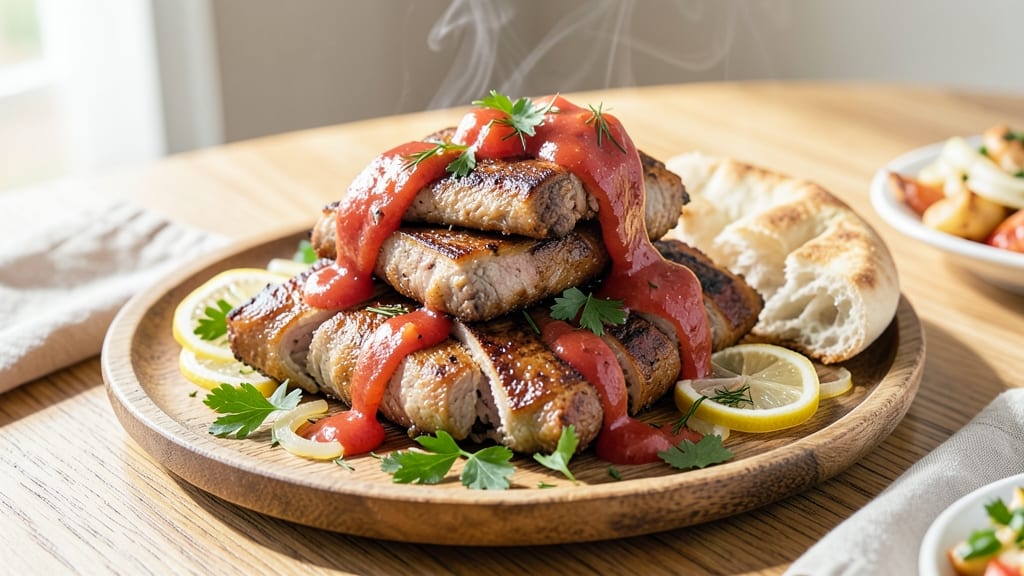
This authentic Greek pork gyros recipe brings the flavors of Athens to your kitchen with crispy, smoky meat that falls apart at every bite. ✨ After years of perfecting the balance between tender pork and that signature charred crust, I've developed a marinade that transforms ordinary pork shoulder into restaurant-quality gyros—no rotisserie required.
The secret lies in the marinade: a blend of lemon juice, olive oil, garlic, and oregano that tenderizes the meat while infusing it with bright, herby notes.
Cooking the pork in a vertical pan (or even a Dutch oven) mimics the rotisserie method, creating those iconic crispy edges while keeping the inside juicy. This approach delivers authentic results without needing specialized equipment.
When you assemble the gyros, warm pita pockets cradle the perfectly cooked pork alongside fresh tomatoes, crisp onions, and cool tzatziki sauce. The contrast of textures—crispy meat, soft pita, creamy sauce—makes every bite unforgettable. Serve with golden fries for the full Greek diner experience.
This recipe serves 4 hungry people and comes together in about 2 hours, including marinating time. The best part? Leftovers reheat beautifully, making it perfect for meal prep or feeding a crowd. Let's get cooking!
Ingredients for authentic greek pork gyros
Pork shoulder, lemon, and oregano transform simple ingredients into authentic Greek gyros magic.
| Ingredient | Amount | Notes |
|---|---|---|
| Pork Shoulder 🍖 | 1 ½ lb | Bone-in for flavor, cut into 1-inch cubes |
| Lemon Juice 🍋 | ½ cup | Freshly squeezed, about 2 lemons |
| Extra-Virgin Olive Oil 🫒 | ½ cup | High quality, fruity variety |
| Garlic Cloves 🧄 | 6 cloves | Peeled, minced for marinade |
| Dried Oregano 🌿 | 2 tbsp | Greek oregano preferred |
| Ground Cumin 🌶️ | 1 tbsp | Toasted for deeper flavor |
| Salt 🧂 | 1 ½ tsp | Kosher or sea salt |
| Black Pepper 🌶️ | 1 tsp | Freshly ground preferred |
| Pita Bread 🍞 | 4 whole | Store-bought or homemade |
| Fresh Tomatoes 🍅 | 1 lb | Roma or vine-ripened, sliced |
| Red Onion 🧅 | 1 medium | Thinly sliced for garnish |
| Plain Greek Yogurt 🥛 | ¾ cup | Full-fat for creamy tzatziki |
| Cucumber 🥒 | 1 medium | Peeled, seeded, grated |
| Fresh Dill 🌿 | ¼ cup | Chopped for tzatziki |
| Garlic Cloves 🧄 | 2 cloves | Minced for tzatziki |
The pork shoulder is non-negotiable here—bone-in adds depth of flavor, and cutting it into 1-inch cubes ensures even cooking. Grab the thickest cut you can find, often labeled as 'Boston butt' or 'picnic roast' at Whole Foods or your local butcher. For the marinade, Greek oregano (not the Italian kind) makes all the difference—it's worth hunting down at Mediterranean markets. If you can't find it, regular oregano works, but the flavor won't be quite the same. The lemon juice should be freshly squeezed—bottled just won't cut it for this recipe.
No fresh dill for the tzatziki? Substitute half the amount with parsley, though it won't be as authentic. Running low on Greek yogurt? Plain whole-milk yogurt works too, but skip the fat-free versions—they won't be creamy enough. The cucumber should be peeled and seeded for that classic Greek texture. If you're in a hurry, pre-grated cucumber from a squeeze bottle (like those at Trader Joe's) saves time, though it's not as fresh. For the tomatoes, Roma tomatoes hold up better than vine-ripened when sliced, but use what you have—just pat them dry before assembling.
Marinated pork keeps 3-4 days in the fridge, but the flavor actually improves after 24 hours. For the tzatziki, store it in an airtight container with plastic wrap pressed directly on the surface to prevent a skin from forming. Both the pork and tzatziki freeze beautifully for up to 3 months—portion the tzatziki into ice cube trays for easy use later. Pita bread stays fresh for 2-3 days if wrapped tightly in foil, but it's best to warm it fresh before serving.
Why You'll Love This Recipe
- Hands-Off Cooking: I swear by this recipe because it’s almost foolproof—just marinate the pork shoulder in olive oil, lemon, and garlic, then let the oven do the work. No flipping, no hovering, and no stressing over a grill.
- Tangy & Herby Magic: That bright lemon juice and oregano? It’s what makes this taste like a real Greek taverna. The pork stays juicy while the outside gets that perfect crisp, and the garlic-infused oil ties everything together.
- Weeknight & Meal Prep: Between us, this is my go-to for busy nights—serve it in pita with tzatziki or pile it on salads. Leftovers? Even better cold the next day, and it’s cheap enough to feed the whole family without breaking the bank.
- Budget-Friendly Feast: Pork shoulder is a steal, and a little goes a long way. I’ve stretched this into four meals, and the flavor only gets richer as it sits. Honestly, it’s one of those recipes where you wonder why you ever ordered takeout.
Step-by-step instructions for authentic Greek pork gyros
Here's the method that delivers restaurant-quality gyros with perfectly seasoned pork and crispy pita.
🔥 Step 1: Marinate the Pork Shoulder for Maximum Flavor
In a large bowl, combine the 1.5 lb pork shoulder cut into 1-inch cubes with the 0.5 cup extra-virgin olive oil, 0.5 cup lemon juice, 6 minced garlic cloves, 2 tbsp dried oregano, 1 tbsp ground cumin, 1.5 tsp salt, and 1 tsp black pepper. Mix thoroughly until every piece of pork is evenly coated.
Transfer the marinated pork to a resealable plastic bag and seal tightly. Refrigerate for at least 4 hours (overnight is ideal) to allow the flavors to deeply penetrate the meat. The longer it marinates, the more tender and flavorful your gyros will be. Here's the thing—this step is non-negotiable for authentic taste.
🍳 Step 2: Cook the Pork Until Tender and Sear the Surface
Preheat your oven to 325°F. Remove the pork from the marinade (reserve the marinade for later) and place it in a baking dish. Roast uncovered for 2.5 to 3 hours, stirring occasionally, until the pork is fork-tender and the internal temperature reaches 195°F. You'll know it's ready when the meat easily pulls apart with two forks.
Once cooked, transfer the pork to a cutting board and let it rest for 10 minutes. While it rests, heat a skillet over medium-high heat and add the reserved marinade. Simmer for 3-4 minutes until slightly reduced. Shred the pork using two forks, then return it to the skillet with the marinade. Cook for an additional 2-3 minutes to create a flavorful crust on each piece.
👨🍳 Step 3: Prepare the Tzatziki Sauce
While the pork cooks, prepare the tzatziki by grating the 1 medium cucumber and placing it in a colander lined with paper towels. Let it drain for 10 minutes to remove excess moisture—this is crucial for a thick, creamy sauce. In a bowl, combine the drained cucumber with the 0.75 cup plain Greek yogurt, 2 minced garlic cloves, 0.25 cup chopped fresh dill, 1 tsp salt, and 1 tsp black pepper.
Mix well and refrigerate for 30 minutes to let the flavors meld. The sauce should be thick and creamy, not watery. If it's too thick, add a splash of water; if too thin, chill it longer. This is the moment that matters: the tzatziki should be cool and perfectly balanced between tangy and creamy.
🥘 Step 4: Assemble the Gyros with Fresh Toppings
Preheat your grill or grill pan over medium-high heat. Lightly brush the 4 whole pita breads with olive oil and toast them for 1-2 minutes per side until warmed and slightly crispy. Keep them warm in a clean towel to prevent drying out.
Slice the 1 lb fresh tomatoes and 1 medium red onion into thin rounds. To assemble, spread a generous layer of tzatziki on each pita, then add a portion of the shredded pork. Top with tomato and onion slices. Fold the pita in half and serve immediately for that classic gyro experience.
Pro Tips For Making Authentic Greek Pork Gyros
- Trim the Fat First: Slice the pork shoulder against the grain but leave a thin fat cap—it renders down to self-baste the meat while keeping it juicy. I used to trim it all off, and the gyros ended up dry. That fat is flavor insurance.
- Marinate Overnight (Minimum): The lemon juice and olive oil need at least 12 hours to work their magic into the pork. I skipped this once and ended up with bland, rubbery meat—don’t be impatient. If short on time, use buttermilk instead of lemon juice for faster tenderizing.
- Sear, Then Slow: Start with a screaming-hot skillet to get a deep crust on the pork, then drop the heat to medium-low and cook uncovered until internal temp hits 195°F. The crust locks in juices, and low-and-slow keeps it from drying out.
- Toast the Oregano: Dry-toast the oregano in the same pan you sear the pork—just 30 seconds over medium heat. The aroma jumps from herbal to smoky, and it blends better into the marinade. (Yes, even dried oregano benefits from this.)
Storing and reheating your authentic greek pork gyros
Marinated Pork Storage
The marinated pork shoulder keeps beautifully in the fridge for 3-4 days in its marinade bag, but the flavor actually deepens after 24 hours. For longer storage, transfer it to an airtight container with the marinade and freeze for up to 3 months.
When ready to cook, thaw it in the fridge overnight—never microwave, as that cooks the edges unevenly. I always double-check the marinade level before freezing to ensure every pork cube stays submerged in flavor. 🥶
Tzatziki Preservation
Store your homemade tzatziki in an airtight container with plastic wrap pressed directly on the surface to prevent a skin from forming. It stays fresh in the fridge for 3-4 days—perfect for meal prep. For longer storage, portion it into ice cube trays and freeze.
When reheating, thaw in the fridge overnight and stir in a splash of water if it thickens too much. The key is keeping it cool until serving. 🥛
Pita Freshness Tips
Warm pita bread stays fresh for 2-3 days if wrapped tightly in foil and stored at room temperature. For best results, warm it in a dry skillet for 30 seconds per side right before assembling.
I find that pre-slicing the pita in half along the fold makes assembly faster—just keep them covered with a damp towel to prevent drying. Never refrigerate pita, as it turns rubbery. 🍞
Reheating Leftover Gyros
For crispy results, reheat shredded pork in a skillet over medium heat with 1 tbsp olive oil for 2-3 minutes, stirring constantly. Add a splash of water if it looks dry. Pita pockets can be warmed in the same skillet for 1 minute per side.
Assemble with fresh toppings—never reheat tomatoes or onions, as they turn mushy. The secret to perfect reheating is high heat and quick timing. 🔥
Freezer-Friendly Assembly
Assemble complete gyros (without tomatoes/onions) and freeze on a tray before transferring to a freezer bag. Reheat in the oven at 350°F for 15 minutes—this keeps the pita from getting soggy.
I like to freeze individual portions so I can grab and go. Just add fresh toppings when serving. This method preserves all the flavors while making meal prep effortless. ❄️
Sauce and Toppings
Fresh toppings like tomatoes and onions should always be added fresh after reheating. Store these separately in airtight containers in the fridge for up to 5 days. For extra convenience, pre-chop and store toppings in small containers.
The contrast of cool, fresh toppings against warm pork is what makes gyros special—never skip this step! 🍅
Nutrition facts
Frequently asked questions
Can I use chicken or beef instead of pork for gyros?
While you can substitute proteins, pork is traditional for authentic flavor. Chicken works but lacks the rich, smoky depth—opt for bone-in thighs marinated for 24 hours. Beef (like sirloin) is possible but requires shorter marinating (4-6 hours) to avoid toughness. The texture and fat content differ, so adjust cooking times accordingly.
What's the secret to crispy pita pockets?
Toast pita over medium-high heat for 1-2 minutes per side until golden, then keep warm in a clean towel. The key is freshness—never use refrigerated pita. For extra crispiness, brush with olive oil before toasting. Warm pita should be slightly charred but still pliable.
How do I make this recipe gluten-free?
Replace pita with gluten-free flatbread or large lettuce leaves (like romaine). Use tamari instead of soy sauce in any sauces, and verify all spices (like oregano) are certified gluten-free. The marinade and toppings remain unchanged. For crispiness, toast gluten-free bread for 30 seconds longer than regular pita.
Can I make gyros in an air fryer?
Yes! After marinating and roasting the pork, shred it and air fry for 3-4 minutes at 375°F to crisp the edges. For pita, air fry at 350°F for 2 minutes per side>. This method works well for small batches but lacks the smoky flavor of grilling. The meat will be tender but not as caramelized.
What's the best way to serve these with kids?
Deconstruct the gyros! Serve shredded pork in bowls with warm pita on the side, plus small cups of tzatziki and toppings. Kids can assemble their own (less messy). For picky eaters, offer plain pork with just a drizzle of sauce. The familiar "build-your-own" format makes it fun while keeping the authentic flavors.