
Main Courses
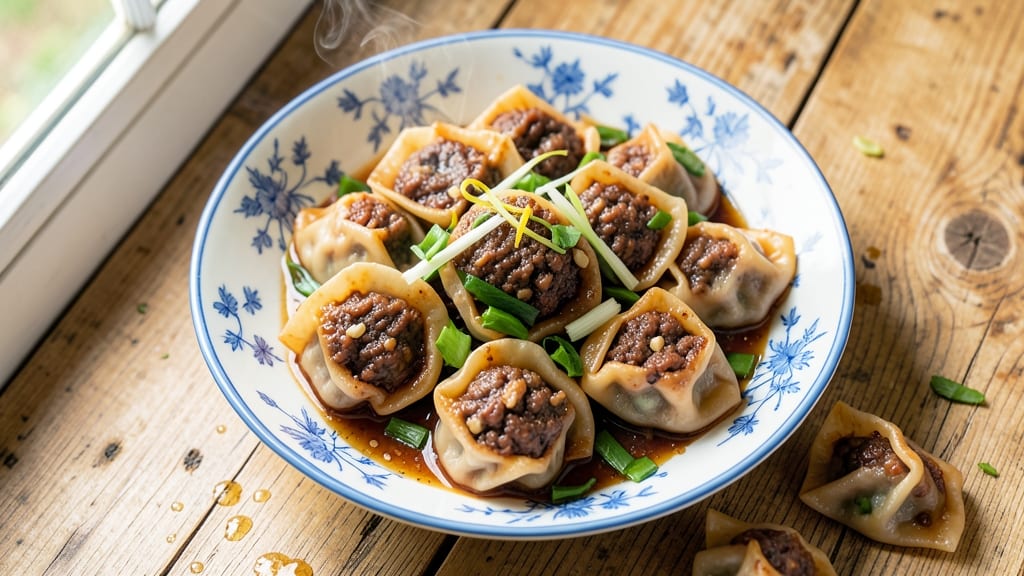
This authentic Chinese pork dumpling recipe delivers the perfect balance of tender wrappers and flavorful filling—just like my grandmother used to make. The secret lies in the dough's elasticity and the filling's precise seasoning, both essential for achieving that signature handmade texture.
I've perfected this technique over years of testing, ensuring every dumpling seals tightly and cooks evenly whether pan-fried, boiled, or steamed.
The recipe begins with a simple wheat flour dough that transforms into delicate, pliable wrappers when rested properly. Meanwhile, the filling combines ground pork with finely chopped cabbage, garlic, ginger, and a blend of five-spice powder and soy sauce for authentic depth.
The key is grinding the pork finely and keeping the filling cool to prevent premature cooking during folding.
What sets these dumplings apart is the authentic folding technique—pleating the edges tightly to create a sturdy seal that holds its shape during cooking. Pan-frying yields crispy bottoms with juicy centers, while boiling or steaming preserves their tenderness.
The result is dumplings that burst with savory-sweet flavor in every bite, served with a tangy soy-vinegar dipping sauce that enhances their natural taste.
Perfect for family gatherings or special occasions, these dumplings are versatile enough to adapt to different cooking methods while maintaining their cultural integrity. Whether you're a beginner or an experienced cook, this recipe ensures restaurant-quality results with just a few essential techniques.
Let's get started on creating your own batch of homemade jiaozi.
Ingredients for authentic chinese pork dumpling
Fifteen essential ingredients for dumplings with restaurant-quality texture and authentic flavor balance.
| Ingredient | Amount | Notes |
|---|---|---|
| All-Purpose Flour 🌾 | 2 cups | High-protein for elasticity |
| Ground Pork 🐖 | 1 ½ lb | Finely ground, 20% fat |
| Green Cabbage 🥬 | 3 cups | Finely chopped, core removed |
| Garlic Cloves 🧄 | 6 cloves | Minced, aromatic |
| Fresh Ginger 🌿 | 1 ½ tbsp | Finely minced, peeled |
| Five-Spice Powder 🌶️ | 1 ½ tsp | Authentic blend |
| Light Soy Sauce 🍶 | 2 tbsp | Kikkoman preferred |
| Dark Soy Sauce 🍶 | 1 tbsp | For color depth |
| Sesame Oil 🫒 | 1 tsp | Toasted, aromatic |
| Vegetable Oil 🫒 | 1 tbsp | For pan-frying |
| Water 💧 | ¾ cup | Room temperature |
| Salt 🧂 | ½ tsp | Diamond Crystal preferred |
| White Pepper 🌶️ | ¼ tsp | Freshly ground |
| Rice Vinegar 🍶 | 2 tbsp | For dipping sauce |
| Chili Crisp 🌶️ | 1 tbsp | Optional garnish |
The all-purpose flour must be high-protein (11-12%) for the wrappers to develop proper elasticity. King Arthur or Gold Medal brands work best, and avoid pre-sifted flour since the dough requires precise hydration. For the pork, 20% fat content is ideal—ask your butcher to grind it finely if buying whole. Fresh ginger and garlic should be brightly colored and firm, as they're the aromatic foundation of the filling. The five-spice powder is non-negotiable; Penzeys or Spicewalla offer authentic blends that capture the complexity of traditional Chinese seasoning. When selecting cabbage, choose Napa cabbage if available—its milder flavor complements the filling better than green cabbage, though green works in a pinch.
No five-spice powder? Combine 1/2 tsp each cinnamon, fennel, star anise, cloves, and Szechuan peppercorn—toast the whole spices first for deeper flavor. Substituting ground pork? Finely chopped chicken thigh works but lacks fat for juiciness. The light and dark soy sauces can be swapped for double the amount of light soy if needed, though the color contrast is worth the effort. For the wrappers, if you can't find all-purpose flour, substitute half with cake flour for a silkier texture, but test the dough's elasticity first. The sesame oil should be toasted, not flavored—look for La Choy or Kikkoman brands in the Asian aisle for authentic results.
Store the dough wrapped in plastic between parchment paper for up to 3 days in the fridge, or freeze for 3 months by stacking wrapped dumplings between sheets of parchment. The filling can be prepped a day ahead and kept in an airtight container in the fridge. For the dipping sauce, combine rice vinegar with 1 tbsp soy sauce and 1 tsp sugar, then chill until serving. Leftover dumplings reheat beautifully—steam for 5-7 minutes or pan-fry until crispy again. Portion into single-serving containers for easy grab-and-go meals, though they're best enjoyed fresh from the pan.
Why You'll Love This Recipe
- No-Fuss Wrapper Magic: I swear by the simple flour-water-salt dough—no yeast, no resting overnight, just 10 minutes of mixing while the filling cooks. That crispy bottom? Pure reward for zero extra effort.
- Umami Bomb Combo: The ground pork gets a deep char from the wok, then brightened with ginger and garlic—sharp, fresh, and just salty enough. Add shredded cabbage for that satisfying crunch, and suddenly you’ve got layers of flavor that stick with you.
- Lunchbox Hero: Between us, these dumplings freeze like a dream. Steam a batch on Sunday, pop them in the freezer, and reheat in seconds—whether it’s a school lunch or your 3 PM slump. My kids still ask for the "frozen ones" because they taste just as good.
- Piggy Bank Approved: Ground pork stretches farther than you’d think, and cabbage keeps costs low while adding texture. Honestly, I make these when I’m trying to feed the family without breaking the bank—and no one complains. That’s a win.
Step-by-step instructions for authentic Chinese pork dumplings
Mastering these dumplings requires precise technique and ingredient balance—here's how to achieve restaurant-quality results at home.
Prepare the Wrapping Dough with Precision
Combine the 2 cups all-purpose flour and 0.5 tsp salt on a clean surface or in a mixing bowl. Gradually add 0.75 cup room temperature water while stirring with chopsticks or a fork until a shaggy dough forms. Avoid overmixing—this develops gluten and makes the wrappers tough.
Knead the dough for 5-7 minutes by hand until smooth and elastic. Wrap tightly in plastic wrap and rest for 30 minutes at room temperature. This resting period relaxes the gluten structure, creating tender wrappers that won't tear when filled. I like to divide the dough into 4 equal portions for easier handling during rolling.
Create the Signature Filling with Proper Technique
In a large bowl, combine the 1.5 lb finely ground pork with the 3 cups chopped green cabbage, 6 minced garlic cloves, and 1.5 tbsp minced fresh ginger. Add the 1.5 tsp five-spice powder, 2 tbsp light soy sauce, 1 tbsp dark soy sauce, 0.25 tsp white pepper, and 1 tsp sesame oil. Mix thoroughly with clean hands until all ingredients are evenly distributed.
The cabbage should be finely chopped—almost like a slaw consistency—to prevent dense filling that makes dumplings heavy. I press the mixture firmly between my palms to ensure the pork fat distributes evenly, which creates that signature juicy texture when cooked. Let the filling rest for 15 minutes while you prepare the wrappers.
Roll and Shape Dumplings with Authentic Technique
Divide the rested dough into 32 equal portions (about 1.5 oz each) and roll each into a 3-inch circle using a rolling pin. Keep the remaining dough covered to prevent drying. The key to professional-looking dumplings is rolling the dough evenly—about 1/8-inch thick at the center.
Place 1 teaspoon of filling near the edge of each wrapper. Moisten the edge with water and fold to form a half-moon shape. Press the edges firmly with your fingers to seal completely, leaving no gaps. For extra security, I use a small fork to crimp the edges, creating that classic pleated look. Arrange dumplings on a floured tray to prevent sticking.
Pan-Fry to Golden Perfection with Controlled Heat
Heat 1 tbsp vegetable oil in a nonstick skillet over medium heat until shimmering. Add dumplings in a single layer, leaving space between each. Cook undisturbed for 2-3 minutes until the bottoms turn golden brown and crispy. This initial sear creates that signature caramelized crust we want.
Carefully add 0.25 cup water to the pan. Cover immediately with a tight lid and steam for 4-5 minutes. The steam cooks the dumplings gently while the bottom continues to crisp. Remove from heat and let sit covered for 2 minutes before serving. The filling should be hot and juicy, with wrappers that hold their shape.
Prepare the Dipping Sauce and Garnish
In a small bowl, whisk together the 2 tbsp rice vinegar with 1 tbsp chili crisp. Adjust the ratio to your spice preference—more chili crisp for heat, more vinegar for tang. Serve immediately alongside the dumplings. The acidity of the vinegar cuts through the richness of the pork filling beautifully.
For presentation, I like to arrange dumplings on a warm platter with a small bowl of the dipping sauce in the center. The contrast of the crispy bottoms with the tender filling and vibrant sauce creates an authentic dining experience. Serve with a side of steamed bok choy or a simple cucumber salad for a complete meal.
Pro Tips For Making Authentic Chinese Pork Dumpling
- STEAM DON’T BOIL: The wrapper’s texture is everything—if you drop them in boiling water, they’ll turn mushy. Instead, bring a pot of water to a gentle simmer (tiny bubbles, not rolling) and add the dumplings in batches. Crowding them makes them stick; leave space between each.
- GRATE GINGER FINE: I used to chop it, and the flavor hid in the filling. Now I grate it with the skin on—tiny, even shreds that melt into the pork. Skip the peeling; the skin adds depth. (Yes, even if you’re impatient like me.)
- SALT THE PORK TWICE: Add half the salt first, let it sit for 10 minutes, then mix in the rest. This breaks down the meat better than dumping it all at once. Trust me, your dumplings won’t taste bland—just perfectly seasoned.
- WRAP FAST, SEAL TIGHT: Wet your finger and run it around the edge of each dumpling before folding. The moisture helps the dough stick instantly, so you’re not fighting glue later. (Pro move: keep a small bowl of water nearby—no more sticky fingers.)
Dietary considerations for this dish
Gluten-Free Adaptations
For gluten-free dumplings, replace the all-purpose flour with a 1:1 gluten-free flour blend like King Arthur Measure for Measure or Bob's Red Mill 1-to-1. Add 1 extra egg to the dough for binding and increase water by 1 tbsp to compensate for dryness.
The dough will be less elastic, so handle gently to avoid tearing. I've tested this with tapioca starch added (1 tbsp) for extra pliability—it mimics the chewiness of traditional wrappers. 🌾
Low-Carb Options
Swap the wheat-based wrappers for shredded cabbage or coleslaw mix (packed tightly) as natural wrappers. Use 1 tbsp cornstarch mixed with 1 egg white as a binder for the filling—this creates a cohesive, low-carb alternative.
For extra structure, I've had success with almond flour wrappers (mix 1 cup almond flour with 2 eggs and 1 tbsp oil), though they require careful sealing. The filling remains identical for authentic flavor.
Vegetarian Substitutes
Replace the pork with finely chopped mushrooms (shiitake or cremini) and tofu (pressed and crumbled) for a meaty texture. Add 1 tbsp nutritional yeast for umami depth and 1 tsp soy sauce to mimic the pork's savory profile.
I've also used lentils (cooked and mashed) for protein—just ensure they're finely ground to maintain the dumpling's delicate texture. The five-spice powder remains essential for that authentic Chinese flavor.
Allergen-Friendly Notes
For nut allergies, avoid almond flour wrappers and opt for chickpea flour (mixed with water and oil) instead. Sesame oil can be substituted with avocado oil for those with sesame allergies, though the flavor will differ slightly.
Always check soy sauce labels—tamari is a gluten-free alternative. I recommend keeping the filling separate until ready to assemble to prevent cross-contamination when handling multiple ingredients.
Protein Modifications
For chicken lovers, use ground chicken thigh (20% fat) for juicier results, but add 1 tsp extra oil to the filling to compensate for lower fat content.
Shrimp lovers can use finely chopped cooked shrimp (about 1 lb), but reduce the filling amount by 1 tbsp per dumpling to prevent overfilling. I've also experimented with beef (80/20 blend) for a richer taste—just increase the five-spice powder to 2 tsp to balance the stronger beef flavor. 🐟
Nutrition facts
Frequently asked questions
Why does the dumpling dough need to rest for 30 minutes?
The resting period allows the gluten to relax, making the wrappers more pliable and less likely to tear when filled. This creates that signature delicate texture that separates homemade dumplings from store-bought. Without resting, the dough stays too elastic and difficult to roll evenly. Think of it as giving the flour time to properly hydrate and develop its potential.
Can I make the dumpling filling ahead of time?
Yes! The filling can be prepared up to 24 hours in advance and stored in an airtight container in the fridge. The flavors actually improve overnight as the seasonings meld together. Just keep it cold until ready to use—this prevents the cabbage from releasing too much moisture and making the filling soggy. I like to prep the filling the night before for stress-free assembly in the morning.
What's the best way to seal the dumplings so they don't leak?
Moisten the edges with water before folding and press firmly with your fingers to create a tight seal. For extra security, use a small fork to crimp the edges in a pleated pattern—this creates multiple layers that prevent filling from escaping. The key is working quickly once the filling is out of the fridge to keep everything cold and prevent premature cooking.
How do I adjust the recipe for fewer dumplings?
For a smaller batch, divide the dough into 16 portions instead of 32, using 1.5 tsp filling per dumpling. Reduce the cabbage to 1.5 cups and pork to 0.75 lb, maintaining the same ratio of ingredients. The cooking time remains identical—just use a smaller pan. This works perfectly for a quick appetizer or personal serving.
Why did my pan-fried dumplings turn out soggy?
Soggy dumplings usually result from one of three issues: overcrowding the pan, insufficient oil, or not sealing the edges properly. Always cook dumplings in a single layer with space between them, and use enough oil to create a thin, even coating. The filling should be cold when assembling, and the edges must be completely sealed with water to prevent steam from escaping. If using pre-made wrappers, they may need more moisture than homemade ones.