
Main Courses
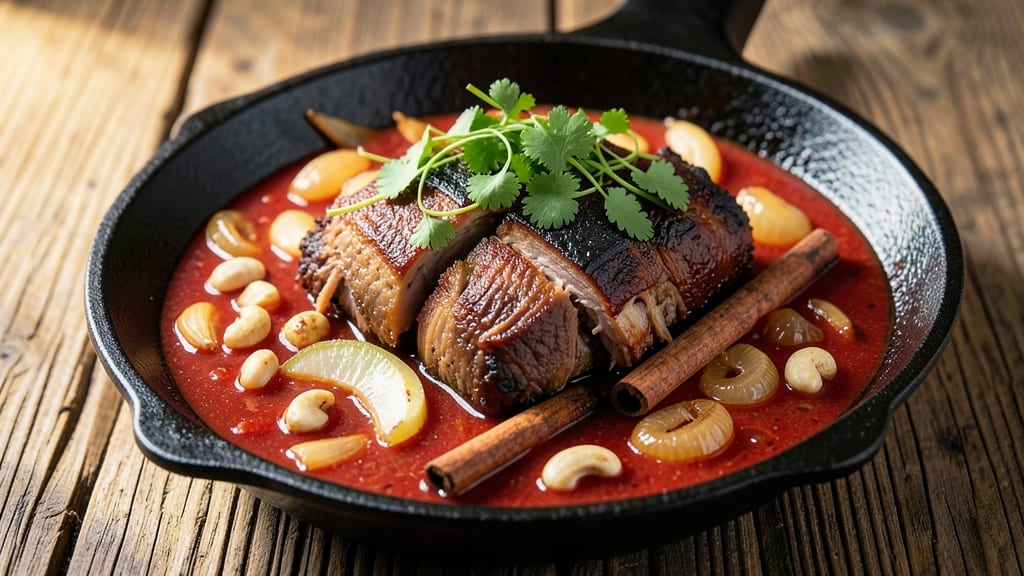
This Anglo-Indian pork vindaloo recipe in style delivers the fiery, tangy-sweet flavors that make it a colonial-era favorite—where Portuguese spices met Indian heat.
The secret lies in slow-braised pork simmered in a vinegar-tomato base until the meat practically falls apart, with deep layers of fenugreek and mustard seeds that define its bold character.
I first made this after discovering my grandmother’s handwritten recipe card, yellowed with age but still packed with notes about "letting the spices bloom" and "never rushing the vinegar."
What sets this apart is the balance: the vinegar’s sharpness cuts through the richness of the pork, while slow cooking transforms tough cuts into melt-in-your-mouth tenderness. The spices—cinnamon, cloves, and black pepper—aren’t just background notes; they develop into a fragrant, almost floral depth as they simmer.
This isn’t a quick weeknight dish, but the kind of meal that rewards patience with restaurant-quality results you’ll crave for days.
By the time you serve it, the vindaloo will be a deep, glossy sauce clinging to tender pork pieces, with a garnish of fresh cilantro that brightens every bite. The aroma alone—smoky, sweet, and tangy—will fill your kitchen and have everyone gathering at the table.
It’s the kind of dish that feels like a hug in a bowl, especially on chilly evenings when you need something hearty and full of flavor.
Serve it with basmati rice or crusty naan to soak up every last drop of that rich, spiced sauce. The leftovers? Even better the next day, as the flavors meld into something impossibly comforting. Let’s get cooking—this vindaloo is worth every minute of simmering.
Ingredients for pork vindaloo recipe anglo indian style
The heart of this Anglo-Indian vindaloo: bold spices, tangy vinegar, and pork that melts with slow cooking.
| Ingredient | Amount | Notes |
|---|---|---|
| Pork Shoulder 🥩 | 2 lb | Bone-in, cut into 2-inch cubes |
| Red Wine Vinegar 💧 | ½ cup | White wine vinegar works too |
| Tomato Paste 🍅 | ½ cup | High-quality, no sugar added |
| Fresh Ginger 🧅 | 2 tbsp | Finely grated, peeled |
| Yellow Onions 🧅 | 2 whole | Thinly sliced, about 2 cups |
| Garlic Cloves 🧄 | 8 cloves | Minced, about 2 tbsp |
| Mustard Seeds 🌶️ | 1 tbsp | Whole, yellow or brown |
| Fenugreek Seeds 🌿 | 1 tsp | Lightly toasted |
| Ground Cumin 🌿 | 1 tsp | Freshly toasted preferred |
| Ground Coriander 🌿 | 1 tsp | Freshly ground for best flavor |
| Cinnamon Sticks 🌿 | 2 whole | Each about 2 inches long |
| Cloves 🌿 | 4 whole | Whole, not ground |
| Black Cardamom Pods 🌿 | 2 whole | Lightly crushed |
| Salt 🧂 | 1 ½ tsp | Kosher or sea salt |
| Fresh Cilantro 🌿 | ¼ cup | Chopped, for garnish |
| Olive Oil 🫒 | 2 tbsp | For blooming spices |
The pork shoulder is non-negotiable here—its fat and collagen transform into tender, flavorful bites. Grab a bone-in cut from Whole Foods or your local butcher; the bones add depth to the sauce. If you can't find bone-in, pork butt works too, but cut it into even 2-inch cubes for consistent cooking. The spices? Penzeys Spices or bulk bins at Indian markets are your best bet—freshly ground coriander and toasted cumin make all the difference. For fenugreek, Madras brand is a cult favorite, but any whole seed will work if lightly toasted in a dry pan first.
No red wine vinegar? White wine vinegar or apple cider vinegar will do—just reduce the amount slightly to avoid over-acidity. The tomato paste can be swapped for crushed tomatoes (1 can, drained), but paste gives that concentrated depth. For the ginger, fresh is essential—no powdered substitutes here. Mustard seeds and fenugreek are the soul of vindaloo; if you're missing one, double the other for intensity. The black cardamom pods? Skip them if unavailable—the dish still sings without them, but they add that smoky complexity that makes it special.
This vindaloo tastes even better the next day, so make extra—it keeps for 5 days in the fridge or 3 months frozen. Store in airtight containers, and the sauce will develop even more richness over time. For reheating, low heat is key—add a splash of water or broth to prevent drying. Garnish with fresh cilantro right before serving, as it wilts quickly. The aroma alone will have everyone rushing to the table—trust me, this is the kind of dish that rewards patience with every bite.
Why You'll Love This Recipe
- One-Pot Magic: I swear by this—just brown the pork, toss in the onions and ginger, then let the vinegar and tomato paste work their alchemy. No extra pans, no fuss, and the flavors meld while you’re still deciding what to watch on TV.
- Tangy, Deep Comfort: That red wine vinegar cuts through the richness of the pork shoulder like a bright summer day after a heavy meal. The slow simmer turns tough meat into something tender, with a sauce that’s sweet, spicy, and just a little bit wicked—exactly how vindaloo should be.
- Leftovers That Shine: Between us, this dish tastes better the next day. The flavors deepen, the sauce thickens just enough to coat everything, and it’s still hearty enough to stretch over rice or flatbreads for days. I’ve fed a houseful with one batch—no regrets.
- Budget Stretch: Pork shoulder is cheap, and a little goes a long way here. The vinegar and spices cost almost nothing, and the dish serves four (or five if you’re generous). Honestly, it’s the kind of recipe that makes grocery day feel like a win.
Step-by-step instructions for Anglo-Indian pork vindaloo
Here's how to build layers of spice and acid that transform tough pork into tender, flavor-packed perfection.
Bloom the Spices in Olive Oil
Heat the 2 tablespoons olive oil in a heavy-bottomed Dutch oven over medium-low heat. Add the 1 tablespoon mustard seeds and toast for 30 seconds until they begin to pop. Immediately add the 1 teaspoon fenugreek seeds, 2 whole cinnamon sticks, 4 whole cloves, and 2 whole black cardamom pods, stirring constantly for 1 minute until fragrant.
Watch closely here—the spices should sizzle gently without burning. This step develops the complex aromatic base that defines Anglo-Indian vindaloo. If you smell anything acrid, reduce the heat slightly. Add the 1 teaspoon ground cumin and 1 teaspoon ground coriander next, stirring for 30 seconds to fully incorporate their earthy warmth.
Sauté Aromatics Until Deeply Golden
Add the 2 whole yellow onions, sliced thinly, and cook for 8-10 minutes over medium heat until they turn deep golden brown and caramelize at the edges. This long cooking time is crucial—it transforms the onions from sharp to sweet and mellow.
Stir in the 2 tablespoons finely grated fresh ginger and 8 minced garlic cloves, cooking for another 2 minutes until the raw aroma disappears and the mixture becomes fragrant. The ginger should soften and meld with the onions, creating a cohesive aromatic paste that forms the sauce's foundation.
Build the Vinegar-Tomato Base
Lower the heat to medium-low and add the 0.5 cup tomato paste, stirring vigorously to prevent burning. Cook for 3-4 minutes until it darkens slightly and loses its raw taste. Pour in the 0.5 cup red wine vinegar all at once, scraping up any browned bits from the bottom of the pot.
Bring the mixture to a gentle simmer and let it reduce for 5 minutes until it thickens slightly. This step balances the heat with acidity, creating the signature tangy-sweet profile of Anglo-Indian vindaloo. Taste and adjust seasoning with the 1.5 teaspoons salt—you want a bright, acidic base that's ready to absorb the pork's flavors.
Braise the Pork Until Fork-Tender
Add the 2 lb pork shoulder cut into 2-inch cubes, stirring to coat evenly in the sauce. Increase heat to medium-high and bring to a boil, then immediately reduce to low heat, cover, and simmer for 2 hours. This long, slow cook time breaks down the connective tissue, rendering fat that bastes the meat and creates a rich sauce.
Check occasionally and add 2-3 tablespoons water if the sauce becomes too dry. The pork is done when it easily pulls apart with two forks and the sauce has thickened into a glossy, velvety consistency. Real talk: don't rush this step—patience here transforms tough pork into melt-in-your-mouth tenderness.
Finish and Garnish
Remove the lid and increase heat to medium-high to reduce the sauce for 10-15 minutes until it coats the back of a spoon. Stir in the 0.25 cup chopped fresh cilantro just before serving to brighten the dish with freshness.
Serve immediately with steamed basmati rice or crusty naan, ensuring each bite delivers the perfect balance of spicy, tangy, and umami flavors. The dish will continue to deepen in flavor as it sits, so don't wait too long to serve—this vindaloo deserves to be enjoyed at its peak.
Pro Tips For Making Pork Vindaloo Recipe Anglo Indian Style
- COOK THE ONIONS LOW: I used to rush this step and end up with bitter, burnt onions that ruined the whole dish. For Anglo-Indian vindaloo, cook your yellow onions over medium-low heat for at least 15 minutes—until they’re deep golden and sweet, not browned. This builds the flavor base that carries the tangy vinegar and slow-cooked pork.
- SALVAGE THE PORK: Pork shoulder needs patience—don’t rush the braise. Start with a hot sear in the pot, then immediately add vinegar and tomato paste to deglaze. Once the liquid reduces by half, lower the heat to a simmer and cover. After 2 hours, check for tenderness; if it’s still tough, add ¼ cup water, cover, and let it work another 30 minutes.
- VINEGAR FIRST, NOT LAST: I learned this the hard way—adding vinegar too late makes the dish taste sharp and unfinished. Pour in the red wine vinegar with the tomato paste at the start, letting it cook down into the onions first. This mellows the acidity and lets the flavors meld properly, giving that classic Anglo-Indian balance.
- GRATE THE GINGER FINE: Skip the food processor for this one. Fresh ginger needs to dissolve completely, and grating it by hand (or using a microplane) ensures it blends smoothly into the sauce. If you’re impatient, finely chop it—but strain the sauce afterward to avoid texture issues. Trust me, the difference is noticeable.
Creative variations of this dish
Goan-Inspired Twist
For a sweeter, coconut-infused version, add 1 cup coconut milk when building the vinegar-tomato base and swap ½ cup of the vinegar for ½ cup tamarind paste. This Goan-inspired adaptation keeps the fiery heat but adds a tropical depth.
I first tried this after a trip to Goa, where vindaloo often incorporates coconut milk to balance the acidity. Garnish with toasted coconut flakes and lime wedges for a bright finish. 🌴
Vegetarian Adaptation
Swap the pork for 2 lbs firm tofu or 1 large eggplant cut into chunks. For tofu, press and marinate in ¼ cup vinegar, 1 tbsp ginger-garlic paste, and 1 tsp turmeric for 30 minutes before cooking.
For eggplant, roast it first at 400°F for 20 minutes to remove bitterness. The spices and vinegar still shine, making this a hearty vegetarian option. 🌱
Spicier Challenge
For those who love heat, add 1-2 tbsp Kashmiri red chili powder when blooming the spices and stir in 1 tbsp gochugaru (Korean chili flakes)> during the final 10 minutes of simmering. Fresh green chilies or bird's eye chilies (seeds removed for less heat) also work beautifully.
I once made this version for a spice challenge and served it with cooling yogurt sauce on the side. 🌶️
Slow Cooker Version
Transfer all ingredients to a 6-quart slow cooker after blooming the spices and sautéing the aromatics. Cook on low for 6-8 hours or high for 4-5 hours, stirring occasionally. The slow cooker's gentle heat mimics the Dutch oven's braising, resulting in tender pork and a deeply flavorful sauce.
This is perfect for busy days when you want to come home to a restaurant-quality meal. ⏳
Creamy Finish Option
For a richer dish, stir in ½ cup heavy cream or ½ cup coconut cream during the final 5 minutes of simmering. This adds a velvety texture that balances the vinegar's tang. I love this version with garlic naan—the buttery bread soaks up the creamy sauce beautifully. 🥛
Nutrition facts
Frequently asked questions
Can I use chicken or beef instead of pork?
Chicken works beautifully—use 2 lbs boneless thighs and reduce the cooking time to 45-50 minutes after simmering. For beef, opt for 2 lbs chuck roast cut into chunks and braise for 3 hours instead. The vinegar and spices will transform all three proteins into tender, flavorful bites.
Why does my vindaloo taste too acidic?
Too much vinegar or insufficient cooking time can make the dish overly sharp. Balance it by adding 1-2 tablespoons sugar or ½ cup coconut milk at the end to mellow the acidity. Also, ensure you simmered the sauce uncovered for 10-15 minutes at the end to reduce excess liquid.
What's the best way to store leftovers?
Let the vindaloo cool completely, then transfer to airtight containers. It keeps for 5 days in the fridge or 3 months frozen. Reheat gently on low heat with a splash of water or broth to restore moisture. The flavors actually deepen overnight, making leftovers even more delicious!
Can I make this in a slow cooker?
Yes! After blooming the spices and sautéing aromatics, transfer everything to a 6-quart slow cooker. Cook on low for 6-8 hours or high for 4-5 hours, stirring occasionally. The slow cooker's even heat mimics the Dutch oven's braising perfectly. This hands-off method is ideal for busy days.
What's the secret to balancing the spices?
The key is blooming spices in oil first—this releases their essential oils for maximum flavor. Toast mustard seeds until they pop, then add fenugreek and whole spices while stirring constantly. The spices should smell fragrant but not burnt. For depth, let the vinegar-tomato base reduce before adding pork, and always taste as you go.