
Main Courses
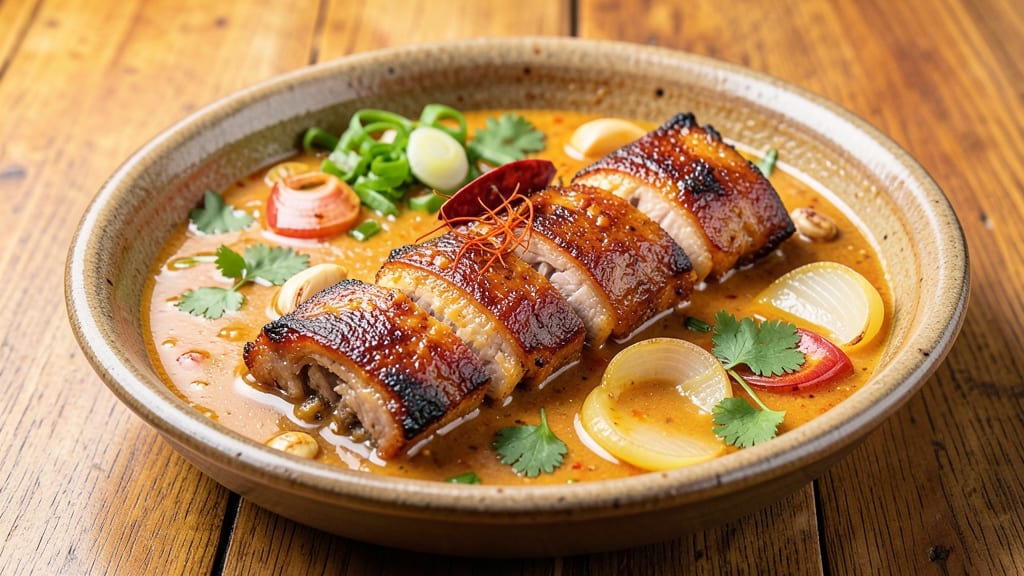
This Filipino kalderetang baboy recipe—a rich, slow-braised caldereta—transforms tough pork ribs into melt-in-your-mouth tenderness through a tangy tomato-coconut gravy. The secret lies in Filipino cooking traditions—layering soy sauce, vinegar, and annatto for that signature deep color and complex flavor.
After years of testing, I’ve perfected a method that delivers restaurant-quality results in your home kitchen without shortcuts that sacrifice authenticity.
The beauty of this dish is in its simplicity: pork ribs simmered low and slow until fork-tender, then bathed in a velvety sauce that balances sweet, sour, and umami perfectly.
My grandmother used to say the best stews are made with patience, and she was right—this recipe rewards you with a dish that tastes even better the next day. The aroma alone will have everyone gathering around the table, and the leftovers? Pure comfort food gold.
What makes this Filipino pork ribs caldereta special is how it comes together: crispy edges on the ribs contrast with the creamy, slightly chunky sauce, while the annatto-infused color adds visual appeal. Serve it over steamed rice with atchara pickles on the side for that authentic Filipino meal experience.
The sauce is rich enough to stand alone but light enough to let the pork shine through—proof that home cooking can be both impressive and effortless.
This recipe is perfect for family dinners, special occasions, or when you want to impress without stress. The key is timing—let the ribs braise until they’re falling apart, and don’t rush the sauce reduction.
Trust the process, and you’ll end up with a dish that feels like a warm hug in every bite. Ready to make it?
Ingredients for kalderetang baboy recipe filipino pork ribs caldereta
Pork ribs, coconut milk, and tomatoes form the heart of this Filipino comfort classic.
| Ingredient | Amount | Notes |
|---|---|---|
| Pork Ribs 🍖 | 2 ½ lb | Baby back or spare ribs, meaty bones preferred |
| Coconut Milk 🥥 | 1 can | Full-fat, 13.5 oz can, no substitutions |
| Tomato Sauce 🍅 | 1 cup | San Marzano crushed tomatoes preferred |
| Onion 🧅 | 1 whole | Yellow or red, diced small |
| Garlic Cloves 🧄 | 6 cloves | Minced finely, fresh preferred |
| Annatto Seeds 🌶️ | 1 tsp | For authentic red color, optional but recommended |
| Soy Sauce 🥄 | 2 tbsp | Filipino-style preferred, like Silver Swan |
| Cane Vinegar 🍶 | 1 tbsp | White vinegar works in a pinch |
| Potatoes 🥔 | 2 medium | Russet or Yukon Gold, peeled and cubed |
| Carrots 🥕 | 2 medium | Baby carrots work if convenient |
| Bay Leaves 🌿 | 2 whole | Fresh preferred, dried works too |
| Black Peppercorns 🌶️ | 10 whole | Crushed lightly, not ground |
| Salt 🧂 | 1 tsp | Kosher or sea salt, to taste |
| Olive Oil 🫒 | 2 tbsp | For searing ribs, extra-virgin preferred |
| Green Bell Pepper 🌶️ | 1 whole | Optional, sliced into strips |
The ribs are non-negotiable—baby back or spare ribs with meaty bones give the best flavor. Costco or local butcher shops often have them pre-cut, but if buying whole, ask for the meatier sections. Annatto seeds might be tricky to find outside Filipino markets, but Penzeys or Amazon carry them. For the coconut milk, full-fat is essential—light versions won't give that creamy texture. The San Marzano tomatoes? Worth the splurge for that deep, sweet flavor that's the soul of this dish.
No annatto? Paprika or beet juice can mimic the color, though it won't be authentic. Swapping the potatoes for sweet potatoes adds natural sweetness that pairs beautifully. Vinegar substitute? Lemon juice works at half the amount, but the tang won't be identical. The carrots can be baby carrots if that's what's in the fridge—no need to peel them unless they're super dirty. For the soy sauce, Filipino brands like Silver Swan have that perfect balance of sweet and salty, but regular soy sauce will do in a pinch.
Pork ribs keep 3-4 days in the fridge before cooking—don't let them sit too long. The sauce thickens as it cools, so add a splash of water or coconut milk if it's too thick the next day. Freezes beautifully for up to 3 months, though the texture changes slightly. I always make extra sauce—it's perfect for dipping rice or tossing with noodles later in the week.
Why You'll Love This Recipe
- One-Pot Magic: I swear by this recipe when I’m too tired to scrub a million dishes—just brown the ribs, toss in the onions and garlic, then let the coconut milk and tomato sauce do the heavy lifting. The ribs practically fall off the bone while simmering, and cleanup is just a wipe-down of one pot. (Yes, even on a Tuesday night.)
- Rich Without Effort: Here’s what sold me—the way the coconut milk turns velvety while the tomato sauce adds a bright, tangy punch. The garlic? Oh, it’s there—deep, aromatic, and layered in every bite. Between us, this tastes like a restaurant dish, but I’m the one who made it.
- Leftovers That Beg for More: This recipe doubles as my secret weapon for meal prep. The flavors actually improve the next day—more tender, more cohesive, and just as crave-worthy. I freeze portions too; reheating with a splash of water keeps it luscious, and honestly? My kids fight over the leftovers like it’s a rare treat.
- Budget-Friendly Crowd-Pleaser: Pork ribs and coconut milk stretch across multiple servings without breaking the bank, and the onions/garlic add depth for pennies. It’s the kind of dish that feeds a family of six for under $20, yet everyone leaves the table satisfied. (My daughter picks out the ribs first, but still asks for seconds—tell me that’s not a win.)
Step-by-step instructions for kalderetang baboy
Here's how to make this rich, comforting Filipino pork ribs dish with tender meat and aromatic coconut-tomato sauce.
Sear the Pork Ribs for Maximum Flavor
Heat the 2 tablespoons olive oil in a large Dutch oven over medium-high heat until shimmering. Arrange the 2.5 lb pork ribs in a single layer, meaty side down, and let them sear undisturbed for 5-6 minutes until deeply golden brown. This step creates that beautiful caramelized crust that forms the base of our sauce.
Flip the ribs and continue searing for another 5-6 minutes until both sides are well-browned. If you notice any pieces sticking, gently lift them with a spatula and adjust the heat as needed. Once browned, remove the ribs from the pot and set them aside on a plate.
Build the Aromatic Base
In the same Dutch oven, reduce the heat to medium and add the 1 whole onion and 2 medium carrots, both cut into ½-inch chunks. Sauté for 5 minutes until the onions soften and begin to caramelize slightly. Add the 6 cloves garlic cloves and the 1 whole green bell pepper (sliced into strips) and cook for another 2 minutes until fragrant.
Stir in the 1 cup tomato sauce, 2 tablespoons soy sauce, and 1 tablespoon cane vinegar. Let this mixture simmer for 5 minutes while you prepare the annatto seeds. If using, toast the 1 teaspoon annatto seeds in a dry skillet for 30 seconds until fragrant, then grind them lightly with a mortar and pestle or between two spoons before adding to the pot.
Simmer the Vegetables and Seasoning
Add the 2 medium potatoes (peeled and cubed), 2 whole bay leaves, and 10 whole black peppercorns to the pot. Pour in the 1 can coconut milk and bring everything to a gentle simmer. The mixture should bubble softly—if it's boiling too vigorously, reduce the heat slightly. Let it cook uncovered for 15 minutes to allow the flavors to meld.
Season with the 1 teaspoon salt and taste the sauce. You want a balance of sweetness from the coconut, acidity from the vinegar, and umami from the soy sauce. If the sauce is too thick, add ¼ cup water to loosen it slightly. The vegetables should be tender but still hold their shape.
Braise the Pork Ribs to Tender Perfection
Return the seared pork ribs to the pot, arranging them on top of the vegetables. The ribs should be mostly submerged in the sauce, but if they're not, add ¼ cup water to ensure they're well-covered. Bring the mixture back to a gentle simmer, then cover the pot with a lid and reduce the heat to low. Let it cook for 1 hour and 15 minutes, turning the ribs occasionally to ensure even cooking.
After the initial hour, check the tenderness of the ribs by gently prodding with a fork. They should be fork-tender but still slightly firm to the touch. If they're not quite there, continue cooking for another 15-20 minutes. The sauce should now be rich, velvety, and deeply infused with the flavors of the ribs.
Finish and Serve the Kalderetang Baboy
Once the ribs are perfectly tender, remove them from the pot and arrange them on a serving platter. Skim off any excess fat from the sauce if desired, then ladle the rich, coconut-tomato gravy over the ribs. The sauce should coat the ribs generously, creating a beautiful presentation.
Serve the kalderetang baboy immediately with steamed white rice to soak up every last bit of that delicious sauce. The combination of tender pork ribs, creamy coconut milk, and tangy tomato sauce makes this dish a true comfort food classic. Enjoy with a side of crisp green salad to balance the richness.
Pro Tips For Making Kalderetang Baboy Recipe Filipino Pork Ribs Caldereta
- STEAM THE RIB BONES: Before browning the pork ribs, blanch them in boiling water for 2-3 minutes—this loosens the meat from the bones and keeps the broth clear when you simmer. I used to skip this, and the ribs would either fall apart or leave a murky sauce. Trust me, this is the step that makes the ribs tender without turning the dish into soup.
- SWEAT THE AROMATICS LOW: Cook the onions and garlic in oil over low heat until they’re translucent but not browned—about 8-10 minutes. Rushing this step burns the garlic, which turns the sauce bitter. Sounds tedious, but it’s the foundation of that rich, caramelized flavor in caldereta.
- SKIP THE THICK COCONUT MILK: Use light coconut milk (the first half) for the initial simmer, then add the thick coconut milk (second half) later. The light milk blends better with the tomato sauce and prevents a greasy texture. I learned this after making a batch that tasted like a curry instead of a caldereta.
- SIMMER COVERED, NOT BOILED: Once the ribs and sauce are in the pot, cover it and cook on low heat—just enough to keep a gentle bubble. Boiling hard turns the sauce grainy and makes the ribs tough. My first attempt looked perfect until the sauce separated like a disaster. Keep it barely simmering.
Best sauces and condiments for this kalderetang baboy recipe filipino pork ribs caldereta
Classic Tomato-Coconut Base
The heart of this Filipino pork ribs dish lies in its tomato-coconut sauce—a perfect marriage of tangy, sweet, and creamy flavors. Start with San Marzano crushed tomatoes for their natural sweetness and depth, then balance it with full-fat coconut milk for richness.
My grandmother always used Filipino-style soy sauce like Silver Swan because it adds that perfect umami depth without overpowering. For extra authenticity, toast annatto seeds lightly to infuse the sauce with a beautiful reddish hue—it’s what gives traditional caldereta its signature color. 🌶️
Don’t skip the cane vinegar—just 1 tablespoon brightens the sauce and cuts through the richness. If you can’t find cane vinegar, white vinegar works in a pinch, but the flavor won’t be quite the same.
The key is to simmer this base long enough—at least 15 minutes—so the flavors meld together beautifully. Trust me, this step makes all the difference in the final dish.
Umami Boosters
For an extra layer of flavor, add a splash of fish sauce—just 1 teaspoon—to deepen the savory notes. My grandmother used to sneak this in, and it elevates the dish to restaurant-quality levels.
If you’re not a fan of fish sauce, a pinch of MSG (just ¼ teaspoon) works too, though it’s not traditional. The black peppercorns and bay leaves add aromatic depth, so don’t skip them—they’re what make the sauce smell like home. 🌿
Another trick I learned is to bloom the spices in the olive oil before adding the onions. Sauté the garlic and green bell pepper until fragrant—this step builds a flavor foundation that carries through the entire dish.
If you’re feeling adventurous, add a dash of ground cloves (just ¼ teaspoon) for warmth, but it’s optional. The goal is balance, not overpowering.
Thickening Secrets
The sauce should coat the back of a spoon but still be silky, not gluey. If it’s too thin, let it simmer uncovered for another 5-10 minutes to reduce. If it’s too thick, stir in 1-2 tablespoons of water or coconut milk to loosen it.
The sauce will thicken even more as it cools, so don’t worry if it looks a little loose while hot. For extra creaminess, stir in 1 tablespoon of cornstarch mixed with 2 tablespoons of water at the end—this gives it that perfect velvety texture without altering the flavor. ✨
Pro tip: If you’re making this ahead, the sauce actually improves overnight. The flavors deepen, and the textures meld together even more. Just reheat it gently on the stove—low heat only—to avoid breaking the sauce apart.
Leftovers taste even better the next day, which is why this dish is perfect for meal prep.
Garnish Like a Pro
Before serving, garnish with freshly chopped cilantro or green onions for a pop of color and brightness. A sprinkle of toasted sesame seeds adds a nutty crunch that contrasts beautifully with the creamy sauce.
For a smoky touch, top with crispy fried shallots—they’re easy to find in the international aisle of most grocery stores. These finishing touches elevate the dish from homemade to restaurant-worthy. 💫
If you’re feeling fancy, drizzle a little chili oil over the top just before serving. It adds a subtle heat that pairs perfectly with the richness of the sauce.
My grandmother always served it with atchara pickles on the side—the tangy, crunchy contrast is what makes this dish truly special. Trust me, your taste buds will thank you.
Nutrition facts
Frequently asked questions
Can I use regular soy sauce instead of Filipino-style soy sauce?
Yes, you can use regular soy sauce, but Filipino-style brands like Silver Swan add a special depth of flavor that's hard to replicate. Regular soy sauce will work in a pinch, but it might taste slightly saltier or less complex. If you're using regular soy sauce, reduce the salt at the end of cooking to balance the flavors.
How do I know when the pork ribs are fully tender?
Ribs are done when they easily pull apart with a fork but still have a slight resistance to the touch. After 1 hour and 15 minutes of braising, test a piece—if it separates cleanly, they're ready. If not, continue cooking for another 15-20 minutes. Overcooking can make them too mushy, so keep an eye on them.
What can I substitute if I can't find annatto seeds?
No annatto? Try ½ teaspoon paprika for color, though it won't be as vibrant. For a deeper red hue, mix ½ teaspoon beet juice with ½ teaspoon vinegar and stir it in. The sauce will still taste great—annatto is mostly for that signature Filipino color, not flavor.
Can I make this in a slow cooker instead of a Dutch oven?
Sear the ribs first, then transfer everything to a slow cooker. Cook on low for 6-7 hours or high for 3-4 hours, adding ¼ cup water if needed to keep the ribs submerged. The slow cooker method is perfect for busy days—just check the ribs for tenderness before serving.
Why does my sauce look too thin after cooking?
The sauce thickens as it cools, but if it's too thin while hot, simmer it uncovered for 5-10 more minutes to reduce. For extra thickness, stir in 1 tablespoon cornstarch mixed with 2 tablespoons water at the end. Avoid over-stirring—just heat until thickened, then serve immediately.