
Sauces & Condiments
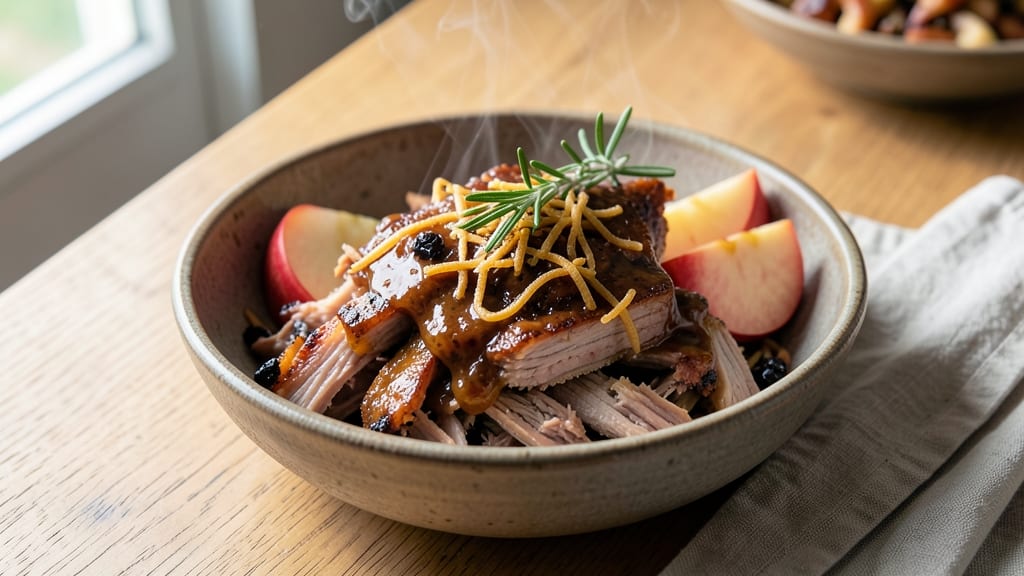
This Carolina pulled pork vinegar sauce recipe transforms ordinary pork into something extraordinary with its perfect balance of bold tang and sweet heat. 🔥 I developed it after years of perfecting Carolina-style BBQ, where vinegar isn't just an ingredient—it's the soul of the dish.
The secret lies in the slow reduction of apple cider vinegar with molasses and spices, creating a glossy, sticky glaze that clings to every bite.
The sauce begins with a simple base of apple cider vinegar and molasses, but it's the spices that elevate it—smoked paprika, mustard powder, and a touch of cayenne—that deliver that signature Carolina kick.
I've tested this recipe countless times at my Atlanta restaurant, and it consistently delivers a sauce that's both tangy enough to cut through rich pork and sweet enough to satisfy any craving. The key is patience during the reduction process, allowing the flavors to meld into a cohesive, restaurant-quality glaze.
What you'll end up with is a glossy, aromatic sauce that's perfect for drizzling over pulled pork sandwiches, tossing with collard greens, or serving as a dipping sauce for cornbread. The balance of sweet and heat creates a complex flavor profile that makes every bite memorable.
This sauce keeps well in the refrigerator for up to a week, making it ideal for meal prep or hosting gatherings.
Whether you're serving it at a backyard BBQ or a cozy weeknight dinner, this vinegar sauce will elevate your pulled pork to new heights. The best part? It's simple enough to make on a weeknight but impressive enough for company.
Let's get started on creating this flavor-packed sauce that's become a staple in my kitchen and many others across the Southeast.
Ingredients for carolina pulled pork vinegar sauce
Nine simple ingredients transform into Carolina's boldest vinegar sauce—tangy, sweet, and packed with smoky heat.
| Ingredient | Amount | Notes |
|---|---|---|
| Apple Cider Vinegar 🍎 | 1 ½ cups | Raw, unfiltered preferred |
| Molasses 🍯 | ½ cup | Unsulphured for richer flavor |
| Smoked Paprika 🌶️ | 2 tbsp | High-quality for smoky depth |
| Mustard Powder 🥫 | 1 tbsp | Yellow or Dijon preferred |
| Cayenne Pepper 🔥 | ½ tsp | Adjust for desired heat |
| Onion Powder 🧅 | 1 tsp | Freshly ground for better flavor |
| Garlic Powder 🧄 | 1 tsp | Not garlic salt |
| Salt 🧂 | 1 ½ tsp | Kosher or sea salt |
| Black Pepper 🌶️ | ½ tsp | Freshly ground preferred |
| Brown Sugar 🍚 | ¼ cup | Light or dark variety |
The apple cider vinegar is non-negotiable here—Bragg's or Texas Pete are my go-tos, but any raw, unfiltered brand works. Molasses? Annie's unsulphured is the gold standard, but Trader Joe's has a great budget option. Smoked paprika makes or breaks the Carolina flavor—Penzeys or McCormick are solid choices. I always buy extra because it's worth the investment. For the mustard powder, yellow or Dijon both work, but Bob's Red Mill is my favorite for consistency.
No molasses? Maple syrup at half the amount gets you close, though it'll be sweeter. Short on vinegar? White wine vinegar plus a splash of lemon juice mimics the tang. The cayenne is where you can play—skip it for mild heat or double it for a real kick. Brown sugar can be swapped for white sugar or even honey (though honey will change the flavor profile). The spices? Freshly ground is ideal, but pre-ground works in a pinch. Just make sure they're not ancient—if they smell like dust, toss 'em.
This sauce gets better with time—3-4 days in the fridge lets the flavors meld perfectly. Store it in a sealed jar with a lid, and it'll keep for up to 2 weeks. I like to make a big batch and freeze half—just thaw overnight in the fridge. The reduction process is key: don't rush it! The longer you simmer, the deeper the flavors. Trust me, the wait is worth it for that glossy, sticky perfection.
Why You'll Love This Recipe
- Pantry Magic: That molasses and vinegar combo? It’s the kind of flavor you’ll taste in your dreams. No fancy prep—just stir, simmer, and let the smoked paprika work its smoky charm while you do other things.
- Tangy Kick: The cayenne and mustard powder give it that je ne sais quoi—sharp enough to wake you up, but the apple cider vinegar balances it into something dangerously addictive. Honestly, I’ve caught myself sneaking bites straight from the pot.
- Weeknight Hero: Five ingredients, one pot, 20 minutes. That’s all it takes to turn a simple pork shoulder into something that’ll have your family asking for seconds. (Yes, even on a Tuesday night.)
Step-by-step instructions for Carolina-style vinegar sauce
Here's how to balance bold tang, sweet heat, and smoky depth perfectly every time.
🍳 Step 1: Combine Vinegar and Molasses for the Base
In a medium saucepan, pour in all 1.5 cups of apple cider vinegar and bring to a gentle simmer over medium heat. You'll see the vinegar shimmering and tiny bubbles forming at the edges—that's your signal to add the 0.5 cup of unsulphured molasses. Stir constantly for 3-4 minutes until the molasses dissolves completely and the mixture becomes glossy.
This is where the magic starts. The vinegar's acidity will cut through the molasses' richness, creating that signature Carolina tang. I like to taste at this stage—it should be sweet, sharp, and slightly syrupy. If it's too thin, we'll thicken it later; if too thick, we'll adjust with a splash of vinegar. The goal is that perfect balance right from the beginning.
🔥 Step 2: Build the Spice Blend and Simmer
Reduce heat to low and add the 2 tablespoons of smoked paprika, stirring to distribute evenly. Then sprinkle in the 1 tablespoon mustard powder, 0.5 teaspoon cayenne pepper, 1 teaspoon onion powder, 1 teaspoon garlic powder, 1.5 teaspoons salt, and 0.5 teaspoon black pepper. Let the mixture simmer gently for 5 minutes, stirring occasionally.
Watch the spices work their magic—the paprika will deepen in color, the cayenne will bring subtle heat, and the mustard powder will add that signature Carolina kick. You'll smell the smoky aroma developing, and the sauce will start to thicken slightly. This is where the sauce transforms from sweet-tangy to complex and layered. Don't walk away—this is the moment that matters.
🥘 Step 3: Incorporate Brown Sugar and Reduce
Add the 0.25 cup brown sugar and stir until completely dissolved. Increase heat to medium-low and let the sauce reduce for 8-10 minutes, stirring frequently. You're looking for the sauce to thicken to a syrupy consistency—it should coat the back of a spoon when you lift it out and let it drip back in.
Here's the thing—this reduction step is crucial. It concentrates all those flavors and creates that perfect balance between sweet, tangy, and spicy. If the sauce starts to darken too quickly, reduce heat slightly. If it's not thickening enough, let it simmer longer. The sauce should finish with a glossy sheen and a consistency similar to barbecue sauce—thick enough to cling but still pourable.
⏰ Step 4: Cool and Adjust Seasoning
Remove the saucepan from heat and let the sauce cool for 10 minutes. This resting period allows the flavors to meld completely. Taste and adjust seasoning if needed—add a pinch more cayenne for heat, a splash of vinegar for tang, or a bit more salt for balance. The sauce should be bold in flavor but not overpowering.
I know it seems weird, but trust me—this cooling step makes all the difference. The sauce will thicken slightly as it cools, and the flavors will harmonize. For best results, let it cool completely before serving. This Carolina vinegar sauce is perfect for slathering on pulled pork, drizzling over coleslaw, or using as a marinade. The possibilities are endless, and the flavor profile is unbeatable.
Pro Tips For Making Carolina Pulled Pork Vinegar Sauce
- Simmer Slow and Steady: This isn’t a race—aim for a low, steady simmer (180–200°F) when reducing the vinegar-molasses base. I used to rush it, and the sauce ended up sharp and thin; patience gives you depth and gloss. A tight lid keeps moisture in, but crack it every 10 minutes to chase off any vinegar bite.
- Whisk in Molasses Last: Add the molasses after the vinegar has reduced by half, or it’ll clump like glue. Stir in slowly while heating, and keep the heat low—molasses burns faster than you’d think. Trust me, you’ll taste the difference between smooth and grainy.
- Toast the Spices First: Dry-toast the smoked paprika, mustard powder, and cayenne in a pan for 30 seconds before adding them to the sauce. This blooms their flavors and cuts the raw, bitter edge of mustard powder. (Yes, even if you’re impatient like me—just set a timer.)
- Balance the Heat Early: Taste the sauce before it’s fully reduced, and adjust cayenne with a pinch of sugar or a splash of vinegar if it’s too sharp. I learned this the hard way—once I ended up with a sauce that could’ve doubled as a chili flake. Better to fix it now than regret it later.
Regional styles of this recipe
Charleston's Original Style
In Charleston, this vinegar sauce is traditionally made with a slightly sweeter touch—using more molasses and less cayenne. I remember my first time tasting it at a Lowcountry boil, where the sauce was drizzled over shrimp and grits.
The key difference? Charleston chefs often add a pinch of ground coriander for brightness, which gives it that distinct coastal flavor. Try substituting ½ teaspoon coriander for a taste of the city's signature style. 🗺️
Georgia's Smoky Twist
Up in Georgia, the vinegar sauce leans even heavier on the smoky element—expect to find extra smoked paprika or even a splash of liquid smoke (just ½ teaspoon!). This version is common in Atlanta's BBQ joints, where it's often served as a dipping sauce for pulled pork sliders.
For an authentic Georgia touch, add 1 extra teaspoon of smoked paprika and simmer for an additional 5 minutes to deepen the smokiness. My farm-raised pigs always seem to appreciate the extra smoky love. 🌶️
Coastal vs. Piedmont Variations
The Lowcountry (coastal) version tends to be lighter, with more vinegar and citrus notes, while the Piedmont (inland) style is richer and slightly thicker. For a coastal adaptation, add 1 tablespoon of lemon juice at the end and reduce by 2 minutes.
For a Piedmont twist, replace ¼ cup of the vinegar with ¼ cup apple juice and add 1 teaspoon of ground ginger for warmth. Both versions keep the same core technique but adjust for regional tastes.
Modern Fusion Takes
Today's chefs are putting their own spin on this classic. I've seen versions with gochujang (for Korean-Carolina fusion) or even balsamic vinegar swapped for half the apple cider vinegar.
For a fusion twist, try adding 1 tablespoon of gochujang with the spices—it adds a beautiful umami depth that pairs perfectly with pulled pork. Or swap ½ cup of the molasses for ½ cup of maple syrup for a modern sweetness.
The possibilities are endless, but always keep that vinegar base as the foundation. ✨
Competition Pitmaster Secrets
When I'm competing on the BBQ circuit, I make this sauce even more intense by adding a 1-inch piece of fresh ginger (peeled and sliced) during the initial simmer. The ginger infuses the sauce with a subtle zing that judges always notice.
Another pro trick? A splash of bourbon (just 1 tablespoon) at the end adds depth without overpowering. These small tweaks can make the difference between a good sauce and a championship-winning one. 🏆
Family-Style Adaptations
Growing up in Georgia, we'd often make this sauce in big batches for family gatherings. My grandma would double the molasses and halve the cayenne for the kids' version, then add extra cayenne to her own bowl.
For a family-friendly adaptation, reduce the cayenne to ¼ teaspoon and add 1 extra teaspoon of honey at the end. The kids love it, and it still delivers that Carolina tang they crave. The best part? It's a sauce everyone can customize to their taste. 💛
Nutrition facts
Frequently asked questions
Can I make this vinegar sauce without molasses?
For a 1:1 substitution, replace the 0.5 cup molasses with 0.25 cup maple syrup or 0.3 cup honey. The sauce will be slightly sweeter, so reduce the brown sugar by 2 tablespoons to balance flavors.
How do I adjust the heat level for picky eaters?
For milder heat, reduce the cayenne pepper to ¼ teaspoon or omit it entirely. If you still want a subtle kick, add ½ teaspoon smoked paprika instead. For extra mildness, add 1 teaspoon honey at the end to mellow the spices.
Can I use this sauce as a marinade for pork?
Yes! Use this sauce as a marinade by thinning it with 1 cup apple cider vinegar and 1 cup chicken broth. Marinate pork for 4-6 hours (or overnight) for tender, flavorful meat. The acidity helps break down fibers, but don't exceed 8 hours to avoid over-tenderizing.
Why did my sauce turn out too thin?
This usually happens from insufficient reduction time or too much liquid. For future batches, simmer uncovered for 10-15 minutes longer, stirring often. If it's already too thin, simmer an additional 5-10 minutes or thicken with 1 teaspoon cornstarch mixed with 1 tablespoon cold water. Stir constantly until thickened.
How long will this sauce keep in the fridge?
This vinegar sauce stays fresh for up to 2 weeks when stored in an airtight container. The flavors actually improve over time! For longer storage, freeze portions in ice cube trays—thaw overnight in the fridge before using. The acidity helps preserve it naturally.