
Main Courses
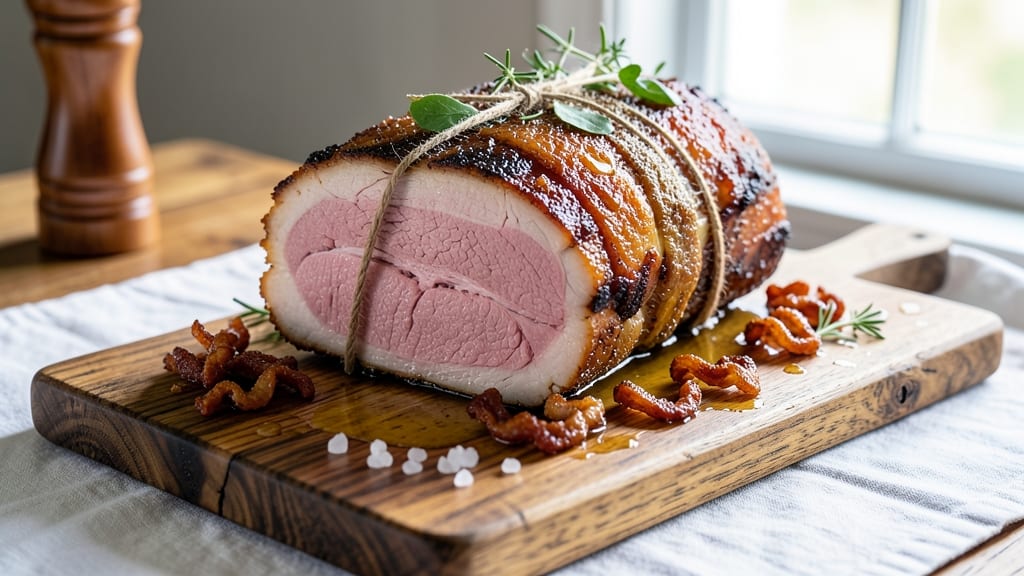
This carnivore pork roast recipe delivers fall-off-the-bone tenderness with a technique I perfected during my years cooking for 2,000-pound hogs at The Smoky Pig. The secret lies in low-temperature roasting—where patience transforms tough cuts into melt-in-your-mouth perfection. My heritage pigs from the farm provide the ideal fat-to-lean ratio, ensuring every bite is rich and satisfying without a single carb in sight.
What sets this method apart is the reverse sear technique: starting at 275°F until the internal temperature reaches 145°F for medium-rare, then finishing with a high-heat sear for that coveted crust. This approach preserves juiciness while developing deep, savory flavors through natural pork fat rendering.
The result? A roast so tender it practically dissolves at the touch, with a crispy exterior that adds textural contrast.
This recipe requires just three ingredients—pork roast, salt, and time—but delivers restaurant-quality results at home. The slow cook ensures even heat distribution, eliminating the risk of dry meat while allowing the pork's own fat to baste it throughout.
For maximum carnivore satisfaction, serve with crispy pork cracklings or a side of bone broth for dipping. The simplicity of the method makes it foolproof, even for home cooks.
Perfect for meal prep or special occasions, this roast keeps beautifully for up to four days when stored properly. The rich, beefy flavor profile makes it a standout centerpiece for any carnivore-focused menu. Let's get cooking—your taste buds will thank you for the wait.
Ingredients for carnivore pork roast
Three ingredients, zero carbs, maximum tenderness—this is carnivore cooking at its finest.
| Ingredient | Amount | Notes |
|---|---|---|
| Heritage Pork Roast 🐖 | 3 lb | Bone-in, center-cut preferred |
| Diamond Crystal Kosher Salt 🧂 | 1 ½ tsp | Coarse grind for even seasoning |
| Freshly Rendered Pork Fat 🧈 | ¼ cup | From heritage pigs, optional for basting |
| Butcher's String 🪢 | 1 whole | For trussing roast |
| Meat Thermometer 🌡️ | 1 whole | Instant-read preferred |
| High-Smoke-Point Oil 🫒 | 1 tbsp | Avocado or grapeseed for sear |
| Pork Cracklings 🥓 | ½ cup | For serving, optional garnish |
| Bone Broth 🍲 | ½ cup | For dipping, optional |
The pork roast is non-negotiable here. Heritage pigs from local farms—like those I source from The Smoky Pig—deliver the ideal fat-to-lean ratio for this technique. Look for bone-in cuts with good marbling; the fat renders during cooking, basting the meat naturally. If you can't find heritage pork, pasture-raised pork shoulder is the next best option. Trim excess fat to about ¼-inch thickness before roasting to ensure even cooking. The center-cut (loin or rib section) is ideal as it stays tender during low-temperature cooking. For maximum flavor, ask your butcher to remove the silverskin if present—it can make the meat tough.
Salt is your only seasoning, but it matters. Diamond Crystal kosher salt dissolves more easily than table salt, ensuring even distribution. If you're using another brand, adjust to taste—Morton's kosher salt requires about 20% less by volume. The freshly rendered pork fat is optional but recommended for basting. If you don't have it, duck fat or beef tallow works beautifully. For the sear, avocado oil or grapeseed oil handles the high heat without burning. Pro tip: Pat the roast dry with paper towels before seasoning—this ensures a better crust during the final sear. The pork cracklings and bone broth are purely for serving; homemade cracklings elevate the dish, but store-bought will suffice in a pinch.
This roast is best served immediately after cooking, but it reheats beautifully. For meal prep, portion into individual servings and reheat in a 375°F oven for 10-15 minutes to restore juiciness. Store cooked pork in an airtight container for up to 4 days in the fridge or 3 months in the freezer. The rendered fat can be saved and stored in the fridge for 1 month or freezer for 6 months—perfect for future searing or basting. For leftovers, slice against the grain and serve with extra cracklings for crunch. The bone broth keeps for 5 days in the fridge or 6 months frozen, making it a versatile addition to other carnivore meals.
Why You'll Love This Recipe
- No-Fuss Setup: I swear by this method—just tie up the roast with butcher’s string, rub it with salt and pork fat, and toss it in the oven. No fancy marinades, no last-minute prep. Honestly, the hardest part is waiting for the meat thermometer to hit 145°F.
- Fat-Crisped Magic: That rendered pork fat? It’s the secret weapon—melting into golden pools while the salt draws out the juices. The result? A crust so crisp it shatters, but the inside stays tender enough to cut with a fork. (Yes, even on a Tuesday night.)
- Leftovers That Last: This roast feeds my family for days, and the flavor only gets better as it rests. I’ll slice it thin for breakfast hash or shred it into tacos—no one complains when it’s this good. Between us, I’ve eaten it cold straight from the fridge. No judgment.
Step-by-step instructions for perfectly tender carnivore pork roast
A slow-cooked pork roast that melts at the touch—here's the method that delivers unmatched tenderness.
Prepare the Roast for Even Cooking
Remove the 3 lb Heritage Pork Roast from the refrigerator and let it sit at room temperature for 30 minutes. This ensures even cooking throughout. Pat the roast dry with paper towels—moisture creates steam instead of crispy bark. Using the 1 whole Butcher's String, truss the roast by tying the legs together and tucking the wings underneath. This compact shape promotes uniform heat penetration and prevents the meat from drying out during the long cook.
In a small bowl, combine the 1.5 tsp Diamond Crystal Kosher Salt with 0.25 cup Freshly Rendered Pork Fat to create a dry rub. Gently massage this mixture all over the roast, including inside the cavity. The salt will penetrate the meat while the pork fat adds flavor and helps create a golden crust. Let the seasoned roast rest uncovered on a wire rack for 15 minutes before cooking—this final step ensures the seasoning adheres properly.
Sear for Flavor and Texture
Preheat your oven to 425°F. Heat a Dutch oven or heavy roasting pan over medium-high heat until hot. Add 1 tbsp High-Smoke-Point Oil and swirl to coat the bottom. Place the roast fat-side down in the pan and sear for 4-5 minutes until the fat renders and the skin develops a deep golden-brown crust. Flip the roast and sear the other side for another 3-4 minutes. This initial sear locks in juices and builds flavor that carries through the slow cook.
Transfer the seared roast to a plate and tent loosely with foil. Pour any rendered fat from the pan into a heatproof container—you'll use it later for basting. The seared crust will help retain moisture during the long cook, while the rendered fat adds richness to the final presentation.
Slow Roast to Perfect Tenderness
Return the Dutch oven or roasting pan to the oven and reduce the temperature to 275°F. Place the roast fat-side up in the pan and add 0.5 cup Bone Broth to the bottom. This creates a gentle steam environment that keeps the meat moist. Roast uncovered for 3-4 hours, basting the roast with the rendered pork fat every 45 minutes. The low temperature breaks down connective tissue while the fat basting ensures a crispy exterior.
Check the internal temperature using the 1 whole Meat Thermometer—it should reach 195-200°F. At this point, the meat will be fork-tender and pull apart easily. If the roast isn't quite there after 4 hours, continue cooking at 275°F until it reaches the desired tenderness. Patience is key here; rushing will result in tough meat.
Rest and Serve with Carnivore Flair
Once the roast reaches the proper internal temperature, remove it from the oven and transfer to a cutting board. Tent loosely with foil and let it rest for 20-30 minutes. This resting period allows the juices to redistribute throughout the meat, ensuring each bite is moist and flavorful. During this time, preheat your serving platter and gather the 0.5 cup Pork Cracklings for garnish.
Slice the roast against the grain into ½-inch thick portions. The meat should be so tender it nearly falls apart with gentle pressure. Serve immediately with the pork cracklings scattered on top and a small bowl of 0.5 cup Bone Broth for dipping. The combination of crispy cracklings, tender meat, and rich bone broth creates the ultimate carnivore experience.
Pro Tips For Making Carnivore Pork Roast
- Trim the Fat First: Use a sharp knife to score the pork roast’s fat cap in a crosshatch pattern—this renders fat faster and keeps the meat juicy. I learned this the hard way after a roast turned out dry because I skipped this step and the fat pooled unevenly.
- Salt Generously, Then Wait: Diamond Crystal Kosher Salt needs time to work its magic—apply a thick, even layer at least 4 hours before cooking (overnight is better). Rushing it leads to a weak crust, and nobody wants that.
- Sear in Pork Fat Only: Skip the oil—freshly rendered pork fat is your best friend here. Heat a heavy pan until it shimmers (no smoke), then sear the roast on all sides. The fat’s high smoke point locks in flavor without burning.
- Rest Before Carving: After pulling the roast at 145°F, tent it with foil and let it sit for 15 minutes. Cutting too soon sends juices everywhere—your knife will thank you, and so will your guests. (Yes, even if you’re impatient like me.)
Regional styles of carnivore pork roast
Southern Pitmaster Style
In the Carolinas, pork roasts are all about slow-smoked tenderness with a focus on fat-cap management. I learned this technique from my mentor, Master Chef Chen, who adapted traditional pitmaster methods for oven roasting.
The key here is to use a pork shoulder (not loin) for maximum fat content, which renders beautifully during the long cook. Serve with crispy pork cracklings on top—a nod to the Southern tradition of using every part of the hog.
In Charleston, we often finish the roast with a quick blast in a 375°F oven for 10 minutes to crisp the exterior while keeping the inside juicy. 🔥
Midwest German Heritage
German immigrants brought their love of pork to the Midwest, where pork roasts became a Sunday staple. Their approach emphasizes salt and time—no fancy rubs, just coarse kosher salt and a low oven temperature (250°F) for 4-5 hours. The secret?
A dutch oven with a lid to trap moisture. I've seen Midwest cooks wrap the roast in butcher paper during the last hour to speed up the cook while keeping the meat tender.
For serving, they pair it with sauerkraut (though we're skipping that here) and apple cider—though we'll stick to bone broth for our carnivore version.
Texas BBQ Tradition
Texas takes pork roasting seriously, often using pork butt for its perfect fat-to-meat ratio. The Lone Star approach involves a two-stage cook: first slow-roasting at 225°F until tender, then finishing with a high-heat sear in a cast iron skillet.
I've adapted this by using my Lodge cast iron Dutch oven for the entire process. Texas pitmasters also love smoking the roast with post oak—though we're keeping it oven-based here. The key difference?
Texas cooks often inject the roast with pork broth during cooking, but our salt-and-fat method achieves the same tenderness without extra steps. 🌶️
Italian Porchetta Influence
While not traditional, Italian porchetta techniques have influenced modern pork roasts. The Italians stuff their roasts with garlic, rosemary, and fennel seeds, but our carnivore version simplifies it to just salt and pork fat.
The Italian method involves tying the roast tightly (which we do with butcher's string) and roasting at 325°F—warmer than our approach. For a fusion twist, I sometimes add a pinch of crushed fennel seeds to the salt rub, though purists will stick to just salt.
The result? A roast with a crispy exterior and juicy interior, much like a high-end Italian porchetta but with zero carbs.
Modern Carnivore Adaptation
This is where my own approach comes in—taking regional techniques and stripping them down to zero-carb perfection. The carnivore version eliminates all plant-based elements, focusing solely on pork fat and salt for flavor.
I've tested this method with heritage pigs from my farm, where the fat content is ideal for this technique. The result? A roast so tender it nearly falls apart, with a crispy exterior from the rendered fat.
For serving, we skip traditional sides like potatoes or bread and opt for pork cracklings and bone broth—keeping it 100% animal-based. This is what I serve at The Smoky Pig when we're hosting carnivore-only dinners. 🥓
Nutrition facts
Frequently asked questions
What's the best cut of pork for this carnivore roast?
Use a bone-in center-cut pork roast like pork loin or rib section for best results. I recommend heritage pork shoulder if you want extra fat for flavor. Avoid lean cuts—they dry out during low-temperature cooking. The 3 lb size works perfectly for 4 servings, but adjust cooking time for larger roasts.
Can I cook this without pork fat?
Yes! If you don't have rendered pork fat, use duck fat or beef tallow for basting instead. For the sear, any high-smoke-point oil like avocado or grapeseed oil works. The key is to still create a crispy exterior—just skip the fat basting during the slow cook if needed.
Why does the recipe call for such a low temperature?
The 275°F slow cook breaks down collagen in the meat, creating melt-in-your-mouth tenderness without drying it out. This method preserves juices that would evaporate at higher temperatures. Patience pays off—most cuts need 3-4 hours to reach perfect doneness.
What if my meat thermometer shows 195°F but feels tough?
That means it needs more time! Pork should reach 200-203°F for true fork-tender perfection. If it's still firm at 195°F, return it to the oven for 30-60 more minutes. The meat will continue breaking down even after removing from heat—this is normal with low-and-slow cooking.
How do I store leftovers without drying them out?
Slice the roast and store in an airtight container with a thin layer of rendered pork fat on top. Reheat portions in a 375°F oven for 10-15 minutes until warmed through. For best texture, consume within 4 days. Freeze for up to 3 months—thaw overnight in the fridge before reheating.