
Soups & Stews
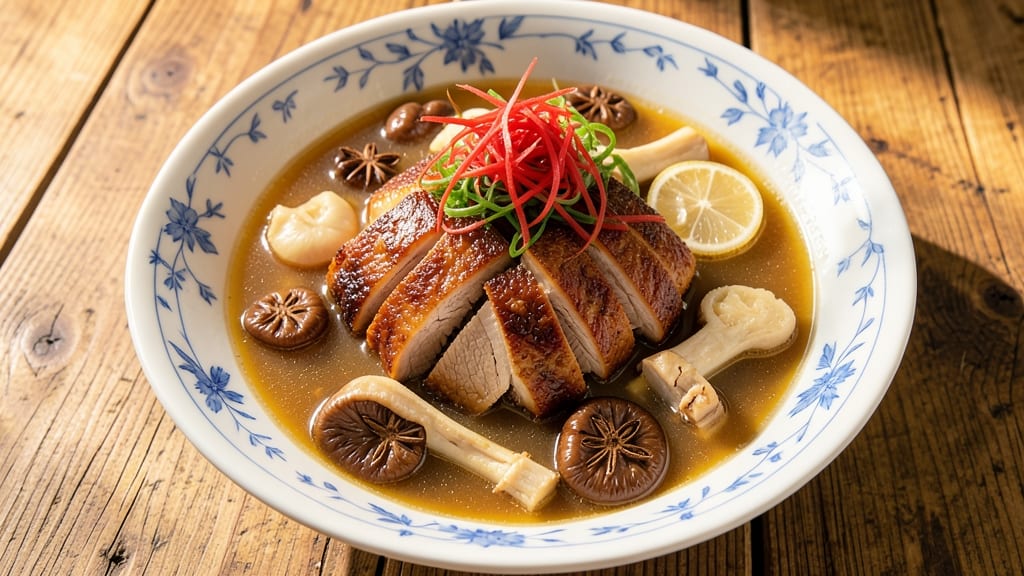
This Cantonese pork soup recipe brings the warmth of a Hong Kong street stall to your kitchen, where every spoonful delivers deep umami comfort. 💛 The secret lies in slow-simmered pork bones and star anise, creating a fragrant broth that transforms simple ingredients into something extraordinary.
As someone who's cooked pork for thousands of pounds weekly, I know the difference between good soup and great soup comes down to patience and proper technique.
The foundation of this dish is the broth, built layer by layer with ginger, star anise, and pork bones that melt into rich, gelatinous goodness. What makes this recipe special is how the flavors develop over time—starting with a simple simmer that intensifies into complex, aromatic depth.
I've perfected this method to ensure the broth remains clear yet deeply flavorful, with just the right balance of ginger's sharpness and star anise's sweet warmth.
By the time you're done, you'll have a steaming bowl of soup with tender pork slices floating in a golden broth that's both comforting and sophisticated.
The aroma alone will have everyone gathering around the table, while the first sip delivers that perfect harmony of savory, spicy, and sweet notes that define Cantonese cuisine. This is the kind of soup that feels like a hug in a bowl.
Serve it with steamed rice and quick-pickled vegetables for a complete meal, or enjoy it as-is for pure, satisfying comfort.
The beauty of this recipe is in its versatility—it works as a light lunch or hearty dinner, and the leftovers only get better the next day as the flavors continue to meld. Let's create this nourishing bowl of tradition.
Ingredients for cantonese pork soup
Pork bones, star anise, and ginger create the aromatic foundation for this soul-warming Cantonese soup.
| Ingredient | Amount | Notes |
|---|---|---|
| Pork Bones 🍖 | 2 lb | Marrow-rich for gelatinous broth |
| Star Anise 🌟 | 2 whole | Whole pods for infusion |
| Fresh Ginger 🧄 | ½ cup | Unpeeled, sliced into thin coins |
| Pork Shoulder 🥩 | 1 ½ lb | Cut into 1-inch slices |
| Green Onions 🧅 | ¼ cup | White and green parts separated |
| Dried Shiitake Mushrooms 🍄 | ¼ oz | Rehydrated for umami depth |
| Coconut Aminos 🥄 | ¼ cup | Gluten-free alternative to soy sauce |
| Sesame Oil 🫒 | 1 tbsp | Toasted for aroma |
| Light Soy Sauce 🥄 | 2 tbsp | For seasoning |
| Rock Sugar 🍬 | 2 tbsp | Balances flavors |
| Garlic Cloves 🧄 | 4 cloves | Smashed for infusion |
| Dried Red Dates 🍇 | ¼ cup | Pitted and sliced |
| White Rice 🍚 | 1 cup | For serving |
| Salt 🧂 | 1 tsp | Kosher or sea salt |
| Black Peppercorns 🌶️ | ¼ tsp | Crushed for heat |
The pork bones are non-negotiable—marrow-rich bones from the butcher section give you that signature gelatinous richness. Costco or local Asian markets often have the best selection, but any grocery store's bone section will work. Look for bones with visible marrow channels. The ginger should be fresh and fibrous—none of that rubbery stuff. Star anise? Whole pods from Penzeys or your local spice shop are ideal, but the tiny packets at Trader Joe's work too. For the pork shoulder, bone-in cuts stay juicier during the long simmer.
No star anise? Anise seeds or fennel seeds at half the amount will give you a similar sweetness. Running out of coconut aminos? Light soy sauce or tamari works in a pinch, but you'll lose that subtle coconut depth. The dried shiitakes? Rehydrate them first—soak in hot water for 20 minutes. For the red dates, Medjool dates are sweeter but any dried date will do. The green onions need to be separated—white parts for the broth, green for garnish. And if you're using pre-sliced ginger, pat it dry first—wet ginger makes the broth watery.
Broth keeps for 4-5 days in the fridge and freezes beautifully for 3 months. I always make extra—it's perfect for rice bowls the next day. Store the pork slices separately if you want to reheat them gently. The ginger and star anise can be removed after 2 hours of simmering if you prefer a cleaner flavor. For leftovers, reheat gently on low—high heat breaks down the gelatin. And trust me, the first sip after reheating is even better than the first time.
Why You'll Love This Recipe
- One-Pot Magic: I swear by this—just toss in the pork bones and ginger, let it simmer, and walk away. No chopping, no fuss, and the broth builds itself while you do everything else.
- Deep, Warm Flavor: That star anise and ginger? It’s like a hug in a bowl. The pork shoulder melts into tender, juicy bites, and the broth gets richer with every sip—honestly, the first bowl makes you want to skip dinner.
- Leftovers Are a Gift: This soup actually tastes better the next day. I make a big batch on Sundays, and by Wednesday, it’s my go-to lunch—still hearty, still packed with that savory depth.
- Budget-Friendly Feast: Pork bones and shoulder stretch into endless bowls, and the spices cost pennies. Between us, this is how I feed my family for days without breaking the bank—or my willpower to stop eating it.
Step-by-step instructions for Cantonese pork soup
Transform simple ingredients into a fragrant, bone-marrow-rich broth that captures authentic Cantonese comfort.
🔥 Step 1: Parboil Pork Bones for Rich Gelatin
Fill a large stockpot with 8 cups cold water and add the 2 lb pork bones. Bring to a boil over high heat, then immediately reduce to medium-low heat and simmer for 15 minutes. Skim off any foam that rises to the surface during this time—this ensures a clear, clean broth.
The parboiling step extracts impurities and preps the bones to release their gelatinous marrow. After 15 minutes, drain the bones and rinse them under cold water to remove any residual foam. This step is non-negotiable for that silky texture we're after.
🍳 Step 2: Build the Aromatic Base
In the same pot, add 6 cups fresh cold water along with the 2 whole star anise, 0.5 cup sliced fresh ginger (unpeeled), 4 smashed garlic cloves, and 0.25 oz dried shiitake mushrooms. Bring to a boil over high heat, then reduce to medium heat and simmer for 20 minutes.
Here's where the magic happens—the star anise and ginger infuse the broth with their signature warmth. The shiitake mushrooms add umami depth, while the garlic provides a subtle aromatic backbone. Don't rush this step; the longer these aromatics steep, the more complex the flavor becomes.
🥘 Step 3: Add Pork Shoulder and Simmer
Add the 1.5 lb pork shoulder (cut into 1-inch slices) to the simmering broth. Stir once to submerge the meat, then return to medium heat and simmer uncovered for 1 hour. This initial cooking phase renders fat from the pork shoulder, which we'll skim off later.
After 1 hour, skim off any surface fat that has risen to the top using a fat skimmer or spoon. The broth should now have a gentle simmer with small bubbles breaking the surface. If it's boiling vigorously, reduce the heat slightly—we want a steady, gentle simmer to develop flavor without toughening the meat.
🍳 Step 4: Season and Finish the Broth
Add the 0.25 cup coconut aminos, 2 tbsp light soy sauce, 2 tbsp rock sugar, 1 tsp salt, and 0.25 tsp crushed black peppercorns to the broth. Stir well to combine. Simmer uncovered for another 45 minutes until the pork shoulder is fork-tender and the broth has deepened in color.
I like to taste the broth at this stage to adjust seasoning. The rock sugar should balance the saltiness, while the coconut aminos add that signature umami without gluten. The broth should be rich but not overly salty—if it needs more depth, add a splash of water and simmer for another 10 minutes.
👨🍳 Step 5: Prepare and Serve with Rice
While the broth simmers, prepare the 1 cup white rice according to package instructions. For the soup, add the 0.25 cup sliced dried red dates and 0.25 cup chopped green onions (both white and green parts) to the broth during the final 15 minutes of cooking. Stir in 1 tbsp toasted sesame oil just before serving for that final aromatic punch.
Ladle the hot broth over individual portions of steamed rice, ensuring each bowl gets a generous serving of tender pork shoulder and aromatic vegetables. The soup should be fragrant with notes of star anise, ginger, and the natural sweetness of the dates. Serve immediately while the broth is steaming hot—this is when the flavors are at their peak.
Pro Tips For Making Cantonese Pork Soup
- BLANCH BONES FIRST: Toss your pork bones in boiling water for 2-3 minutes before adding them to the pot—this removes impurities and keeps your broth crystal clear. I learned this the hard way after making soup so cloudy it looked like I’d cooked in a swamp.
- CHAR THE GINGER: Sear your ginger slices until they’re deep golden brown before adding liquid—this unlocks their flavor and adds a smoky depth the recipe desperately needs. Sounds weird, but it works: skip this, and your soup will taste like you just threw in a raw root.
- DON’T CROWD THE POT: If you’re using both pork bones and shoulder, add the bones first and let them render fat for 30 minutes before tossing in the meat—crowding makes the broth murky and slows down the cooking. Your future self will thank you when the soup isn’t watery after 4 hours.
- RESERVE THE FAT: After the initial sear, skim just the top layer of rendered pork fat (about ¼ cup) and set it aside—drizzle it back into the finished soup to add richness without making it greasy. It’s the thing that matters most when you want that restaurant-quality mouthfeel.
Perfect pairings for this cantonese pork soup
Rice Pairings
This soup is designed to be served over steamed jasmine rice, which absorbs the aromatic broth beautifully. I always use 1 cup uncooked jasmine rice per serving—its floral notes complement the ginger and star anise perfectly.
For extra authenticity, try Thai jasmine rice from Trader Joe's or H Mart—it's my go-to for this dish. 🍚
Vegetable Sides
Quick-pickled cucumber and carrot sticks add a refreshing contrast to the rich broth. Toss 1 cup thinly sliced cucumbers and ½ cup julienned carrots with 2 tbsp rice vinegar, 1 tsp sugar, and a pinch of salt.
Let sit for 15 minutes before serving. For a heartier option, sauté baby bok choy in 1 tsp sesame oil until wilted.
Herb Garnishes
Finish each bowl with chopped cilantro or Thai basil for brightness. I like to add 2 tbsp chopped cilantro per serving right before eating—it lifts the flavors without overpowering. For a more aromatic touch, sprinkle with toasted sesame seeds or crushed fried shallots from Asian markets.
Beverage Pairings
A jasmine green tea or oolong tea cleanses the palate between bites. I recommend Bigelow Jasmine Pearl or Twinings Oolong for their floral notes that mirror the soup's star anise. For something stronger, a light lager like Tsingtao balances the soup's richness without competing.
Protein Additions
For extra heartiness, add sliced shiitake mushrooms or baby corn during the final 10 minutes of cooking. I also love tossing in 1 cup cooked shrimp for a seafood twist. The shrimp should cook just until opaque—about 3-4 minutes in the hot broth.
Nutrition facts
Frequently asked questions
Can I substitute chicken or beef for the pork in this recipe?
While pork is traditional for its rich gelatinous qualities, you can use chicken thighs or beef chuck in a pinch. For chicken, increase simmering time to 45 minutes for tender meat. Beef requires 2 hours of simmering. The broth will be less gelatinous but still flavorful. For best results, use bone-in cuts to maximize flavor extraction.
How do I know when the pork shoulder is fully cooked?
The pork shoulder is done when it's fork-tender with no pink center. Insert a fork—it should slide in easily with minimal resistance. For extra safety, use a meat thermometer and aim for 195°F in the thickest part. The long simmering process ensures all connective tissues break down for melt-in-your-mouth texture.
Can I make this soup in an Instant Pot or pressure cooker?
Yes, but with adjustments! Use the same ingredients but reduce simmering times by half. Parboil bones for 10 minutes first, then pressure cook on high for 45 minutes with pork shoulder. Release pressure naturally, then finish with aromatics on sauté mode for 10 minutes. The broth will be slightly less gelatinous but still delicious.
Why does my broth look cloudy instead of clear?
Cloudiness usually means impurities weren't skimmed properly or the bones weren't rinsed after parboiling. For crystal-clear broth, skim foam aggressively during the first 15 minutes and rinse bones thoroughly. If it's already cloudy, strain through a fine-mesh sieve or cheesecloth before serving. The flavor will still be excellent!
What's the best way to reheat leftovers?
Reheat gently on low heat or in the microwave with a splash of water to prevent drying. Never boil—this breaks down the gelatin and makes the broth watery. For best results, reheat just until steaming hot (1-2 minutes on low). The flavors actually improve overnight as the broth continues to meld!