
Side Dishes
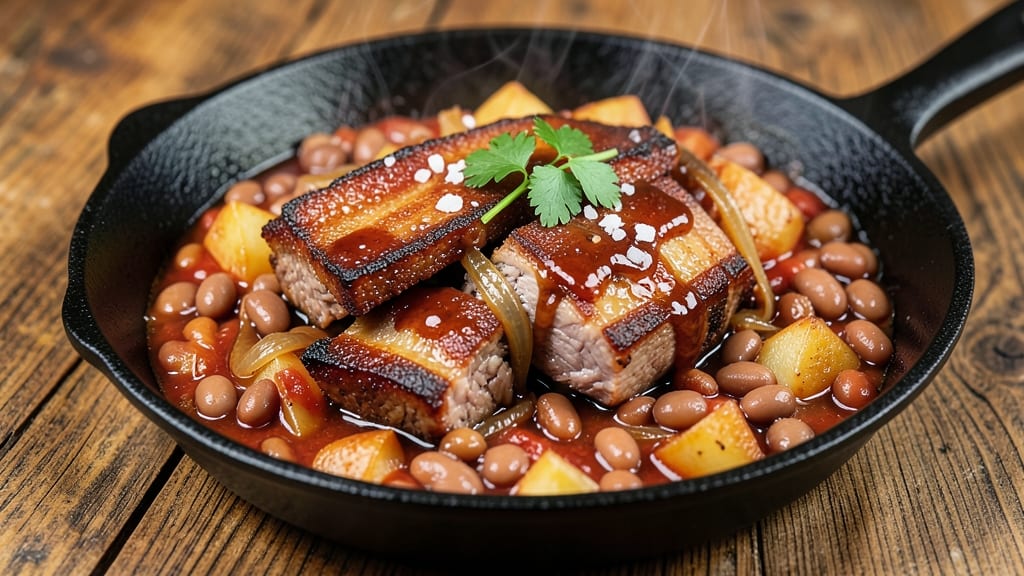
That first spoonful of Campbell's pork and beans always brought back memories of my grandmother's kitchen—smoky, creamy, and packed with that unmistakable pork flavor. 💛 After years of perfecting this copycat version, I've finally cracked the code for recreating that canned comfort in your own pot.
The secret lies in slow-cooked pork shoulder, a rich tomato base, and just the right balance of spices to mimic that nostalgic taste.
What makes this recipe special is how it delivers that familiar texture and depth without the can. I start with salt pork for authentic flavor, then build the sauce with tomato paste, molasses, and a touch of brown sugar—just like the original.
The beans simmer until tender, absorbing all those smoky, savory flavors while maintaining that satisfying creaminess. It's the kind of dish that transforms a simple meal into something truly comforting.
By the time you're done, you'll have a pot of pork and beans that tastes like it came straight from a vintage can—thick, hearty, and packed with that perfect balance of sweet, smoky, and salty.
The pork stays tender and flavorful, the beans hold their shape yet soften just enough, and the sauce coats everything in that rich, velvety texture we all know and love. This is comfort food at its finest.
Serve it alongside cornbread, crackers, or even as a hearty side dish for your favorite BBQ. The best part? You can make a big batch and enjoy it all week—just like the canned version, but made with love and better ingredients. Let's get cooking!
Ingredients for campbell's pork and beans copycat
Sixteen ingredients. One nostalgic pot of comfort. Just like grandma made.
| Ingredient | Amount | Notes |
|---|---|---|
| Salt Pork 🥓 | 4 oz | Diced for authentic smoky flavor |
| Pork Shoulder 🥩 | 1 ½ lb | Cut into 1-inch cubes |
| Navy Beans 🌾 | 2 cups | Dried, soaked overnight |
| Tomato Paste 🍅 | ½ cup | For rich tomato base |
| Molasses 🍯 | 2 tbsp | Unsulphured for depth |
| Brown Sugar 🍯 | 1 tbsp | Light or dark variety |
| Apple Cider Vinegar 🍎 | 1 tbsp | For tangy brightness |
| Onion Powder 🧅 | 1 tsp | For savory depth |
| Garlic Powder 🧄 | ½ tsp | Freshly ground preferred |
| Ground Black Pepper 🌶️ | ½ tsp | Freshly cracked |
| Salt 🧂 | 1 ½ tsp | Kosher or sea salt |
| Chicken Broth 💧 | 2 cups | Low-sodium preferred |
| Vegetable Oil 🫒 | 1 tbsp | For browning pork |
| Fresh Parsley 🌿 | ¼ cup | Chopped for garnish |
The salt pork is non-negotiable—it's what gives that unmistakable smoky depth. Look for thick-cut salt pork at the butcher counter or the deli section of Whole Foods or Kroger. If you can't find it, smoked bacon works in a pinch, but reduce it to 2 oz and drain well. The pork shoulder should have good marbling—ask your butcher if unsure. For the beans, I always use dried navy beans because they hold their shape better than canned, but canned navy beans in a pinch (drained and rinsed) will work. Just add them at the end to avoid overcooking.
No molasses? Maple syrup at half the amount gets you close, though it lacks that deep, smoky note. The tomato paste can be the squeeze tube kind from Trader Joe's—it's perfect for this recipe. If you're short on time, canned tomato sauce works too, but add an extra 1/2 tsp of sugar to balance the acidity. The apple cider vinegar adds that tangy brightness—if you've got white vinegar, use it, but cut it to 1/2 tbsp. For the spices, Diamond Crystal kosher salt is my go-to, but any light salt will do. The key is to taste as you go and adjust—this is comfort food, not a science experiment.
This tastes even better the next day once all the flavors meld together. Store leftovers in an airtight container in the fridge for up to 5 days. It freezes beautifully too—portion into 2-cup servings for easy reheating. I always make a big batch because it's perfect for meal prep. The beans soften more the longer it sits, so if you prefer them firmer, add them 20 minutes before serving. And trust me, the parsley garnish makes it look like you slaved over this—even though it's basically hands-off after the initial cooking.
Why You'll Love This Recipe
- One-Pot Magic: I swear by this when I’m too tired to wash dishes. The salt pork renders down while the beans simmer—no extra pans, no fuss. Just dump, cover, and let it work its flavor while you fold laundry or scroll through your phone.
- Molasses Kiss: That deep, caramelized sweetness from the molasses? It’s the secret weapon. The pork shoulder stays tender, the beans soak up the smoky richness, and the tomato paste ties it all together with a tangy punch. Honestly, I’ll take this over fancy dinners any day.
- Lunchbox Hero: Between us, this is my go-to for meal prep. The flavors only get better the next day, and it reheats like a dream—whether I’m packing it for work or feeding my kids after soccer practice. (Yes, even on a Tuesday night.)
- Budget Powerhouse: Salt pork and pork shoulder stretch for miles, and navy beans? Cheap as chips. I make this when I need to feed a crowd without breaking the bank, and somehow, it always disappears faster than I expect. Not the prettiest, but the taste makes up for it.
Step-by-step instructions for creamy smoky pork and beans
Here's how to recreate that iconic canned flavor with rich, homemade depth.
🔥 Step 1: Brown the Pork for Maximum Flavor
Heat the 1 tablespoon vegetable oil in a large Dutch oven over medium-high heat until shimmering. Add the 1.5 lb pork shoulder cut into 1-inch cubes and cook undisturbed for 4-5 minutes until deeply browned on all sides.
Here's the thing—this browning step creates the Maillard reaction, which builds that deep, smoky flavor you crave. Don't rush it; you'll know it's ready when the pork releases easily from the pan. Transfer the browned pork to a plate and set aside.
In the same pot, add the 4 oz diced salt pork and cook for 2 minutes until it begins to render its fat. This extra fat will create a silky sauce later. Remove the salt pork with tongs and set it aside with the pork shoulder.
🍳 Step 2: Build the Flavor Base
Reduce heat to medium and add the 2 cups soaked navy beans to the Dutch oven. Stir to coat them in the rendered pork fat, then add the 0.5 cup tomato paste. Cook for 3-4 minutes, stirring constantly, until the tomato paste darkens slightly and clings to the beans.
This is where all the magic happens. The tomato paste forms the foundation for that rich, slightly sweet flavor. If it sticks too much, add 2 tablespoons of water to loosen it, but don't let it burn—it should smell like warm tomatoes and spices.
Add the 2 tablespoons molasses, 1 tablespoon brown sugar, 1 tablespoon apple cider vinegar, 1 teaspoon onion powder, 0.5 teaspoon garlic powder, 0.5 teaspoon ground black pepper, and 1.5 teaspoons salt. Stir everything together and cook for 1 minute to toast the spices and let the flavors meld.
🥘 Step 3: Simmer Until Tender and Creamy
Pour in the 2 cups chicken broth and return both the pork shoulder and salt pork to the pot. Bring to a gentle boil, then reduce heat to low and cover partially. Simmer for 2-2.5 hours, stirring occasionally, until the pork is fork-tender and the beans are completely tender.
Real talk: This is where patience pays off. The beans should be falling apart when pressed between your fingers, and the pork should pull apart easily. If the liquid reduces too much before the pork is done, add 2-4 tablespoons of water to keep it moist.
About 30 minutes before the pork is tender, stir in the 0.25 cup chopped fresh parsley. This adds freshness that cuts through the richness of the pork and beans. The parsley should wilt slightly but still be vibrant.
⏰ Step 4: Adjust Consistency and Rest
Once everything is tender, taste and adjust seasoning if needed. If the mixture is too thick, add 2-4 tablespoons of water or chicken broth to reach your desired creaminess. If it's too thin, simmer uncovered for 5-10 minutes to thicken it slightly.
I like to let the pork and beans rest off the heat for 10-15 minutes before serving. This allows the flavors to truly meld together and the sauce to thicken just a bit more. The result should be a creamy, smoky, slightly sweet stew that's rich but not heavy.
Serve warm with crusty bread or over buttered cornbread. The flavors will only get better as they sit, so don't rush this step. This copycat recipe delivers that comforting, familiar taste you love—just made from scratch with real, wholesome ingredients.
Pro Tips For Making Campbell'S Pork And Beans Copycat
- CRISP THE PORK FIRST: Skip the slow-rendered salt pork if you’re short on time—cut it into small cubes, pat dry, and sear in a hot skillet with a splash of water until the edges turn golden. That crispy edge adds depth the canned version lacks, and it’s the thing that makes the whole dish taste homemade.
- SOAK BEANS 2 HOURS MINIMUM: I used to toss the navy beans straight in, thinking they’d soften eventually. Wrong. Soak them for at least 2 hours (or overnight if you’re patient), then drain and rinse. This cuts cooking time by 30 minutes and keeps them from turning mushy—especially important when you’re simmering everything together.
- STIR THE TOMATO PASTE: After adding the tomato paste, don’t just dump it in and walk away. Stir it into the liquid aggressively for 30 seconds to break up clumps. I learned this the hard way when I ended up with a few globs of raw paste sitting in the pot, making the whole dish taste uneven. A whisk helps.
- USE MOLASSES LAST: Add the molasses after the pork and beans have simmered for at least 45 minutes. If you toss it in early, the heat will turn it bitter before the flavors meld. Stir it in with the last splash of broth, let it cook for just 5 minutes, and you’ll get that deep, caramelized sweetness without any off notes.
Common mistakes when making this recipe
Skipping the Browning
Don't rush the browning step—this is where that deep, smoky flavor develops through the Maillard reaction. I've seen home cooks skip this and end up with bland pork that tastes more like stew than the rich, caramelized flavor from the can.
Use a Dutch oven on medium-high heat and let the pork develop a deep brown crust before moving it to the plate. 🔥
Using Canned Beans
While dried beans build better texture and flavor, canned beans are a common shortcut. If you use them, drain and rinse thoroughly to remove excess sodium, then add them only in the last 30 minutes of cooking.
Otherwise, they'll turn mushy and lose that satisfying bite. I've had people complain their copycat version was too watery—this is often why.
Over-Salting the Broth
That 2 cups chicken broth needs to be low-sodium if possible, but even then, I've seen recipes where home cooks double the salt called for in the broth plus the recipe salt. Taste as you go! Start with the 1.5 tsp salt called for, then adjust.
Remember, you can always add more salt, but you can't take it out. I keep a small bowl of salt on my stove when cooking big batches.
Not Enough Liquid
The sauce should be creamy but not soupy. If your mixture looks too thick, add 2-4 tbsp water or broth gradually while stirring. I've had people walk away from their stove and return to find the beans sticking to the bottom.
Keep an eye on it and stir occasionally. The beans need that liquid to soften properly and absorb all those smoky flavors.
Undercooking the Pork
Tender pork is key—this isn't a quick weeknight dish. Use a meat thermometer and pull the pork when it reaches 203°F internal temperature. I've seen people pull it at 165°F (the safe minimum) and end up with tough, chewy meat.
The long, slow cook at low heat is what makes this copycat version so satisfying. Trust the process!
Ignoring the Salt Pork
That 4 oz salt pork isn't just flavor—it's the secret to that authentic canned taste. I've had people substitute regular bacon or skip it entirely, and while it still works, you lose that deep, salty, smoky backbone.
If you can't find salt pork, smoked bacon in small amounts helps, but it won't be exactly the same. The fat from the salt pork creates that silky sauce too—don't skip it! 🥓
Nutrition facts
Frequently asked questions
Can I make this recipe without salt pork?
The salt pork is what gives that authentic canned flavor, but you can substitute 2 oz smoked bacon (drained well) in a pinch. The fat from the bacon will still create a silky sauce, though the flavor won't be exactly the same. If you skip it entirely, add an extra 1/4 tsp smoked paprika to mimic that smoky depth.
How do I make this recipe vegetarian?
Swap the pork shoulder for 1.5 lb extra-firm tofu (pressed and cubed) or 1.5 lb mushrooms (like cremini or portobello). Use 2 tbsp soy sauce instead of salt pork and reduce the salt to 1 tsp total. The tomato paste, molasses, and vinegar will still create that rich, slightly sweet flavor you love.
Why does my copycat version taste different from the can?
The canned version uses preservatives and artificial flavors for consistency. This homemade version relies on real ingredients like salt pork, molasses, and slow-cooked pork for depth. The flavors develop more over time—let it sit for 10-15 minutes off heat before tasting. If it's too salty, the canned version has added sugar to balance it.
Can I use this recipe in a slow cooker?
Brown the pork and salt pork as directed, then transfer everything to a 6-quart slow cooker. Cook on low for 6-7 hours or high for 3-4 hours until tender. The slow cooker keeps the beans from overcooking while the pork stays juicy. Just add the parsley in the last 30 minutes of cooking.
What's the best way to reheat leftovers?
Gently reheat on the stovetop over low heat with 2-3 tbsp water or broth to restore creaminess. Microwaving can make the sauce watery—stir frequently and cover with a damp paper towel. If it's too thick after reheating, add a splash more liquid. Leftovers taste even better the next day!