
Main Courses
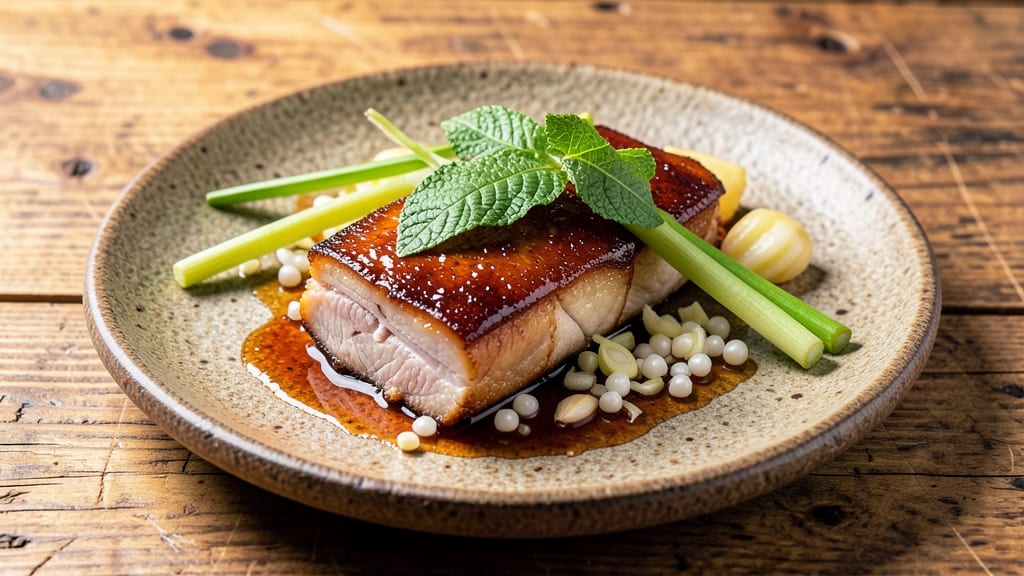
This Cambodian pork belly recipe brings the aromatic soul of Southeast Asia to your table with crispy edges and fragrant lemongrass-kaffir lime flavors. ✨ After years of perfecting pork techniques—from my time in Charleston kitchens to my own farm—I’ve developed a method that delivers restaurant-quality results at home. The secret lies in slow-roasting until the skin crackles like autumn leaves, while the interior stays tender and infused with citrusy, herbal notes.
The dish starts with a marinade of lemongrass, galangal, and kaffir lime leaves—classic Cambodian aromatics—that transform tough pork belly into melt-in-your-mouth perfection. I’ve streamlined the process without sacrificing authenticity, so you can achieve that signature balance of crispy, caramelized edges and succulent meat in just 3 hours (mostly hands-off time).
The final touch? A drizzle of sweet chili sauce and fresh herbs that elevate every bite to something truly special.
What makes this recipe stand out is how it captures the essence of Cambodian home cooking—rich, fragrant, and deeply satisfying. The pork belly develops a golden-brown crust that shatters with each bite, while the interior remains juicy and infused with the bright, citrusy flavors of the marinade.
This isn’t just a dish; it’s an experience that transports you to the streets of Phnom Penh with every forkful.
Serve it with steamed jasmine rice and a side of quick-pickled vegetables to round out the meal. The leftovers reheat beautifully, making this the perfect dish for feeding a crowd or meal prepping for the week. Let’s get cooking!
Ingredients for cambodian pork belly
Six aromatic ingredients transform tough pork belly into crispy, fragrant perfection.
| Ingredient | Amount | Notes |
|---|---|---|
| Pork Belly 🥓 | 4 lb | Skin-on, cut into 1-inch thick slices |
| Lemongrass Stalks 🌿 | 3 whole | Bruised for maximum flavor |
| Galangal Root 🍃 | 1 piece | About 3 inches long, peeled |
| Kaffir Lime Leaves 🍋 | 6 whole | Torn into strips |
| Garlic Cloves 🧄 | 8 cloves | Minced for marinade |
| Shallots 🧅 | 6 whole | Minced for marinade |
| Fish Sauce 🍶 | ¼ cup | High-quality brand like Red Boat |
| Brown Sugar 🍚 | ½ cup | Packed, light brown preferred |
| Sweet Chili Sauce 🌶️ | ¼ cup | For serving, store-bought or homemade |
| Coconut Milk 🥥 | 1 can | Full-fat for richness |
| Fresh Cilantro 🌿 | ¼ cup | Chopped, for garnish |
| Fresh Mint 🍃 | ¼ cup | Chopped, for garnish |
| Olive Oil 🫒 | ½ cup | For roasting |
| Salt 🧂 | 1 ½ tsp | Diamond Crystal preferred |
| Black Pepper 🌶️ | 1 tsp | Freshly ground |
The pork belly is non-negotiable—look for thick-cut pieces with good marbling at your local butcher or Asian markets like 99 Ranch or H Mart. Fresh galangal and kaffir lime leaves are essential for authenticity; if you can't find them at specialty stores, Asian grocery chains usually stock them. Bruise the lemongrass by banging it with the side of your knife—this releases the oils that make the marinade sing. For the fish sauce, Red Boat or Tiparos brands are your best bet—they’ve got that deep umami punch without overpowering. The brown sugar should be packed into the measuring cup for accurate flavor balance.
No galangal? Substitute ginger at half the amount, though it won’t be identical. Running short on kaffir lime leaves? Double the lemongrass and add lime zest for brightness. The shallots can be swapped for regular onions if needed, but they add a milder sweetness. For the sweet chili sauce, Maesri or Sriracha brands work perfectly. If you’re making a big batch, freeze the marinade in ice cube trays—just thaw and use as needed. The coconut milk should be full-fat for that creamy richness, but if you’re watching calories, light coconut milk works too—just add a splash of cream at the end.
This dish tastes even better the next day, so make extra if you can. Store leftovers in an airtight container for up to 5 days in the fridge, or freeze for 3 months for meal prep. The crispy skin is best eaten fresh, but the tender meat reheats beautifully. For serving, keep the sweet chili sauce and herbs separate until ready to eat—this way, everyone can customize their portion. The pork belly reheats best at 300°F for 15 minutes, covered loosely with foil to prevent sogginess.
Why You'll Love This Recipe
- One-Pan Magic: I swear by this recipe when I’m too tired to wash a million dishes. The pork belly roasts right alongside the aromatics—no extra pots, no fuss—just that golden, caramelized crust forming while the galangal and lemongrass infuse the air with a scent that makes my whole kitchen smell like a Cambodian street market.
- Flavor Bomb: Between us, this isn’t just "good"—it’s the kind of dish that makes you pause mid-bite to wonder how something so simple can taste this complex. The galangal adds a peppery kick, the kaffir lime leaves bring that citrusy brightness, and the garlic? Oh, it’s there, but in the best way—like a warm hug for your taste buds.
- Weeknight Workhorse: This is my go-to when I need something impressive but don’t want to slave away. The prep is straightforward—slice the pork, rough-chop the herbs, and let the oven do the heavy lifting. By the time the kids are in bed, I’ve got a dish that feels like a restaurant meal, not a weeknight scramble.
Step-by-step instructions for Cambodian pork belly recipe
Here's how to transform your pork belly into a fragrant, crispy masterpiece with bold Cambodian flavors.
👨🍳 Step 1: Prepare the Aromatic Marinade
In a food processor, combine the 3 whole lemongrass stalks (bruised), 1 piece peeled galangal root, 6 whole kaffir lime leaves, 8 cloves garlic, and 6 whole shallots. Pulse until finely minced but not pasty—you want texture for maximum flavor infusion. Transfer this aromatic paste to a mixing bowl.
Add the 0.5 cup packed brown sugar, 0.25 cup fish sauce, 0.5 cup olive oil, 1.5 tsp salt, and 1 tsp black pepper. Mix thoroughly until the sugar dissolves completely and the marinade has a thick, syrupy consistency. This balance of sweet, salty, and umami creates the perfect flavor bridge for the pork belly.
🍳 Step 2: Coat and Rest the Pork Belly
Pat the 4 lb skin-on pork belly slices completely dry with paper towels—this is crucial for crispy skin. Spread the marinade evenly over both sides of each slice, pressing it into the meat so it penetrates deeply. The skin should be generously coated but not dripping.
Place the marinated pork belly on a plate, skin-side up, and refrigerate for at least 4 hours (overnight is ideal). This resting period allows the marinade to tenderize the meat and develop complex flavors. The pork belly will absorb the aromatic paste beautifully, creating that signature Cambodian depth of flavor.
🔥 Step 3: Roast Until Golden and Crispy
Preheat your oven to 375°F. Line two baking sheets with parchment paper and arrange the marinated pork belly slices in a single layer, skin-side up. Roast for 45 minutes, then flip each slice and roast for another 45 minutes until the skin is deep golden brown and crispy, and the internal temperature reaches 195°F when measured in the thickest part.
Here's the secret: I like to broil the pork belly for the last 3-5 minutes to achieve that perfect caramelization on the skin. Watch it closely—broilers can vary in intensity—and pull it out when the skin is crispy and slightly charred in spots. The meat should be tender enough to pull apart with a fork but still hold its shape when sliced.
🥘 Step 4: Simmer in Coconut Milk Sauce
While the pork belly rests, heat the 1 can coconut milk in a saucepan over medium heat until it begins to simmer. Add the roasted pork belly slices and any accumulated juices from the baking sheets. Simmer gently for 10-15 minutes, allowing the coconut milk to infuse with the pork's flavors and create a rich, velvety sauce.
Taste the sauce and adjust the seasoning if needed—you might want to add a splash more fish sauce for saltiness or a touch of brown sugar for sweetness. The sauce should coat the back of a spoon and have a delicate balance of coconut creaminess and the pork's savory depth. This step ensures every bite is moist and infused with the marinade's aromatic flavors.
🍽️ Step 5: Serve with Fresh Garnishes
Transfer the pork belly slices to a serving platter and drizzle generously with the coconut milk sauce. Garnish with 0.25 cup chopped fresh cilantro and 0.25 cup chopped fresh mint for a vibrant pop of color and freshness. Serve immediately with 0.25 cup sweet chili sauce on the side for dipping or drizzling.
The result should be a perfect balance of textures: crispy, caramelized skin that gives way to tender, juicy meat infused with lemongrass, galangal, and kaffir lime. Each bite delivers layers of sweet, salty, and umami flavors that define Cambodian cuisine. Enjoy with steamed jasmine rice to soak up every delicious drop of sauce!
Pro Tips For Making Cambodian Pork Belly
- Char the Galangal First: Slather the galangal root in oil and sear it hard in a dry pan for 2-3 minutes per side until it’s deep golden and fragrant. This unlocks its full citrusy punch—raw galangal just tastes like a milder ginger and misses the soul of the dish. (Yes, even if you’re skeptical about burning root.)
- Slice Pork Belly Against Grain: Cut the pork belly into ½-inch thick slices lengthwise, not crosswise—this keeps the meat tender and the fat layers intact for that melt-in-your-mouth texture. I used to ignore this and ended up with chewy, uneven bites that ruined the whole experience.
- Simmer Low and Slow: Once the pork belly hits the pot with aromatics, reduce heat to a gentle simmer (barely bubbles) and cover for 45 minutes. Pushing the heat turns the broth cloudy and toughens the meat—this isn’t a race, and rushing it makes all the difference in the final tenderness.
- Toast Kaffir Lime Leaves: Lightly char the kaffir lime leaves over an open flame for 10 seconds per side—they’ll curl and smell like citrus and smoke. This step deepens their flavor without overpowering, and it’s easier than you’d think. (Pro move: crush them slightly before adding to the pot.)
Troubleshooting your cambodian pork belly
Skin Not Crispy?
If your pork belly skin isn’t crispy enough, it’s likely because the marinade wasn’t fully absorbed or the oven temperature fluctuated. I’ve found that patting the pork belly completely dry with paper towels before marinating is absolutely critical—any moisture will prevent that perfect crackling crust.
Also, increase your oven temperature to 400°F for the final 10 minutes of cooking to supercharge the caramelization. For extra insurance, I like to sprinkle a thin layer of cornstarch on the skin before the final broil—it creates a crispier texture similar to what you’d get with a deep-fry. 🔥
Meat Too Tough?
Overcooking is the usual culprit here. The pork belly should reach an internal temperature of 195°F, but if it’s still tough, you likely cooked it too long. I recommend using a meat thermometer and pulling the pork out when it hits 190°F—it’ll continue cooking slightly as it rests.
For extra tenderness, simmer the slices in coconut milk for an additional 5-10 minutes after roasting. This step mimics traditional Cambodian braising techniques and adds moisture back into the meat. Trust me, this makes all the difference! ⚡
Marinade Too Strong?
If the flavors are overpowering, it’s probably because the fish sauce or brown sugar dominated. The key is balance—reduce the fish sauce to 2 tablespoons and add an extra ¼ cup of coconut milk to mellow out the intensity.
For a more subtle marinade, increase the olive oil to ⅔ cup and reduce the sugar to ¼ cup. I also like to rinse the pork belly briefly under cold water after marinating (but before cooking) to remove excess fish sauce while keeping the aromatic oils intact.
This trick works wonders! 💫
Sauce Too Thin?
A thin sauce usually means the coconut milk wasn’t reduced enough or the pork didn’t release enough juices. To fix this, simmer the coconut milk uncovered for an extra 5-7 minutes to thicken it naturally.
If it’s still too thin, mash one of the pork belly slices in the saucepan to release more gelatin and flavor. For a quick fix, stir in 1 teaspoon of cornstarch mixed with 1 tablespoon of water and cook for 1-2 minutes until it thickens.
The sauce should coat the back of a spoon—this ensures every bite is rich and cohesive. 🥥
Flavors Muted?
Muted flavors often mean the marinade didn’t penetrate deeply enough or the aromatics weren’t fresh. Double-check that your lemongrass, galangal, and kaffir lime leaves are fresh—wilted herbs will lose their punch.
If you’re short on time, blend the marinade ingredients into a paste using a mortar and pestle or food processor, then let it sit for 30 minutes before applying to the pork. This extra step helps extract more flavor from the aromatics.
For an extra boost, add 1 teaspoon of shrimp paste (if you can find it) to the marinade—it adds a deep, savory depth that’s classic in Cambodian cooking. 🌿
Nutrition facts
Frequently asked questions
Can I substitute pork belly with another cut of pork?
While pork belly is ideal for its fat content and texture, you can use pork shoulder in a pinch. Just increase the cooking time by 30-45 minutes and monitor closely to avoid dryness. The fat cap will be thinner, so brush it with extra olive oil during roasting for crispiness. For best results, choose a cut with good marbling to mimic the pork belly's richness.
How do I find galangal and kaffir lime leaves?
These ingredients are staples in Asian grocery stores like H Mart, 99 Ranch, or T&T Supermarket. Look for fresh galangal in the refrigerated section (it resembles ginger but with a brown, wrinkled exterior) and kaffir lime leaves in the produce or frozen herbs aisle. If unavailable, substitute galangal with ginger (half the amount) and use lime zest + extra lemongrass for the lime leaves.
Can I make this recipe in a slow cooker?
After marinating overnight, place the pork belly in the slow cooker with 1 cup coconut milk and cook on low for 6-8 hours. For crispy skin, transfer to a baking sheet and broil for 5-7 minutes at the end. The slow cooker method works well for large batches and is perfect for meal prep—just store leftovers in an airtight container for up to 5 days.
What's the best way to reheat leftover Cambodian pork belly?
Reheat in a 300°F oven for 15-20 minutes, covered loosely with foil to prevent drying. For extra crispiness, broil for 2-3 minutes at the end. Avoid microwaving—it makes the skin soggy. The coconut milk sauce reheats beautifully on the stovetop over low heat, stirring occasionally until warmed through.
Is this dish gluten-free?
The recipe as written is naturally gluten-free, but check your fish sauce and sweet chili sauce for hidden gluten. Brands like Red Boat Fish Sauce and Maesri Sweet Chili Sauce are typically gluten-free, but always verify labels. For extra authenticity, serve with gluten-free rice noodles or extra jasmine rice.