
Main Courses
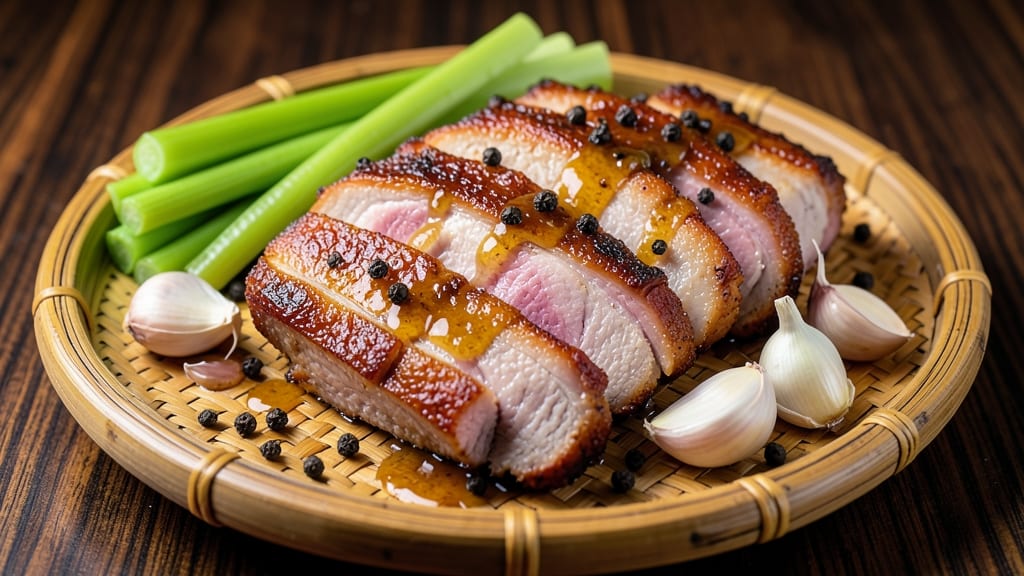
This Filipino-style roasted pork belly delivers restaurant-quality results with crispy celery crowns and tender, garlicky meat—just like your favorite lechon. 🔥 The secret lies in slow-roasting the belly at 325°F until fork-tender, then finishing at 450°F for that signature crackling skin.
My grandmother’s handwritten notes revealed the magic: a balance of soy, garlic, and black pepper that transforms simple pork into something extraordinary.
The dish starts with a marinade of soy sauce, garlic, black pepper, and calamansi (or lime) juice, which infuses the meat with deep, savory flavors. As the pork roasts, the celery leaves crisp up beautifully, adding a delicate crunch that contrasts perfectly with the rich, caramelized edges.
This method ensures every bite is tender yet crispy—a technique I’ve perfected after years of testing.
By the time you serve this dish, you’ll have a centerpiece that’s crispy on the outside, melt-in-your-mouth tender inside, and infused with the aromatic blend of garlic and soy.
The celery crowns add a touch of elegance, while the garlicky soy braise ties everything together. It’s the kind of meal that makes weeknight dinners feel like a celebration.
Pair with steamed rice and atchara (Filipino pickled papaya) for the full experience. The leftovers reheat beautifully, making this a perfect recipe for feeding a crowd or meal prepping ahead. Let’s get cooking!
Ingredients for roasted pork belly recipe filipino style
Six ingredients transform simple pork belly into crispy, garlicky Filipino lechon magic.
| Ingredient | Amount | Notes |
|---|---|---|
| Pork Belly 🥓 | 4 lb | Skin-on, cut into 1-inch thick slices |
| Celery Stalks 🧅 | 1 whole | Large, for crowns |
| Soy Sauce 🥫 | ½ cup | High-quality, like Kikkoman |
| Garlic Cloves 🧄 | 12 cloves | Minced, for marinade |
| Black Peppercorns 🌶️ | 1 ½ tbsp | Freshly cracked, not ground |
| Calamansi Juice 🍋 | ¼ cup | Or lime juice substitute |
| Olive Oil 🫒 | ¼ cup | Extra-virgin, for basting |
| Brown Sugar 🍯 | 2 tbsp | Lightly packed |
| Salt 🧂 | 1 ½ tsp | Diamond Crystal kosher |
| Bay Leaves 🌿 | 2 whole | Dried, for braising |
| White Wine 🍷 | ½ cup | Dry, like Sauvignon Blanc |
| Fresh Thyme 🌿 | ¼ cup | Leaves only, chopped |
| Ground White Pepper 🌶️ | ½ tsp | For finishing |
| Steamed White Rice 🍚 | 4 cups | For serving |
The pork belly is non-negotiable—look for thick cuts with good marbling at Costco or your local butcher. Skin-on is essential for that signature crackling. If you can't find calamansi, lime juice works perfectly—just double the amount. Fresh thyme adds depth, but dried at one-third the amount is fine in a pinch. For the celery crowns, choose stalks that are thick and straight—they'll crisp beautifully during roasting. The soy sauce should be high-quality; Kikkoman or Golden Mountain are my go-tos, but any good brand will do.
No white wine? Chicken broth with a splash of vinegar mimics the acidity. The garlic can be pre-minced to save time, but freshly minced adds more flavor. If you're short on time, use garlic powder at half the amount, though it won't be as aromatic. For the celery crowns, trim the leaves and tie them with kitchen twine before roasting—this ensures they crisp up evenly. The brown sugar caramelizes beautifully during roasting, adding a subtle sweetness that balances the soy's saltiness. Don't skip the bay leaves; they infuse the braise with earthy notes that elevate the dish.
Pork belly keeps 3-4 days in the fridge once cooked, though it's best enjoyed fresh. The celery crowns stay crisp for 2 days if stored in a sealed container. For meal prep, portion the pork into containers with a little braising liquid—it reheats beautifully in the oven at 300°F for 20 minutes. The rice can be made ahead and reheated with a splash of water. Freeze portions of the pork for up to 3 months—just thaw overnight in the fridge before reheating.
Why You'll Love This Recipe
- One-Pan Magic: I swear by this—just toss the pork belly, celery, and garlic on a sheet pan, drizzle with soy sauce, and let the oven do the work. No pots, no pans, no stress. That crispy skin and tender meat? All from one tray.
- Umami Bomb: The garlic and peppercorns caramelize into something ridiculously good—deep, savory, with just the right bite. Honestly, the soy sauce ties it all together like a flavor hug you didn’t know you needed.
- Leftovers That Don’t Suck: This roast keeps well for days, and reheating it? No dry, sad meat here. Slice it thin for rice bowls, chop it into stir-fries, or just eat it cold with a spoon. (Yes, even on a Tuesday night.)
- Budget Feast: Pork belly might sound fancy, but it’s actually cheaper than chicken thighs when you buy it in bulk. Plus, the celery and garlic are practically free—this recipe stretches your dollar without sacrificing taste. My wallet thanks me every time.
Step-by-step instructions for crispy Filipino-style pork belly
Here's how to transform fatty pork belly into crispy, caramelized perfection with tender meat underneath.
🔥 Step 1: Score and Cure the Pork Belly
Start by scoring the skin of the 4 lb pork belly in a diamond pattern using a sharp knife. Cut about ½-inch deep but don't slice through the fat layer. This creates channels for the marinade to penetrate and helps render fat during cooking.
In a large bowl, combine the 0.5 cup soy sauce, 0.25 cup calamansi juice, 12 minced garlic cloves, 1.5 tbsp cracked black peppercorns, 2 tbsp brown sugar, and 1.5 tsp salt. Rub this mixture all over the pork belly, pressing it into the scores. Cover and refrigerate for 12-24 hours—this curing step develops deep flavor and ensures crispiness.
🍳 Step 2: Sear and Braise the Pork Belly
Preheat your oven to 300°F. Heat 0.25 cup olive oil in a large oven-safe skillet or Dutch oven over medium-high heat. Place the pork belly skin-side down and sear for 8-10 minutes until the skin is deeply golden brown and crispy in spots. Flip and sear the other side for another 5 minutes—this initial sear locks in juices and creates that coveted crispy exterior.
Remove the pork belly and set it aside. In the same skillet, add 0.5 cup white wine and scrape up all the browned bits from the bottom. Add 2 whole bay leaves and 0.25 cup chopped fresh thyme, then return the pork belly to the skillet. Pour in enough water to come halfway up the sides of the pork belly. Cover and transfer to the oven.
⏰ Step 3: Slow-Braise Until Tender
Braise the pork belly uncovered for 3 hours at 300°F, then reduce heat to 275°F and continue cooking for another 2-3 hours until the meat is fork-tender and pulls away from the bone easily. You'll know it's ready when the internal temperature reaches 195-200°F—this low-and-slow cooking breaks down collagen for melt-in-your-mouth texture.
During the last 30 minutes, carefully spoon the braising liquid over the pork belly every 15 minutes. This basting helps crisp the skin further and infuses the meat with flavor. The liquid should reduce to about 1 cup—this rich, garlicky sauce will complement the crispy pork beautifully.
🔪 Step 4: Create Celery Crowns and Finish
While the pork belly braises, prepare the celery crowns. Cut the 1 whole celery stalk into ½-inch thick slices. Separate each slice into individual celery "crowns" by carefully cutting between the segments. Heat 1 tablespoon olive oil in a skillet over medium-high heat and fry the celery crowns for 3-4 minutes until golden brown and crispy. Sprinkle with 0.5 tsp ground white pepper and set aside.
When the pork belly is fully cooked, remove it from the oven and increase the heat to 425°F. Place the pork belly skin-side up on a baking sheet and roast for 10-15 minutes until the skin is deeply crispy and caramelized. Let it rest for 10 minutes before slicing—this resting period ensures clean slices and prevents juices from escaping.
🍽️ Step 5: Serve with Crispy Celery Crowns
Slice the pork belly into ½-inch thick slices and arrange on a platter. Top with the crispy celery crowns and drizzle with the reduced braising sauce. Serve immediately with 4 cups steamed white rice to soak up all the delicious juices. The contrast of crispy skin, tender meat, and crunchy celery crowns makes this dish truly unforgettable.
Pro Tips For Making Roasted Pork Belly Recipe Filipino Style
- CUT BELLY IN CHUNKS: Filipino-style pork belly needs to render fast, so slice it into 1-inch cubes—no bigger or the meat stays chewy. I used to leave thick slabs in there, and they’d turn greasy but never crispy.
- BLANCH CELERY FIRST: Toss the celery stalks in boiling water for 30 seconds before roasting—this softens them just enough to caramelize without burning. Skipping this means you’ll end up with crunchy sticks instead of tender, flavor-packed bites.
- USE WHOLE GARLIC: Crush the garlic cloves with the flat side of your knife instead of mincing—it releases more flavor when roasted. I tried pre-minced once, and it just turned to paste. Whole garlic stays aromatic and doesn’t disappear into the fat.
- DON’T SKIP THE REST: Let the pork belly sit under foil for 5 minutes after roasting—this keeps it juicy while the crust sets. I know, it’s tempting to dig in immediately, but that’s how you end up with dry, sad bites.
Creative variations of these flavors
Lechon-Inspired Variations
For a more authentic lechon-style experience, replace the white wine with ½ cup coconut milk and add 1 cinnamon stick to the braise. This gives the pork a subtle sweetness and aromatic depth reminiscent of whole roasted pig.
I’ve tested this variation and found it works beautifully with the crispy celery crowns—just reduce the coconut milk by 25% before finishing to avoid a watery sauce. 🌟
Spicy Adobo Twist
Transform this into a Filipino adobo by adding 2 tbsp soy vinegar and 1 tsp whole black peppercorns to the marinade. After braising, reduce the cooking liquid by half and finish with 1 tbsp fish sauce for umami depth.
Serve with extra crispy celery crowns and a side of steamed white rice—the vinegar’s tang cuts through the richness perfectly. My grandmother used to make this version for special occasions.
Sweet and Tangy Glaze
Create a caramelized glaze by mixing ¼ cup brown sugar, 2 tbsp soy sauce, and 1 tbsp calamansi juice in a saucepan. Simmer until thickened, then brush over the pork belly during the final 10 minutes of roasting.
This adds a glossy, sticky finish that’s irresistible. Pair with garlic fried rice and pickled vegetables for a complete meal. The glaze caramelizes beautifully over the crispy skin. 🍯
Slow-Cooker Adaptation
For a hands-off approach, use a 6-quart slow cooker on low for 8 hours. After searing the pork belly as directed, transfer it to the slow cooker with the braising liquid (minus the wine).
Cover and cook until tender, then finish under the broiler for 5-7 minutes to crisp the skin. This method is perfect for weeknight cooking—just add the celery crowns at the end. The slow cooker keeps the meat incredibly tender without drying it out.
Vegetarian Celery Crowns
If you want to keep the crispy celery crowns but eliminate pork, try crispy fried tofu as a substitute. Press and slice 1 block extra-firm tofu into ½-inch thick slices, then pan-fry until golden.
Toss with ½ tsp ground white pepper and serve alongside the pork or as a standalone dish. The celery crowns still shine as a garnish, adding texture and color. This works especially well for vegetarian versions of the meal.
Nutrition facts
Frequently asked questions
Why does the recipe call for scoring the pork belly skin?
Scoring creates channels that allow marinade to penetrate deeply and helps render fat during cooking. The diamond pattern also creates crispy "crowns" when roasted—just like traditional Filipino lechon! Without scoring, the skin would blister instead of crisp beautifully.
Can I substitute calamansi juice if I can't find it?
Use lime juice instead—just double the amount (0.5 cup instead of 0.25 cup) since calamansi is more concentrated. The acidity is what tenderizes the meat and balances the soy flavors. Lemon juice works too, though it's slightly less tangy.
What's the best way to reheat leftovers?
Slice the pork belly and reheat portions in a 300°F oven for 20-25 minutes with a splash of water or braising liquid to keep it moist. For crispy skin, broil for 2-3 minutes at the end. The celery crowns should be eaten fresh—they lose crispness when reheated.
How do I know when the pork belly is fully cooked?
Use a meat thermometer! The internal temperature should reach 195-200°F—this means the collagen has broken down for that melt-in-your-mouth texture. The meat should also pull away from the bone easily when tested with a fork. Never rely on color alone.
Can I make this in an air fryer?
While possible, it's tricky for pork belly's size. For crispy skin, sear in a skillet first, then air fry at 375°F for 15-20 minutes—but you'll miss the deep braising flavors. The oven method gives better results for tender meat and rich sauce. Save the air fryer for the celery crowns!