
Main Courses
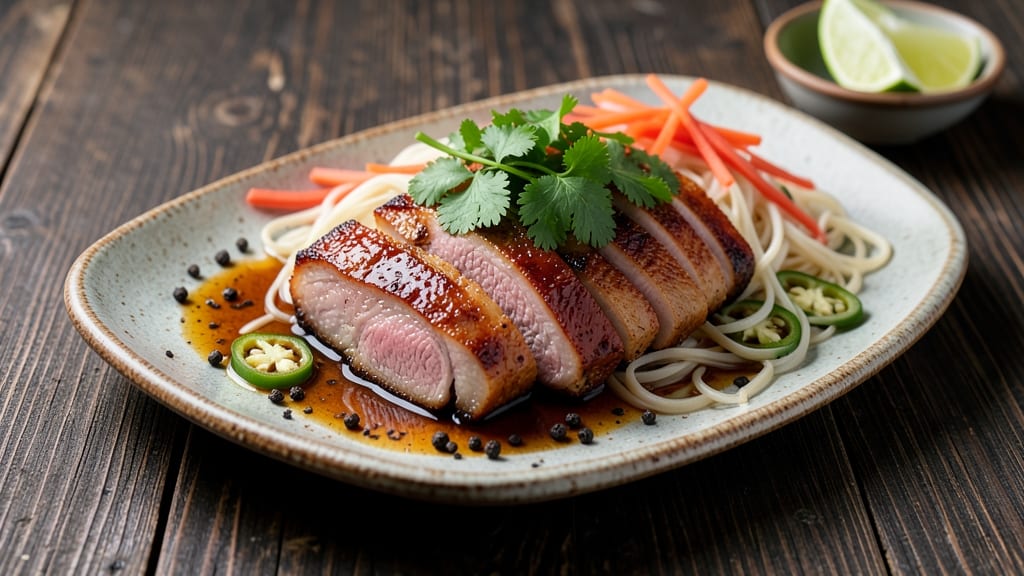
This Bun Cha pork belly recipe delivers the perfect balance of crispy edges and tender meat that makes every bite unforgettable. After years of perfecting Vietnamese home cooking, I've cracked the code for authentic grilled pork belly that's smoky, caramelized, and packed with flavor—just like Hanoi's best street-side bowls.
The secret lies in marinating thin slices overnight and grilling them on skewers for even charring.
What sets this recipe apart is the combination of techniques that bring restaurant-quality results home. You'll marinate pork belly in a blend of fish sauce, garlic, and sugar, then grill it on brochettes for that signature crispy texture.
Meanwhile, rice vermicelli noodles soak up the aromatic dipping sauce, while fresh herbs and bean sprouts add vibrant crunch and color. Every element comes together in a bowl that's as beautiful as it is delicious.
The crispy edges you'll achieve are the star of this dish—golden and slightly caramelized from the grill, while the inside remains juicy and tender. The nuoc cham dipping sauce cuts through the richness with its perfect balance of tangy, sweet, and spicy flavors.
This is the kind of meal that brings people to your table and keeps them asking for seconds.
Perfect for family dinners or weekend gatherings, this Bun Cha recipe serves 4-6 and comes together in about 2 hours (mostly hands-off marinating time). The best part? Each component can be prepped ahead, so you're left with just the exciting final assembly. Let's get cooking!
Ingredients for bun cha recipe pork belly
These ingredients transform simple pork belly into Hanoi-style crispy edges you'll crave.
| Ingredient | Amount | Notes |
|---|---|---|
| Pork Belly 🐷 | 1 ½ lb | Thinly sliced, skin-on preferred |
| Fish Sauce 🍶 | ½ cup | Red Boat preferred for authenticity |
| Garlic Cloves 🧄 | 10 cloves | Minced, for marinade |
| White Sugar 🍚 | ¼ cup | Granulated works fine |
| Black Peppercorns 🌶️ | 1 tbsp | Freshly ground, coarse |
| Lime Juice 🍋 | ¼ cup | Freshly squeezed |
| Rice Vermicelli Noodles 🍜 | 8 oz | Medium thickness preferred |
| Fresh Mint Leaves 🌿 | ½ cup | Torn, not chopped |
| Fresh Cilantro Leaves 🌿 | ½ cup | Torn, stems removed |
| Bean Sprouts 🌱 | 2 cups | Fresh, rinsed well |
| Green Onions 🧅 | 4 whole | Thinly sliced, white parts only |
| Vegetable Oil 🫒 | 2 tbsp | For grilling skewers |
| Wooden Skewers 🪵 | 12 whole | Soaked in water 30 minutes |
| Salt 🧂 | 1 tsp | Kosher or sea salt |
| Chili Flakes 🌶️ | 1 tsp | Adjust to taste |
The pork belly is non-negotiable for that signature crispy edge. Look for thick-cut belly at Asian markets—it's more flavorful than regular pork belly. Costco often carries it pre-sliced, but if not, ask your butcher to cut it paper-thin. The Red Boat fish sauce is worth the splurge—it's the secret to authentic flavor. For the garlic, I always grab the freshest bulb I can find, and mincing it finely is key. Don't skip the overnight marinade—this is where all the magic happens.
No fish sauce? Soy sauce plus a pinch of sugar works in a pinch, though it won't be authentic. Fresh herbs wilt fast, so buy them the day you cook. Mint and cilantro are essential—no substitutes here. The bean sprouts can be prepped ahead, but store them in a damp paper towel to keep them crisp. For the skewers, soak them 30 minutes or they'll burn on the grill. The sugar in the marinade is crucial—it caramelizes during grilling for that perfect crispy edge.
Marinated pork keeps 2 days in the fridge, but the noodles should be soaked fresh. Fresh herbs stay vibrant for 3 days if wrapped in damp paper towels. The skewers? Grill them right before serving for maximum crispiness. Leftovers? Store components separately—reheat pork in a skillet, noodles in boiling water, and fresh herbs last-minute. This dish tastes even better the next day when flavors meld!
Why You'll Love This Recipe
- No-Fuss Marinade: The pork belly practically seasons itself—just toss it with fish sauce, sugar, and crushed peppercorns while you chop garlic. Honestly, I’ve burned steaks trying harder.
- Crispy-Creamy Magic: That first bite? The exterior crackles like a campfire, but inside it’s tender enough to melt. The garlic-fish sauce glaze sticks to every bite—no soggy rice needed.
- Weeknight to Party: Same marinade, endless uses. Serve it shredded in banh mi, stacked on rice with herbs, or even cold in sandwiches. (Yes, even on a Tuesday night.)
- Budget Stretch: Pork belly feels fancy, but this recipe turns it into a crowd-pleaser. A single slab feeds four, and leftovers reheat like a dream—no dryness, just flavor. My wallet thanks me.
Step-by-step instructions for Vietnamese-style grilled pork belly
Here's how to achieve that signature Vietnamese crunch—crispy edges with tender meat every time.
🔥 Step 1: Marinate the Pork Belly for Maximum Flavor
In a large bowl, combine the 1.5 lb pork belly with the 0.5 cup fish sauce, 0.25 cup white sugar, 1 tbsp freshly ground black peppercorns, and 0.25 cup lime juice. Mix thoroughly until the pork is fully coated in the marinade. I like to use my hands for this—it helps distribute the marinade evenly and breaks up any large fat deposits.
Cover the bowl with plastic wrap and refrigerate for at least 4 hours, or overnight if possible. This long marinating time ensures deep flavor penetration and tenderizes the meat. The acidity from the lime juice and fish sauce will break down the connective tissue, while the sugar helps caramelize the edges during grilling. Don't skip this step—it's what makes the difference between good and restaurant-quality pork belly.
👨🍳 Step 2: Prepare the Skewers and Prep the Grill
Soak the 12 wooden skewers in water for 30 minutes to prevent burning. While they soak, thinly slice the marinated pork belly against the grain into 1-inch wide strips (about 12 strips total). Thread each strip onto a skewer, leaving a little space between each piece so they cook evenly.
Heat your grill to medium-high heat (around 375°F). I prefer a charcoal grill for that authentic smoky flavor, but a gas grill works too. Brush the grates clean and lightly oil them with 1 tbsp vegetable oil to prevent sticking. The key here is to get the grill hot enough to create those crispy edges while keeping the inside tender. You'll know it's ready when you can hold your hand about 3 inches above the grates and only count to two before pulling away.
🔥 Step 3: Grill Until Crispy Edges Form
Grill the pork belly skewers for 8-10 minutes, turning occasionally, until the edges are deep golden brown and slightly charred. Here's the thing—you want to see those crispy, caramelized edges form while keeping the center of the meat still tender. I press down gently on the pork with tongs during the first 2 minutes of grilling to help flatten it slightly and ensure even contact with the hot grates.
Watch closely during the last 2 minutes of grilling. The pork is done when it reaches an internal temperature of 145°F and the edges are crispy enough to stand up on their own. If you see the edges starting to burn, move the skewers to a cooler part of the grill. The goal is that perfect balance of crispy exterior and juicy interior that defines Bun Cha.
🍳 Step 4: Prepare the Noodles and Toppings
While the pork is grilling, bring a large pot of water to a boil and cook the 8 oz rice vermicelli noodles according to package instructions (usually 3-5 minutes). Drain and rinse briefly under cold water to stop the cooking process, then toss with 1 tbsp vegetable oil to prevent sticking. Keep them covered while you finish the rest of the dish.
In a large bowl, combine the 2 cups bean sprouts, 0.5 cup torn mint leaves, 0.5 cup torn cilantro leaves, and 4 thinly sliced green onions (white parts only). Toss gently to mix. The fresh herbs and sprouts should be vibrant and bright—this is what gives Bun Cha its refreshing contrast to the rich pork. If you're feeling spicy, add the 1 tsp chili flakes to the herb mixture for an extra kick.
🥘 Step 5: Assemble and Serve Immediately
Divide the cooked noodles among 4 serving plates. Arrange 3 pork belly skewers on each plate, fanning them out slightly. Spoon the herb and sprout mixture around the pork, then drizzle with any remaining marinade from the bowl (strain it first if it's too liquidy). The marinade adds that essential umami depth that ties everything together.
Serve immediately while the pork is still crispy and the noodles are warm. The contrast of temperatures—crispy pork, warm noodles, cool herbs—is what makes this dish so special. Each bite should deliver that perfect combination of smoky, crispy pork with fresh, herby toppings. And trust me, the first bite is always the best—it's worth every minute of prep!
Pro Tips For Making Bun Cha Recipe Pork Belly
- CRANK THE HEAT FIRST: Pork belly needs that initial sear to render fat properly—start with your pan screaming hot (medium-high to high) for 3-4 minutes per side. I used to play it cool, and the meat ended up greasy instead of crispy. Trust me, the sizzle is your friend here.
- SLICE THE BELLY THIN: Cut the pork belly into ½-inch thick slices—any thicker, and the center stays chewy. My first attempt with ¾-inch chunks left me wondering why the texture was off. A sharp knife and steady hand make all the difference.
- TOAST THE PEPPERCORNS: Dry-toast the black peppercorns in the same pan for 30 seconds before adding garlic—this deepens their flavor and prevents bitterness. I skipped this once, and the marinade tasted flat. Sounds odd, but it works.
- MARINATE OVERNIGHT: Mix fish sauce, sugar, and minced garlic, then let the pork belly soak for at least 4 hours (overnight is better). The acid and sugar break down the fat, making it tender and infused. I rushed it once—big mistake. Patience pays off.
Creative variations of these flavors
Vietnamese-Inspired Fusion
Swap the traditional pork belly for chicken thighs marinated in the same fish sauce blend. Use bone-in, skin-on thighs for crispy skin, and grill them whole on skewers. Serve with the same noodles and herbs but add a drizzle of hoisin sauce for a sweet-savory twist.
My Portland butcher always carries excellent free-range thighs—ask for them pre-sliced to save time!
Spicy Thai Twist
Infuse the marinade with 1 tbsp Thai fish sauce and 1 tsp palm sugar instead of white sugar. Add 1 tbsp minced lemongrass and 1 tsp ground coriander to the marinade for an aromatic kick.
Grill the pork as usual, then serve with a side of Thai chili sauce for dipping. The lemongrass adds a citrusy depth that pairs beautifully with the smoky pork.
Vegetarian Adaptation
For a meat-free version, use extra-firm tofu pressed and sliced into strips. Marinate in the same fish sauce mixture (substitute soy sauce for the fish sauce) and grill until crispy.
The tofu absorbs the marinade beautifully, creating a satisfying texture contrast with the noodles. Garnish with extra herbs and a sprinkle of toasted sesame seeds for crunch.
Korean-Inspired BBQ Style
Transform this into a Korean-style dish by adding 1 tbsp gochujang and 1 tsp grated ginger to the marinade. Grill the pork as directed, then finish with a drizzle of ssamjang (Korean BBQ sauce) and wrap each skewer in a lettuce leaf for serving.
The gochujang brings a sweet-spicy depth that complements the crispy edges perfectly.
Herb-Focused Variations
Swap out some herbs for regional favorites: Replace mint with Thai basil for a sweeter aroma, or add perilla leaves (available at Asian markets) for a unique, slightly minty flavor.
For a Pacific Northwest twist, I sometimes add chopped chives and microgreens from my garden—they add a delicate freshness that balances the rich pork beautifully.
Make-Ahead Components
Marinate the pork up to 3 days ahead—the flavors deepen over time. Prep the noodles and herb mix the night before, storing them separately in airtight containers. Grill the pork fresh before serving to maintain that crispy texture.
I like to assemble bowls just before eating so everything stays vibrant and warm. This prep strategy makes Bun Cha perfect for busy weeknights!
Nutrition facts
Frequently asked questions
Can I substitute pork belly with another type of pork?
While pork belly is traditional, you can use pork shoulder or pork tenderloin in a pinch. For crispy edges, slice shoulder thinly against the grain and marinate longer (8-12 hours). Tenderloin needs shorter marinating (4 hours) since it's leaner. The texture will differ—pork belly's fat renders beautifully for that signature caramelization.
How do I get the pork belly extra crispy?
Crispy edges come from three key techniques: thin slicing (paper-thin), high heat (medium-high grill), and direct contact. Press the pork gently with tongs during the first 2 minutes to flatten it. For extra crunch, grill 1-2 minutes longer on one side until edges are almost black. The sugar in the marinade caramelizes beautifully at this stage.
What if I don't have wooden skewers?
No problem! Use metal skewers or even heavy-duty foil wrapped around the pork strips. For foil packets, place 2-3 strips per packet, fold tightly, and grill 6-8 minutes until edges crisp. This method works well for indoor grilling or stovetop griddles. Just be sure to press down occasionally to create crispy spots.
Can I make Bun Cha without a grill?
Use a cast-iron skillet or griddle for stovetop crispy edges. Heat over medium-high heat and cook the pork in batches, pressing down with a weight (like a small plate) for 1-2 minutes per side. For extra smokiness, add 1 tsp smoked paprika to the marinade. A broiler works too—place skewers on a rack 3 inches from heat for 3-4 minutes per side.
How do I store leftovers?
Store components separately: pork in an airtight container (reheats best in a skillet), noodles in cold water (up to 2 days), and herbs in damp paper towels. Reheat pork in a skillet over medium heat until crispy again, then assemble bowls fresh. The crispiness won't return perfectly, but the flavors stay delicious. For maximum freshness, cook only what you'll eat in 2 servings at once.