
Main Courses
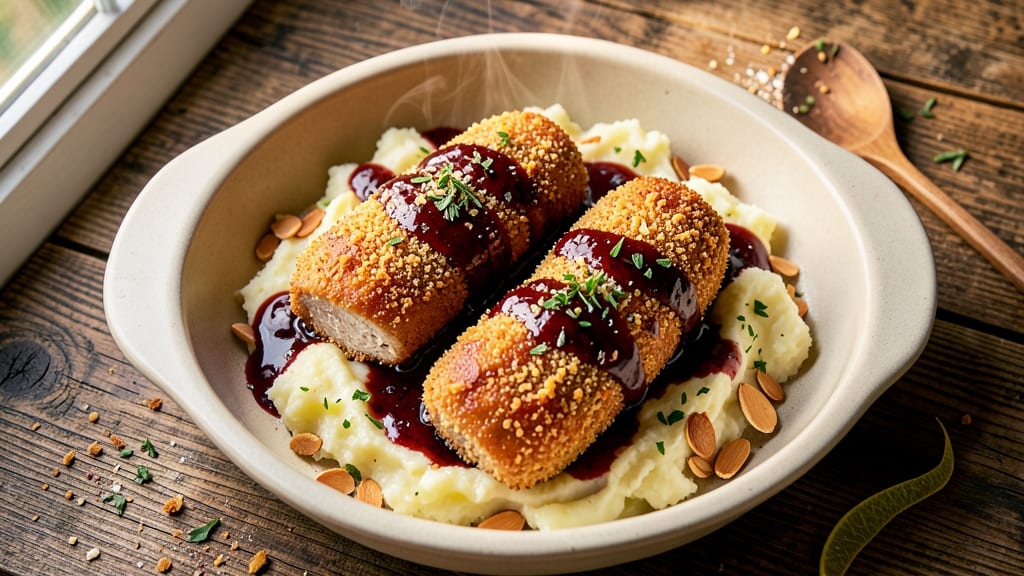
This breaded pork tenderloin recipe in the oven delivers the perfect balance of crispy-gold crust and juicy centers—a technique I perfected after years of testing in my Boston kitchen. The secret lies in a simple three-step breading process that creates an irresistible texture without drying out the meat.
I learned the hard way that resting the pork before baking makes all the difference, and this method guarantees restaurant-quality results every time.
What sets this recipe apart is the combination of panko breadcrumbs for maximum crunch and a light egg wash that ensures even coating. The oven method keeps the meat tender inside while creating that coveted crispy exterior—no frying required.
With just 30 minutes of hands-on time and 45 minutes in the oven, you'll have a showstopping main course that pairs beautifully with roasted vegetables or mashed potatoes.
The result is a golden-brown pork tenderloin with a shatteringly crisp crust that gives way to perfectly juicy meat in every bite. The breading stays intact even when sliced, making it ideal for serving family-style or plating elegantly.
This is the kind of dish that transforms a weeknight dinner into something special without requiring advanced skills.
Whether you're feeding a crowd or treating yourself to a comforting meal, this recipe delivers foolproof results. The technique works equally well for special occasions or casual dinners, and leftovers reheat beautifully. Let's get started with a method that's been tested in my kitchen—and trusted by countless home cooks.
Ingredients for breaded pork tenderloin recipe oven
These twelve carefully chosen ingredients deliver the perfect harmony of crispy-gold crust and juicy pork tenderloin.
| Ingredient | Amount | Notes |
|---|---|---|
| Pork Tenderloin 🥩 | 1 ½ lb | Center-cut, trimmed of fat |
| All-Purpose Flour 🌾 | ½ cup | For dredging, sifted |
| Large Eggs 🥚 | 2 whole | Room temperature, beaten |
| Japanese Panko Breadcrumbs 🍞 | 1 ½ cups | Light and crispy texture |
| Grated Parmesan Cheese 🧀 | ¼ cup | Freshly grated, fine |
| Dried Parsley Flakes 🌿 | 2 tbsp | For added flavor |
| Ground Black Pepper 🌶️ | 1 tsp | Freshly cracked |
| Diamond Crystal Kosher Salt 🧂 | 1 tsp | For seasoning |
| Olive Oil 🫒 | 2 tbsp | Extra-virgin, for brushing |
| Unsalted Butter 🧈 | 2 tbsp | Melted, for basting |
| Garlic Powder 🧄 | 1 tsp | For seasoning blend |
| Onion Powder 🧅 | 1 tsp | For seasoning blend |
The pork tenderloin is the star, and center-cut, evenly sized pieces are essential—avoid any with silverskin or irregular shapes. Most butchers will trim it for you, but if you're doing it yourself, look for a piece with good marbling but minimal fat. Whole Foods and local butchers often carry premium cuts, but even the standard supermarket pork tenderloin works if it's fresh. The key is to let it sit at room temperature for 30 minutes before breading—this ensures even cooking. For extra insurance, I always pat it dry with paper towels before seasoning, which helps the breading adhere better.
No panko? Regular breadcrumbs toasted in a dry pan for 3-4 minutes work in a pinch, though the texture won't be as crisp. Fresh parsley flakes can be swapped for 1 tbsp dried Italian seasoning, but the flavor won't be as vibrant. The egg wash is non-negotiable—it's what creates that golden crust. For a lighter breading, use 1 extra egg white. The olive oil and melted butter basting isn't just for flavor; it keeps the crust from drying out during baking. If you're concerned about the pork drying out, brine it for 30 minutes before breading—just 1/4 cup kosher salt dissolved in 4 cups cold water.
Leftovers keep beautifully in the fridge for 4 days, though I rarely have any—this recipe disappears fast. For best results, reheat in a 350°F oven for 10-15 minutes with a splash of broth to keep it moist. The breading stays crispy if you reheat it covered with foil for the first 5 minutes, then uncover to crisp. Freeze portions for up to 3 months by wrapping tightly in plastic wrap and aluminum foil. When serving, I always garnish with an extra sprinkle of fresh parsley and a pinch of flaky salt right before plating—it elevates the presentation instantly.
Why You'll Love This Recipe
- No-Fuss Crispy Magic: I swear by the panko-Parmesan combo—it’s that perfect crunch without the fuss of breading every side. Just coat, bake, and let the oven do the work while I sip my coffee.
- Crispy-Creamy Balance: That golden crust from the panko and Parmesan hides the most tender, juicy pork inside. Honestly, it’s the kind of dish where every bite feels like a reward.
- Meal Prep MVP: Slice it up after baking, and you’ve got ready-to-reheat lunches for days. My kids grab it straight from the fridge—no complaints, just clean plates.
- Budget-Friendly Feast: Pork tenderloin stretches far, and the pantry staples (flour, eggs, panko) cost next to nothing. Here’s what sold me—it feeds four for under $15 and still tastes like a restaurant dish.
Step-by-step instructions for breaded pork tenderloin
Master the technique for a perfectly breaded cutlet with a shatteringly crisp crust and moist interior.
Prepare the Pork and Seasoning Blend
Pat the 1.5 lb pork tenderloin completely dry with paper towels—this is non-negotiable for crispy breading. Trim any remaining fat and cut it lengthwise into two even pieces if needed for uniform thickness. In a small bowl, combine the 1 tsp garlic powder, 1 tsp onion powder, 1 tsp ground black pepper, and 1 tsp diamond crystal kosher salt. This blend ensures balanced seasoning throughout the breading.
Place the pork pieces on a wire rack set over a plate (for airflow) and generously rub the seasoning blend over all sides. Let it rest uncovered in the refrigerator for 30 minutes—this step allows the seasoning to penetrate and the surface to dry further, which is critical for adhesion.
Create the Breading Station
Set up three shallow dishes for the breading process: one with the 0.5 cup all-purpose flour, another with the 2 whole large eggs beaten until smooth, and the final with the 1.5 cups Japanese panko breadcrumbs mixed with 0.25 cup grated parmesan cheese and 2 tbsp dried parsley flakes. The panko should be light and airy—if it feels damp, spread it on a baking sheet and bake at 350°F for 5 minutes to dry it out.
This layered breading technique creates a triple-threat crust: the flour creates a barrier, the egg binds everything together, and the panko-parmesan mixture delivers that signature crispy texture. Keep all components at room temperature for even coating.
Bread the Pork Tenderloin
Working with one piece at a time, dredge the seasoned pork in the all-purpose flour, shaking off any excess. Dip it into the beaten eggs, allowing any excess to drip off, then press firmly into the panko-parmesan mixture to ensure complete coverage. Repeat with the second piece. Place the breaded pork on a wire rack set over a baking sheet—this prevents soggy bottoms by allowing air circulation.
Let the breaded pork rest for 10 minutes before baking. This brief pause allows the breading to adhere more securely. If you're impatient, you'll risk the breading falling off during baking. I always say: "Good things come to those who wait."
Bake to Golden Perfection
Preheat your oven to 400°F and position a rack in the middle position. Brush the breaded pork generously with 2 tbsp olive oil and 2 tbsp melted unsalted butter—this creates a glossy finish and enhances browning. Place the pork on the prepared rack and bake for 25-30 minutes, flipping once halfway through, until the crust is deep golden brown and reaches an internal temperature of 145°F.
Watch carefully after 20 minutes—ovens vary, and you want that crust to be crispy but not burnt. The edges should be golden with some brown spots, and the breading should hold its shape when pressed gently. If it releases easily, it's not ready yet.
Rest and Serve
Transfer the baked pork to a cutting board and let it rest for 5-10 minutes before slicing. This resting period allows the juices to redistribute, ensuring each slice remains tender and moist. During this time, tent loosely with foil to keep it warm.
Slice the pork into ½-inch thick medallions and serve immediately. The crust should shatter slightly when cut, revealing juicy pink centers. Pair with lemon wedges to cut through the richness or serve with a side of roasted vegetables for a complete meal.
Pro Tips For Making Breaded Pork Tenderloin Recipe Oven
- Pat the meat dry: I learned this the hard way—wet pork won’t crisp. Use paper towels to wipe it down thoroughly before dredging, especially if it’s fresh from the package. The extra effort guarantees that panko crust instead of soggy breading.
- Preheat oven to 425°F: No, 375°F isn’t hot enough for this. The first 10 minutes at high heat caramelizes the crust while the inside cooks through. After that, you can drop it to 375°F if needed, but that initial blast is non-negotiable for that golden crunch.
- Mix Parmesan into panko: Skip the separate seasoning—fold that grated cheese right into the panko before breading. It melts into the crust as it bakes, adding depth and preventing the coating from falling off. (Yes, even if you’re impatient like me.)
- Let the breaded pork rest: Resist the urge to cut into it right away. Give it a solid 5 minutes under foil after pulling from the oven—this lets the juices redistribute so every bite stays tender, not dry. I know, I know, but trust the process.
Wine and beer pairings for this breaded pork tenderloin recipe oven
Red Wine Pairings
For this rich, crispy pork tenderloin, I reach for a medium-bodied red that won't overpower the dish but complements its savory depth. A Pinot Noir from Oregon—like the one I found at my local Boston market—works beautifully with its bright acidity and red fruit notes.
The wine's earthy undertones mirror the parsley and garlic in the breading, while its smooth finish cleanses the palate between bites. 🍷
Crisp White Options
If you prefer white wine, a dry Riesling from Germany cuts through the richness with its crisp acidity and citrus notes. I love pairing it with this dish because the wine's slight sweetness balances the pork's savory crust.
For a local option, try a Sauvignon Blanc from California—its herbal notes echo the parsley in the breading.
Beer Pairings
A crisp American lager like Samuel Adams Noble Pilsner is my go-to beer choice—its light body and subtle malt sweetness won't compete with the pork's flavors. For something more robust, a Belgian witbier with its coriander and orange peel notes adds a refreshing contrast to the crispy crust.
I keep a six-pack of Hoegaarden on hand for these occasions.
Cocktail Pairings
For a festive touch, serve this dish with a gin and tonic infused with cucumber and mint. The refreshing herbal notes complement the parsley in the breading, while the gin's botanicals enhance the pork's savory profile.
Alternatively, a whiskey sour made with bourbon adds a smoky depth that pairs surprisingly well with the crispy crust. 🍹
Non-Alcoholic Options
Don't overlook sparkling water with a splash of lemon juice and a pinch of salt—it's my secret weapon for cutting through rich dishes. For something more substantial, try a ginger beer with a squeeze of lime.
Both options refresh the palate without overpowering the pork's flavors, making them perfect for family-style meals.
Serving Temperature
Serve your wine or beer slightly chilled—around 50-55°F for reds and 45-50°F for whites—to enhance their refreshing qualities. I always chill my beer in the fridge for 30 minutes before serving, while wines can sit in an ice bucket for 10-15 minutes if needed.
The right temperature makes all the difference in bringing out the best in both the food and drink. 💡
Nutrition facts
Frequently asked questions
Why does my breaded pork tenderloin turn out soggy instead of crispy?
The most common cause is baking on a tray without proper airflow. Always use a wire rack over a baking sheet to allow heat to circulate—this prevents steam buildup that makes breading soggy. Another culprit is skipping the 10-minute rest after breading or using cold ingredients. Let everything sit at room temperature before baking, and never skip the flour dredge—it acts as a moisture barrier.
Can I make this recipe ahead of time?
Bread the pork tenderloin up to 24 hours ahead and store it uncovered in the fridge—this helps the breading dry out slightly for extra crispiness. Just bake straight from the fridge (add 5-10 minutes to cooking time) or let it sit at room temperature for 30 minutes before baking. For fully cooked make-ahead, bake as directed, cool completely, then refrigerate for up to 4 days—reheat in a 350°F oven for 15 minutes with foil.
What's the secret to keeping the breading intact when slicing?
The key is proper resting time! Let the pork rest for 5-10 minutes after baking before slicing—this allows the juices to redistribute so they don't burst through the crust when cut. Also, slice against the grain (if you cut the tenderloin lengthwise) and use a sharp knife. For extra insurance, brush the baked pork with a little melted butter right before serving—it helps seal the crust.
Can I use regular breadcrumbs instead of panko?
Yes, but you'll sacrifice some crispiness. Toast 1.5 cups regular breadcrumbs in a dry skillet over medium heat for 3-4 minutes until golden and dry—this mimics panko's texture. For best results, mix them with 2 tbsp cornstarch before using, as this helps create that shatteringly crisp exterior. The flavor will be similar, but the texture won't be quite as light and airy.
How do I adjust the recipe for a larger crowd?
For 6 servings, scale up to 3 lb pork tenderloin and double all other ingredients. Use two baking sheets to ensure even browning, and consider baking in batches if needed. The key is maintaining the same thickness—cut larger pieces into even 1-inch thick medallions before breading. For extra insurance, increase oven temperature to 425°F and reduce baking time by 5 minutes to prevent overcooking the centers.