
Main Courses
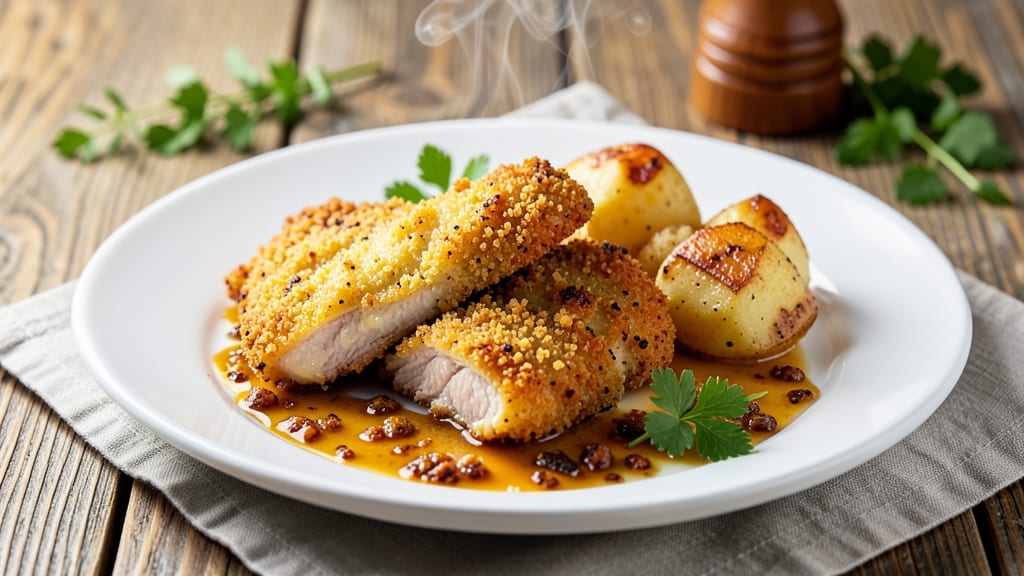
This breaded butterfly pork chop recipe delivers the perfect balance of crispy gold crust and juicy pink hearts—a technique I perfected during my years at The Smoky Pig.
The secret lies in properly butterflying the chops to ensure even cooking, then creating a triple-layer breading that locks in moisture while delivering that satisfying crunch. Trust me, once you try this method, you'll never go back to traditional cutlets.
The process starts with thin, even slices of pork tenderloin—each chop is carefully butterflied and pounded to an even thickness, ensuring consistent doneness. A simple flour-egg-breadcrumb sequence builds that signature crunch, while a hot cast iron skillet renders the breading to golden perfection in just 3-4 minutes per side.
The key is maintaining the right oil temperature and resisting the urge to flip too soon—patience here makes all the difference.
What you'll end up with is a plate of restaurant-quality pork chops that are crispy on the outside and tender all the way through, with juices running freely when cut. The breading stays intact, creating that satisfying contrast with each bite.
This is the kind of dish that elevates a weeknight dinner into something special—without requiring advanced skills or hours in the kitchen.
Serve these with classic sides like roasted garlic potatoes or a crisp green salad to complete the meal. The technique works equally well with bone-in chops if you prefer, though the tenderloin version delivers the most consistent results. Let's get cooking—your taste buds will thank you.
Ingredients for breaded butterfly pork chops
The perfect blend of crispy crunch and juicy tenderness starts with these quality ingredients.
| Ingredient | Amount | Notes |
|---|---|---|
| Pork Tenderloin 🥩 | 1 ½ lb | Thinly sliced, butterflied even thickness |
| All-Purpose Flour 🌾 | ¾ cup | Fine texture for light coating |
| Large Eggs 🥚 | 2 whole | Room temperature for even coating |
| Panko Breadcrumbs 🍞 | 1 ½ cups | Light and crispy texture |
| Unsalted Butter 🧈 | ¼ cup | Melted for basting |
| Vegetable Oil 🫒 | 2 cups | High smoke point for frying |
| Diamond Crystal Kosher Salt 🧂 | 1 ½ tsp | Fine grain for even seasoning |
| Freshly Ground Black Pepper 🌶️ | 1 tsp | Coarse grind for texture |
| Garlic Powder 🧄 | 1 tsp | For aromatic depth |
| Paprika 🌶️ | 1 tsp | Smoked variety for color |
| Lemon Wedges 🍋 | 2 whole | For serving, fresh squeezed |
| Fresh Parsley 🌿 | ¼ cup | Chopped, for garnish |
The pork tenderloin is non-negotiable here—look for center-cut pieces with good marbling for juiciness. Costco or Whole Foods carry excellent quality, but your local butcher can trim it to perfect slices. The butterflying technique is key: pound each slice to ¼-inch thickness for even cooking. If you're nervous about slicing, pre-sliced pork tenderloin from the grocery store deli section works too, just ask for thin cuts. For the breading, Panko creates that signature crunch, but if you've got Italian breadcrumbs, mix them with a pinch of cornstarch for extra crispiness.
No panko? Crushed cornflakes make a decent substitute—they're lighter than regular breadcrumbs. Running short on eggs? 1 tbsp cornstarch + 3 tbsp water replaces each egg for binding. The melted butter in the breading mix isn't optional—it adds richness and helps the crust adhere. For the oil, vegetable or canola works best (high smoke point), but avocado oil is ideal if you've got it. The spices are simple but essential: smoked paprika adds color and depth, while garlic powder gives that subtle savory note. Pro tip: toast your breadcrumbs with a pinch of salt and pepper before mixing—they'll stay crispier longer.
Keep your butterflied pork in the fridge until ready to bread, but no longer than 2 hours before cooking to prevent drying. The breading mix can be prepped a day ahead and stored in an airtight container—just give it a stir before using. These chops shine best freshly cooked, but leftovers reheat beautifully in a 350°F oven for 10-12 minutes (cover with foil to keep moist). For meal prep, portion the breaded chops into ziplock bags and freeze—cook straight from frozen, adding 2-3 minutes to the frying time. Serve immediately with lemon wedges to cut through the richness.
Why You'll Love This Recipe
- No-Fuss Prep: I swear by this recipe because the hardest part is slicing the pork thin—everything else? Just dip, coat, repeat. No fancy techniques, no waiting around.
- Crispy-Creamy Magic: That panko crust gives you a shatteringly crispy exterior while the butter-poached center stays juicy and tender. It’s the kind of bite that makes people ask for seconds before you even finish the plate.
- Weeknight to Dinner Party: Same recipe works for a lazy Tuesday with a side salad or impresses guests when you serve it with garlic mashed potatoes and roasted veggies. The butter-basted finish makes it feel special without extra effort.
- Budget-Friendly Leftovers: Pork tenderloin stretches far, and the breading keeps well—reheat in a skillet for breakfast hash or toss into a panino the next day. Honestly, it’s my go-to for feeding the family without breaking the bank.
Step-by-step instructions for crispy breaded butterfly pork chops
Here's how to transform tender pork tenderloin into golden, crispy chops with juicy centers every time.
Prepare the Pork with Perfect Butterfly Technique
Begin by slicing the 1.5 lb pork tenderloin into 4 even cutlets about ½-inch thick. Place each cutlet between two sheets of plastic wrap and gently pound with a meat mallet until uniformly ¼-inch thick—this ensures even cooking. The goal is to create thin, even surfaces that will crisp beautifully.
Now for the butterfly technique: Lay each cutlet flat and make a horizontal cut down the center, stopping about ½-inch from the bottom. Open the cut like a book to create a butterfly shape. This exposes more surface area for the breading to adhere while keeping the center juicy. Season both sides immediately with ½ tsp diamond crystal kosher salt, ¼ tsp freshly ground black pepper, ¼ tsp garlic powder, and ¼ tsp paprika—this seasoning will penetrate while you prep.
Create the Breading Station
Set up three shallow bowls for your breading station. In the first bowl, combine the 0.75 cup all-purpose flour with ½ tsp diamond crystal kosher salt, ½ tsp freshly ground black pepper, ½ tsp garlic powder, and ½ tsp paprika. In the second bowl, crack the 2 whole large eggs and whisk vigorously until frothy. In the third bowl, spread the 1.5 cups panko breadcrumbs—they should be light and airy, not compacted.
I like to work quickly at this stage to prevent the eggs from getting watery. The flour creates a light adhesive layer, the eggs bind the breadcrumbs, and the panko delivers that signature crispy texture. Keep the bowls close together so you can bread each chop efficiently without letting the coating dry out.
Bread the Pork Chops Evenly
Working with one butterfly chop at a time, press it gently into the flour mixture, coating both sides completely. Tap off any excess but don't shake it—you want a thin, even layer. Dip the floured chop into the beaten eggs, allowing any excess to drip off, then press it firmly into the panko breadcrumbs, coating both sides thoroughly. The panko should stick tightly to the egg layer without falling off.
Place each breaded chop on a wire rack set over a baking sheet. This elevation prevents soggy bottoms by allowing air to circulate underneath. Let them rest for 5 minutes while you prepare the cooking setup. This brief rest helps the breading adhere more securely before frying.
Fry to Golden Perfection
Heat 2 cups vegetable oil in a large skillet over medium heat until it reaches 350°F—use a thermometer for accuracy. The oil should be hot enough to sizzle gently when you add a breaded chop, but not smoking. Working in batches to avoid overcrowding, carefully slide in 2-3 chops at a time and fry for 2-3 minutes per side until they're deep golden brown and the internal temperature reaches 145°F.
Don't press down on the chops with a spatula—they'll release when ready. If they brown too quickly, reduce the heat slightly. As they cook, the butterflied shape will crisp beautifully on all exposed surfaces while maintaining that juicy pink center. Transfer cooked chops to a paper towel-lined plate to drain excess oil.
Finish with Butter and Garnish
Return the skillet to medium-low heat and add the 0.25 cup unsalted butter. Tilt the pan slightly and spoon the melted butter over the cooked chops, basting them generously for 1 minute. This step adds incredible richness and helps create a glossy finish. The butter should foam slightly but not burn.
Transfer the chops to serving plates and garnish immediately with the 0.25 cup chopped fresh parsley. Serve with the 2 whole lemon wedges for a bright, tangy contrast to the crispy, savory chops. The lemon juice will cut through the richness while highlighting the smoky paprika and garlicky notes in the crust.
Pro Tips For Making Breaded Butterfly Pork Chops
- Pound Thin First: I learned this the hard way—skipping the ¼-inch thickness step means uneven cooking and soggy centers. Use a meat mallet or rolling pin to flatten the tenderloin before butterflying, or your breading will end up like a soggy pancake.
- Chill the Egg Wash: After dipping in flour, pop the pork chops in the fridge for 10 minutes before the egg wash. Cold eggs coat better and stick tighter to the flour, so your panko doesn’t slide off halfway through frying. (Yes, even if you’re impatient like me.)
- Skip the Overcrowding: Fry in batches of two at most—any more and the oil temp drops faster than a hot pan’s patience. Your chops will steam instead of sear, leading to greasy, uneven crusts. A single layer in the pan guarantees that crispy, golden finish you’re after.
- Toast the Panko: Sprinkle the panko in a dry skillet over medium heat for 2-3 minutes until it’s fragrant and just starting to brown. The extra crunch and flavor make a real difference, and it’s a 5-minute upgrade that saves you from bland, generic breading. (Your future self will thank you.)
Storing and reheating this recipe
Refrigerator Storage
Store your cooked breaded butterfly pork chops in an airtight container lined with parchment paper to prevent sticking. They’ll keep fresh in the refrigerator for up to 3 days—the breading stays crispier when stored this way.
Let them cool completely before sealing to avoid condensation. I like to stack them with a paper towel between layers to absorb any excess moisture. 🥩
Freezer Prep Tips
For longer storage, portion the breaded chops into single-serving ziplock bags with a piece of parchment between each. Freeze for up to 3 months—the breading remains crispy when reheated properly.
Thaw overnight in the fridge before reheating. I’ve found that freezing them uncooked (after breading) works even better: cook straight from frozen, adding 2-3 extra minutes to the frying time.
Oven Reheating Method
Preheat your oven to 350°F and place the chops on a baking sheet lined with foil. Cover loosely with another sheet of foil to trap moisture, then reheat for 10-12 minutes until reaching 165°F internal temperature.
The foil prevents sogginess while keeping the breading intact. For extra crispiness, broil for 1-2 minutes at the end—just watch closely to avoid burning. 🔥
Skillet Revival
My favorite method for crispy results is a quick skillet refresh. Heat 1 tablespoon vegetable oil in a nonstick skillet over medium heat until shimmering. Add the chops and cook for 1-2 minutes per side until golden and heated through.
The oil helps restore that crispy texture without drying out the meat. Keep the heat medium—too high will crisp the breading but leave the center cold.
Microwave Hack
For a quick fix, place the chops on a microwave-safe plate with 1 tablespoon water in the bottom. Cover with a damp paper towel and microwave on high for 45 seconds, then check the internal temperature.
If needed, add 15-second intervals until reaching 165°F. The steam helps maintain moisture, though the breading won’t be as crispy as oven or skillet methods. Best for busy weeknights when you’re short on time.
Nutrition facts
Frequently asked questions
Why does butterflying the pork chops matter?
The butterfly technique creates even thickness and exposes more surface area for the breading to adhere. This ensures consistent cooking and a crispy crust on all sides while keeping the center juicy. Without butterflying, you risk uneven doneness and a less tender result.
Can I use regular breadcrumbs instead of panko?
Yes, but expect a denser texture. For best results, mix regular breadcrumbs with 1 tablespoon cornstarch to improve crispiness. Panko's light, airy structure creates that signature crunch, but the dish will still taste great with a standard breadcrumb substitute.
What's the best way to keep the breading from falling off?
Let breaded chops rest for 5 minutes before frying—this helps the coating adhere. Also, avoid overcrowding the pan and use a thermometer to maintain 350°F oil temperature. If breading still falls off, your oil may be too hot or the chops too wet from the egg.
How do I know when the chops are fully cooked?
Use a meat thermometer to check for 145°F internal temperature at the thickest part. The breading should be deep golden brown, not pale. If you cut into one, the center should look pink but not raw. Never rely on color alone—meat thermometers are your best friend for perfect doneness.
Can I make these ahead of time?
Bread the chops and freeze them raw (uncooked) for up to 3 months. Cook straight from frozen, adding 2-3 extra minutes to the frying time. For cooked leftovers, reheat in a 350°F oven for 10-12 minutes to maintain crispiness. The skillet revival method works best for restoring that golden crust.