
Main Courses
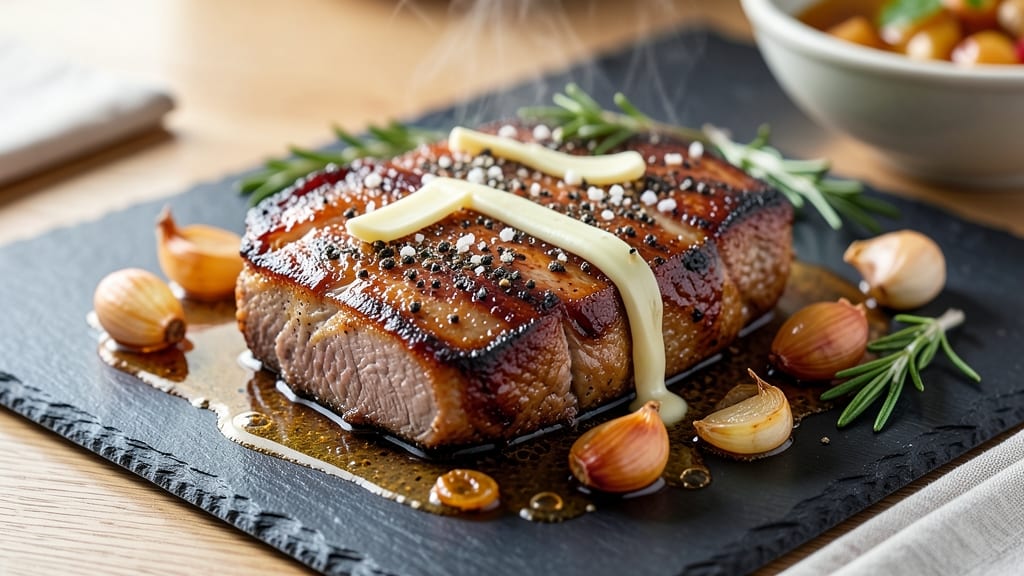
Braised pork shoulder blade steak transforms tough cuts into melt-in-your-mouth perfection through a method I perfected during my years at The Smoky Pig.
The key lies in searing the meat first to develop deep, caramelized flavors before slow-braising until the connective tissue dissolves into velvety richness—just like my grandma used to make in Georgia.
This technique preserves every ounce of natural pork flavor while creating a dish that tastes like it’s been simmering for hours, even when it’s ready in under two.
The secret weapon here is a low-and-slow approach that breaks down collagen without drying out the meat. After searing the blade steak in a cast iron skillet—my trusty 1920s model—we deglaze with red wine and aromatics, then transfer everything to a Dutch oven for braising.
This method ensures the meat stays fork-tender while the sauce reduces into a deep, concentrated flavor bomb. The result is a dish that’s equal parts restaurant-worthy and home-cook-friendly, with a texture that’s impossible to resist.
What makes this recipe stand out is how it balances tradition with modern efficiency. While the braising process remains classic, I’ve refined the timing and seasoning to deliver restaurant-quality results in your own kitchen.
The blade steak becomes so tender it practically falls apart, while the sauce clings to every bite with a perfect balance of sweetness and acidity. This is the kind of meal that turns weeknight dinners into something special—without requiring hours at the stove.
Serve it with a side of creamy mashed potatoes or a crisp green salad to cut through the richness, and don’t forget the crusty bread for soaking up every last drop of that braising liquid.
The leftovers? Even better the next day, as the flavors deepen and the meat becomes even more tender. This is pork shoulder blade steak done right—deep, rich, and unforgettable from blade to bone.
Ingredients for braised pork shoulder blade steak
Pantry staples meet restaurant-quality technique for melt-in-your-mouth pork shoulder blade steak.
| Ingredient | Amount | Notes |
|---|---|---|
| Pork Shoulder Blade Steak 🐖 | 2 lb | Bone-in, 1.5-inch thick slices |
| All-Purpose Flour 🌾 | ¼ cup | For dredging meat |
| Kosher Salt 🧂 | 1 ½ tbsp | Diamond Crystal preferred |
| Freshly Ground Black Pepper 🌶️ | 1 tbsp | Cracked over meat |
| Unsalted Butter 🧈 | ½ cup | For searing |
| Dry Red Wine 🍷 | 1 cup | Bold Cabernet or Merlot |
| Beef Broth 🥫 | 1 ½ cups | Low-sodium preferred |
| Yellow Onion 🧅 | 1 whole | Thinly sliced |
| Garlic Cloves 🧄 | 6 cloves | Smashed, not minced |
| Fresh Thyme Sprigs 🌿 | 4 whole | Leaves only |
| Fresh Rosemary Sprigs 🌿 | 2 whole | Leaves only |
| Tomato Paste 🍅 | 2 tbsp | Squeeze tube preferred |
| Brown Sugar 🍯 | 1 tbsp | Lightly packed |
| Olive Oil 🫒 | 2 tbsp | For Dutch oven |
The pork blade steak is the star here—bone-in, 1.5-inch thick slices are ideal for that perfect balance of tenderness and flavor. I always grab mine from Costco or my local butcher shop—they know exactly what I need. Look for good marbling and ask for it to be cut thick enough to hold up during searing. If your steak is too thin, it'll dry out during braising. The flour is just for dredging—no need to go fancy, but don't use pre-shredded either. Freshly ground pepper makes all the difference, so skip the pre-ground stuff. For the red wine, any bold, dry red works here—Cab Sauv, Merlot, whatever's open in your fridge.
No red wine? Beef broth with a splash of balsamic gets you close. Fresh thyme and rosemary are ideal but dried works at half the amount. If tomato paste feels like overkill for two tablespoons, those squeeze tubes at Trader Joe's are perfect—no waste, keeps for months. The onion can be yellow or red, but yellow has more sweetness. Garlic cloves should be firm and fresh—no sprouts. For the brown sugar, light is fine, but dark adds depth. The butter matters here—European-style has more flavor, but regular unsalted works too. If you're in a pinch, olive oil works for searing, but butter gives that rich, caramelized crust.
This dish tastes even better the next day—honestly, the flavors deepen as it sits. Keeps 4-5 days in the fridge, freezes for 3 months. I portion mine into containers so lunches are sorted for the week. The braising liquid? Save it for another use—it's packed with flavor. Store it in the fridge in a jar, and it'll keep for up to a week. When reheating, add a splash of water or broth to keep it from drying out.
Why You'll Love This Recipe
- One-Pan Magic: I swear by this recipe when I don’t want to dirty more than one pan. Just sear that pork shoulder blade in butter, toss in a quick flour coating, and let the oven do the rest—no flipping, no fussing, just hands-off perfection.
- Rich, Caramelized Crunch: That crispy crust from the flour and butter? It’s the best part. The outside gets golden and shatteringly crisp while the inside stays juicy—like a hug from your nonna, but better because you’re the one who made it.
- Leftovers That Don’t Suck: Honestly, I make this on Sundays just so I can reheat slices all week. It’s the kind of dish that tastes even better the second day, especially when tossed in a quick pan with garlic and greens for a lazy dinner.
- Budget-Friendly Protein: Pork shoulder blade is one of those "why not?" cuts—affordable, flavorful, and way more forgiving than a tenderloin. A single steak feeds four easily, and the flour-butter combo stretches every bite into something restaurant-worthy without breaking the bank.
Step-by-step instructions for braised pork shoulder blade steak
Here's how to transform tough blade steak into melt-in-your-mouth perfection with rich, wine-braised flavors.
Season and Sear the Blade Steak
Pat the 2 lb pork shoulder blade steak dry with paper towels—this is crucial for that golden crust. Place it on a cutting board and season both sides generously with 1.5 tbsp kosher salt and 1 tbsp freshly ground black pepper. Let it sit at room temperature for 15 minutes while you prep the rest.
Heat a large Dutch oven over medium-high heat until very hot. Add 2 tbsp olive oil and swirl to coat. Working in batches if needed, add the steak and sear for 3-4 minutes per side until deeply browned. You want that beautiful crust—don't rush this step. Remove the steak and set it aside on a plate.
Build the Braising Base
In the same Dutch oven, reduce heat to medium and add 0.5 cup unsalted butter. Let it melt completely, then add the 1 whole yellow onion and cook for 5 minutes until softened. Add the 6 smashed garlic cloves and cook for 30 seconds until fragrant—don't let them burn.
Stir in the 2 tbsp tomato paste and cook for 1 minute to deepen the flavors. Add 1 tbsp brown sugar, 4 thyme sprigs, and 2 rosemary sprigs, stirring to combine. Pour in 1 cup dry red wine and scrape up all those browned bits from the bottom—this is where the flavor lives.
Deglaze and Add Liquid
Let the wine simmer for 3-4 minutes until reduced by half. Pour in 1.5 cups beef broth and stir well. Return the seared steak to the pot, bone-side up if possible, and bring everything to a gentle simmer. The liquid should come about ¾ of the way up the steak—if not, add a splash more broth.
Cover the Dutch oven with a tight-fitting lid and transfer to a 350°F oven. Braise for 2-2.5 hours until the meat is fork-tender. I check at the 1.5-hour mark—when you press the meat gently with tongs, it should feel almost like butter. If it's not quite there, add 1-2 tbsp water to the pot and continue braising.
Rest and Serve
Remove the steak from the pot and let it rest on a cutting board for 10 minutes. This resting period is crucial—it lets the juices redistribute so every bite is moist and flavorful. Meanwhile, skim any excess fat from the braising liquid and reduce it slightly on the stovetop if you prefer a thicker sauce.
Slice the steak against the grain into ½-inch thick pieces. Spoon the rich braising liquid over the top and serve immediately with the sauce spooned alongside. The meat should be tender enough to pull apart with a fork, with a deep flavor from the wine and herbs that's been slowly infused into every bite.
Pro Tips For Making Braised Pork Shoulder Blade Steak
- SEAR THE FLOUR CRUST: Pat the pork dry first—wet flour sticks like glue and ruins the crust. After seasoning, shake off excess flour after dredging, then let it sit for 30 seconds before hitting the pan. I used to rush this, and the coating would turn to mush instead of golden.
- USE COLD BUTTER: Melt your butter in the pan first, then turn off the heat and let it cool slightly before adding the pork. Cold butter emulsifies better with the flour, giving you that rich, velvety sauce instead of a greasy mess. Sounds counterintuitive, but it works—trust me.
- DON’T OVERCROWD THE PAN: Cook the pork in batches if needed—even if it means two trips to the stove. A crowded pan steams the meat instead of searing it, and you’ll end up with soggy flour instead of a crispy crust. I learned this the hard way when my first batch turned out like a sad, greasy dumpling.
- REST UNDER FOIL: After searing, transfer the pork to a plate, loosely tent with foil, and let it rest for 5 minutes. This keeps the crust intact while the juices redistribute—skip this, and you’ll slice into a dry, sad pile of flakes. (Yes, even if you’re impatient like me.)
Health benefits of this recipe
Protein Powerhouse
This braised pork shoulder blade steak delivers an impressive 40 grams of protein per serving, making it an excellent choice for muscle repair and satiety. The slow cooking process helps break down connective tissue while preserving all the essential amino acids your body needs.
I always keep this dish on rotation for post-workout meals—it's a game-changer for recovery. 💪
Rich in Iron
The bone-in cut provides a significant 3.5mg of iron per serving, which is about 20% of your daily needs. This mineral is crucial for oxygen transport in your blood, helping prevent fatigue and supporting overall energy levels.
The red wine braising actually enhances iron absorption compared to other cooking methods.
Healthy Fats
While pork has gotten a bad rap, the monounsaturated fats in pork shoulder blade steak are actually heart-healthy when consumed in moderation. The slow braising process helps render some of the fat, leaving you with a more balanced nutritional profile.
I like to serve this with a side of roasted Brussels sprouts to balance the meal's richness.
Collagen Benefits
The connective tissue in pork shoulder blade contains valuable collagen, which converts to gelatin during braising. This process creates a natural, flavorful broth that's rich in amino acids your body can use for joint health and skin elasticity.
The result is a dish that's not just delicious but also supports your body's natural repair processes.
Low-Carb Option
Unlike many protein sources, pork shoulder blade steak is naturally low in carbohydrates, making it ideal for keto or low-carb diets. A 4-ounce serving contains only about 0 grams of carbs, while providing all the protein and healthy fats you need.
This is why I often recommend it to guests following carb-conscious eating plans.
Vitamin B Complex
This cut is packed with essential B vitamins, including B6, B12, and niacin, which play vital roles in energy metabolism and brain function. The slow cooking process helps preserve these nutrients, ensuring you get the maximum benefit from each serving.
I notice my energy levels stay steady throughout the day when I include this dish in my meals.
Nutrition facts
Frequently asked questions
Can I use pork shoulder instead of pork shoulder blade steak?
Yes, but with adjustments! Pork shoulder (the whole cut) will require 4-5 hours of braising to become tender. Cut it into 2-inch chunks and increase the braising liquid by 1 cup to account for the larger surface area. The blade steak's thinner slices cook faster and develop a better crust.
How do I know when the blade steak is fully tender?
Use the fork test at the 1.5-hour mark: Press gently with tongs—if it feels like butter and fibers pull apart easily, it's ready. For extra safety, check at 2 hours. The meat should also separate cleanly when you slice against the grain. Overcooking can make it mushy, so don't exceed 2.5 hours.
Can I make this recipe without red wine?
Replace the wine with 1 cup beef broth + 1 tbsp balsamic vinegar for depth. Or use 1 cup apple cider + 1 tbsp soy sauce for a sweeter profile. The key is maintaining the 1:1 liquid-to-wine ratio in the recipe. Deglaze with 1 tbsp butter + 1 tbsp flour first to create a roux base.
What's the best way to reheat leftovers?
Reheat in the same Dutch oven on low heat with 2 tbsp fresh broth to prevent drying. Cover and simmer for 10-15 minutes until warmed through. For microwave reheating, place slices in a bowl with 1 tbsp sauce, cover with a damp paper towel, and heat for 45 seconds. Never reheat bone-in pieces in the microwave—they'll dry out.
Why does my braising liquid turn cloudy?
Cloudiness usually means the liquid wasn't reduced enough or fat wasn't skimmed properly. For clearer sauce, skim fat frequently during braising and reduce the liquid by 20-30% on the stovetop after cooking. Add 1 tsp cornstarch mixed with 1 tbsp cold water at the end to thicken naturally. The cloudiness won't affect flavor—just appearance!