
Main Courses
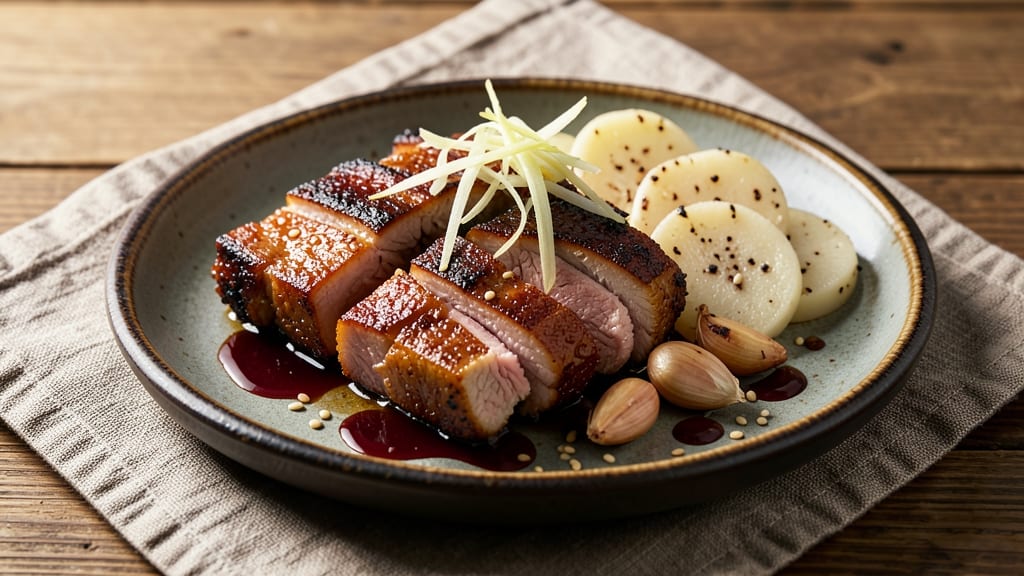
This braised pork belly with taro recipe delivers the perfect harmony of crispy fat and silky root vegetables—exactly what makes it a showstopper. 🔥 I developed this technique after years of perfecting Asian-style braising methods, where the pork belly becomes fork-tender while the taro absorbs the rich, aromatic broth.
The secret lies in slow cooking at low temperatures, allowing the collagen to break down into velvety richness while the taro maintains its natural sweetness.
The process starts with searing thick slices of pork belly until golden, then simmering them in a flavorful broth with ginger, garlic, and soy until the meat practically melts in your mouth. Meanwhile, the taro—peeled and cut into chunks—cooks alongside the pork, absorbing the savory depths of the braising liquid.
This isn’t just a dish; it’s a multi-texture experience where every bite offers contrast between the crispy edges of the pork and the tender, almost custard-like taro.
What you’ll end up with is a dish that’s rich, aromatic, and deeply satisfying—a perfect balance of textures and flavors that’s both restaurant-worthy and achievable at home.
The pork belly will be crispy on the outside, tender on the inside, while the taro soaks up the braising liquid, becoming impossibly silky. Serve it with steamed jasmine rice or a simple green salad to let the flavors shine.
This recipe is ideal for special occasions or when you want to impress without spending hours in the kitchen. The slow braising does most of the work while you prepare the rest, making it a foolproof method for achieving professional results at home.
Let’s get started on creating this dish that’s as beautiful as it is delicious.
Ingredients for braised pork belly with taro
Thick slices of pork belly and silky taro transform into restaurant-quality braise with these aromatic ingredients.
| Ingredient | Amount | Notes |
|---|---|---|
| Pork Belly 🥓 | 2 lb | Thick slices, skin-on preferred |
| Taro Root 🥔 | 1 ½ lb | Peeled, cut into 2-inch chunks |
| Fresh Ginger 🌿 | 2 tbsp | Grated, aromatic variety |
| Garlic Cloves 🧄 | 6 cloves | Minced, fresh preferred |
| Soy Sauce 🍶 | ½ cup | Dark soy for color, or light |
| Mirin 🍶 | ¼ cup | Sweet rice wine, or sub 1 tbsp sugar |
| Sake 🍶 | ¼ cup | Dry sake, or sub white wine |
| Sesame Oil 🫒 | 1 tbsp | Toasted, for aroma |
| Sugar 🍚 | 2 tbsp | Brown sugar for depth |
| Star Anise 🌿 | 2 whole | For aromatic depth |
| Bay Leaves 🌿 | 2 whole | Fresh or dried |
| Vegetable Oil 🫒 | 2 tbsp | High smoke point for searing |
| Salt 🧂 | 1 ½ tsp | Kosher or sea salt |
| Black Pepper 🌶️ | ½ tsp | Freshly cracked |
The pork belly is the star here—look for thick slices with good marbling at your butcher or Asian market. Costco or Whole Foods usually carry pre-sliced belly, but if you're buying a whole piece, ask for it cut into 1-inch thick slices. Taro root can be tricky to find; Asian grocery stores or specialty markets are your best bet. If you can't find fresh taro, dasheen works in a pinch. For the aromatics, Penzeys is ideal, but the regular grocery store spice aisle will do. The ginger and garlic should be vibrant—no brown spots or softness there.
No mirin? Substitute 1 tbsp sugar plus 1 tbsp water—it mimics the sweetness and acidity. Running low on sake? Dry white wine or even apple juice works in a bind. The sesame oil is non-negotiable for that signature aroma, but if you're avoiding it, toasted sesame seeds at double the amount will give you some of that nutty flavor. For the sugar, brown sugar adds depth, but white works fine. The star anise and bay leaves can be swapped for cinnamon sticks or cloves if you're out, though the flavor will shift slightly. And if you're wondering about the pork belly—no need to trim excess fat. That's what makes it crispy and delicious.
This braise tastes even better the next day, so make extra—it keeps for 4-5 days in the fridge. For longer storage, freeze portions for up to 3 months. I like to portion it into containers with a scoop of jasmine rice so it's ready for quick meals. The taro will soften further when reheated, so if you're serving it immediately, let it sit at room temperature for 10 minutes before slicing. The pork belly's crispy edges will soften slightly too, but that's part of the charm—it's all about that tender, silky texture.
Why You'll Love This Recipe
- One-Pan Magic: I swear by this—just sear the pork belly, toss in the taro chunks, and let the soy and ginger work their magic. No chopping boards, no extra pots, and the taro soaks up all that savory goodness like a sponge.
- Leftovers That Shine: Between us, this dish actually improves the next day. The flavors meld even deeper, and I’ll often repurpose it into fried rice or noodles. (Yes, even on a Tuesday night, when takeout feels like work.)
- Budget-Friendly Luxe: Pork belly can feel indulgent, but here it’s stretched across multiple meals without sacrificing flavor. The taro keeps it hearty, the ginger adds warmth, and the garlic? Well, that’s the secret weapon that makes it feel like a restaurant dish.
Step-by-step instructions for braised pork belly with taro
Let's create a dish where crispy pork belly meets tender taro in a rich, aromatic braise.
🔥 Step 1: Sear the Pork Belly for Maximum Crisp
Cut the 2 lb pork belly into thick slices, about ½-inch thick, keeping the skin intact. Pat dry with paper towels—this is crucial for crispy skin. Heat 2 tablespoons vegetable oil in a heavy Dutch oven over medium-high heat until shimmering.
Place the pork belly slices skin-side down and let them sear undisturbed for 4-5 minutes until the skin turns deep golden brown and crispy. Flip carefully and sear the other side for another 3-4 minutes. You'll smell that glorious fat rendering—don't rush this step. The crispy skin is what makes this dish special.
👨🍳 Step 2: Build the Aromatic Base
Remove the pork belly from the pot and set aside. In the same Dutch oven, reduce heat to medium and add 2 tablespoons fresh ginger and 6 cloves minced garlic. Sauté for 1 minute until fragrant—you should smell that pungent aroma filling your kitchen.
Add 2 whole star anise and 2 whole bay leaves, stirring for 30 seconds to toast them lightly. Pour in 0.5 cup soy sauce, 0.25 cup mirin, and 0.25 cup sake, scraping up any browned bits from the bottom. These bits are packed with flavor—don't miss them! Let the liquid simmer for 2 minutes until slightly reduced.
🥘 Step 3: Braise the Pork Belly and Taro
Return the pork belly to the pot, skin-side up. Add 1.5 lb peeled taro root cut into 2-inch chunks, 2 tablespoons sugar, 1.5 teaspoons salt, and 0.5 teaspoon black pepper. Pour in enough water to come about halfway up the pork belly—about 2 cups should do it.
Bring to a gentle simmer, then cover tightly with a lid. Reduce heat to low and let it cook for 1.5 hours. The pork belly should be fork-tender and the taro should be soft when pierced with a knife. If the liquid reduces too much before then, add ½ cup hot water to keep it submerged.
🔥 Step 4: Finish with Sesame Oil for Depth
After braising, uncover the pot and increase heat to medium-high. Let the liquid reduce by half, about 10-15 minutes, until it coats the back of a spoon. This thickens the sauce and intensifies the flavors. Remove the star anise and bay leaves—they've done their job.
Stir in 1 tablespoon sesame oil and taste. Adjust seasoning if needed—you might want a touch more soy sauce for saltiness or a bit of sugar to balance acidity. The pork belly should be tender enough to pull apart with a fork, and the taro should be silky smooth when cut.
🍽️ Step 5: Rest and Serve with Confidence
Let the braised pork belly and taro rest for 10 minutes before serving. This step is important—it lets the juices redistribute so every bite is moist and flavorful. Serve the pork belly slices over the taro, spooning the rich braising liquid generously over the top.
Garnish with extra sesame oil drizzle and a sprinkle of freshly cracked black pepper. The contrast of crispy pork belly skin with tender, silky taro and that aromatic sauce is what makes this dish truly special. Enjoy it with steamed rice to soak up every last bit of that delicious braising liquid!
Pro Tips For Making Braised Pork Belly With Taro
- SEAR THE BELLY FIRST: Get that pork belly screaming hot in a dry pan before adding anything else—no oil needed at first. The crust locks in flavor and keeps it from falling apart later, and I learned this after my first batch turned out greasy instead of caramelized.
- PEEL TARO ROOT THINLY: Skip the thick chunks—slice the taro paper-thin (almost translucent) so it cooks through without turning to mush. I used to cut it like potatoes, and it ended up gummy. A sharp knife and patience make all the difference.
- DON’T OVERCOOK THE GINGER: Thinly slice the ginger (no need to peel) and add it late—right when the pork belly is almost tender. Burnt ginger ruins the dish faster than you’d think, and fresh slices release flavor without bitterness.
- USE LESS SOY SAUCE: Start with half the amount listed and taste as you go. Soy sauce is sneaky—too much turns the braise salty and one-dimensional. The taro and pork belly carry their own depth; let them shine. (Yes, even if the recipe says otherwise.)
Creative variations of this dish
Japanese-Inspired Miso Glaze
Transform this braise into a Japanese-inspired dish by adding a miso glaze during the final reduction. After removing the star anise and bay leaves, stir in 2 tablespoons red miso paste and 1 tablespoon mirin, then simmer for 5 minutes until glossy.
The umami depth from the miso pairs beautifully with the pork belly’s richness, while the mirin keeps it balanced. Garnish with toasted sesame seeds and thinly sliced scallions for an elegant touch. 🌿
Thai Coconut Curry Twist
For a Thai-inspired variation, replace the soy sauce with 2 tablespoons red curry paste and add 1 cup coconut milk to the braising liquid. Swap star anise for 1 stalk lemongrass and 2 kaffir lime leaves, then finish with 1 tablespoon fish sauce and 1 teaspoon palm sugar.
The coconut milk will create a creamy, aromatic sauce that complements the taro’s earthiness. Serve with jasmine rice and fresh cilantro. 🌶️
Smoky BBQ Glaze Adaptation
Give it a Southern BBQ flair by adding ½ cup BBQ sauce (like Sweet Baby Ray’s) and 1 teaspoon smoked paprika to the braising liquid. After the initial sear, add 2 slices of thick-cut bacon to render fat, then remove before braising.
The smoky-sweet glaze will caramelize beautifully, creating a sticky, flavorful crust on the pork belly. Top with crumbled blue cheese for a tangy contrast. 🔥
Sweet Potato Swap
If taro is hard to find, substitute sweet potatoes for a familiar yet equally satisfying texture. Peel and cube 1.5 lb sweet potatoes (about the same size as taro chunks) and add them to the braise alongside the pork belly.
Their natural sweetness will meld perfectly with the soy and mirin, creating a dish that’s both comforting and elegant. 🍠
Spicy Kimchi Braise
Add ½ cup chopped kimchi and 1 teaspoon gochujang to the braising liquid for a Korean-inspired kick. The tangy, spicy kimchi will brighten the dish, while the gochujang adds a deep, fermented richness.
Finish with a drizzle of sesame oil and sesame seeds for a dish that’s bold, complex, and packed with flavor. Serve with steamed rice to balance the heat. 🌶️
Herb-Infused White Wine Braise
For a French-inspired twist, replace the soy sauce and sake with ½ cup dry white wine and 1 cup chicken stock.
Add 1 sprig thyme, 1 sprig rosemary, and 1 bay leaf to the braising liquid, then finish with 1 tablespoon butter and a splash of lemon juice. The herbs and wine create a bright, aromatic sauce that pairs beautifully with the taro’s earthiness.
Garnish with fresh parsley for a refined touch. 🍷
Nutrition facts
Frequently asked questions
Why does the pork belly need to be seared before braising?
The searing step is crucial for creating that crispy skin that becomes the star of this dish. When you sear the pork belly skin-side down, the fat renders and creates a golden, crackling crust that contrasts perfectly with the tender meat and silky taro. This step also adds depth of flavor by developing the Maillard reaction, which creates hundreds of complex compounds that make the dish taste richer and more satisfying.
Can I substitute regular potatoes for taro in this recipe?
While you can technically use potatoes, taro brings a unique earthy sweetness and creamy texture that pairs beautifully with the pork belly. Potatoes will work in a pinch, but they lack the natural stickiness and subtle nuttiness of taro. If you must substitute, try sweet potatoes for a closer flavor profile—they'll absorb the braising liquid well and add a pleasant sweetness that complements the pork.
How do I know when the pork belly is fully tender?
The pork belly is done when it's fork-tender—meaning a fork should slide through it with minimal resistance. Test by inserting a fork into the thickest part of the meat. If it pierces easily and the meat flakes apart, it's ready. Typically, this takes about 1.5 hours of braising at low heat, but timing can vary based on your stove and the thickness of your pork slices. The taro should also be soft when pierced with a knife—both should be cooked through simultaneously.
What’s the best way to reheat leftovers without drying out the pork belly?
Reheat leftovers gently in a skillet with a splash of water or broth to keep everything moist. Place the pork belly slices and taro chunks in a pan over low heat, cover with a lid, and add just enough liquid to create steam. Heat for about 5-7 minutes, stirring occasionally, until warmed through. The pork belly will soften slightly, losing some crispiness, but it will still be delicious. For extra flavor, add a drizzle of sesame oil or a splash of the original braising liquid.
Can I make this dish in a slow cooker instead of a Dutch oven?
Yes, but with a few adjustments! Sear the pork belly first in a skillet, then transfer it to the slow cooker along with the taro, aromatics, and braising liquid. Cook on low for 6-8 hours or high for 3-4 hours, adding water as needed to keep the pork submerged. The slow cooker will give you tender meat, but you'll lose some of the crispy skin texture. For extra depth, finish by searing the pork belly slices in a hot pan after removing them from the slow cooker.