
Main Courses
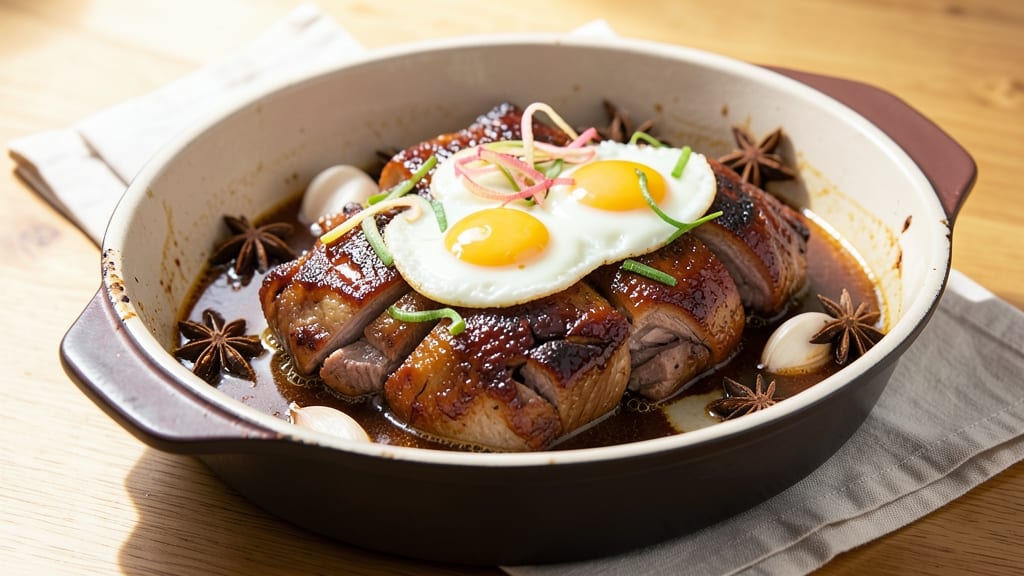
This braised pork and egg recipe transforms humble ingredients into a restaurant-worthy dish with deep, savory flavors and silky poached eggs. 💛 Growing up in Georgia, I learned how pork shoulder—slow-cooked with aromatics—becomes tender enough to shred, while the eggs poached in that rich broth add a luxurious finish.
The technique blends Southern comfort with Chinese dan bing tradition, creating a dish that’s both nostalgic and refined.
The secret lies in the braising: searing the pork first develops a deep, caramelized crust, while slow simmering in soy, ginger, and star anise extracts every ounce of flavor. Meanwhile, the eggs poach in that same fragrant broth, absorbing its richness without overcooking.
This method ensures the pork stays fork-tender and the eggs remain silky, never rubbery—a balance that takes practice but delivers results worth every minute.
What you’ll end up with is a dish that’s hearty enough for a family dinner but elegant enough for guests. The pork shreds effortlessly, the broth is velvety with just the right balance of sweet and umami, and each egg slides off the spoon with a perfect runny yolk.
Serve it over steamed rice or with pickled vegetables to cut through the richness, and pair it with a light jasmine tea or crisp white wine.
This recipe isn’t just about technique—it’s about the story behind the meal. The slow braise turns tough cuts into something tender, while the poached eggs add a touch of sophistication.
Whether you’re cooking for a crowd or treating yourself to a special night in, this dish delivers comfort and flavor in every bite. Let’s get started on creating something truly memorable.
Ingredients for braised pork and egg
Pork shoulder, aromatic spices, and fresh eggs—simple ingredients for a dish that feels truly special.
| Ingredient | Amount | Notes |
|---|---|---|
| Pork Shoulder 🐖 | 2 lb | Bone-in preferred for flavor |
| Large Eggs 🥚 | 6 whole | Fresh for perfect poaching |
| Soy Sauce 🍶 | ½ cup | High-quality, light variety |
| Star Anise Pods 🌿 | 2 whole | Whole, not ground |
| Fresh Ginger 🧄 | 2 tbsp | Finely grated, peel removed |
| Garlic Cloves 🧄 | 6 cloves | Minced, not powdered |
| Green Onions 🧅 | 4 whole | White and green parts separated |
| Vegetable Oil 🫒 | ¼ cup | High smoke point |
| Brown Sugar 🍚 | 2 tbsp | Light or dark variety |
| White Wine 🍷 | ½ cup | Dry, not sweet |
| Jasmine Rice 🍚 | 1 ½ cups | Uncooked, long-grain |
| Salt 🧂 | 1 ½ tsp | Kosher or sea salt |
| Black Pepper 🌶️ | ½ tsp | Freshly ground |
| Sesame Oil 🫒 | 1 tbsp | Toasted, for finishing |
The pork shoulder is the backbone of this dish. Look for cuts with good marbling—Costco or your local butcher shop usually have the best options. If you can't find bone-in, boneless works fine, but the bone adds depth to the broth. Fresh ginger and star anise are non-negotiable for that authentic flavor. Penzeys sells great whole spices if your grocery store lacks them. The soy sauce should be light-colored—Kikkoman is reliable, but Japanese brands like Hoyu elevate the dish further. Don't skip the bone-in if possible; it infuses the broth with incredible richness.
No star anise? Anise seeds or even a bay leaf work in a pinch, though the flavor won't be identical. Substituting white wine with extra chicken broth (plus a splash of vinegar) keeps the dish balanced. Fresh ginger is ideal, but if you must use powdered, reduce the amount to half—it's much more concentrated. For the eggs, room temperature is key—they poach perfectly without breaking. The green onions should be separated: white parts go into the braise, green tops save for garnish. Sesame oil is for finishing only—add it at the very end to preserve its delicate aroma.
Pork shoulder keeps beautifully in the fridge for 3-4 days before cooking, but use it within 2 days for best texture. The braised pork and broth reheat wonderfully—3 minutes in a skillet restores all the richness. Store the eggs in their shells in the fridge until ready to poach. For the rice, cook it just before serving so it stays light and fluffy. The sesame oil and green onions should be added fresh when serving, as they lose their vibrancy when stored. This dish tastes even better the next day as flavors meld further.
Why You'll Love This Recipe
- Here’s what sold me: this dish improves the second day. The pork gets even more fall-apart tender, and the eggs? They absorb even more of that sticky, star-anise-kissed sauce. I make a double batch on Sundays, and by Wednesday, my coworkers are texting me for the recipe. (Yes, even on a Tuesday night.)
- One-Pot Magic: I swear by this recipe when I’m too tired to wash extra dishes. The pork shoulder braises right in the same pot where the eggs poach—no frying pans, no mess. Just one sheet pan, one spatula, and you’re done. Honestly, the cleanup is almost as good as the meal.
- Umami Bomb: That star anise and ginger combo? It’s what turns this dish from good to ridiculously good. The pork stays tender while soaking up the deep, savory sauce, and the eggs? They poach right in the flavorful liquid, turning silky with just a hint of that aromatic richness. Between us, I’ve had braised pork before—but this? This is next-level.
- Leftovers That Beg for More: Here’s what sold me: this dish improves the second day. The pork gets even more fall-apart tender, and the eggs? They absorb even more of that sticky, star-anise-kissed sauce. I make a double batch on Sundays, and by Wednesday, my coworkers are texting me for the recipe. (Yes, even on a Tuesday night.)
Step-by-step instructions for braised pork and egg dish
Master this two-stage technique for tender pork and silky poached eggs in aromatic broth.
🔥 Step 1: Braise the Pork Shoulder to Fork-Tenderness
Heat the 0.25 cup vegetable oil in a large Dutch oven over medium-high heat. Add the 2 lb pork shoulder and sear on all sides until deeply browned, about 8-10 minutes per side. This creates the flavor foundation.
Remove the pork and set aside. In the same pot, add 2 tbsp fresh ginger, 6 cloves garlic cloves, and 4 whole green onions (white parts only). Sauté for 2 minutes until fragrant. Deglaze with 0.5 cup white wine, scraping up browned bits, then add 0.5 cup soy sauce, 2 tbsp brown sugar, 1.5 tsp salt, and 0.5 tsp black pepper. Return the pork to the pot.
Pour in enough water to cover the pork by 1 inch, then add the 2 whole star anise pods. Bring to a simmer, then reduce heat to low and cover. Braise for 2.5-3 hours until the pork is fork-tender and the broth has reduced slightly. Skim off any surface fat before proceeding.
🍳 Step 2: Prepare the Jasmine Rice
While the pork braises, rinse the 1.5 cups jasmine rice under cold water until the water runs clear. In a separate pot, combine the rice with 2.5 cups water and ½ tsp salt. Bring to a boil, then reduce heat to low, cover, and simmer for 15 minutes. Remove from heat and let steam, covered, for 10 minutes. Fluff with a fork before serving.
This rice should be perfectly tender with a slight bite—just right for soaking up the rich pork broth. Don't overcook it or it'll turn mushy when mixed with the braising liquid.
🥘 Step 3: Poach the Eggs in Pork Broth
Carefully remove the pork shoulder from the broth and set aside. Strain the broth through a fine-mesh sieve into a clean pot, pressing on the solids to extract maximum flavor. Return the broth to medium-low heat until it reaches 160°F—just below a gentle simmer.
Crack each of the 6 whole large eggs into small bowls. Using a slotted spoon, gently lower one egg at a time into the broth. Poach for 3-4 minutes until the whites are set but yolks remain runny. Remove with a slotted spoon and drain briefly on paper towels.
Here's the key: the broth should be gently simmering but not boiling—violent bubbles will scramble the eggs. Maintain the temperature precisely at 160°F for perfect silky yolks.
🍽️ Step 4: Assemble and Finish
Slice the pork shoulder against the grain into ¼-inch thick slices. Divide the jasmine rice among serving bowls, then arrange the pork slices on top. Ladle the warm pork broth over the rice and pork.
Place 1-2 poached eggs in each bowl, then drizzle with 1 tbsp sesame oil and sprinkle with the reserved green onion greens. The sesame oil adds a nutty aroma that complements the rich pork flavors perfectly.
Serve immediately with extra broth on the side. Each bite should deliver tender pork, silky egg, and deeply flavorful broth in perfect harmony. The contrast between the warm rice and cool poached yolks makes this dish truly special.
Pro Tips For Making Braised Pork And Egg
- SEAR THE PORK FIRST: I used to skip this step and just toss the pork shoulder straight into the braise—big mistake. A quick 3-4 minute sear in a hot pan with a splash of soy sauce and a pinch of sugar builds flavor fast. The crust locks in juices later, so don’t rush it—let the meat hit medium-high heat until it’s golden in spots.
- CRACK EGGS IN HOT WATER: Cold eggs straight into the pot? That’s how you end up with rubbery yolks. My grandmother swore by this: poach the eggs in a separate pot of simmering water for 3-4 minutes before adding them to the braise. The yolks stay creamy, and they absorb the pork’s rich sauce better—no more sad, broken yolks in a greasy mess.
- DON’T OVERCOOK THE GINGER: I learned this the hard way—grating ginger too fine and letting it sit in the braising liquid for hours turns it bitter. Instead, slice it into ¼-inch thick rounds, toast them lightly in the pot for 30 seconds, then remove. The aroma stays bright, and the flavor doesn’t turn harsh—trust me, your taste buds will notice.
- USE STAR ANISE EARLY: Sounds weird, but it works: drop the whole star anise pods into the pot with the raw pork while searing. The heat cracks them open, releasing their flavor into the fat before the braise even starts. If you add them later, you’ll just end up with a few floating pods that barely contribute—this guarantees they infuse the whole dish.
Make-ahead tips for this dish
Braise Ahead
This dish tastes even better the next day, so braise the pork shoulder completely and refrigerate it in its broth for up to 3 days. When ready to serve, simply reheat the pork and broth together over low heat for 10-15 minutes until warmed through.
The flavors meld beautifully overnight, making the broth richer and more complex. I always double the recipe so I can enjoy leftovers—trust me, it's worth the effort. 💛
Egg Prep Strategy
Poach the eggs fresh when serving to maintain their silky texture, but you can prepare the broth ahead. Strain and refrigerate the pork broth (without eggs) for up to 3 days. Reheat it gently before poaching eggs to preserve its delicate balance of flavors.
Keep the eggs in their shells in the fridge until ready to cook—room temperature eggs poach much better. This two-stage approach saves time while keeping everything fresh. ✨
Rice Timing
Cook the jasmine rice fresh just before serving to maintain its perfect texture. However, you can prepare the rice up to 1 day ahead and reheat it in a steamer basket over simmering water for 5 minutes.
This keeps the grains separate and prevents mushiness. I like to make a big batch of rice for the week and store it in the fridge—it pairs perfectly with this dish when reheated properly. 🍚
Storage Solutions
Store the braised pork in airtight containers with its broth to maintain moisture. The pork stays tender for 4 days in the fridge, while the broth can be frozen for 3 months in freezer-safe bags. Label everything clearly—I use masking tape and a Sharpie for my farm's recipes.
When reheating, add a splash of water or broth to prevent drying out. The eggs should always be poached fresh for best results. ❄️
Make-Ahead Assembly
For a stress-free dinner, assemble everything except the eggs up to 1 day ahead. Store the sliced pork and rice separately in the fridge, then reheat them together with a splash of broth. When guests arrive, simply poach the eggs and assemble the plates.
This approach lets you focus on hosting rather than cooking. The key is keeping the pork and rice separate until serving to maintain texture. 💡
Freezer-Friendly Components
Freeze the braised pork and broth separately for up to 3 months. Thaw overnight in the fridge before reheating. The rice doesn't freeze well, so prepare it fresh when needed.
For the eggs, poach them fresh—freezing cooked eggs changes their texture dramatically. This method lets you prep everything except the final egg step ahead of time, making Sunday dinners effortless. 🧊
Nutrition facts
Frequently asked questions
Can I substitute pork shoulder with another cut?
Pork shoulder is ideal for its fat content and flavor, but you can use pork butt or even pork loin in a pinch. For loin, reduce braising time to 1.5-2 hours since it cooks faster. Avoid lean cuts like tenderloin—they won't stay tender during braising. If using pork loin, slice it thinner (¼-inch) to ensure quick cooking.
How do I fix rubbery poached eggs?
Overcooked eggs happen when broth temperature exceeds 160°F. Use a thermometer to monitor heat—gentle simmering is key. Also, room-temperature eggs poach better. If eggs turn rubbery, try adding 1 tbsp vinegar to the broth next time to help set the whites faster without overcooking.
What's the best way to reheat leftovers?
Reheat pork and broth together in a skillet over low heat for 5-7 minutes, adding a splash of water if needed. For rice, steam it fresh or reheat in a microwave with a damp paper towel. Never microwave the eggs—they'll break apart. The broth reheats beautifully, so keep it warm separately for poaching fresh eggs.
Can I make this dish vegetarian?
While pork is traditional, you can substitute with mushrooms or seitan for texture. Braise the mushrooms in the same aromatics for 30 minutes until tender. For eggs, use tofu or chickpea flour "eggs" (mix ¼ cup flour with ½ cup water and 1 tsp baking powder)—poach them in the broth for 4-5 minutes.
Why does my broth taste too salty?
This usually happens when using pre-salted ingredients like soy sauce or bacon. Taste as you go—reduce salt by ½ tsp if needed. For balance, add 1 tbsp brown sugar or ½ cup water to dilute. If the dish is already too salty, serve with extra rice or pickled veggies to cut through the flavor.