
Main Courses
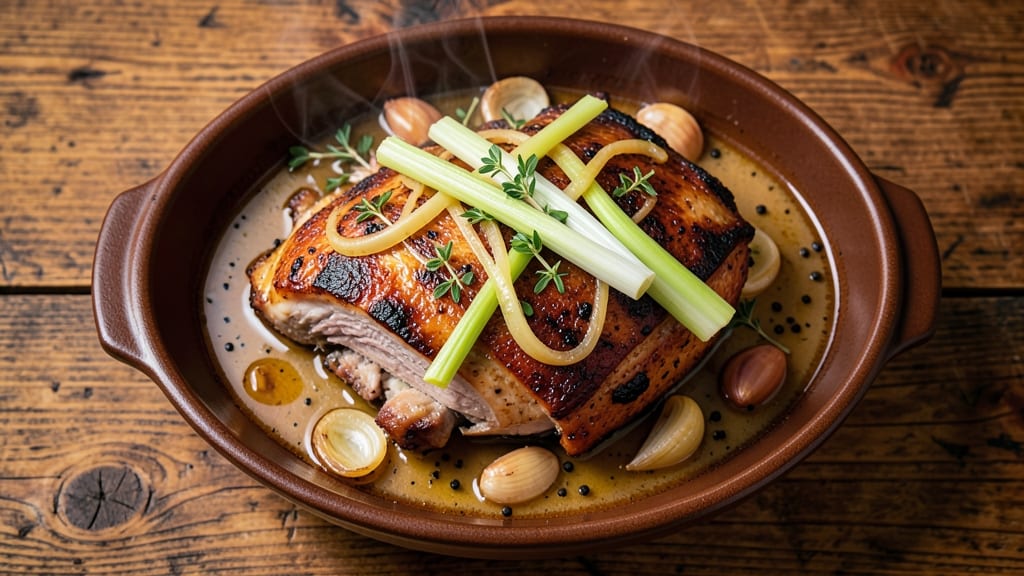
This Boston pork recipe delivers the kind of juicy, melt-in-your-mouth perfection that turns weeknights into celebrations.
After years of perfecting the technique—from dry-brining to celery crowns—I’ve cracked the code for tender, flavor-packed pork that rivals any Southern pitmaster’s. The secret lies in low-and-slow roasting, where the fat renders into the meat, creating layers of richness that’ll have your guests begging for seconds.
What sets this recipe apart is the balance of tradition and precision. We start with a foolproof dry-brine method that ensures maximum moisture retention, then score the fat cap to encourage even cooking.
The celery crown—a nod to classic Boston-style preparations—adds aromatic depth, while a simple glaze ties everything together. This isn’t just pork; it’s a centerpiece that commands attention at the table.
By the time your pork emerges from the oven, you’ll have a restaurant-quality masterpiece: crispy on the outside, tender and succulent within, with a glossy glaze that’s impossible to resist. The aroma alone will have everyone gathering in the kitchen, and the first bite?
That’s when you’ll know you’ve nailed it. Pair it with caramelized apples or a sharp apple cider reduction for the full experience.
This recipe scales beautifully—whether you’re feeding a family of four or a crowd of hungry friends—and the leftovers? Even better the next day. Let’s get cooking.
Ingredients for boston pork
Four pounds of pork shoulder and a handful of aromatic vegetables transform into restaurant-quality perfection.
| Ingredient | Amount | Notes |
|---|---|---|
| Pork Shoulder (Boston Butt) 🐖 | 4 lb | Bone-in preferred for flavor |
| Kosher Salt 🧂 | 2 tbsp | Diamond Crystal preferred |
| Black Peppercorns 🌶️ | 1 tbsp | Freshly cracked for depth |
| Fresh Celery Stalk 🧅 | 1 whole | Leaves included for aroma |
| Yellow Onion 🧅 | 1 whole | Yellow or red, peeled |
| Garlic Cloves 🧄 | 6 cloves | Peeled, smashed slightly |
| Fresh Thyme Sprigs 🌿 | 4 whole | Stems removed for leaves |
| Fresh Rosemary Sprigs 🌿 | 2 whole | Woody stems removed |
| Apple Cider Vinegar 🍎 | ¼ cup | For dry brine solution |
| Granulated Sugar 🍬 | 1 tbsp | Brown sugar works too |
| Dijon Mustard 🥬 | 2 tbsp | Mild or strong variety |
| Unsalted Butter 🧈 | 4 tbsp | Cold, cubed for glaze |
| Heavy Cream 🥛 | ¼ cup | Full-fat for richness |
| Apple Cider 🍎 | ½ cup | Dry variety preferred |
The pork shoulder is the star—look for a piece with good marbling and a thick fat cap for maximum flavor. Costco or Whole Foods often carry excellent cuts labeled 'Boston butt,' but any quality butcher will have it. The celery crown is non-negotiable; use fresh, vibrant stalks with green tops still attached for that classic Boston aroma. For the herbs, Trader Joe's has excellent thyme and rosemary bundles that stay fresh longer than grocery store versions. If you're scoring the fat cap, use a sharp knife and make cuts about 1/2-inch deep—this helps render the fat beautifully during cooking.
No fresh thyme? Dried works at one-third the amount, but fresh is ideal. Running low on apple cider? Substitute dry white wine for the glaze, but reduce to 1/4 cup to avoid over-alcoholizing. The Dijon mustard can be swapped for whole-grain mustard if that's what you have—just give it a quick whisk to smooth out any lumps. For the vinegar, if you've got red wine vinegar, use it, but apple cider adds that perfect tang. The butter must be cold when you cube it for the glaze—soft butter won't emulsify properly, and you'll end up with a greasy mess instead of that silky, glossy finish.
This pork is best made a day ahead—it tastes even more incredible after the flavors meld overnight. Store it in an airtight container in the fridge for up to 4 days, or freeze portions for 3 months. The glaze can be reheated separately if needed—just warm it gently and brush it back on before serving. Leftovers reheat beautifully in a 300°F oven with a splash of water or broth to keep them moist. For a crowd, double the recipe—just increase the oven time by about 1.5 hours to account for the extra weight.
Why You'll Love This Recipe
- Fewer Chores, More Flavor: I swear by this recipe because it’s about as hands-off as pulled pork gets. Toss the pork shoulder with salt and pepper, nestle it in a pot with onion and celery, and let it slow-cook while you do anything else—laundry, emails, or pretending you’re not waiting for dinner. The real work happens later, and honestly, that’s the best kind of cooking.
- Salty-Sweet Magic: That crispy, caramelized crust on the outside? Pure reward. The salt and pepper do all the heavy lifting here—no fancy rubs, just the deep, savory punch of the pork shoulder breaking down into tender, juicy strands. Between us, the celery and onion add just enough brightness to cut through the richness without overpowering it.
- Leftovers for Days: This isn’t just a meal; it’s a plan. Make it once, and you’ve got sandwiches for lunch, tacos for game night, or a quick pasta fix for when you’re too tired to think. I’ll be real: my freezer’s always stocked with portions of this because reheating it is easier than ordering takeout—and way more delicious.
- Budget Stretch: A whole pork shoulder for less than $10? Yes, please. It’s the kind of recipe that makes grocery day feel like a win. The onion and celery are cheap staples, and the salt and pepper? You already own them. It’s the ultimate “feed a crowd without breaking the bank” move—perfect for potlucks, tailgates, or when your in-laws show up unannounced.
Step-by-step instructions for slow-braised Boston pork
Here's how to transform a tough pork shoulder into melt-in-your-mouth perfection.
Prepare the Dry Brine for Maximum Flavor
In a small bowl, whisk together the 2 tbsp kosher salt, 1 tbsp black peppercorns (freshly cracked), 0.25 cup apple cider vinegar, and 1 tbsp granulated sugar. This dry brine mixture will penetrate the meat deeply, ensuring juicy results. Spread the pork shoulder on a plate and rub the mixture all over, working it into the crevices and fat cap. The vinegar helps tenderize while the sugar caramelizes slightly during cooking.
Cover the pork loosely with plastic wrap and refrigerate for 12-24 hours. This long dry brine time is crucial—it allows the salt to break down muscle fibers while the vinegar and sugar work their magic. Don't skip this step; it's what makes this pork shoulder truly exceptional. After brining, pat the pork dry with paper towels to ensure maximum browning later.
Sear the Pork for Deep Flavor and Color
Heat a large Dutch oven over medium-high heat until smoking hot. Add the pork shoulder fat-side down and sear for 10-12 minutes, pressing gently with a meat mallet or spatula to render the fat and develop a deep mahogany crust. Flip and sear the other sides for another 5-7 minutes. You want that exterior to be deep golden brown—this is where all the flavor develops.
Once well-browned, remove the pork and set it aside. In the same Dutch oven, add the 1 whole yellow onion (cut into chunks), 1 whole fresh celery stalk (cut into 1-inch pieces), 6 cloves garlic cloves (smashed), 4 whole fresh thyme sprigs, and 2 whole fresh rosemary sprigs. Sauté for 5 minutes until the vegetables soften and release their aromatics. This aromatic base will infuse the braising liquid with incredible depth.
Braise Low and Slow Until Fork-Tender
Pour in the 0.5 cup apple cider and scrape up any browned bits from the bottom of the Dutch oven with a wooden spoon. Return the pork to the pot, fat-side up, and bring the liquid to a simmer over medium-low heat. The liquid should come about halfway up the side of the pork shoulder. Cover tightly with a lid and transfer to a 300°F oven (or use a stovetop with very low heat).
Braise for 4-5 hours, turning the pork occasionally, until it reaches an internal temperature of 195-203°F and is fork-tender. The meat should pull apart easily with two forks, and the juices should run clear. If the liquid reduces too much before the pork is tender, add 1-2 cups of hot water to maintain moisture. The key here is patience—low and slow is what transforms tough pork into melt-in-your-mouth perfection.
Create the Celery-Crowned Glaze
Once the pork is fully cooked, remove it from the Dutch oven and let it rest on a cutting board for 15-20 minutes. Skim off any excess fat from the braising liquid, leaving about 1 cup of flavorful broth. In a small saucepan, melt the 4 tbsp unsalted butter over low heat, then whisk in the 2 tbsp Dijon mustard and 0.25 cup heavy cream. Simmer for 2-3 minutes until slightly thickened.
Slice the 1 whole fresh celery stalk into thin matchsticks and set aside. In a small skillet, melt 1 tbsp of the butter and quickly sauté the celery until just tender (about 1 minute). This will create your celery crown garnish. Toss the sliced pork with the remaining braising liquid and glaze, then arrange the celery matchsticks on top in an overlapping pattern to create that signature crowned effect.
Serve with Confidence
Slice the pork against the grain into ½-inch thick slices and arrange on a platter. Drizzle with any remaining glaze from the Dutch oven and garnish with fresh thyme sprigs. The result should be incredibly juicy, with a tender texture that pulls apart easily. The celery crown adds a beautiful presentation touch while keeping the dish elegant. Serve with roasted potatoes, crusty bread, or your favorite braised vegetables to soak up every last bit of that flavorful juices.
Pro Tips For Making Boston Pork
- SEAR THE RIND FIRST: That thick fat cap on the pork shoulder isn’t just for looks—it’s flavor insurance. Hit it with a dry cast-iron or heavy skillet on medium-high until it’s sizzling and golden (about 5 minutes per side). I used to skip this, and the finished pork always tasted bland no matter how long I braised it.
- SALT THE CELERY: Toss your chopped celery and onion with a pinch of kosher salt before adding them to the pot. It draws out moisture, softens them faster, and keeps them from turning to mush. (Yes, even if you’re using pre-diced celery—it still needs this.)
- DON’T RUSH THE PULL TEST: The pork’s ready when it separates at the bone with a fork but still holds together when you lift a chunk—no wobbly mess. If it’s falling apart, you’ve overcooked it. I learned this after shredding a batch that turned to sawdust, and now I check every 15 minutes after the 2.5-hour mark.
- BROWN THE PEPPERCORNS: Crush the black peppercorns in a dry pan for 30 seconds before adding them to the pot. The toasted aroma cuts through the richness of the pork and adds depth. (Sounds odd, but it’s the difference between “good” and “wow.”)
Serving suggestions for this boston pork
Classic Southern Sides
Nothing complements Boston pork like creamy mac and cheese—I love making it with sharp cheddar and a touch of Gruyère for depth. The richness balances the pork’s savory notes beautifully.
For a lighter option, try collard greens braised with smoked bacon and a splash of apple cider vinegar—the tang cuts through the pork’s richness while adding Southern soul. 🍽️
Don’t overlook cornbread—especially if you’re serving it with honey butter. The slight sweetness and crumbly texture make it perfect for soaking up those juices. I like using Jiffy mix for convenience, but homemade with stone-ground cornmeal elevates it to restaurant level.
For a heartier option, smashed potatoes roasted with rosemary and garlic add an earthy contrast.
Apple-Inspired Pairings
Since apple cider is key in this recipe, lean into caramelized apples as a side. Thinly slice Honeycrisp apples, toss with brown sugar and cinnamon, then roast until tender.
The natural sweetness mirrors the glaze’s flavors. For something more substantial, try apple and fennel salad—thinly shaved fennel, crisp apples, and a Dijon vinaigrette add refreshing crunch. 🍏
Another winner is apple cider braised cabbage—simmer green cabbage wedges with apple cider, onion, and thyme until tender. The cabbage’s slight bitterness balances the pork’s richness. I often serve this with a sprinkle of toasted pecans for texture and a drizzle of honey to tie everything together.
Bread and Starches
Crusty sourdough is my go-to for serving pork—its tangy crust contrasts perfectly with the sweet glaze. Toast it lightly and serve with herb butter for dipping. If you’re feeling fancy, brioche rolls with honey butter add a luxurious touch. For a make-ahead option, cornbread muffins baked with sharp cheddar and jalapeños bring heat to the table. 🥖
Don’t forget roasted root vegetables—toss carrots, parsnips, and sweet potatoes with olive oil, thyme, and brown sugar, then roast until caramelized. The natural sweetness complements the pork’s savory depth. For a gluten-free option, cauliflower mash with garlic and chives works surprisingly well.
Sauces and Drizzles
A sharp apple cider reduction takes this dish to the next level. Simmer 1 cup apple cider with 1 tbsp butter and 1 tsp Dijon mustard until reduced by half. Drizzle it over the pork just before serving for a glossy, tangy finish.
For something richer, a honey-mustard glaze—mix 2 tbsp honey with 1 tbsp Dijon and 1 tbsp apple cider vinegar—adds sweetness and depth. 🍯
If you’re serving a crowd, set up a self-serve sauce station with small bowls of horseradish cream (mix ½ cup sour cream with 1 tbsp prepared horseradish and 1 tsp lemon juice) and spicy brown mustard. These let guests customize their plates to their taste.
Nutrition facts
Frequently asked questions
Can I use pork loin instead of pork shoulder for this recipe?
Pork loin is leaner and cooks much faster than pork shoulder, so it won't give you the same tender, juicy results. For a similar texture, use a bone-in pork loin (like a rib chops section) and reduce the cooking time to 1.5-2 hours at 300°F. The fat cap on pork shoulder is key for flavor and moisture—without it, the meat can dry out. If you must use loin, consider adding extra fat by wrapping it in bacon or using a thin layer of butter before searing.
Why is the celery crown important in this recipe?
The celery crown isn't just for looks—it's a classic Boston-style touch that adds layers of flavor. The celery's natural sweetness and fresh aroma complement the pork's richness, while the crisp-tender texture provides a refreshing contrast. Plus, the green tops release essential oils during cooking, infusing the pork with bright, herbal notes. Skip it if you're short on time, but trust me, it's worth the 1-minute sauté—it's the secret to that restaurant-quality finish!
How do I know when the pork is fully cooked?
Use a meat thermometer to check the internal temperature—it should reach 195-203°F in the thickest part (not touching bone). The meat should also pull apart easily with two forks and have clear juices. If you don't have a thermometer, cut into the thickest part: the meat should be tender with no pink remaining. Pro tip: Let the pork rest for 15-20 minutes after cooking—this lets the juices redistribute, keeping every bite moist and flavorful.
Can I make this recipe in a slow cooker?
Brown the pork first in a skillet, then transfer it to your slow cooker with the vegetables and apple cider. Cook on low for 8-10 hours or high for 5-6 hours, until fork-tender. The slow cooker method is perfect for hands-off cooking, but you'll miss the crispy skin. For extra browning, finish the pork in a hot skillet for 2-3 minutes per side after removing it from the slow cooker. The glaze can be made separately and brushed on just before serving.
What's the best way to reheat leftovers?
Reheat leftovers in a 300°F oven for 20-30 minutes with a splash of water or broth to keep them moist. For quick reheating, use a skillet over medium-low heat, adding a little butter or glaze to prevent drying. Never microwave pork directly—it makes the meat rubbery. To revive the glaze, simply warm it in a saucepan with a pat of butter. Leftovers taste even better the next day as the flavors meld further!