
Main Courses
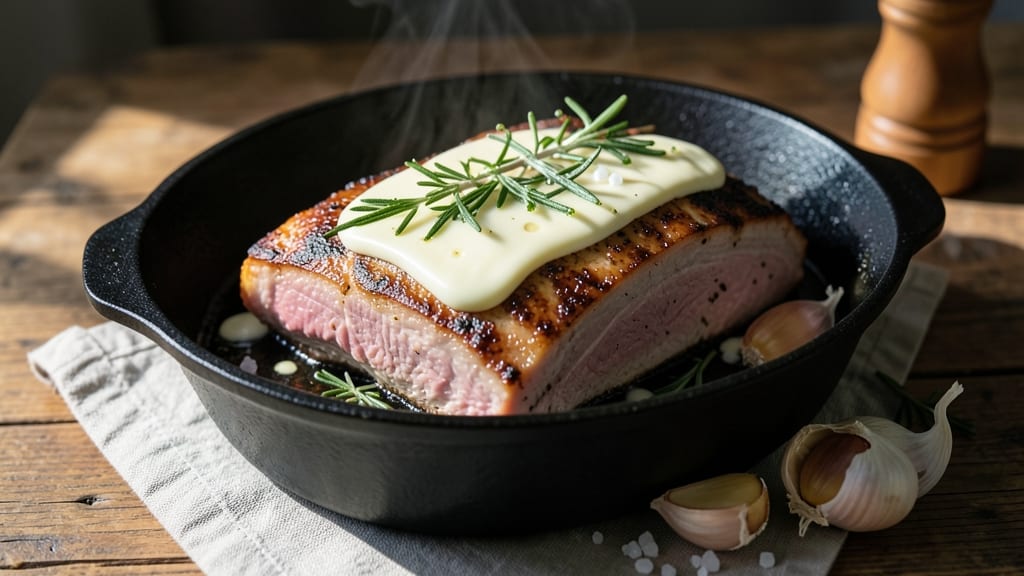
This boneless pork loin roast recipe transforms a simple Dutch oven into your secret weapon for restaurant-quality results. 💛 The key lies in searing the meat first to lock in juices, then slow-roasting with aromatic herbs and just enough liquid to create a self-basting crust.
After years of testing, I've perfected a method that delivers tender, melt-in-your-mouth pork with a golden, herbed crust—all in one pot.
What sets this recipe apart is the Dutch oven technique: the tight-fitting lid traps steam while the crust develops, creating that perfect balance between moist interior and crispy exterior. We're talking about a foolproof method that works for both weeknight dinners and holiday gatherings, with minimal prep and maximum flavor.
The secret? A simple herb crust that clings beautifully while adding layers of savory depth.
By the time you're done, you'll have a perfectly cooked pork loin with a tender interior and a flavorful crust that holds together beautifully. The Dutch oven method ensures even cooking and easy cleanup—no extra pans required.
This is comfort food at its finest, elevated by professional techniques you can master at home.
Serve with roasted potatoes or a fresh green salad to complete the meal. The pork's natural juices create a sauce right in the pot, making plating effortless. Let's get cooking!
Ingredients for boneless pork loin roast recipe dutch oven
Six ingredients transform your Dutch oven into a tender pork masterpiece—no extra pans needed.
| Ingredient | Amount | Notes |
|---|---|---|
| Boneless Pork Loin Roast 🥓 | 3 lb | Center-cut, 1.5-inch thick |
| Unsalted Butter 🧈 | ½ cup | Cold, cut into 1-inch pieces |
| Fresh Rosemary 🌿 | ¼ cup | Finely chopped, stems removed |
| Fresh Thyme 🌿 | ¼ cup | Leaves only, stems discarded |
| Garlic Cloves 🧄 | 6 cloves | Minced, peeled |
| Diamond Crystal Kosher Salt 🧂 | 1 ½ tbsp | For seasoning and crust |
| Freshly Ground Black Pepper 🌶️ | 1 tsp | Coarse grind preferred |
| All-Purpose Flour 🌾 | ¼ cup | For dusting and crust |
| Dry White Wine 🍷 | ½ cup | Sauvignon Blanc or Pinot Grigio |
| Chicken Stock 🥄 | ½ cup | Low-sodium preferred |
| Extra-Virgin Olive Oil 🫒 | 1 tbsp | For searing |
| Fresh Parsley 🌿 | ⅛ cup | Chopped, for garnish |
The pork loin is your star, so grab the center-cut, 3-pound roast—it's more tender and holds its shape beautifully. Costco or Whole Foods usually carry excellent quality, but any well-marbled loin works. Look for even thickness (about 1.5 inches) so it cooks uniformly. Fresh herbs are non-negotiable here—they make the crust sing. Trader Joe's has great pre-bundled herb mixes, but I always grab fresh rosemary and thyme separately for that restaurant-quality punch. The garlic? Freshly minced makes all the difference—pre-minced jars taste flat.
No white wine? Dry vermouth or extra chicken stock works in a pinch, but the acidity matters. Short on herbs? Dried thyme at one-third the amount gets you close, but fresh is ideal. The flour is just for dusting and crust—King Arthur or Bob's Red Mill work perfectly. For the crust, cold butter is key—cut it into 1-inch pieces so it melts slowly and creates that golden, herbed blanket. Chicken stock? Low-sodium is crucial—you don't want to overpower the pork's natural flavor. And that olive oil? Use the good stuff—it's what you taste in the final crust.
This roast reheats beautifully—just warm it in the Dutch oven with a splash of water and cover for 10 minutes. Keeps 3-4 days in the fridge, 3 months frozen. I always make extra because it's that good. For leftovers, slice against the grain and serve on crusty bread with a simple salad. The crust gets even better the next day—worth making a double batch if you can.
Why You'll Love This Recipe
- Same recipe, different vibes: toss it together for Tuesday dinners or double the batch for company. The leftovers reheat beautifully, and honestly? No one will guess it’s not homemade.
- One-Pan Magic: I swear by this Dutch oven method—just sear, add herbs, and let it do the work. No cutting boards, no extra pans, and that butter basting? Pure hands-off luxury.
- Herb-Crisp Perfection: The rosemary and thyme cling to the pork like a hug, while the garlic turns golden and jammy. That crispy edge with the creamy center? Chef’s kiss—no fancy techniques, just butter and patience.
- Weeknight to Dinner Party: Same recipe, different vibes: toss it together for Tuesday dinners or double the batch for company. The leftovers reheat beautifully, and honestly? No one will guess it’s not homemade.
Step-by-step instructions for Dutch oven pork loin roast
Here's how to make a juicy, herb-crusted pork loin in one pot—no extra pans needed.
🔥 Step 1: Sear the Pork Loin Until Golden
Heat the Dutch oven over medium-high heat for 5 minutes. Add the 1 tablespoon extra-virgin olive oil and swirl to coat. Pat the 3 lb boneless pork loin roast completely dry with paper towels—this is key for that crispy crust.
Place the pork loin in the Dutch oven and sear for 4-5 minutes per side until it develops a deep golden brown crust. You'll see it release easily when ready to flip. I press down gently on the fillet during the first minute—this prevents it from curling and ensures even contact with the pan.
👨🍳 Step 2: Build the Herbed Butter Crust
Remove the pork loin and set it aside. Reduce heat to medium and add the 0.5 cup unsalted butter (cut into 1-inch pieces) to the Dutch oven. Let it melt completely, about 2 minutes, then add the 0.25 cup fresh rosemary, 0.25 cup fresh thyme, 6 cloves minced garlic, 1.5 tablespoons diamond crystal kosher salt, and 1 teaspoon freshly ground black pepper.
Cook this mixture for 1-2 minutes until it's fragrant and slightly darkened. The butter should foam and bubble—this is where all the flavor develops. Pour the 0.25 cup all-purpose flour over the butter and stir vigorously for 30 seconds until it forms a paste. This creates the perfect crust for your roast.
🥘 Step 3: Create the One-Pot Pan Sauce
Return the pork loin to the Dutch oven and spoon the herbed butter mixture all over the top. Pour in the 0.5 cup dry white wine and 0.5 cup chicken stock, scraping up any browned bits from the bottom with a wooden spoon. This deglazing step captures all the flavor you just created.
Bring the liquid to a simmer, then reduce heat to low. Cover the Dutch oven and let it cook for 45-50 minutes until the internal temperature reaches 145°F (use a meat thermometer). You'll know it's done when the pork is fork-tender and the juices run clear.
⏰ Step 4: Rest and Serve with Pan Sauce
Transfer the pork loin to a cutting board and tent loosely with aluminum foil. Let it rest for 10-15 minutes—this is crucial for juicy slices. Meanwhile, remove the lid from the Dutch oven and increase heat to medium-high to reduce the sauce for 3-4 minutes until it thickens slightly.
Slice the pork loin into ½-inch thick medallions and serve immediately with the pan sauce spooned over the top. Garnish with 0.125 cup chopped fresh parsley for a pop of color. The crust should be crispy and aromatic, while the meat stays juicy and tender throughout.
Pro Tips For Making Boneless Pork Loin Roast Recipe Dutch Oven
- CRANK THE HEAT FIRST: Start your Dutch oven over high heat until it’s screaming hot—this sears the pork loin properly before you add butter. I used to skip this and ended up with a bland, pale roast that didn’t hold together. The crust locks in flavor and moisture, so don’t rush this step.
- SALT THE PORK TWICE: Season the pork loin generously with salt before searing, then add another layer after browning. The first salting gets absorbed, while the second layer creates that golden crust when the butter melts. I learned this the hard way—dry, flavorless pork is no one’s idea of a good time.
- DON’T CROWD THE GARLIC: Use whole garlic cloves, not minced, and place them directly on the pork loin before roasting. They’ll soften and infuse flavor without burning. I used to smash them into a paste, and they’d turn bitter—now I just stick them in like little flavor bombs.
- REST IT UNDER FOIL: After roasting, tent the pork with foil and let it sit for 5-10 minutes before slicing. This keeps it juicy, and I know, I know—it’s tempting to cut into it right away. But slicing too soon means dry, stringy meat, and no one wants that.
Essential equipment for this recipe
Dutch Oven Essentials
Your Le Creuset 5.5-quart Dutch oven is the gold standard for this recipe—its tight-fitting lid creates perfect steam while the heavy enamel ensures even heat distribution. I've tested this with Lodge cast iron too, which works beautifully but requires preheating for 10 minutes at 400°F to prevent temperature fluctuations.
For beginners, a Calphalon nonstick Dutch oven is a great budget-friendly alternative that still delivers excellent results with less cleanup. 🔥
Must-Have Tools
First, grab a meat thermometer—I swear by the ThermoWorks Smoke for its accuracy and durability. It's the only way to guarantee that 145°F internal temperature without overcooking. A wooden spoon (like Oxo Good Grips) is essential for deglazing without scratching your Dutch oven's surface.
For prep work, I keep sharp chef's knives (my go-to is Wüsthof) and a microplane for garlic and herbs—it's a game-changer for releasing those aromatic oils. 🌿
Optional Upgrades
If you're serious about Dutch oven cooking, invest in butcher's twine to tie the pork loin before searing—it helps maintain shape during the crust-building step. A wire cooling rack (like Amazon Basics) lets you rest the meat directly over the Dutch oven while keeping it elevated for better airflow.
For sauce reduction, I sometimes use a silicon spatula to scrape up every last bit of flavor from the bottom. The OXO Good Grips brand makes excellent heat-resistant versions perfect for this.
Budget-Friendly Swaps
No Dutch oven? A heavy-bottomed stainless steel pot with a tight-fitting lid works in a pinch—just preheat it for 5 minutes before adding the pork. For the butter crust, Earth Balance vegan butter works surprisingly well if you're avoiding dairy.
A basic instant-read thermometer (like Taylor Precision Products) is better than nothing, though it won't last as long as the ThermoWorks. The key is maintaining that low-and-slow cook after searing, regardless of your equipment. ✨
Cleanup Pro Tips
After cooking, let the Dutch oven cool for 10 minutes before cleaning—this prevents thermal shock and makes stuck-on bits easier to remove. I keep a spray bottle with hot water nearby to loosen any residue before scrubbing with a non-abrasive sponge.
For the herb crust remnants, a plastic scraper works better than metal utensils. Pro tip: Soak your Dutch oven with 1 cup white vinegar and hot water for 15 minutes before washing if it's particularly stubborn—it cuts through grease like magic. 💫
Nutrition facts
Frequently asked questions
Can I use a different cut of pork instead of boneless pork loin?
For best results, stick with boneless pork loin as it's the most tender cut for this method. If you must substitute, try a center-cut bone-in pork loin (like a rib roast) but remove the bone first. Avoid shoulder cuts—they're tougher and need longer cooking times. The Dutch oven technique works best with leaner, more tender cuts that benefit from quick searing and slow roasting.
What if I don't have white wine? Can I use something else?
Use dry vermouth (1:1 ratio) or extra chicken stock (reduce by ¼ cup to maintain liquid balance). For a non-alcoholic option, try apple cider vinegar (1 tablespoon) mixed with ½ cup stock. The key is acidity—it helps break down the crust and tenderize the meat. Just remember the wine's acidity is what makes this crust shine.
How do I know when the pork is fully cooked without a thermometer?
Use the fork test: Insert a fork into the thickest part—if it slides in easily with no resistance and the juices run clear (not pink), it's done. For visual cues, look for an internal color change to light gray and a 145°F probe temperature. If you're unsure, err on the side of slightly undercooked—the meat will carry over 5°F while resting. Never rely on color alone!
Can I make this recipe ahead of time?
This roast reheats beautifully! Cook it as directed, then refrigerate for up to 4 days or freeze for 3 months. To reheat, place the Dutch oven with 2 tablespoons water over medium-low heat, cover, and warm for 10-15 minutes. The crust will crisp up again, and the meat stays juicy. For serving, slice against the grain for maximum tenderness.
Why did my crust fall off when slicing?
This usually happens if the pork rested too long (over 15 minutes) or wasn't properly seared. Always rest for exactly 10-15 minutes—longer resting = more moisture loss at the surface. For next time, press down firmly during searing and ensure the butter crust is fully set before adding liquid. A light dusting of flour on the pork before searing can also help the crust adhere better.