
Main Courses
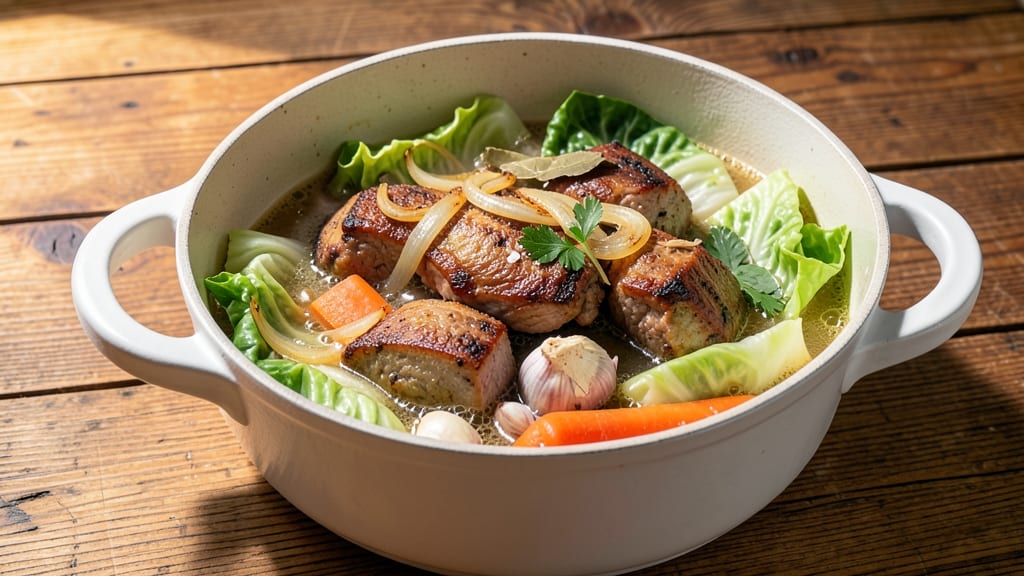
This boiled pork and cabbage recipe brings hearty comfort to your table with minimal effort—just like my grandma used to make. The secret lies in slow-simmered pork shoulder that becomes fork-tender while cabbage transforms into sweet, wilted perfection.
I've perfected this technique over years of Southern cooking, where pork and cabbage pairings are tradition.
What makes this dish special is the balance of simplicity and depth. A few basic ingredients—pork, cabbage, onions, and seasonings—create a meal that's rich in flavor without requiring fancy techniques.
The pork benefits from long, gentle cooking that melts the connective tissue, while the cabbage absorbs the savory broth, becoming tender yet still holding its shape. This is the kind of meal that tastes even better the next day.
By the time you're done, you'll have a steaming pot of tender pork that practically falls apart with a fork, surrounded by cabbage that's sweetened from the slow cooking process.
The aroma alone will fill your kitchen with warmth, and every bite delivers that satisfying combination of savory meat and tender vegetable. It's a classic that never goes out of style.
Perfect for family dinners, potlucks, or when you need a comforting meal with minimal fuss. The recipe scales easily, making it ideal for feeding a crowd while keeping prep simple. Let's get started on this timeless favorite that brings comfort to every table.
Ingredients for boiled pork and cabbage
Pantry staples plus one trip to the butcher. Southern comfort in a pot.
| Ingredient | Amount | Notes |
|---|---|---|
| Pork Shoulder 🥩 | 3 lb | Bone-in, cut into 2-inch chunks |
| Green Cabbage 🥬 | 1 whole | Heavier heads preferred |
| Yellow Onion 🧅 | 1 whole | Medium size, sliced in half |
| Carrots 🥕 | 4 whole | Medium size, peeled and chopped |
| Bay Leaves 🌿 | 2 whole | Dried for convenience |
| Garlic Cloves 🧄 | 6 cloves | Peeled, smashed slightly |
| Salt 🧂 | 2 tbsp | Kosher or sea salt |
| Black Peppercorns 🌶️ | 1 tsp | Coarsely crushed |
| Apple Cider Vinegar 🍎 | 2 tbsp | For tangy depth |
| Fresh Thyme 🌿 | ½ cup | Or 1 tbsp dried thyme |
| Water 💧 | 8 cups | Enough to cover pork |
The pork shoulder is the heart of this dish—bone-in cuts with good marbling break down beautifully. Look for pork shoulder roast at your local butcher or grocery store meat department. If you're buying a whole shoulder, ask to have it cut into 2-inch chunks for even cooking. Trader Joe's and Whole Foods usually carry pre-cut pork shoulder, but I've also used the regular supermarket stuff with great results. For cabbage, heavier heads tend to be more flavorful—look for firm, crisp leaves with no yellowing. The carrots can be any variety, but orange carrots hold their shape better than purple or rainbow varieties during long cooking.
No fresh thyme? Dried works just fine—use about one-third the amount. Short on vinegar? A splash of lemon juice or even a pinch of sugar will add brightness. The bay leaves can be skipped if you're out, but they add that subtle aromatic depth. For a quicker version, pre-cut frozen cabbage works (just thaw first). If you're making this ahead, the pork actually tastes better the next day—the flavors meld even more. Want extra richness? Add a quarter cup of apple cider to the water when boiling.
This dish reheats beautifully—just warm through with a splash of water or broth. Keeps in the fridge for 4-5 days in its broth, or you can portion the pork and cabbage separately for 3-4 days. Freezes wonderfully for up to 3 months, though the cabbage might get mushy. I like to make a double batch and freeze half—perfect for lazy weeknights. The broth alone is amazing for soups or gravies, so don't toss it! Store it in the fridge for up to 1 week or freeze for 3 months.
Why You'll Love This Recipe
- I’ll be real: most boiled dishes turn into sad, watery meals the next day. Not this one. The pork stays fork-tender, the cabbage holds its shape, and the broth? Thickens into something you can actually use—soup base, rice stir-fry, or just reheated with a crack of black pepper. I’ve fed my family this for days and still get “more, please.”
- One-Pot Magic: Honestly, I swear by this recipe because it’s literally one pot. Toss in the pork shoulder, cabbage wedges, onions, carrots, and bay leaves—no chopping like a fine chef, just rough cuts—and let the water do the work. The pork falls apart tender, the cabbage softens just enough, and the carrots stay crisp enough to bite into. No pans, no fuss, just done.
- Savory Simplicity: Between us, this dish is the kind of thing you’ll make without a recipe after the third time. The pork shoulder stays juicy while the cabbage soaks up all the porky flavor, and those bay leaves? They add this earthy depth that makes it taste like you simmered it for hours (even if it’s really 45 minutes). The onions caramelize just enough to give it that sweet-savory punch—no fancy techniques, just good stuff.
- Leftovers That Don’t Suck: I’ll be real: most boiled dishes turn into sad, watery meals the next day. Not this one. The pork stays fork-tender, the cabbage holds its shape, and the broth? Thickens into something you can actually use—soup base, rice stir-fry, or just reheated with a crack of black pepper. I’ve fed my family this for days and still get “more, please.”
Step-by-step instructions for boiled pork and cabbage
This hearty dish comes together with minimal effort but maximum flavor—just follow these simple steps.
Prepare the Pork and Vegetables
Start by cutting the 3 lb pork shoulder into 2-inch chunks—this ensures even cooking. Pat the pieces dry with paper towels to help them brown slightly in the pot. While the pork rests, prepare the vegetables: Remove the core from the whole green cabbage and cut it into 8 wedges, keeping the leaves intact. Slice the whole yellow onion in half and peel the 4 whole carrots, then chop them into 1-inch pieces.
For the aromatics, peel and smash the 6 cloves garlic lightly with the flat side of a knife. Strip the leaves from the 0.5 cup fresh thyme and give them a rough chop. The bay leaves can stay whole—they'll infuse flavor without needing to be chopped. This prep work takes about 15 minutes but sets the foundation for a flavorful simmer.
Season and Sear the Pork
In a large pot with a lid, combine the pork chunks, 2 tbsp salt, and 1 tsp coarsely crushed black peppercorns. Toss everything to coat the meat evenly. Heat the pot over medium-high heat until the pork starts to brown—this adds depth of flavor. You’ll see the pieces develop a golden crust in about 3-4 minutes. Don’t rush this step; it’s what makes the dish taste rich and savory.
Once the pork is lightly browned, add the 2 whole bay leaves and the 2 tbsp apple cider vinegar. The vinegar will brighten the flavors as the dish simmers. Stir everything together, then add the 8 cups water and bring the mixture to a rolling boil. This step ensures the pork releases its natural juices into the pot, creating a flavorful broth.
Simmer the Pork Until Tender
Reduce the heat to low and add the cabbage wedges, onion halves, and chopped carrots to the pot. The liquid should just barely cover the ingredients—if it doesn’t, add a splash more water. Cover the pot with a lid and let the mixture simmer gently for 1 hour and 15 minutes. You’ll know it’s ready when a fork slides into the pork with ease and the vegetables are tender but still hold their shape.
Here’s the thing—don’t lift the lid during cooking. Every time you peek, you lose heat and extend the cooking time. Instead, trust the process. The pork will become fork-tender, and the cabbage will soften just enough to be delicious without turning mushy. If the liquid reduces too much, add a little more water to keep everything submerged.
Finish with Aromatics and Rest
After the pork is tender, add the smashed garlic cloves and chopped thyme to the pot. Stir everything together and let it simmer uncovered for another 5-7 minutes. This allows the garlic to infuse its flavor and the thyme to release its aromatic oils. Taste the broth and adjust the seasoning if needed—you might need a little more salt or a splash of vinegar to balance the flavors.
Once everything is seasoned perfectly, turn off the heat and let the pot sit covered for 10 minutes. This resting period lets the flavors meld together and the juices redistribute in the pork. Serve the dish directly from the pot, with the cabbage, carrots, and onions floating in the rich, savory broth. It’s simple, comforting, and packed with flavor—exactly what you’d expect from a classic boiled pork and cabbage recipe.
Pro Tips For Making Boiled Pork And Cabbage
- Sear the Pork First: Skip the slow start—pat the pork shoulder dry, then sear it hard in a pot with oil over medium-high heat for 5 minutes per side. I used to skip this, and the meat always tasted bland and waterlogged. That crust locks in flavor and keeps it from falling apart later.
- Cut Cabbage in Wedges: Leave the cabbage whole but slice it into 6-8 thick wedges (core intact) instead of chopping. This keeps it from turning to mush while still cooking through evenly. My grandmother swore by this, and she was right: it holds its shape and soaks up the pork juices better.
- Don’t Overcrowd the Pot: Add the pork first, then let it release some fat before tossing in onions and carrots. Crowding the pot with everything at once steams the meat instead of browning it. I learned this the hard way—now I wait until the onions are golden before adding the cabbage.
- Use a Bay Leaf Twist: Tie 2-3 bay leaves in a small cheesecloth pouch before adding them to the pot. This keeps them from floating loose and burning, while still infusing the broth. (Yes, even if you’re impatient like me—it’s worth the 30 seconds.)
Wine and beer pairings for this boiled pork and cabbage
Southern White Wine
For this dish, I always reach for a crisp, dry white wine from the Southeast—something like Georgia's Chateau de la Creche Viognier. The bright acidity and floral notes cut through the richness of the pork beautifully.
If you prefer something lighter, a Carolina Pinot Grigio works wonders too. The key is to avoid heavy, oaky whites that would overpower the delicate cabbage flavors. 🍷
German Beer Pairings
Given the dish's Eastern European roots, a German Helles Lager is my go-to choice. Brands like Augustiner Helles or Weihenstephaner Original provide a clean, slightly malty profile that complements the pork's savory depth.
For something more robust, try a German wheat beer (Weissbier) with its citrusy notes—it brightens the cabbage's natural sweetness. Just avoid heavy stouts or IPAs that would clash with the dish's simplicity.
Apple Cider Enhancement
Since we're already using apple cider vinegar in the recipe, why not extend that flavor profile with a glass of hard cider? I love pairing this dish with Angry Orchard Crisp Apple or Strongbow Original.
The apple notes echo the vinegar's tang while adding a refreshing contrast to the rich pork. For a non-alcoholic option, try Martinelli's Sparkling Apple Cider—it's festive and pairs perfectly with the cabbage's natural sweetness.
Spiced Wine Option
For a cozy winter twist, heat up a glass of mulled wine with cinnamon sticks and orange slices. I make mine with Chateau Ste. Michelle Riesling—its natural sweetness balances the dish's savory elements beautifully.
The spices add warmth that complements the cabbage's earthy flavors. This is especially perfect when serving the dish during colder months when you want that extra coziness factor. 🔥
Regional Beer Adaptations
If you're cooking this in the Southeast, try pairing with Atlanta's SweetWater 420 IPA—its citrusy hop profile works surprisingly well with the cabbage's natural sweetness. For a more traditional approach, Charleston's Blue Moon Belgian White offers a crisp, slightly spiced profile that enhances the pork's richness.
Each region has its own beer culture, so don't be afraid to experiment with local craft options that reflect your area's flavor profile.
Nutrition facts
Frequently asked questions
Can I use pork ribs instead of pork shoulder?
Yes, but adjust the cooking time! Pork ribs will take about 30-45 minutes longer to become tender due to their smaller size and different fat content. Cut them into 1.5-inch pieces for even cooking. The ribs will stay juicier but may fall apart more easily when served.
What if my cabbage turns mushy?
This happens when cabbage cooks too long or in too much liquid. To fix it, add the cabbage wedges only in the last 30 minutes of cooking. For extra structure, keep the core intact and reduce the water to just cover the pork. If it's already mushy, drain most of the broth and serve the cabbage separately with a squeeze of lemon.
Can I make this in a slow cooker?
Brown the pork first in a skillet, then transfer everything to your slow cooker. Cook on low for 6-7 hours or high for 3-4 hours. The pork will be even more tender, and the cabbage will absorb all the flavorful juices. Just add the garlic and thyme in the last 30 minutes of cooking.
How do I serve this dish traditionally?
In many Southern and Eastern European traditions, this dish is served family-style straight from the pot. Spoon the pork and cabbage onto a platter with the broth ladled over the top. Serve with crusty bread to soak up the delicious liquid. For extra authenticity, add a side of buttered potatoes or a simple green salad with vinegar dressing.
What's the best way to reheat leftovers?
Reheat gently in the same pot over low heat with a splash of water or broth to keep everything moist. For microwave reheating, cover with a damp paper towel and heat in 30-second intervals, stirring between each. The cabbage will stay tender if reheated quickly—never let it sit in hot liquid too long.