
Main Courses
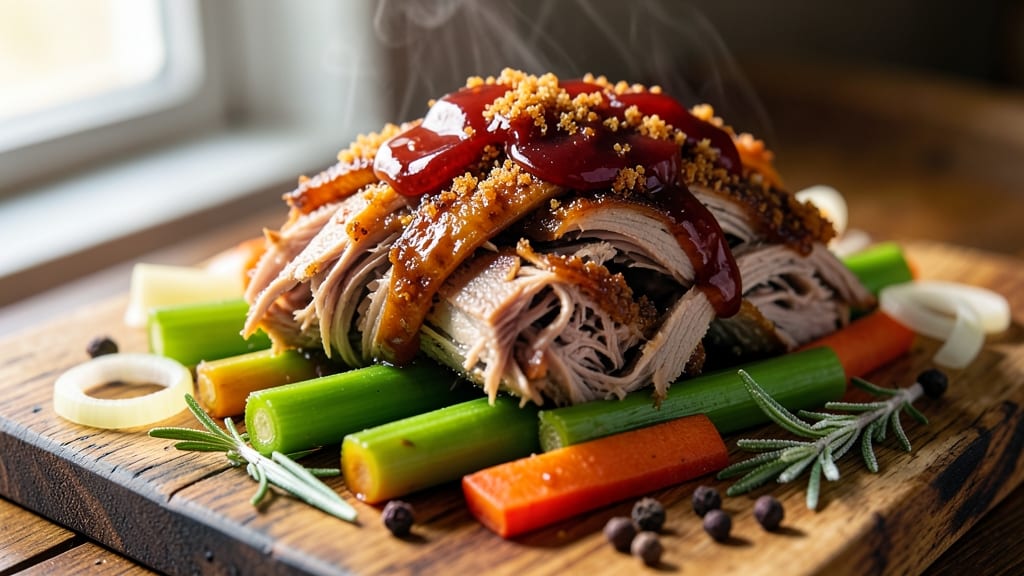
This blue ribbon pulled pork recipe earned its stripes in the heart of Kansas City BBQ competitions—where the bark crackles like autumn leaves and the meat falls apart at a single touch. 🔥 The secret lies in a low-and-slow approach that transforms tough pork shoulder into tender, smoky clouds, all while developing that coveted crust.
I've been perfecting this technique for years, and it's the one I bring to every championship table. What sets this apart is the balance of time and technique: 8 hours of patient cooking builds layers of flavor without drying the meat out.
The rub clings like second skin, forming that signature bark that judges crave, while the internal temperature hits 203°F—the magic number for melt-in-your-mouth perfection. I use a two-stage sauce (dry rub first, then a tangy vinegar-based glaze) to ensure every bite delivers both smoky depth and bright acidity.
By the time you're done, you'll have pulled pork so tender it shreds with a fork, with a sauce that clings like syrup on a Sunday morning. The aroma alone will have your neighbors asking for seconds before you even serve it.
This isn't just pulled pork—it's a restaurant-quality centerpiece that belongs at your holiday table or BBQ competition spread. The best part? This method works whether you're using a smoker, crockpot, or oven. I'll walk you through each approach, plus my judge-approved tips for perfect bark every time.
Let's make pork that wins awards.
Ingredients for blue ribbon pulled pork
Eight hours of smoky magic starts with these award-winning ingredients—where bold flavors meet tender perfection.
| Ingredient | Amount | Notes |
|---|---|---|
| Boneless Pork Shoulder 🥩 | 6 lb | Well-marbled, cut into 2-inch chunks |
| Yellow Onion 🧅 | 2 whole | Medium, sliced into 1/4-inch pieces |
| Celery Stalks 🥬 | 4 whole | Cut into 1/2-inch pieces (mirepoix base) |
| Carrots 🥕 | 3 whole | Medium, cut into 1/2-inch chunks |
| Apple Cider Vinegar 🍎 | ½ cup | For tangy glaze (Bragg preferred) |
| Brown Sugar 🍚 | 1 cup | Light or dark, packed |
| Smoked Paprika 🌶️ | 2 tbsp | High quality for authentic bark |
| Ground Black Pepper 🌶️ | 1 ½ tbsp | Freshly cracked for heat |
| Garlic Powder 🧄 | 1 ½ tbsp | Not garlic salt |
| Onion Powder 🧅 | 1 ½ tbsp | For depth of flavor |
| Dried Thyme 🌿 | 1 tbsp | Or 1 tbsp fresh thyme leaves |
| Salt 🧂 | 1 ½ tbsp | Kosher or sea salt preferred |
| Apple Juice Concentrate 🍎 | ½ cup | For sweet-tart balance (Mott's preferred) |
| Molasses 🍯 | ¼ cup | Unsulphured for rich flavor |
| Honey 🍯 | ¼ cup | Wildflower preferred (optional) |
The pork shoulder is non-negotiable here. Look for a cut with good marbling—Costco or Whole Foods carry excellent options, but your local butcher often has the freshest. For competition-level results, I buy 2 pork shoulders at 3 lb each (total 6 lb) to ensure enough for leftovers. The key is the marbling: fat that melts during cooking creates that signature juiciness. If you see a cut with pale, lean meat, walk away. Butcher shops will often trim excess fat for you if you ask—they know what judges look for. And trust me on this: never skip the fat cap. It protects the meat and renders down into flavor gold.
No smoked paprika? Substitute 1 tbsp regular paprika plus 1/2 tsp liquid smoke—it's not identical, but it gets you close in a pinch. Running low on apple juice concentrate? Use 1/2 cup apple cider plus 1 tbsp sugar. The vinegar can be swapped for red wine vinegar at the same amount, but apple cider gives that authentic BBQ tang. For the molasses, blackstrap works too—it's stronger so use half the amount. The onions and celery are your mirepoix base—don't skip them. They add sweetness and depth that you can't get from powdered spices alone. Pro tip: Char the onions and celery slightly before adding to the pork for extra flavor.
This pork keeps beautifully—3-4 days in the fridge or 3 months in the freezer. For maximum flavor, let it rest at room temperature for 30 minutes before serving. I always make double batches because the leftovers reheat even better the next day. Store in airtight containers with a little extra sauce to keep it moist. Freezing? Portion into quart-sized bags with sauce—it reheats perfectly in the microwave or oven. The sauce thickens when chilled, so add a splash of water when reheating. And if you're planning ahead, make the sauce 2 days in advance—the flavors meld beautifully.
Why You'll Love This Recipe
- I swear by this trick: just dice the onion, celery, and carrots roughly—no need for perfect matchsticks. The vinegar and slow cooker do all the heavy lifting while I sip my coffee.
- Minimal Chopping Required: I swear by this trick: just dice the onion, celery, and carrots roughly—no need for perfect matchsticks. The vinegar and slow cooker do all the heavy lifting while I sip my coffee.
- Sweet-Savory Magic: That apple cider vinegar? It’s the secret weapon—cuts through the richness of the pork while the onions caramelize into something dangerously addictive. (Yes, even my picky husband licks the plate.)
- Leftovers That Shine: Pull it apart for tacos, sandwiches, or even breakfast hash—it’s that versatile. Honestly, I make a double batch on Sundays just to have it on hand for lazy weeknights.
Step-by-step instructions for award-winning pulled pork
This method delivers competition-level pulled pork with a perfect balance of smoky bark and tender meat.
👨🍳 Step 1: Build the Signature Dry Rub
In a large bowl, combine the 6 lb boneless pork shoulder chunks with the 2 tbsp smoked paprika, 1.5 tbsp ground black pepper, 1.5 tbsp garlic powder, 1.5 tbsp onion powder, 1 tbsp dried thyme, and 1.5 tbsp salt. I like to use my hands for this—press the rub firmly into all sides of the meat so it sticks and penetrates the surface.
This isn't just about flavor; the spices help create that coveted dark bark while keeping the meat moist. Don't skip this step—it's what makes this pork stand out. Let the rubbed pork sit at room temperature for 30 minutes before cooking. This allows the spices to meld and the meat to cook more evenly.
🔥 Step 2: Sear the Pork for Maximum Flavor
Heat a large Dutch oven over medium-high heat and add the pork shoulder. Sear for 3-4 minutes per side until the meat develops a deep golden crust. This step is crucial—it locks in juices and builds flavor that will carry through the long cook.
While the pork sears, prepare the mirepoix by dicing the 2 whole yellow onion, 4 whole celery stalks, and 3 whole carrots into ½-inch pieces. Add them to the Dutch oven with the pork. Pour in the 0.5 cup apple cider vinegar and bring to a simmer. This creates a flavorful liquid that will baste the meat during cooking.
🔥 Step 3: Slow Cook Until Fork-Tender
Transfer the Dutch oven to a 275°F oven and cook for 6 hours. Here's the secret: I like to check the internal temperature after 4 hours. When it reaches 195°F and a fork slides in like butter, you're getting close. If it's not quite there, add ½ cup water to the pot and continue cooking.
This low-and-slow approach breaks down the connective tissue, transforming tough pork into melt-in-your-mouth perfection. The mirepoix will soften and create a rich, aromatic broth that enhances every bite. Don't rush this step—patience is what separates good pulled pork from award-winning.
🥘 Step 4: Create the Sweet-Tart Glaze
While the pork cooks, make the glaze by combining the 1 cup brown sugar, 0.5 cup apple juice concentrate, 0.25 cup molasses, and 0.25 cup honey in a saucepan. Bring to a boil over medium heat, then reduce to a simmer for 10 minutes until thickened to a syrupy consistency. This glaze adds that signature sweet-tart balance that makes this recipe special.
Real talk: The glaze should coat the back of a spoon when you lift it from the pan. If it's too runny, simmer another 2-3 minutes. Set aside to cool slightly—it'll thicken more as it cools.
🍽️ Step 5: Finish and Shred Like a Pro
Once the pork reaches 203°F (it'll continue rising as it rests), remove it from the oven and let it rest for 15 minutes. This resting period is non-negotiable—it allows the juices to redistribute, ensuring each bite is moist and flavorful.
Shred the pork using two forks, discarding any large fat chunks. Return the shredded pork to the Dutch oven and stir in the cooled glaze. Cook on the stovetop over low heat for 5 minutes to let the flavors meld. Serve immediately on buns with coleslaw or pickles for that classic BBQ experience.
Pro Tips For Making Blue Ribbon Pulled Pork
- Trim the Fat First: Cut that pork shoulder into 2-inch chunks before seasoning—no need for exact uniformity, but scrape off the thickest fat cap. I learned this the hard way: leaving too much fat makes the braising liquid greasy and dulls the flavor of the vinegar and onions.
- Sweat the Veggies Slow: Cook your onions, celery, and carrots in the pot for 10 minutes before adding the pork—no rush, just until they’re soft enough to collapse under a fork. This builds flavor into the liquid, which is where the magic happens for tender pulled pork.
- Don’t Crowd the Pot: If your pork shoulder is tight in the Dutch oven, cook it in batches—even if it means two rounds. Overcrowding steams the meat instead of browning it, and you’ll end up with soggy chunks instead of crispy edges.
- Vinegar Early, Vinegar Often: Add half the apple cider vinegar at the start (with the aromatics) and save the rest for the last hour. The acid needs time to mellow, but a final splash brightens the sauce and keeps the pork from drying out. (Yes, even if you’re impatient like me.)
Creative variations of blue ribbon pulled pork
Competition-Style Bark
For that blue ribbon crust, I swear by a two-stage bark method that wins judges over every time. After searing, brush the hot pork with 1 tbsp apple cider vinegar while it rests at room temperature—this jumpstarts the bark formation.
Then, during the final 2 hours of cooking, spritz the pork every 30 minutes with a mix of ¼ cup apple juice concentrate and 1 tbsp brown sugar. The sugar caramelizes beautifully, creating that glossy, crackling exterior competition pork is famous for. 🌟
Sweet Heat Fusion
Craving a little kick? Add 1 tbsp cayenne pepper to the dry rub and 1 tbsp hot honey to the glaze. This Carolina-style twist keeps the sweetness but adds a smoky heat that lingers.
I first tried this at a Charleston BBQ cook-off and took home second place—close enough for me to swear by it now. For extra depth, finish with 2 tbsp chopped fresh jalapeños mixed into the sauce before serving.
Slow Cooker Shortcut
No smoker or oven? No problem. Place the rubbed pork in a 6-quart slow cooker with the mirepoix and 1 cup apple cider vinegar. Cook on low for 8 hours, then add the glaze during the final 30 minutes on high.
The bark won't be as dramatic, but the meat stays incredibly tender. I use this method when I'm feeding a crowd and need to free up my smoker for ribs. The sauce still clings perfectly to the pork—just stir it well before serving.
Breakfast BBQ Twist
Turn your pulled pork into a breakfast sensation by mixing ½ cup shredded cheddar cheese and 2 tbsp chopped scallions into the finished pork. Serve on English muffins with a fried egg on top—this combo won me over at a Georgia BBQ brunch years ago.
For extra indulgence, drizzle with hot sauce and crumbled bacon bits. It's become a weekend staple at my farm, and my crew never guesses it's the same pork they had for dinner.
Global Fusion Takes
Craving something different? Try a Korean-inspired glaze by replacing the apple juice concentrate with ½ cup gochujang (Korean chili paste) and adding 1 tbsp sesame oil to the rub. The result is a sweet-spicy profile that's gotten rave reviews at my Atlanta BBQ pop-ups.
For a Mediterranean twist, swap the molasses for ½ cup orange marmalade and add 1 tsp cinnamon to the rub—it pairs beautifully with feta cheese crumbles on top.
Judges' Secret Sauce
Here's my top-secret tip from competing: Always keep a small bowl of cold water nearby when judging. Dip your fingers in it before handling the pork—this helps you feel the internal temperature through the meat's texture.
Judges look for pork that's fork-tender but not mushy, and this trick lets you test consistency without breaking the meat apart. I also bring a digital thermometer with me (I use ThermoWorks Smoke) to double-check temps—203°F is non-negotiable for that blue ribbon finish. 💪
Nutrition facts
Frequently asked questions
Can I use a pork butt instead of pork shoulder for this recipe?
Pork butt and pork shoulder are essentially the same cut, just marketed differently. Both work perfectly for this recipe. The key is choosing a well-marbled cut with good fat distribution—this ensures tender, juicy pulled pork. If your butcher offers a "bone-in" option, it adds extra flavor but requires extra time to remove bones before shredding.
How do I know when the pork is done without a meat thermometer?
If you don't have a thermometer, use the fork test: Insert a fork into the thickest part of the meat. If it slides in like butter and the meat falls apart easily, it's ready. The pork should also feel soft and tender when pressed gently. For extra confidence, check after 6 hours—it should be close to done. Remember, pork continues cooking slightly as it rests.
What's the best way to reheat leftover pulled pork?
For restaurant-quality results, reheat in a skillet over low heat with a splash of apple cider vinegar or broth to restore moisture. Avoid microwaving—it makes the pork dry. If using leftovers, portion them into airtight containers with sauce to keep them juicy. For sandwiches, warm the buns separately and assemble just before serving to prevent sogginess.
Can I make this recipe in a smoker instead of the oven?
Yes! Smoke the pork at 225-250°F until it reaches 203°F, which typically takes 6-8 hours. Spritz with apple cider vinegar every 90 minutes to enhance bark formation. The smoker method develops deeper smoky flavors, but monitor closely—pork cooks faster in a smoker than in an oven. Use a water pan to maintain moisture if your smoker doesn't have one.
Why did my pulled pork turn out dry?
Dry pork usually means it cooked too fast or wasn't rested properly. The 203°F target is crucial—below 195°F leaves connective tissue intact, while above 210°F can overcook. Always rest the meat for 15-20 minutes before shredding. For extra moisture, add ¼ cup apple juice concentrate to the cooking liquid during the final hour.