
Main Courses
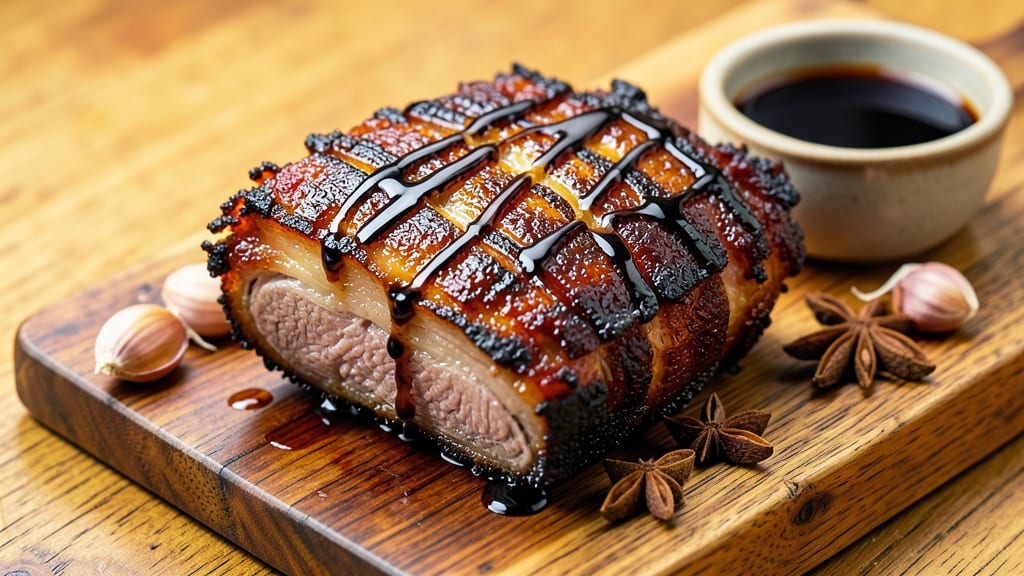
This black vinegar pork knuckle recipe transforms tough meat into melt-in-your-mouth perfection with a tangy-sour glaze that cuts through every bite. Growing up in Georgia, I learned how black vinegar’s bold acidity tenderizes pork while building layers of caramelized depth—no shortcuts, just time and patience.
The key? A long marinade followed by slow braising until the meat falls apart, leaving you with a dish that tastes like a Sunday supper every time.
What sets this recipe apart is the balance of flavors: the vinegar’s sharp tang mellows into sweetness as it caramelizes, while star anise and cinnamon add warmth that lingers.
I use a heritage pork knuckle—rich in collagen—for that signature fall-apart texture, and the glaze thickens into a sticky-sweet sauce that clings to every bite. This isn’t just a recipe; it’s a technique that rewards attention to detail, and the results speak for themselves.
The final dish delivers restaurant-quality pork knuckle with crispy edges and tender, juicy meat that practically dissolves on your tongue. The glaze is sticky enough to coat each bite but balanced with just enough sweetness to complement the vinegar’s bite.
Serve it over steamed rice or with pickled vegetables to cut through the richness—every component comes together for a meal that feels both comforting and impressive.
This method scales beautifully for gatherings, and leftovers reheat even better the next day. The secret lies in the slow cook—no rush, just time working its magic.
Whether you’re feeding a crowd or treating yourself to a special meal, this recipe delivers the kind of pork dish that becomes a family tradition. Let’s get started on creating something truly memorable.
Ingredients for black vinegar pork knuckle
The backbone of this restaurant-quality pork knuckle: bold flavors and heritage ingredients.
| Ingredient | Amount | Notes |
|---|---|---|
| Heritage Pork Knuckle 🥩 | 3 lb | Bone-in, skin-on preferred |
| Black Vinegar 🍶 | 1 cup | Authentic Chinese black vinegar |
| Brown Sugar 🍚 | ¾ cup | Packed, light or dark |
| Soy Sauce 🍶 | ½ cup | High-quality, dark variety |
| Garlic Cloves 🧄 | 8 cloves | Minced, fresh preferred |
| Star Anise Pods 🌿 | 2 whole | Crushed lightly for aroma |
| Cinnamon Sticks 🌿 | 2 whole | 2-inch pieces, broken |
| Dried Ginger 🌿 | 1 tbsp | Ground, aromatic variety |
| Sesame Oil 🫒 | 1 tbsp | Toasted, for aroma |
| Water 💧 | 1 cup | Filtered preferred |
| Kosher Salt 🧂 | 1 ½ tbsp | Diamond Crystal preferred |
| Black Peppercorns 🌶️ | 1 tsp | Freshly cracked |
| Honey 🍯 | 2 tbsp | Wildflower preferred |
| Cornstarch 🌾 | 1 tbsp | For glaze thickening |
The pork knuckle makes all the difference—heritage breeds like Duroc or Berkshire deliver that signature melt-in-your-mouth texture. Most butchers carry them, but if you're in a pinch, a 2-3 lb bone-in pork shoulder works too (just adjust cooking time). For black vinegar, Asian markets have the best selection—look for bottles labeled 'Chinese black vinegar' (not balsamic vinegar). The brown sugar should be packed; don't scoop it loosely. Star anise and cinnamon? Penzeys or bulk spice sections at Whole Foods are my go-tos—they stay potent longer. Fresh ginger is ideal, but dried works in a bind (just use half the amount).
No black vinegar? Balsamic vinegar is a decent substitute, though it won't have the same deep umami. Running low on soy sauce? Coconut aminos add a similar depth, though the color will differ slightly. The honey balances the acidity—if you're vegan, maple syrup works beautifully. For a quicker glaze, skip the cornstarch and reduce the vinegar mixture longer. The sesame oil is non-negotiable for aroma, but if you're avoiding it, a pinch of toasted sesame seeds at the end adds that nutty touch. Fresh garlic is a must here—jarred garlic just doesn't cut it.
This dish tastes even better the next day, so double the recipe if you're feeding a crowd. Store leftovers in the fridge for up to 5 days, covered tightly to preserve moisture. For longer storage, freeze portions in airtight containers for up to 3 months. Reheat gently in a skillet with a splash of water to restore moisture. The glaze thickens as it cools, so if it seems too thin when hot, let it sit 10 minutes before serving.
Why You'll Love This Recipe
- One-Pot Magic: That’s right—just one pot, one lid, and 30 minutes of hands-off time. The black vinegar and soy sauce do most of the work while you chop garlic (seriously, that’s the hardest part).
- Sweet-Savory Balance: Brown sugar caramelizes into the pork knuckle, cutting through the tangy black vinegar for a flavor that’s ridiculously addictive—like a cross between sticky BBQ and umami bomb.
- Budget Meal for Crowds: Heritage pork knuckle is affordable, and the ingredients won’t break the bank. Feed six people for under $20, and you’ll have enough for lunches, potlucks, or a lazy Sunday brunch. (Yes, even on a Tuesday night.)
Step-by-step instructions for black vinegar pork knuckle
Master this method and you'll achieve tender, fall-off-the-bone pork knuckle with a glossy black vinegar glaze.
Prepare the Pork Knuckle for Maximum Flavor
Pat the 3 lb heritage pork knuckle completely dry with paper towels—this ensures a better crust. Place it skin-side down in a roasting pan and score the fat cap in a crosshatch pattern with a sharp knife. This helps render the fat more evenly and creates pockets for the marinade to penetrate.
In a small bowl, combine 1.5 tbsp kosher salt, 1 tsp freshly cracked black peppercorns, 1 tbsp dried ginger, 8 cloves minced garlic, and 2 tbsp honey. Rub this mixture all over the pork knuckle, including inside the cavity. Let it sit at room temperature for 30 minutes while you prepare the marinade—this allows the flavors to begin penetrating the meat.
Create the Black Vinegar Marinade
In a saucepan, combine 1 cup black vinegar, 0.75 cup packed brown sugar, 0.5 cup soy sauce, 1 cup water, 2 whole star anise pods (lightly crushed), 2 whole cinnamon sticks (broken into 2-inch pieces), and 1 tbsp toasted sesame oil. Bring to a gentle simmer over medium heat and cook for 10 minutes to allow the spices to infuse.
Remove from heat and let cool slightly. Strain the marinade through a fine-mesh sieve to remove the spices, pressing gently on the solids to extract all the flavor. Pour the strained marinade over the pork knuckle in the roasting pan, ensuring it's fully submerged. Cover with plastic wrap and refrigerate for at least 4 hours (overnight is ideal) to tenderize the meat and deepen the flavors.
Slow-Braise for Tender Perfection
Preheat your oven to 300°F. Remove the pork knuckle from the refrigerator and let it sit at room temperature for 30 minutes before cooking. Place the roasting pan in the oven and braise for 3 hours, uncovered. This slow cooking time is crucial—it breaks down the collagen in the connective tissue, transforming the knuckle into tender, melt-in-your-mouth meat.
After 3 hours, check the internal temperature using a meat thermometer. It should read 195-200°F—this is when the pork becomes fork-tender. If it hasn't reached this temperature, continue cooking for another 30 minutes, adding ¼ cup water to the pan if the marinade begins to dry out.
Glaze and Finish for Crispy Texture
Once the pork knuckle is tender, remove it from the oven and transfer it to a cutting board. Strain the braising liquid into a saucepan and place it over medium heat. Whisk in 1 tbsp cornstarch and 2 tbsp honey, then simmer for 3-5 minutes until the glaze thickens to a glossy consistency. Taste and adjust seasoning with additional soy sauce or black vinegar if needed.
Brush the glaze generously over the pork knuckle, then return it to the oven (broiler on high) for 5-7 minutes to caramelize the glaze and crisp the skin. Watch closely—you want a deep, glossy sheen, not burnt spots. Let the knuckle rest for 10 minutes before carving to allow the juices to redistribute.
Serve with the Tangy-Sour Sauce
Slice the pork knuckle against the grain into ½-inch thick pieces. Serve immediately with the reduced glaze spooned over the top. The contrast of the sweet, tangy-sour glaze cutting through the rich, fatty pork is what makes this dish unforgettable. Pair with steamed jasmine rice and quick-pickled vegetables to balance the richness.
Real talk: The first time I made this, I rushed the braising time and ended up with tough meat. Don't make that mistake—patience is key. The longer you braise, the more tender the result. Trust the process, and you'll have a showstopping centerpiece for your table.
Pro Tips For Making Black Vinegar Pork Knuckle
- Sear the Knuckle Hard: The first 10 minutes in a screaming-hot pot are non-negotiable—get that crust on every side before adding liquid. I learned this the hard way when my first batch turned out soft and pale instead of deep, glossy, and caramelized. Use a heavy pot or wok and don’t skimp on the oil; heritage pork knuckle needs that initial shock to render its fat properly.
- Blanch the Garlic: Toss those garlic cloves in boiling water for 30 seconds first—just enough to soften them without turning to mush. This ensures they infuse the sauce smoothly instead of clinging stubbornly to the knuckle or burning at the bottom. (Yes, even if you’re impatient like me, resist the urge to skip this.)
- Balance the Vinegar: Black vinegar’s tang can overpower if you’re not careful—start with 2 tablespoons per pound of pork, then taste the sauce before adding it to the pot. If it’s too sharp, hit it with a pinch of brown sugar or a splash of soy sauce to round it out. I used to dump in the whole bottle and wondered why my dish tasted like a balsamic vinegar experiment gone wrong.
- Simmer Low and Slow: After the initial sear and sauce build, drop the heat to a bare simmer—you’re looking for tiny bubbles, not rolling action. Cover the pot loosely and let it cook for 2.5–3 hours, checking occasionally to add water if the sauce reduces too much. I was skeptical until I tried it: the collagen breaks down just right, and the meat falls off the bone without drying out.
Best sauces and condiments for these flavors
Black Vinegar Glaze
The star of this dish is the black vinegar glaze, a complex balance of sweet, tangy, and umami flavors.
I start by simmering 1 cup black vinegar, ½ cup soy sauce, and ¾ cup brown sugar with 2 star anise pods and 2 cinnamon sticks for 10 minutes to extract their aromatic oils. The result is a deep, molasses-like reduction that clings beautifully to the pork.
For extra richness, I finish with 1 tbsp cornstarch and 2 tbsp honey to thicken it into a glossy, sticky sauce. 🍶
This glaze isn't just about flavor—it's about texture too. The acidity from the vinegar tenderizes the meat while caramelizing into a deep mahogany color that adds visual appeal. For a quicker version, reduce the vinegar mixture longer (up to 20 minutes) to intensify the flavors without cornstarch.
Trust me, the longer you reduce, the more complex the taste becomes.
Spiced Soy Reduction
For a deeper flavor profile, I often enhance the glaze with a spiced soy reduction. After braising, I strain the cooking liquid and reduce it further with 1 tsp grated fresh ginger, 1 crushed red pepper flake, and 1 tsp toasted sesame oil.
This adds a layered heat and earthiness that complements the pork's richness. The key is to simmer it until it coats the back of a spoon—this ensures it'll cling perfectly to each bite.
This variation works especially well if you're serving the pork knuckle with steamed rice or noodles, as the reduction's stickiness helps bind everything together. I like to drizzle it generously over the sliced pork before serving, letting guests spoon extra sauce onto their plates.
The contrast of the sweet-savory glaze against the fatty pork is what makes this dish unforgettable.
Pickled Vegetable Pairing
To balance the richness of the pork, I always serve it with quick-pickled vegetables—thinly sliced daikon radish, carrots, and cucumber in a rice vinegar, sugar, and sesame seed brine. The bright acidity cuts through the fat, cleansing the palate between bites.
For extra crunch, I add thinly sliced scallions and toasted sesame seeds right before serving. This simple side transforms the meal into a full sensory experience.
Pro tip: Make the pickles 1-2 days ahead so the flavors meld together. Store them in the fridge in their brine, and they'll keep for up to 5 days.
The longer they sit, the more flavorful they become—perfect for meal prep. I often double the batch because they disappear fast once the pork is on the table.
Sesame-Ginger Dipping Sauce
For an interactive element, I serve a sesame-ginger dipping sauce on the side. Blend ¼ cup toasted sesame oil, 2 tbsp soy sauce, 1 tbsp honey, 1 tbsp grated fresh ginger, 1 clove garlic, and 1 tbsp rice vinegar until smooth.
This sauce adds a nutty, spicy kick that pairs perfectly with the pork's tenderness. It's also great for dipping steamed rice or freshly baked buns if you're serving them alongside.
This sauce is incredibly versatile—use it to moisten dry rice, drizzle over noodles, or even toss with quick-pickled veggies for extra flavor. I like to make a small batch (about ½ cup) so it doesn't overpower the main dish.
The sesame oil adds a luxurious finish, so don't skip it—it's what elevates this sauce from good to extraordinary.
Nutrition facts
Frequently asked questions
What makes black vinegar different from regular vinegar in this recipe?
Black vinegar has a deeper, molasses-like flavor with complex umami notes that regular vinegar can't match. The dark color comes from aged rice wine fermented with bacteria and yeast, creating a rich, slightly smoky taste that pairs perfectly with pork. For this dish, it's essential—it tenderizes the meat while adding layers of sweet-sour depth that regular vinegar simply can't replicate.
Can I use a pork shoulder instead of a knuckle?
Yes, but you'll need to adjust cooking time. A 2-3 lb bone-in pork shoulder works well, but it may take 4-5 hours at 300°F to reach the same tenderness. The knuckle's collagen-rich bone gives it that signature melt-in-your-mouth texture, so if you're using shoulder, monitor the internal temp closely—it should hit 195-200°F for perfect results.
How do I know when the pork is fully tender?
Use a meat thermometer to check the internal temperature—it should read 195-200°F. The meat will also pull away from the bone easily, and a fork should slide in and out with minimal resistance. If you're unsure, let it cook another 30 minutes—pork knuckle only gets more tender with time, never tougher.
What's the best way to reheat leftovers?
Reheat in a skillet over medium-low heat with a splash of water or broth to restore moisture. Cover the pan to trap steam and prevent drying. For oven reheating, wrap the pork tightly in foil and bake at 300°F for 20-30 minutes. Never microwave—it makes the meat rubbery. Leftovers keep well for 5 days in the fridge or 3 months frozen.
Can I make this recipe in a slow cooker?
Follow the same marinade steps, then place the pork in the slow cooker with the marinade and cook on low for 8-10 hours or high for 5-6 hours. The key is patience—the longer it cooks, the more tender the meat becomes. For extra flavor, add ½ cup water halfway through if the liquid reduces too much.