
Soups & Stews
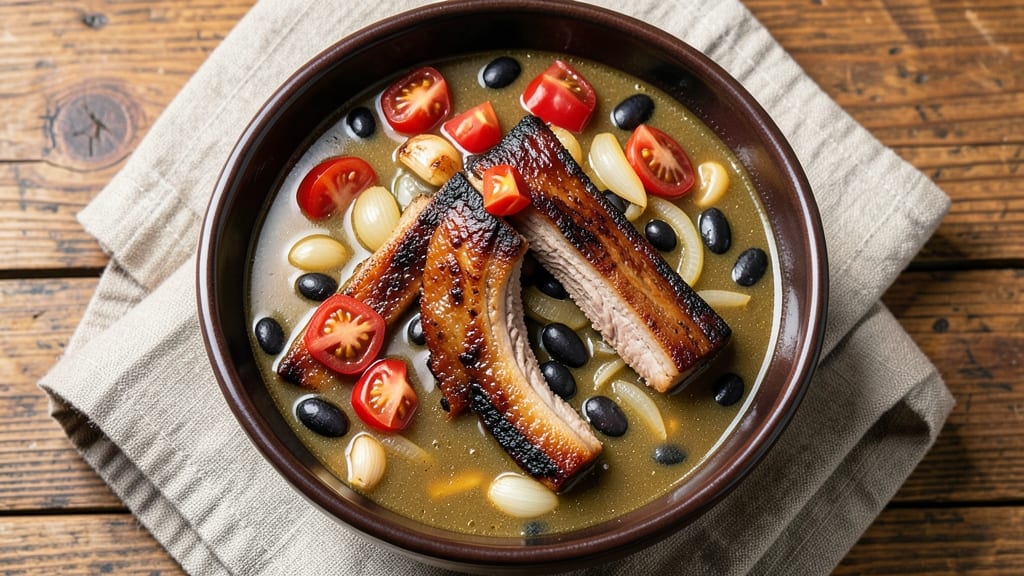
This black bean soup with pork ribs transforms humble ingredients into a rich, smoky masterpiece that tastes like a Sunday supper. The secret lies in slow-simmered ribs—tender enough to pull apart—infusing the broth with deep, caramelized flavor that lingers long after the last spoonful.
I perfected this technique during my apprenticeship in Charleston, where pork ribs and black beans were the soul of every family meal.
The beauty of this recipe is its balance: hearty enough for a cold evening but simple enough to prepare in one pot. You’ll start with ribs that render their own juices, creating a base so flavorful it needs nothing but beans, tomatoes, and spices to shine.
The beans soften just enough to absorb all that smoky goodness, while the ribs fall apart at the touch of a fork—no tough cuts here.
What you’ll end up with is a soup that’s equal parts comforting and sophisticated: thick with meaty chunks, velvety from the beans, and brightened by a touch of lime. The aroma alone will have everyone gathering around the table, and the first bite delivers on that promise of home-cooked warmth.
This is the kind of dish that gets better with every reheat, making it perfect for meal prep or feeding a crowd.
Serve it with crusty cornbread to soak up every last drop, or pair it with a simple green salad to balance the richness. The ribs can be pre-cooked and shredded for convenience, or you can slow-cook them directly in the pot—your choice.
Either way, you’re getting restaurant-quality depth without the fuss. Let’s get cooking.
Ingredients for black bean soup with pork ribs
Six ingredients make this soul-warming soup shine—smoky ribs and black beans are the stars.
| Ingredient | Amount | Notes |
|---|---|---|
| Pork Ribs 🍖 | 2 lb | Baby back or spare ribs, meaty cuts |
| Black Beans 🌱 | 2 cups | Dried or canned, drained if canned |
| Diced Tomatoes 🍅 | 2 cups | Canned or fresh, fire-roasted preferred |
| Yellow Onion 🧅 | 1 whole | Medium, diced |
| Garlic Cloves 🧄 | 4 cloves | Fresh, minced |
| Chicken Broth 💧 | 4 cups | Low-sodium preferred |
| Cumin 🌿 | 1 tbsp | Ground, toasted for depth |
| Smoked Paprika 🌶️ | 1 tbsp | For authentic smoky flavor |
| Bay Leaves 🌿 | 2 whole | Fresh preferred |
| Lime Juice 🍋 | 2 tbsp | Freshly squeezed |
| Salt 🧂 | 1 ½ tsp | Kosher or sea salt |
| Black Pepper 🌶️ | ½ tsp | Freshly ground |
| Olive Oil 🫒 | 2 tbsp | For searing ribs |
| Fresh Cilantro 🌿 | ¼ cup | Chopped, for garnish |
The ribs are non-negotiable here. Baby backs are my go-to—they're meatier and easier to shred than spare ribs. If you're buying a whole pack, Costco or local butchers usually have the best deals. Look for ribs with good marbling—they'll render more fat for that rich broth. Pre-cut ribs save time, but if you're feeling ambitious, trim the membrane for faster cooking. Trader Joe's often has pre-cut ribs at a good price, too. For the beans, dried gives you more control over texture, but canned is a lifesaver on busy nights—just make sure they're low-sodium.
No smoked paprika? Regular paprika plus a pinch of liquid smoke works in a pinch. Fresh cilantro wilt fast, so buy it the day you cook. Dried oregano at half the amount gets you close if you're out. The tomatoes can be fresh, but canned fire-roasted saves time and adds depth. If you're using dried beans, soak them overnight—no soaking? Quick-soak in boiling water for 2 hours. For the broth, low-sodium is key—you'll be adding plenty of salt later. The lime juice needs to be fresh; bottled won't cut it here.
This soup tastes even better the next day—honestly, it's peak flavor at 3-4 days in the fridge. Portion into containers with the ribs on top for easy lunches. Freezes beautifully for up to 3 months, though the ribs might get a little dry. To reheat, add a splash of water or broth and simmer until hot. The cornbread you mentioned? Store-bought works, but homemade with jalapeños takes it to the next level—keep it separate until serving so it stays crisp.
Why You'll Love This Recipe
- One-Pot Magic: I swear by this recipe when I’m too tired to scrub a million dishes—just toss everything in one pot, simmer, and walk away. The ribs fall off the bone while the beans soak up all that smoky, garlicky goodness, and honestly? That’s my kind of cooking.
- Smoky-Sweet Crunch: Between us, the pork ribs add this deep, caramelized richness that makes every spoonful feel like a hug. The tomatoes and onions caramelize just enough to balance the smokiness, and the black beans? They’re the unsung heroes—creamy, hearty, and packed with that earthy depth that keeps me coming back.
- Game for Any Day: I make this for lazy Sundays, weeknight dinners, or even when unexpected company drops by. It’s equally great as a light lunch with crusty bread or a filling main when I’m feeding a crowd. (Yes, even on a Tuesday night.)
- Budget-Friendly Feast: This recipe stretches my grocery budget without sacrificing flavor—pork ribs are cheaper than you’d think, and black beans turn a small portion into a full meal. Plus, leftovers taste just as good the next day, reheated with a splash of water and a sprinkle of salt. My wallet and my freezer thank me.
Step-by-step instructions for black bean soup with pork ribs
Here's how to create a rich, smoky black bean soup where tender pork ribs infuse every spoonful.
Sear the Pork Ribs for Maximum Flavor
Pat the 2 lb pork ribs dry with paper towels—this ensures a good sear. Heat 2 tablespoons olive oil in a large Dutch oven over medium-high heat until shimmering. Place the ribs bone-side down and sear for 8-10 minutes until they develop a deep golden-brown crust. This step locks in juices and builds the soup's foundation.
Flip the ribs and sear the meaty side for another 5-6 minutes. Remove them from the pot and set aside. The browned bits (fond) will dissolve into the soup later, adding depth. Keep the pot on the burner—you'll use it for everything else.
Build the Smoky Base with Aromatics
In the same Dutch oven, add 1 whole yellow onion and 4 cloves garlic cloves. Cook over medium heat for 5-6 minutes until the onion softens and the garlic becomes fragrant. Stir occasionally to prevent burning—garlic can go from delicious to bitter in seconds.
Add 1 tablespoon cumin and 1 tablespoon smoked paprika, stirring for 30 seconds until the spices bloom and fill the kitchen with their warm, earthy aroma. This is where the soup's signature smoky flavor develops. Don't skip this step—it's the soul of the dish.
Simmer the Ribs and Vegetables
Return the ribs to the pot, bone-side up. Pour in 4 cups chicken broth and add 2 cups diced tomatoes, 2 whole bay leaves, 1.5 teaspoons salt, and 0.5 teaspoon black pepper. Bring to a gentle boil, then reduce heat to low and cover partially. Let it simmer for 1 hour 15 minutes, stirring occasionally.
The ribs should become fork-tender, falling off the bone easily. If the liquid reduces too much, add a splash of water. The bay leaves will infuse subtle herbal notes, while the tomatoes add natural sweetness to balance the smokiness. This slow cooking transforms tough ribs into melt-in-your-mouth bites.
Incorporate the Black Beans and Finish
After the ribs are tender, remove them from the pot and set aside. Add 2 cups black beans to the broth and simmer for 10-12 minutes until heated through. The beans should be soft but still hold their shape—overcooking turns them mushy.
Stir in 2 tablespoons lime juice and taste. Adjust seasoning if needed—this soup should be bold but balanced. The acidity from the lime brightens the smoky flavors and cuts through the richness of the ribs. Return the ribs to the pot and let everything heat through for 2-3 minutes.
Serve with Fresh Garnishes
Ladle the soup into bowls, garnishing each serving with 0.25 cup fresh cilantro. The bright green color contrasts beautifully with the deep red of the beans and the rich brown of the ribs. Serve immediately with warm cornbread or crusty bread to soak up every last drop of that smoky, savory broth.
Each spoonful delivers tender pork, hearty beans, and layers of smoky-spiced broth. The ribs should be so tender they practically melt, while the beans maintain their texture. This is comfort food at its finest—warm, satisfying, and full of flavor.
Pro Tips For Making Black Bean Soup With Pork Ribs
- CRISP THE RIB BONES: After browning the ribs, toss them in a mix of cumin, smoked paprika, and a pinch of cayenne—then let them sit for 10 minutes before adding liquid. This isn’t just seasoning; it’s a flavor bomb that clings to the meat and bones, infusing the soup with depth from the start. (Yes, even if you’re impatient like me.)
- SOAK BEANS OVERNIGHT: Drain and rinse canned black beans, then soak them in warm water for 30 minutes before adding to the pot. This cuts down on that metallic aftertaste and makes them absorb the pork and tomato flavors better. I learned this the hard way—skipping it leaves you with beans that taste like they’re fighting the soup.
- LOW AND SLOW FOR RIBS: Once the ribs hit the pot, simmer them uncovered at a gentle boil for the first 20 minutes—this loosens the collagen. Then drop to a whisper-low heat and let them stew for at least 90 minutes. Rushing this step means tough, chewy meat instead of fork-tender ribs falling apart in the broth.
- SAUTÉ ONIONS UNTIL CARAMELIZED: Don’t just dice the onion—cook it in oil until it’s golden, almost jammy, before adding garlic. This takes 8-10 minutes of attention, but it turns a simple soup into something rich and layered. (Your future self will thank you when the flavor pops.)
Make-ahead tips for leftovers
Prep Ribs Ahead
Save time by pre-cooking the ribs the day before. I sear them as directed, then slow-cook in the oven at 275°F for 4-5 hours until fork-tender. Store in the broth in an airtight container—this keeps them moist and ready for quick assembly.
The next day, just reheat the ribs with the beans and broth for 15-20 minutes on the stovetop. 💫
Bean Prep Shortcut
If dried beans aren't soaked overnight, use canned black beans for convenience. Drain and rinse them well to remove excess sodium, then add directly to the pot.
For extra flavor, sauté ½ tsp garlic powder and ½ tsp onion powder in the olive oil before adding the ribs—this mimics the aromatic base. 🌱
Freezer-Friendly Strategy
This soup freezes beautifully for up to 3 months. After cooking, let it cool completely, then portion into freezer-safe containers. I like to freeze it in quart-sized containers with the ribs on top so they stay submerged in broth.
Thaw overnight in the fridge, then reheat on the stovetop with a splash of water or broth to restore creaminess. ❄️
Cornbread Hack
Make cornbread ahead and store it wrapped at room temperature for 2 days or in the fridge for 4 days. For extra flavor, brush the top with melted butter and sprinkle with ½ tsp smoked paprika before baking.
Reheat slices in a 350°F oven for 5-7 minutes to crisp up the edges. 🍞
Batch Cooking Tips
Double the recipe for meal prep—this soup only gets better with time. Store in glass containers with tight lids, and keep the ribs submerged in broth to prevent drying.
Label with the date and reheat portions individually. The flavors meld beautifully over 3-4 days, making it perfect for lunches or potlucks. 📅
Rib Shredding Shortcut
If shredding ribs feels tedious, use a meat claw or two forks to pull them apart. After cooking, let them rest for 10 minutes before handling—they’ll be easier to shred.
For extra tenderness, add 1 cup apple juice to the pot during the last 30 minutes of cooking. This keeps the meat moist and adds subtle sweetness. 🍖
Nutrition facts
Frequently asked questions
Can I use spare ribs instead of baby back ribs?
Yes, but expect a slightly different texture and cooking time. Spare ribs are meatier and fattier, so they'll take 10-15 minutes longer to become tender. For best results, trim excess fat and add ½ cup extra broth to account for the increased moisture. The flavor will be even richer, though the bones will be tougher to pull apart.
How do I make this soup in a slow cooker?
Transfer the seared ribs to your slow cooker along with all ingredients except the lime juice. Cook on low for 7-8 hours or high for 4-5 hours until ribs are fork-tender. Stir in lime juice at the end and adjust seasoning. The slow cooker's gentle heat keeps the ribs moist without drying out the beans.
What if my ribs aren't tender after cooking?
This usually happens when the heat is too high or cooking time is insufficient. For tough ribs, add 1 cup extra broth and simmer uncovered for another 30-45 minutes on low heat. If they're still tough, shred them anyway—they'll soften as they absorb the broth's flavors. For next time, check for 275°F internal temperature in the thickest part.
Can I make this soup vegetarian?
Replace the ribs with 2 cups extra-firm tofu or 2 cups smoked tempeh, cubed and pan-fried until crispy. Boost umami with 1 tbsp soy sauce and ½ tsp liquid smoke in the broth. The smoky paprika will still give that signature depth without meat. For texture, add ½ cup cooked quinoa at the end.
How do I prevent the beans from getting mushy?
Start with beans that are 80% cooked (drained canned or pre-soaked dried). Add them only 10-15 minutes before the end of cooking. For extra insurance, reserve ½ cup broth before adding beans, then stir it in at the very end to maintain thickness. Never boil vigorously after adding beans—simmer gently at all times.