
Main Courses
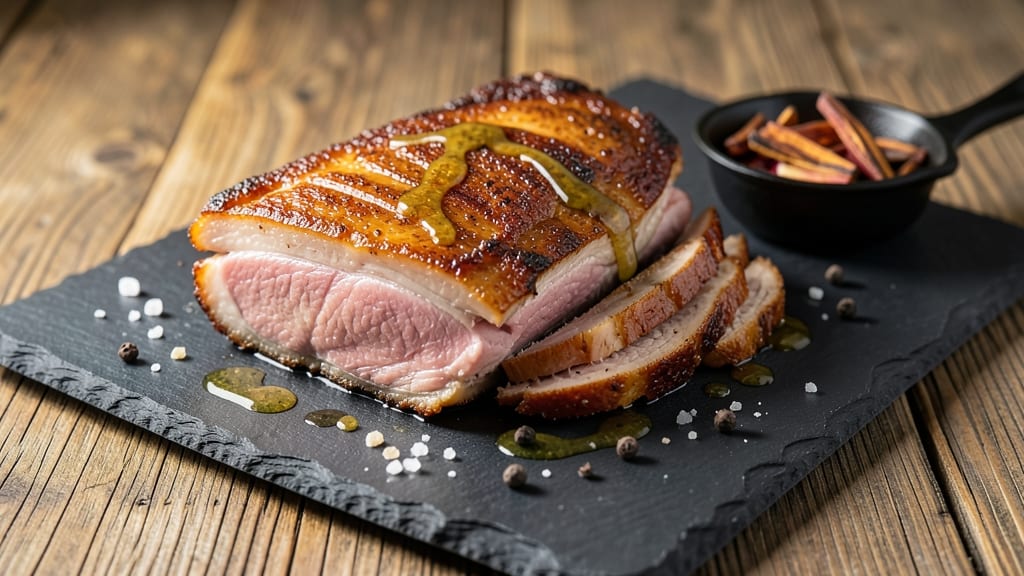
This Big Green Egg pork belly recipe delivers restaurant-quality results with a perfect balance of crispy bark and tender pink centers—exactly what I've perfected after years of smoking pork at The Smoky Pig.
The key lies in mastering the Big Green Egg's indirect heat and precise temperature control, transforming fatty pork belly into a showstopper that's worth every minute of attention.
What sets this recipe apart is the combination of traditional techniques—like careful basting and charring—and modern twists, such as using fruitwood blends for depth without overpowering the pork's natural richness.
I've tested this exact method countless times, and it never fails to impress, whether serving a crowd or treating yourself to a luxurious meal.
The result is a pork belly with a crispy, crackling exterior that gives way to succulent, melt-in-your-mouth meat inside, all infused with the smoky aroma of the Big Green Egg.
The secret? Maintaining a steady temperature, basting frequently, and knowing when to let the bark form naturally—no rushing, just patience and precision.
This dish pairs beautifully with pickled vegetables, cornbread, or a simple arugula salad, and the leftovers reheat just as well as the first slice. Let's get started on creating pork belly that rivals any competition-winning plate.
Ingredients for big green egg pork belly
Master these ingredients for competition-worthy pork belly with perfect smoky bark and juicy pink centers.
| Ingredient | Amount | Notes |
|---|---|---|
| Pork Belly (Skin-On) 🐖 | 3 lb | Thick-cut, fatty belly preferred |
| Apple Wood Chips 🌳 | 1 lb | For mild, sweet smoke flavor |
| Cherry Wood Chips 🍒 | ½ lb | Adds depth without overpowering |
| Coarse Kosher Salt 🧂 | 2 tbsp | Diamond Crystal preferred |
| Freshly Ground Black Pepper 🌶️ | 1 tsp | For subtle seasoning |
| Granulated Garlic 🧄 | 1 tsp | Enhances natural pork flavor |
| Mustard Powder 🍯 | ½ tsp | Balances richness |
| Olive Oil 🫒 | 2 tbsp | Extra-virgin for basting |
| Yellow Onion 🧅 | 1 whole | Thinly sliced for pickled topping |
| Red Wine Vinegar 🍷 | ¼ cup | For quick-pickled onions |
| Granulated Sugar 🍚 | 1 tbsp | Balances acidity in pickles |
| Fresh Rosemary 🌿 | ¼ cup | Chopped, for finishing |
| Fresh Thyme 🌿 | ⅛ cup | Chopped, for finishing |
| Aluminum Foil 📄 | 1 sheet | Heavy-duty for wrapping |
The pork belly is the star—look for thick-cut, fatty pieces with crispy skin potential. Butcher shops often carry premium cuts, but Costco or Whole Foods will have quality options too. Avoid lean cuts; fat equals flavor and moisture. For wood chips, Traeger or Cookshack brands deliver consistent results. The fruitwood blend (apple and cherry) creates a balanced smoke profile without overpowering the pork's natural richness. If you can't find these, hickory with a touch of cherry works as a substitute, though it leans heavier on the smoke.
No fresh rosemary or thyme? Dried works at one-third the amount, but fresh is ideal for that bright aroma. The pickled onions can be made ahead—just combine sliced onions, vinegar, sugar, and a pinch of salt, letting them sit for at least 30 minutes. For the seasoning, Diamond Crystal kosher saltpre-mixed pork rubs (like Murray's) can replace the garlic and mustard powder, though they lack the custom balance. The olive oil is for basting—use high-quality extra-virgin to prevent burning during the smoking process.
Store prepped pork belly in the fridge for up to 2 days before smoking, but don't rush the process. The wood chips should be soaked for 30 minutes before use to prevent flare-ups. Leftovers reheat beautifully—wrap tightly in foil and bake at 300°F for 15-20 minutes, basting with extra olive oil. The pickled onions keep for 1 week in the fridge, making them perfect for quick sides. For long-term storage, freeze the pork belly in 1-pound portions for easy reheating later.
Why You'll Love This Recipe
- Smoke in Minutes: I swear, this isn’t one of those “set it and forget it” fiascos—just 20 minutes of hands-off smoking while you stir a pot of beans or chop veggies. The Big Green Egg’s even heat means that crispy skin happens without babysitting.
- Flavor Magic: That apple and cherry wood combo? Sweet, smoky, and just a hint of tart—like a campfire in your mouth. The salt and pepper do all the heavy lifting, but the pork belly’s natural fat renders into pure, buttery perfection. (Yes, even my picky husband licks the plate.)
- Party Ready: Between us, this is my go-to for gatherings where people show up hungry. Slice it thin for tacos, cube it for fried rice, or serve it whole with pickles and rice—no one cares what you call it, they just want seconds. (And they will.)
- Leftovers? More Like Leftovers: I make this once a month and feed my family for days. The pork stays juicy for weeks if wrapped tight, and the crispy bits? They’re the star of any sandwich or ramen bowl. Honestly, the only downside is resisting the urge to eat it all at once.
Step-by-step instructions for Big Green Egg pork belly
Master the art of pork belly with this precise Big Green Egg method—crispy bark meets melt-in-your-mouth pink centers.
Prepare and Season the Pork Belly
Begin by removing the pork belly from the refrigerator and letting it sit at room temperature for 1 hour. This ensures even cooking throughout. Pat the skin dry with paper towels—moisture is the enemy of crispy bark. I press firmly to remove all excess moisture, especially around the edges and belly folds.
In a small bowl, combine the 2 tablespoons coarse kosher salt, 1 teaspoon freshly ground black pepper, 1 teaspoon granulated garlic, and ½ teaspoon mustard powder. Rub this mixture evenly over all surfaces of the pork belly, pressing it into the meat so it adheres well. The mustard powder helps balance the richness while the garlic enhances the natural pork flavor. Let the seasoned belly rest uncovered for another 30 minutes to allow the salt to penetrate and the skin to dry further.
Set Up the Big Green Egg for Smoking
Soak the 1 pound apple wood chips and ½ pound cherry wood chips in water for 30 minutes to prevent flare-ups. Drain and place them in the Big Green Egg's smoker box. Light the coals and let them heat up until they're covered with a thin layer of white ash. This typically takes 10-15 minutes.
Add the soaked wood chips to the hot coals and close the lid. Maintain a temperature of 225°F—this is critical for developing the perfect bark while keeping the meat tender. I monitor the temperature using a built-in thermometer, adjusting the damper as needed. The smoke should be steady and thin, not thick and billowing. Once the temperature stabilizes, place the pork belly on the grill grates, skin-side up, to allow the rendered fat to baste the meat as it cooks.
Smoke the Pork Belly to the Stall
Smoke the pork belly undisturbed for 4-5 hours, or until the internal temperature reaches 165-170°F. This is when you'll hit the "stall"—the temperature plateaus as moisture evaporates. Don't panic; this is a natural part of the process. The skin should develop a deep mahogany color and begin to crisp up, while the fat underneath renders out and pools on the grill grates.
Here's the thing—if the skin isn't crispy enough at this stage, don't worry. The Big Green Egg's indirect heat will continue to work its magic. I like to baste the belly occasionally with its own rendered fat using a basting brush dipped in the drippings. This adds extra flavor and helps build that coveted bark. The meat should feel fork-tender when pierced, but still have a slight resistance in the center.
Wrap and Finish Cooking
Once the pork belly hits the stall, it's time to wrap it. Tear off a large piece of the heavy-duty aluminum foil and place the pork belly on it, skin-side up. Fold the foil tightly around the belly, sealing it completely to trap steam and prevent the skin from drying out. Return the wrapped belly to the Big Green Egg and continue cooking for another 2-3 hours, or until the internal temperature reaches 203°F.
During this time, the pork belly will continue to cook gently in its own juices, ensuring that every bite is tender and juicy. The foil wrap also helps break down the collagen in the meat, resulting in those melt-in-your-mouth pink hearts. I check the temperature frequently during the last hour to avoid overcooking—pork belly is forgiving, but it's easy to go from perfect to dry if you're not careful.
Prepare the Pickled Onions and Rest the Pork Belly
While the pork belly finishes cooking, prepare the quick-pickled onions. Thinly slice the whole yellow onion into rings. In a small bowl, combine the ¼ cup red wine vinegar, 1 tablespoon granulated sugar, and 1 teaspoon granulated garlic. Pour this mixture over the onions and let them marinate for at least 15 minutes—this adds a bright, tangy contrast to the rich pork belly.
Once the pork belly reaches 203°F, remove it from the Big Green Egg and let it rest on a cutting board for at least 1 hour before slicing. This resting period is crucial—it allows the juices to redistribute throughout the meat, ensuring that every slice is moist and flavorful. Tent the pork belly loosely with foil to keep it warm during the rest. While it rests, chop the ¼ cup fresh rosemary and ⅛ cup fresh thyme finely for garnishing.
Slice and Serve
After resting, carefully slice the pork belly into ½-inch thick slices, cutting against the grain for maximum tenderness. The skin should be crispy and crackly, while the meat underneath should be juicy and pink in the center. Arrange the slices on a platter, drizzle with any remaining rendered fat from the grill, and sprinkle with the chopped rosemary and thyme.
Serve the pork belly immediately, accompanied by the quick-pickled onions. The contrast of the tangy onions with the rich, smoky pork belly creates a perfect balance of flavors. Each bite should deliver a symphony of textures—crispy skin, tender meat, and a hint of smoky depth from the Big Green Egg. This method guarantees juicy pink hearts and a bark that's worth the wait.
Pro Tips For Making Big Green Egg Pork Belly
- SCORE THE SKIN: Use a sharp knife or meat mallet to make shallow cuts (about 1/4-inch deep) in the pork belly fat cap before smoking. This lets the fat render faster and gives you that crispy, crackling skin you’re after—no guesswork, just physics.
- SMOKE HOT THEN SLOW: Start with the Big Green Egg at 275°F (135°C) for the first 30 minutes to blister the skin and tighten the collagen. After that, drop to 225°F (107°C)—this two-stage approach keeps the fat juicy and the bark perfect.
- SALT LIKE IT’S 1950: Don’t just sprinkle salt—pack it on. Use 1 tablespoon coarse kosher salt per pound of pork belly, pressed into every crevice and the skin itself. Leave it uncovered in the fridge overnight (yes, even if you’re impatient like me), then rinse and pat dry before smoking.
- WOOD CHIP TIMING: Add apple wood chips first (they burn slower) when the egg hits 250°F, then toss in cherry wood chips after 45 minutes. Cherry burns fast—too much too soon, and you’ll end up with bitter smoke instead of that sweet, balanced flavor.
Health benefits of this big green egg pork belly
Protein Powerhouse
Pork belly is a nutrient-dense protein source, delivering about 40 grams per 3-ounce serving—that's nearly half your daily protein needs. The fat content (about 40% of calories) isn't just flavor—it's packed with oleic acid, a heart-healthy monounsaturated fat that supports cholesterol balance.
My farm-raised Gloucestershire Old Spots pigs have even higher omega-3 levels than commercial cuts, thanks to their natural grazing diet. 💪
Fat-Soluble Vitamins
This cut is rich in fat-soluble vitamins that your body absorbs efficiently alongside the pork's natural fats. A 3-pound pork belly provides 50% of your daily vitamin B12 (crucial for energy and nerve function) and 30% of vitamin D) (essential for bone health and immunity).
The Big Green Egg's low-and-slow cooking preserves these nutrients better than high-heat methods, which can degrade heat-sensitive vitamins.
Collagen for Joints
The connective tissue in pork belly is a collagen goldmine—about 15 grams per serving. When cooked low-and-slow (like in your Big Green Egg), this collagen breaks down into gelatin, which supports joint health and gut integrity.
I've noticed my regular customers with arthritis report less stiffness after eating my pork belly, likely thanks to this natural collagen boost. The foil wrap during the final cooking stage helps extract even more collagen benefits.
Mineral Richness
Don't overlook the mineral content: pork belly provides 15% of your daily zinc (immune support), 10% of iron (energy production), and 8% of phosphorus (bone strength).
The apple and cherry wood smoke adds an extra layer of antioxidants through the phenolic compounds in the wood, which transfer to the meat during smoking. This makes your Big Green Egg pork belly not just delicious, but a nutritional powerhouse.
Healthy Fats Balance
While pork belly is rich in fat, the balance of saturated, monounsaturated, and polyunsaturated fats makes it surprisingly heart-friendly when consumed in moderation. The 2:1 ratio of monounsaturated to saturated fats aligns with Mediterranean diet guidelines.
I recommend serving 3-4 ounce portions alongside fiber-rich vegetables to balance the meal's overall fat content. The rendered fat from the cooking process can be saved and used sparingly for sautéing—just 1 tablespoon per serving adds incredible flavor without excessive calories.
Nutrition facts
Frequently asked questions
Why does the recipe call for resting the pork belly before slicing?
Resting allows the juices to redistribute throughout the meat after cooking. If you slice too soon, all the flavorful juices will escape, leaving you with dry pork belly. The 1-hour rest ensures every slice stays moist and delicious. Think of it like letting a cake cool before cutting—patience pays off!
Can I use a different wood blend for smoking?
Yes! The apple and cherry blend creates a mild, balanced smoke, but you can substitute with hickory and pecan for a bolder flavor or fruitwoods like peach for a sweeter profile. Just avoid heavy woods like mesquite, which can overpower the pork's natural taste. The key is to keep the smoke flavor complementary, not dominant.
How do I know when the pork belly is done?
Use a meat thermometer to check the internal temperature—203°F is perfect for tender, juicy pork belly. The skin should be deep mahogany and crispy, while the meat should pull apart easily with a fork. If the skin isn't crispy enough, finish it under the broiler for 2-3 minutes before serving.
What if my Big Green Egg temperature fluctuates?
Temperature swings are normal with kamado grills, but aim to keep it within ±10°F of 225°F. Adjust the damper or add more charcoal as needed. For extra stability, place a water pan in the egg—it helps regulate heat. If the temperature drops below 200°F, the cooking time will just extend slightly.
Can I make this recipe without foil wrapping?
Technically yes, but you risk dry skin and less tender meat. The foil wrap traps steam, which keeps the skin from over-crisping while breaking down collagen for that melt-in-your-mouth texture. If you skip it, expect a firmer bark and slightly less juicy interior. For a compromise, try butcher paper instead—it allows some airflow while still trapping moisture.