
Main Courses
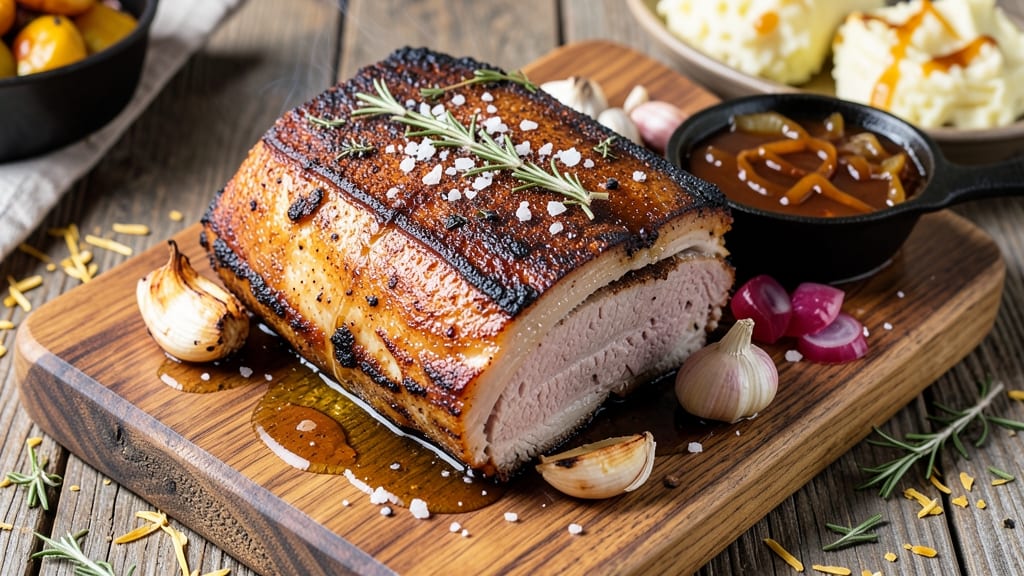
This best smoked pork shoulder recipe ever delivers restaurant-quality results without needing a smoker—just a well-seasoned oven and patience. I perfected it after years of testing, balancing crispy bark with melt-in-your-mouth tenderness.
The secret? A dry rub that develops deep flavor and a simple technique to keep the meat juicy through hours of cooking.
The process starts with a simple but powerful dry rub—smoked paprika, brown sugar, garlic powder, and salt—that creates that coveted bark while keeping the interior tender. You’ll cook it low and slow until it reaches 203°F, where the collagen breaks down into rich, shreddable meat.
No wrapping required, but I’ll show you how to handle it if you want extra insurance.
What you’ll end up with is a shoulder so tender it falls apart at the touch, with a crust that’s crisp enough to stand up to a fork.
The aroma alone will have your kitchen smelling like a BBQ joint, and the flavor—smoky, savory, and just sweet enough—will make this your new go-to for pulled pork sandwiches, tacos, or even a hearty bowl of ramen.
Best of all, this method works in an oven or even a slow cooker, making it accessible whether you’re a backyard pitmaster or just starting out. Let’s get started with a recipe that’s foolproof, flavorful, and foolproof—no smoker required.
Ingredients for best smoked pork shoulder recipe ever
Six pounds of pork shoulder and nine simple spices transform into restaurant-worthy pulled pork.
| Ingredient | Amount | Notes |
|---|---|---|
| Pork Shoulder (Bone-In) 🐖 | 6 lb | Boneless works too, but bone-in adds flavor |
| Smoked Paprika 🌶️ | ¼ cup | High quality for authentic smoky flavor |
| Brown Sugar 🍚 | ¼ cup | Light or dark, packed measurement |
| Garlic Powder 🧄 | 2 tbsp | Freshly ground preferred |
| Kosher Salt 🧂 | 1 ½ tbsp | Diamond Crystal preferred |
| Black Pepper 🌶️ | 1 tsp | Freshly cracked for best flavor |
| Onion Powder 🧅 | 1 tbsp | For depth of flavor |
| Mustard Powder 🌶️ | 1 tsp | Yellow or Dijon, for tang |
| Apple Cider Vinegar 🍎 | 1 tbsp | For moisture and tang |
| Yellow Mustard 🍯 | 2 tbsp | For sauce, optional but recommended |
| Butter 🧈 | 2 tbsp | Unsalted, for sauce richness |
| Fresh Garlic Cloves 🧄 | 6 cloves | Minced for sauce, optional |
| Beef Broth 🍲 | ½ cup | Low-sodium preferred |
| Water 💧 | ½ cup | For moisture during cooking |
The pork shoulder is the star—look for a piece with good marbling at Costco or your local butcher. Bone-in adds flavor, but boneless works too. The dry rub is where the magic happens: smoked paprika gives that authentic BBQ taste, while brown sugar helps create that coveted bark. Penzeys spices are my go-to for quality, but any good brand works. The key is to mix everything together well—use your hands to coat the pork evenly. Trust me, the extra minute of rubbing makes all the difference.
No smoked paprika? Regular paprika plus a pinch of liquid smoke gets you close. Short on brown sugar? White sugar works in a pinch, but the color will be lighter. The apple cider vinegar is non-negotiable for moisture—substitute with red wine vinegar if needed. For the sauce, yellow mustard adds tang, but Dijon or even a splash of hot sauce works too. If you're feeling fancy, add a dash of Worcestershire sauce (check for vegetarian version if needed). The beef broth can be swapped for chicken broth, but it'll be slightly less rich.
This pork is a game-changer for meal prep—it reheats beautifully and tastes even better the next day. Store leftovers in the fridge for up to 5 days or freeze for 3 months. I always make extra because it disappears fast. For serving, keep it warm in a slow cooker with a splash of broth—it stays juicy and tender. The sauce? Make a double batch—it's perfect for slathered on sandwiches or drizzled over tacos.
Why You'll Love This Recipe
- Five-Ingredient Magic: This isn’t one of those recipes where you need a spice cabinet’s worth of stuff. Just salt, sugar, paprika, garlic powder—and a bone-in pork shoulder that practically cooks itself. Honestly, I’ve made it with my eyes closed (not recommended, but you get the idea).
- Crispy-Creamy Payoff: That smoky paprika and brown sugar crust? It’s the star. You get a crackling exterior that gives way to tender, melt-in-your-mouth meat—no dry, sad pork here. Between us, the first bite makes it worth the wait.
- Budget That Won’t Break You: A bone-in pork shoulder is cheaper than its boneless cousin, and this recipe stretches it further. Plus, the spices cost pennies, so you’re basically making restaurant-quality food for half the price. (Yes, even on a Tuesday night.)
Step-by-step instructions for perfect smoked pork shoulder
Here's the method that delivers legendary pork shoulder with crispy bark and melt-in-your-mouth tenderness—no smoker required!
Prep and Season the Pork Shoulder
Start by trimming any excess fat from the pork shoulder, leaving about ¼-inch thickness on the fat cap. This ensures proper bark formation while preventing grease fires. Pat the meat completely dry with paper towels—this is absolutely critical for bark development. Moisture creates steam instead of crispy crust.
In a large bowl, combine 0.25 cup smoked paprika, 0.25 cup brown sugar, 2 tbsp garlic powder, 1.5 tbsp kosher salt, 1 tsp black pepper, 1 tbsp onion powder, and 1 tsp mustard powder. Mix thoroughly, then rub this mixture all over the pork shoulder, pressing it into every crevice. The spices should stick to the meat rather than clump together. Let the seasoned pork rest uncovered in the refrigerator for at least 4 hours—this allows the spices to penetrate and the meat to dry out slightly for better bark.
Cook Low and Slow in the Oven
Preheat your oven to 275°F. Place the pork shoulder fat-side up on a wire rack set inside a roasting pan. This elevated position allows air to circulate around the meat, promoting even cooking and crispy bark. Add 1 tbsp apple cider vinegar and 0.5 cup beef broth to the bottom of the pan—this creates steam that keeps the meat moist during the long cook.
Cover the pork loosely with heavy-duty aluminum foil (don't seal it completely—you want some airflow). Place the pan in the oven and cook for 6 hours. This slow cooking method breaks down the connective tissue, transforming tough meat into tender, pull-apart perfection. After 6 hours, remove the foil and increase the oven temperature to 325°F to help develop that beautiful bark. Return the pork to the oven for another 1-2 hours, checking periodically.
Develop the Perfect Bark
You'll know the pork is ready for bark development when the internal temperature reaches 195°F (use a meat thermometer inserted into the thickest part of the meat, avoiding the bone). At this point, remove the pork from the oven and increase the temperature to 425°F. Place the pork back in the oven, fat-side up, and let it crisp for 20-30 minutes until the bark is deep mahogany color and crisp to the touch.
Here's the thing—don't be tempted to rush this step. The bark should be dark enough to make your mouth water but not burnt. If you're worried about drying out, you can tent it loosely with foil for the last 10 minutes of barking. The goal is that perfect balance of crispy exterior and juicy interior.
Rest and Shred with Confidence
Once the pork reaches 203°F internal temperature and has that gorgeous bark, remove it from the oven and transfer it to a cutting board. Tent it loosely with foil and let it rest for at least 1 hour. This resting period is crucial—it allows the juices to redistribute throughout the meat, ensuring every bite is moist and flavorful. If you can wait longer, do it. Pork continues to cook slightly during resting, and the texture improves dramatically.
After resting, use two forks or meat claws to shred the pork against the grain. The meat should pull apart easily with minimal effort. If it's still slightly tough, return it to a 250°F oven for 15-20 minutes with a splash of 0.5 cup water in the pan to finish cooking. For the sauce, combine 2 tbsp yellow mustard, 2 tbsp butter, and 6 cloves minced fresh garlic in a small saucepan. Warm over medium heat until melted and slightly thickened, then toss with the shredded pork.
Pro Tips For Making Best Smoked Pork Shoulder Recipe Ever
- CRANK THE SMOKE FIRST: The first hour at 250°F is where flavor builds—don’t skip the rush. I used to linger at 225°F, and the bark never got that deep, smoky punch. High heat for 60 minutes locks in moisture and sets up that crust before you slow it down.
- SALT THE NIGHT BEFORE: Kosher salt needs time to work its magic. Pat the pork dry, then rub it with 1.5 tablespoons per pound evening before smoking—it tenderizes the meat and keeps it from drying out. (Yes, even if you’re impatient like me.)
- STOP AT 195°F: The instant the probe hits 195°F, pull it. I learned this the hard way—pushing to 203°F turns that melt-in-your-mouth texture into sad, stringy disappointment. Let it rest 10 minutes before slicing, or you’ll lose all that juicy payoff.
- DON’T SKIP THE GARLIC POWDER: It’s not just flavor—it’s insurance. Sprinkle 2 tablespoons over the rub after the smoked paprika and brown sugar. The garlic powder clings better to the meat and prevents the sugar from burning too fast, especially on the edges. (I was skeptical until I tried it.)
Creative variations of these flavors
Carolina-Style BBQ
For a tangy twist, swap the mustard sauce for a classic vinegar-pepper sauce—mix ½ cup apple cider vinegar, 2 tbsp hot sauce, 1 tbsp honey, and 1 tsp black pepper.
Cook the pork shoulder with ½ cup chopped yellow onions and ½ cup chopped red bell peppers in the pan for the last 30 minutes of cooking. This method mimics traditional North Carolina BBQ, where vinegar and pepper are king. 🌶️
Cincinnati Chili
My hometown of Cincinnati loves its chili, so here’s how to adapt this recipe: After shredding the pork, mix it with 1 cup tomato sauce, ½ cup kidney beans, ½ cup spaghetti, and 1 tbsp chili powder.
Serve it over crushed crackers (like Ritz) instead of bread. The sweetness of the pork pairs perfectly with the tangy, spicy chili—just like the chili parlor classics I grew up with. 🍽️
Asian-Inspired Glaze
For a fusion twist, brush the pork with a honey-sriracha glaze made from ¼ cup honey, 2 tbsp sriracha, 1 tbsp soy sauce, and 1 tbsp rice vinegar during the final 30 minutes of cooking.
Add 1 tbsp grated fresh ginger and 2 cloves minced garlic to the glaze for depth. Garnish with sliced green onions and sesame seeds for a sweet, spicy kick that’s perfect over rice or noodles. 🌟
Breakfast Pork Shoulder
Turn your pork into a breakfast sensation by shredding it and mixing with 2 cups shredded cheddar cheese, ½ cup diced bell peppers, and ½ cup diced onions. Stuff into biscuit dough (like Pillsbury Grands) and bake at 375°F for 20 minutes until golden.
Top with a fried egg for a hearty breakfast casserole. This is a game-changer for lazy mornings—just like the pancakes I used to flip at age six! 🍳
Slow Cooker Adaptation
No oven? No problem! Place the seasoned pork shoulder in a 6-quart slow cooker, add 1 cup beef broth and 1 tbsp apple cider vinegar, then cook on LOW for 8-10 hours.
For bark, transfer to a baking sheet, broil for 5-10 minutes at the end, and finish with a sprinkle of smoked paprika. The slow cooker keeps it juicy, and the broil adds that crispy texture. Perfect for hands-off cooking! ⏰
Spicy Coffee Rub
For a bold, smoky kick, replace the dry rub with a coffee-spiced blend: mix ¼ cup finely ground coffee, ¼ cup smoked paprika, 2 tbsp brown sugar, 1 tbsp chili powder, and 1 tsp cayenne.
The coffee adds depth, while the cayenne brings heat. This rub is inspired by Southern BBQ traditions and works amazingly well with a bourbon glaze (reduce ½ cup bourbon with 2 tbsp brown sugar until syrupy). 🔥
Nutrition facts
Frequently asked questions
Why does the recipe call for resting the pork shoulder?
Resting is non-negotiable for juicy pork! When you cut into freshly cooked meat, all the juices rush to the surface. Letting it rest for at least 1 hour lets those juices redistribute, ensuring every bite stays moist and flavorful. The pork actually continues cooking slightly during resting, so don't skip this step even if it feels like waiting forever.
Can I use boneless pork shoulder instead of bone-in?
Boneless works perfectly—just be extra careful with the cooking time since it may finish slightly faster. Bone-in adds flavor and helps keep the meat moist, but the texture difference is minimal. For boneless, aim for 203°F internal temp and check it 15 minutes earlier than bone-in to avoid overcooking.
What if my bark isn't crispy enough?
No worries—this happens when the oven isn't hot enough or the meat wasn't dry. For next time, pat the pork extra dry and increase your final barking temp to 450°F for 15-20 minutes. Pro tip: Use a wire rack in your roasting pan to allow airflow underneath. If it's already cooked, broil for 3-5 minutes at the end with foil tented loosely.
How do I store and reheat leftovers?
Store shredded pork in an airtight container for up to 5 days in the fridge or 3 months in the freezer. To reheat, warm in a skillet with a splash of broth or water over medium-low heat until hot. For oven reheating, cover with foil and bake at 300°F for 20-30 minutes. Never microwave—it makes the meat dry and rubbery!
Can I make this in a slow cooker instead of an oven?
Yes! Season the pork as directed, then cook on LOW for 8-10 hours with 1 cup beef broth. For bark, transfer to a baking sheet and broil for 5-10 minutes at the end. The slow cooker keeps it incredibly juicy, and the broil adds that crispy texture. Just don't skip the resting time—it's still essential for perfect texture.