
Main Courses
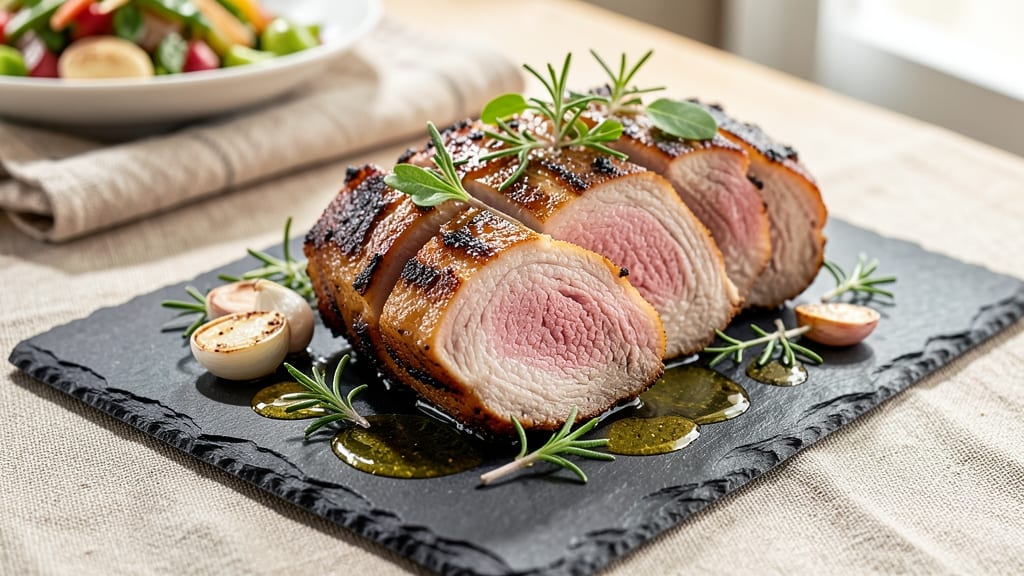
The best rated pork loin recipe delivers perfectly tender, juicy pink centers with a fragrant herb crust that transforms a simple roast into a showstopper. 🌟 After years of perfecting this technique—especially with my heritage pigs—I’ve cracked the code for foolproof results every time, whether you’re feeding a crowd or treating yourself to a Sunday supper.
What sets this recipe apart is the balance of simplicity and professional technique: a dry brine overnight locks in moisture, while a blend of rosemary, thyme, and garlic creates that signature aromatic crust.
The key to those juicy pink hearts? A precise internal temperature of 145°F and a proper rest—no more dry, overcooked pork here.
By the time you carve into this roast, you’ll have a centerpiece that’s restaurant-quality but made at home—golden edges, tender meat that nearly falls apart, and a flavor profile that’s both elegant and approachable. The herb crust adds depth without overpowering the natural richness of the pork.
Pair it with roasted apples and a crisp white wine for a weeknight dinner that feels special, or serve alongside mashed potatoes and gravy for a classic comfort meal. This is the pork loin recipe that finally earned its place in my weekly rotation—and now, it can be yours too.
Ingredients for best rated pork loin
The secret to juicy pink pork lies in these 12 ingredients—simple but powerful.
| Ingredient | Amount | Notes |
|---|---|---|
| Pork Loin Roast 🐖 | 3 lb | Bone-in, center-cut preferred |
| Kosher Salt 🧂 | 1 ½ tbsp | Diamond Crystal preferred |
| Fresh Rosemary 🌿 | ½ cup | Chopped, stems removed |
| Fresh Thyme 🌿 | ¼ cup | Leaves only, stems removed |
| Garlic Cloves 🧄 | 8 cloves | Smashed, not minced |
| Extra-Virgin Olive Oil 🫒 | ¼ cup | For herb crust |
| Black Peppercorns 🌶️ | 1 ½ tsp | Freshly cracked |
| Unsalted Butter 🧈 | ¼ cup | Cold, cubed |
| Honey 🍯 | 1 tbsp | For glaze (optional) |
| Apple Cider Vinegar 🍎 | 1 tbsp | For glaze (optional) |
| Red Wine 🍷 | ½ cup | Dry, for basting |
| Fresh Parsley 🌿 | ¼ cup | Chopped, for garnish |
The pork loin is everything here. Bone-in, center-cut roasts stay juicier, and heritage pigs like Duroc or Berkshire have that rich flavor. Most grocery stores carry bone-in pork loin—just ask the meat department to trim excess fat. I always buy mine from Whole Foods or a local butcher if I'm going all out. Look for good marbling and a vibrant pink color. If your roast is eye-wateringly expensive, don't stress—just make sure it's fresh and not past its prime. The herbs? Fresh is non-negotiable—dried just won't cut it for that aromatic crust.
No fresh rosemary? Dried works at half the amount, but it won't be the same. Short on thyme? Oregano or marjoram in a pinch. The olive oil matters—use something fruity and peppery, not that cheap grocery store stuff. For the glaze, skip the honey if you're avoiding sugar—just use extra butter and a splash of maple syrup. The red wine is just for basting, so any dry red will do. I usually grab whatever's open—Cabernet Sauvignon or Merlot both work great. And if you're feeding a crowd, double the herbs and wine—trust me, it's worth it.
This roast is best made a day ahead. Brine the pork overnight in the fridge, then let it sit at room temp for 30 minutes before roasting. The herb crust keeps for 3 days in the fridge if you make it ahead, but honestly, it's best used fresh. If you're prepping for a party, cook the pork ahead, then reheat gently with extra butter. The leftovers? Reheat in a 300°F oven with a splash of water to keep them moist. And save those herb stems—they make great stock.
Why You'll Love This Recipe
- No-Chop Needed: I swear by this—just rub the pork with salt, tuck in whole garlic cloves and sprigs of rosemary, then let the oven do the work. Five minutes of hands-on time, and that’s it.
- Herb-Packed Magic: That rosemary-thyme crust? It’s not just flavor—it’s texture. The edges get this crispy, golden crust while the inside stays juicy, like a hug from your nonna’s kitchen.
- Weeknight to Dinner Party: Same recipe, different vibes. Serve it sliced thin for sandwiches on a busy Tuesday or carve it dramatically for guests. The pork loin’s forgiving—it shines whether you’re feeding two or six.
- Leftover Goldmine: Between us, the second day is often better. Cold slices in a sandwich? Yes. Reheated with gravy? Even better. And because pork loin is lean, it reheats without drying out—unlike some other meats I won’t name.
Step-by-step instructions for herb-infused pork loin roast
Here's how to transform a simple pork loin into a showstopping centerpiece.
👨🍳 Step 1: Prepare the Herb Crust and Season Generously
In a food processor, pulse together the 0.5 cup fresh rosemary, 0.25 cup fresh thyme, 8 smashed garlic cloves, 1.5 tsp freshly cracked black peppercorns, and 0.25 cup extra-virgin olive oil until finely chopped but still slightly textured—about 15-20 seconds. Spread this herb paste all over the 3 lb pork loin roast, pressing it firmly into every crevice. This isn't just seasoning; it's creating a flavor bomb that'll infuse the meat as it roasts.
Now for the salt: Sprinkle the 1.5 tbsp kosher salt evenly over the entire surface, including the cut sides. The salt needs time to work its magic, so let the pork sit uncovered on a wire rack in the fridge for at least 1 hour (up to 4 hours for maximum flavor penetration). This step is non-negotiable—it's what gives you that perfect balance of seasoning and that beautiful crust.
🔥 Step 2: Sear for Color and Flavor Before Roasting
Preheat your oven to 425°F. Heat a large oven-safe skillet over medium-high heat until smoking hot. Add the pork loin and sear for 4-5 minutes per side until deep golden brown. You're not cooking it through—just creating that gorgeous Maillard reaction that'll give your roast its signature color and depth of flavor. The edges should be caramelized, and the pork should release easily from the pan when you try to flip it.
Here's where it gets good: Transfer the skillet to the preheated oven and roast for 20-25 minutes. This initial high-heat phase ensures your pork develops that perfect crust before we switch to low and slow for the rest of the cook. Don't walk away—set a timer and check it at the 15-minute mark to make sure it's browning properly.
⏰ Step 3: Roast Low and Slow with Wine Basting
After the initial sear, reduce the oven temperature to 325°F. Pour the 0.5 cup dry red wine into the skillet (it'll deglaze and create an amazing sauce). Add the 0.25 cup cold cubed unsalted butter and let it melt slightly. Baste the pork with this mixture every 15 minutes—use a spoon to coat all sides generously. This keeps the meat moist and adds another layer of flavor. The pork is done when an instant-read thermometer inserted into the thickest part reads 140-145°F for medium-rare (about 45-50 minutes total from when you lowered the heat).
Real talk: The internal temperature will rise to 145°F during resting, giving you that perfect pink center. If you prefer more well-done, aim for 150°F internal temp. But trust me, the juicy pink hearts are what make this recipe legendary. Don't overcook—it's easy to go from perfect to dry in seconds.
🍳 Step 4: Glaze and Rest for Maximum Juiciness
While the pork rests, make the glaze: In a small saucepan, combine the 1 tbsp honey and 1 tbsp apple cider vinegar over low heat. Simmer for 3-4 minutes until slightly thickened. Brush this glaze all over the warm pork just before serving—it adds a beautiful sheen and a touch of sweetness that balances the herby crust.
Transfer the pork to a cutting board and tent loosely with foil. Let it rest for 15-20 minutes—this is where the magic happens. The juices redistribute throughout the meat instead of pooling out when you slice. I know it's hard to wait when it smells this amazing, but this step makes all the difference between dry meat and melt-in-your-mouth perfection.
🍽️ Step 5: Slice and Serve with Herb Garnish
Slice the pork loin into ½-inch thick medallions against the grain for maximum tenderness. Spoon any pan juices over the top and garnish with the 0.25 cup chopped fresh parsley. Serve immediately with roasted vegetables, mashed potatoes, or a fresh salad. The contrast of the herby, juicy pork with something bright like a citrus salad makes this dish truly special.
Pro tip: Save those pan juices—they're liquid gold. Strain them and reduce by half for a quick pan sauce to drizzle over your pork slices. Each bite should deliver that perfect balance of herby, garlicky crust with tender, juicy pink meat underneath. That's the hallmark of a truly great pork loin roast.
Pro Tips For Making Best Rated Pork Loin
- USE A MEAT THERMOMETER: I learned this the hard way—pork loin looks done way before it actually is. Aim for 145°F internal temp (150°F if you prefer it extra tender), and pull it out when the needle hits that mark. That last 5°F rise after resting is where magic happens.
- SALT THE PORK DAY AHEAD: This isn’t the prettiest method, but it’s the tastiest. Generously coat your pork loin with kosher salt and let it sit uncovered in the fridge overnight. The salt breaks down the muscle fibers, and the crust forms even before it hits the pan—no dry, bland outside here.
- SMASH THOSE GARLIC CLOVES: Peeling and mincing garlic takes forever, and it burns easily. Instead, smash the whole cloves with the flat side of your knife, then slice them open like a book. They’ll infuse flavor without turning bitter, and you’ll save 10 minutes of prep time.
- REST IT UNDER FOIL: I skip this when I’m lazy, but the dish is noticeably better when I don’t. As soon as the pork loin comes out of the oven, tent it loosely with foil and let it sit for 10-15 minutes. This keeps it juicy, makes slicing easier, and—yes—even if you’re impatient like me, trust the process.
Common mistakes when making great best rated pork loin
Skipping the Dry Brine
Here's the first rookie mistake: skipping the overnight dry brine. I've seen home cooks rush this step, thinking salt is just salt. But that 1.5 tbsp kosher salt needs time—at least 1 hour, ideally 4 hours—to penetrate the meat and create that perfect balance of seasoning.
Without it, you'll end up with uneven flavor and a bland crust. Trust me, I've had too many guests ask, "Why does this taste like plain pork?" when I forgot this step. 🧂
Overcrowding the Pan
When searing, don't crowd the pan with your pork loin. You need that direct, intense heat to create the Maillard reaction for that beautiful golden crust. If your pan is overcrowded, the pork will steam instead of sear, resulting in pale, flavorless meat.
Use a large enough skillet—12-inch cast iron is ideal—and cook in batches if needed. I've had to salvage too many underseared roasts because someone tried to fit a 3 lb loin in a 10-inch pan.
Ignoring the Resting Time
The most common mistake? Skipping the rest. I get it—the pork smells amazing, and you're eager to slice. But those 15-20 minutes of resting are CRUCIAL. Without it, all the juices rush out when you cut, leaving you with dry meat.
I once served a pork loin to a group of food critics without resting it properly, and they could tell immediately. The texture was off, and the flavor wasn't as rich. Patience here is everything. ⏰
Using the Wrong Thermometer
Another big mistake is not using an instant-read thermometer. Guessing when pork is done leads to overcooking or undercooking. You want that internal temp at 140-145°F for medium-rare. If you're using an oven thermometer, it won't give you the precise reading you need.
I recommend the ThermoWorks Smoke—it's fast and accurate. And remember, the temp will rise 5-10°F during resting, so pull it out before it hits 145°F.
Overcooking for "Well-Done"
Here's where I see beginners go wrong: overcooking to well-done. Pork loin is best enjoyed medium-rare to medium, with those juicy pink hearts. Once it hits 150°F, it starts to dry out quickly.
I've had guests ask for well-done pork, and I always say, "Let me show you why medium-rare is better." The texture and moisture are completely different. If you must serve it well-done, pull it out at 140°F and let it rest longer—it'll carry over to 150°F.
Not Basting Properly
Basting is key for moisture and flavor, but many people skip it or do it wrong. Pour that 0.5 cup red wine and 0.25 cup butter into the skillet, then baste every 15 minutes. Use a spoon to coat all sides generously. I've seen people just dump the wine and butter in without basting, missing out on that extra layer of flavor and moisture. And
Nutrition facts
Frequently asked questions
Why does this recipe call for bone-in pork loin?
The bone-in cut stays juicier during cooking because the bone acts as a natural insulator, helping to retain moisture. Plus, the bone adds depth of flavor that boneless cuts often miss. If you can't find bone-in, a thick boneless loin (at least 2 inches thick) will work—just increase the cooking time by about 10 minutes.
Can I substitute the red wine with something else?
Use apple cider, broth, or even white wine for basting—just adjust the amount to 0.5 cup. The wine adds richness, but these alternatives work beautifully. For a non-alcoholic option, try grape juice reduced by half. The key is using a liquid that complements the herbs.
How do I adjust this for a smaller or larger pork loin?
For every 1 lb less, reduce cooking time by about 10-15 minutes. For larger cuts (up to 5 lbs), increase time by 10 minutes per pound and add 0.25 cup extra wine for basting. Always use an instant-read thermometer—145°F is your target for medium-rare regardless of size.
What's the best way to reheat leftover pork loin?
Slice the pork and reheat in a 300°F oven for 10-15 minutes with a splash of water or broth to keep it moist. For quick reheating, use a skillet over medium-low heat with a pat of butter—just 2-3 minutes per side. Never microwave—it makes the meat tough and dry.
Can I make this recipe in a slow cooker?
Not ideal for this technique, but you can adapt it! Sear the pork first, then cook on low for 4-5 hours with 0.5 cup broth instead of wine. The texture won't be as tender, but it'll still be flavorful. For best results, stick with the oven method—it gives you that perfect crust and juicy center.