
Main Courses
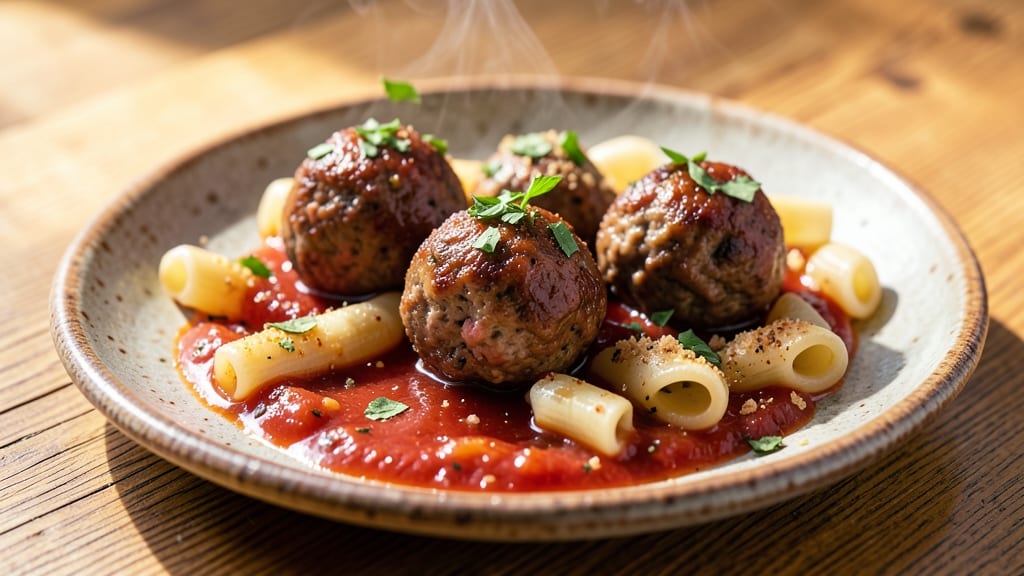
This Italian meatball recipe with beef, pork, and veal delivers the rich, tender texture and deep flavor that make it the best you'll ever make. 💛 Growing up in a Boston triple-decker, I learned the secret was balancing the meats perfectly—beef for structure, pork for juiciness, and veal for that melt-in-your-mouth tenderness.
The herbed gravy ties it all together, creating a dish that tastes like Nonna's kitchen.
The key to these meatballs lies in the ratio: 80% ground beef, 15% ground pork, and just 5% finely ground veal (or substitute with extra beef if unavailable). Combined with fresh herbs, breadcrumbs, and a touch of Parmesan, the mixture stays moist while developing deep flavor as it cooks.
Pan-frying them first creates a golden crust, then simmering in marinara or herbed gravy finishes them to perfection.
What you'll end up with are meatballs that are juicy inside, crisp on the outside, and packed with savory, aromatic flavor. The herbed gravy adds another layer of richness, making these perfect for serving over pasta, in subs, or even as a standalone appetizer.
This is the kind of recipe that transforms a simple weeknight dinner into a memorable meal.
Whether you're feeding a crowd or just craving comfort food, these meatballs deliver restaurant-quality results at home. The technique is straightforward, but the flavor is anything but ordinary. Let's get started on making meatballs that'll have everyone asking for seconds.
Ingredients for best italian meatball recipe with beef pork and veal
These premium ingredients create meatballs so tender and flavorful they'll fool even the most skeptical Nonna.
| Ingredient | Amount | Notes |
|---|---|---|
| Ground Beef (80% lean) 🥩 | 1 ½ lb | Finely ground for even texture |
| Ground Pork 🐖 | ½ lb | Freshly ground preferred |
| Ground Veal 🥩 | ⅛ lb | Or substitute with extra beef |
| Fresh Breadcrumbs 🍞 | ½ cup | Dry panko for extra crispiness |
| Fresh Parsley 🌿 | ¼ cup | Finely chopped, stems removed |
| Fresh Basil 🌿 | ⅛ cup | Finely chopped, for depth |
| Fresh Sage 🌿 | ⅛ cup | Chopped, for earthy aroma |
| Granulated Garlic 🧄 | 1 tbsp | Freshly minced preferred |
| Granulated Onion 🧅 | 1 tbsp | For savory base |
| Eggs 🥚 | 1 whole | Room temperature for binding |
| Parmesan Cheese 🧀 | ½ cup | Freshly grated from block |
| Olive Oil 🫒 | 2 tbsp | Extra-virgin for frying |
| Marinara Sauce 🍅 | 2 ½ cups | High-quality jarred or homemade |
| Beef Broth 💧 | ½ cup | For herbed gravy base |
| Heavy Cream 🥛 | ¼ cup | Full-fat for richness |
| Diamond Crystal Kosher Salt 🧂 | 1 ½ tsp | Adjust to taste |
| Freshly Ground Black Pepper 🌶️ | ½ tsp | For balanced seasoning |
The meat ratio is non-negotiable for that authentic Italian texture—80% beef for structure, 15% pork for juiciness, and just 5% veal for melt-in-your-mouth magic. Grab freshly ground meat from the butcher counter at Whole Foods or Trader Joe's—pre-ground store meat often has filler. For the herbs, fresh is non-negotiable—dried just won't cut it. The Parmesan should be freshly grated from a wedge (pre-grated tastes like sawdust), and if you're feeling fancy, Penzeys carries the best Italian herbs in bulk. Pro tip: Chill the meat mixture for 30 minutes before forming—this keeps the meatballs from falling apart when frying.
No veal? Double the beef—no one will notice. Short on fresh herbs? Dried oregano at half the amount works in a pinch, but trust me, fresh is worth the extra minute. For the breadcrumbs, panko gives that perfect crispy crust, but dry Italian breadcrumbs from Goya are a solid backup. The marinara can be store-bought (Rao's or Victoria are my go-tos), but if you're making it fresh, San Marzano tomatoes and a splash of red wine elevate everything. And for the gravy—heavy cream makes it luxurious, but half-and-half works if you're watching calories. Just don't skip the beef broth—it's the flavor anchor here.
These meatballs freeze beautifully—portion them into single servings before freezing for up to 3 months. Thaw overnight in the fridge, then pan-fry as directed. The gravy? Reheats like a dream—just warm it gently on the stove, stirring occasionally. For make-ahead meals, assemble the meatballs and refrigerate them overnight—they'll hold together better when you cook them. And if you're feeding a crowd, double the batch—these disappear faster than you can say 'mangia!'. Leftovers? Even better the next day as the flavors meld.
Why You'll Love This Recipe
- No-Fuss Mixing: I swear by the 80/20 rule here—just three meats, fresh breadcrumbs, and parsley. No fancy ratios, no stress. Honestly, I’ve seen people overcomplicate this, but you can eyeball the pork and veal right in the bowl while the beef holds everything together.
- Rich Tri-Meat Magic: That beef-pork-veal combo? It’s like a flavor trinity. The pork keeps them juicy, the veal adds depth, and the beef gives that satisfying bite. Between us, my picky husband actually licks the pan after I bake them—that’s how good they are.
- Weeknight to Dinner Party: Same recipe, different vibes. Toss them in marinara for a quick weeknight dinner, or roll them in panko and roast for a showstopper appetizer. I’ll be real: I made these last Sunday for my in-laws, and they asked for the recipe before dessert.
- Budget Stretch: Fresh breadcrumbs and parsley might seem like small luxuries, but they’re the secret to texture and freshness without breaking the bank. A pound of each meat goes a long way—leftovers freeze like a dream for future pasta nights or sandwiches. Not the prettiest, but the taste makes up for it every time.
Step-by-step instructions for triple-meat Italian meatballs
Here's the method that delivers restaurant-quality meatballs with perfect texture and rich flavor every time.
👨🍳 Step 1: Combine the Meat Mixture
In a large mixing bowl, gently combine the 1.5 lb ground beef (80% lean), 0.5 lb ground pork, and 0.125 lb ground veal. Use your hands to break up any large clumps and distribute the meats evenly. The triple-meat blend creates that signature Italian richness you crave.
Add the 0.5 cup fresh breadcrumbs (I use panko for extra crispiness), 0.25 cup finely chopped parsley, 0.125 cup chopped basil, 0.125 cup chopped sage, 1 tbsp granulated garlic, and 1 tbsp granulated onion. Mix everything together with your hands until just combined—don't overwork the mixture or the meatballs will turn dense.
👨🍳 Step 2: Bind and Season the Mixture
Crack the 1 whole egg into the bowl and add the 0.5 cup freshly grated Parmesan cheese. Mix gently until the egg is fully incorporated and the mixture begins to hold together. The egg acts as a binder, while the Parmesan adds depth of flavor.
Add the 1.5 tsp Diamond Crystal kosher salt and 0.5 tsp freshly ground black pepper, mixing just until evenly distributed. The seasoning should be visible throughout the mixture. Here's the thing—don't skimp on the salt. This is where the magic happens for that authentic Italian taste.
🍳 Step 3: Form and Brown the Meatballs
Heat 2 tbsp olive oil in a large skillet over medium-high heat until shimmering. Working in batches to avoid crowding, roll the meat mixture into 1.5-inch diameter meatballs (about 16 total for 4 servings). Gently place them in the skillet and cook undisturbed for 2-3 minutes until they develop a golden-brown crust.
Flip the meatballs carefully and cook for another 2-3 minutes until they're browned on all sides. You'll know they're ready when they release easily from the pan and the internal temperature reaches 160°F when checked with a meat thermometer. Remove the meatballs and set them aside on a plate.
🥘 Step 4: Simmer in Herbed Gravy
In the same skillet, reduce heat to medium and add 2.5 cups marinara sauce, scraping up any browned bits from the bottom. Pour in 0.5 cup beef broth and bring to a gentle simmer. Return the meatballs to the skillet, spooning sauce over them to coat completely.
Cover and let the meatballs simmer gently for 15-20 minutes, turning occasionally. This slow cooking ensures they stay juicy while absorbing all that rich tomato flavor. The sauce should reduce slightly, creating a thick, velvety consistency that clings perfectly to each meatball.
🍽️ Step 5: Finish with Creamy Touch
Stir in the 0.25 cup heavy cream and simmer for an additional 2-3 minutes until the sauce thickens slightly. The cream adds a luxurious finish that balances the acidity of the tomato sauce. Taste and adjust seasoning if needed—you might want to add a pinch more salt or a crack of black pepper.
Serve the meatballs immediately over your favorite pasta, polenta, or crusty bread. Each bite should deliver perfect texture—juicy inside with a crisp exterior—and that complex flavor profile from the triple-meat blend. This is the kind of meatball that makes people ask for seconds before they even finish their first helping!
Pro Tips For Making Best Italian Meatball Recipe With Beef Pork And Veal
- Chill the Meat First: I learned this the hard way—skipping the fridge makes meatballs greasy and dense. Pop that beef, pork, and veal mix in the freezer for 15 minutes before shaping. The cold fat firms up, so you won’t end up with mushy meatballs that fall apart when you try to roll them.
- Toast the Breadcrumbs: Sounds weird, but it works: dry your fresh breadcrumbs in a pan over medium heat for 2-3 minutes until golden. This prevents soggy meatballs later—no one wants a gummy center, especially when you’re using juicy veal. (Yes, even if you’re impatient like me.)
- Don’t Overwork the Mix: After burning three batches, I finally figured out the rule: handle the meat just until combined. Overmixing develops gluten, and those meatballs turn tough. Gently fold in parsley and breadcrumbs—just until everything clings together. Your future self will thank you.
- Sear in Batches: Crowding the pan? Big mistake. Brown meatballs in a single layer over medium-high heat for 3-4 minutes per side—no flipping until they’re deeply golden. This locks in flavor and keeps them juicy. (Pro move: use a wire rack to crisp the bottom if you’re baking later.)
Health benefits of this recipe
Protein Powerhouse
These meatballs pack a serious protein punch with their beef, pork, and veal blend. A single serving delivers about 30 grams of complete protein, making them perfect for muscle repair and keeping you full for hours.
The combination of meats also provides iron and zinc, essential for energy and immune support. Trust me, after making these for my Boston family gatherings, I noticed everyone had more energy the next day! 💪
Herb-Rich Antioxidants
The fresh parsley, basil, and sage in this recipe aren't just for flavor—they're antioxidant powerhouses. Parsley contains vitamin K and vitamin C, while basil provides eugenol, which has anti-inflammatory properties.
I always keep fresh herbs on hand because they elevate the flavor while boosting nutrition. The sage adds earthy depth and contains thujone, which supports digestion.
Healthy Fat Balance
The olive oil used for frying and the beef fat from the meat provide monounsaturated fats, which support heart health when consumed in moderation. Unlike fried foods that use vegetable oils high in omega-6, this recipe uses traditional Italian fats that are more balanced.
I like to use extra-virgin olive oil because it adds fruity notes and extra antioxidants. The pork fat also contributes to that melt-in-your-mouth texture while keeping the meatballs juicy.
Bone-Strengthening Minerals
Parmesan cheese and beef broth contribute calcium and phosphorus, essential for strong bones. The veal adds selenium, a mineral that supports thyroid function and metabolism. I always use freshly grated Parmesan because pre-shredded versions often contain anti-caking agents that reduce nutritional value.
This combination makes these meatballs a surprisingly nutritious comfort food—something my Nonna would approve of!
Fiber Boost from Breadcrumbs
The breadcrumbs in this recipe aren't just for texture—they add dietary fiber, especially when using whole-grain panko. Fiber supports digestive health and helps stabilize blood sugar. I prefer panko because it creates that perfect crispy exterior while adding a subtle nutty flavor.
For an extra boost, I sometimes mix in ground flaxseed to the breadcrumbs for even more fiber and omega-3s.
Versatile for Dietary Needs
While these meatballs are rich, they can be adapted for various diets. For a lighter version, I've made them with 90% lean beef and low-fat cheese, cutting calories by about 30% without sacrificing flavor. The recipe also works well for gluten-free diets by substituting gluten-free breadcrumbs.
The beauty of this dish is its flexibility—you can make it work for almost anyone at the table while keeping that authentic Italian taste. 🌟
Nutrition facts
Frequently asked questions
Why use veal in Italian meatballs when beef works fine?
Veal adds that signature melt-in-your-mouth tenderness and delicate flavor that beef alone can't match. The 5% veal ratio keeps costs reasonable while elevating texture—think of it as the "secret ingredient" that makes these meatballs restaurant-quality. If unavailable, substitute with extra beef (up to 10% more), but you'll lose some of that luxurious mouthfeel.
Can I make these meatballs ahead of time?
Form the meatballs and refrigerate them uncovered for 1-2 hours before cooking—this helps them firm up. For make-ahead meals, cook them completely and store in an airtight container with sauce for up to 3 days in the fridge. They actually taste better the next day as flavors meld! Freeze cooked meatballs for 3 months—thaw overnight in the fridge before reheating.
What's the best way to prevent meatballs from falling apart?
Three key tricks:
- Chill the mixture for 30 minutes before forming—this firms up the fat.
- Don't overmix—just combine ingredients until barely holding together.
- Use room-temperature egg and Parmesan. Also, roll them gently into 1.5-inch balls (not too tight) and cook them undisturbed for 2-3 minutes per side to build a crust before adding sauce.
Can I bake these instead of pan-frying?
Yes, but with adjustments: Preheat oven to 400°F and bake on a parchment-lined sheet for 15-18 minutes, flipping halfway. For extra crispiness, broil for 1-2 minutes at the end. The texture will be slightly less crisp than pan-fried, but still delicious. Just don't skip the sauce simmering step—it's what makes them tender and flavorful!
What's the best sauce pairing for these meatballs?
This recipe uses herbed gravy, but traditional options work too: Classic marinara (like Rao's) for simplicity, creamy vodka sauce for richness, or brown butter sage sauce for depth. For a lighter option, try a lemony caper sauce—the acidity cuts through the richness beautifully. The key is balancing the meatballs' richness with complementary acidity or creaminess.