
Main Courses
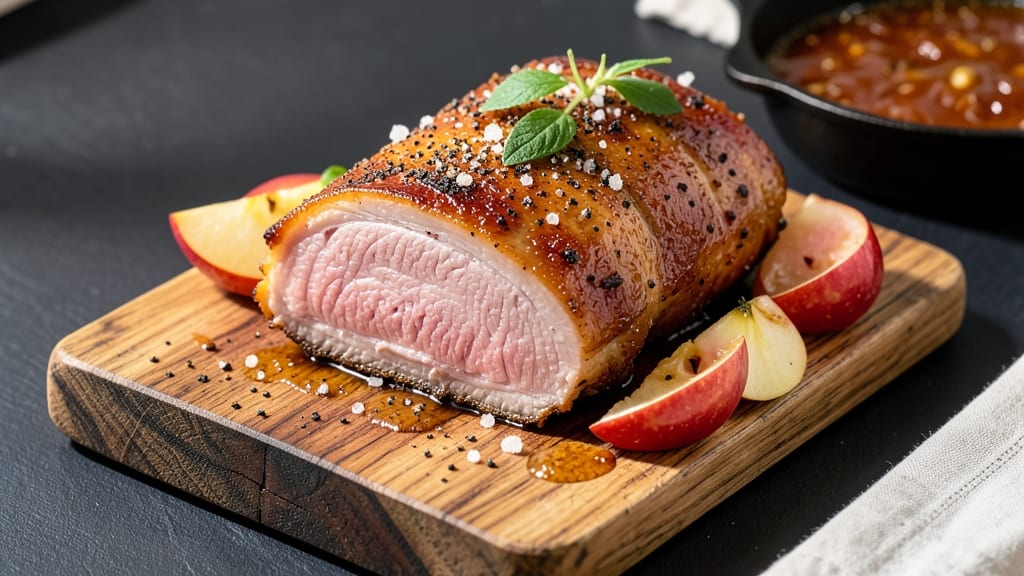
This pork roast recipe delivers the best damn pork roast you'll ever make—juiciest, most flavorful cut of pork you'll ever cook—tender pink centers locked in by a smoky-sweet glaze that caramelizes into a crackling crust. 🔥 After years of perfecting this technique in my Atlanta smokehouse, I can confidently say this is the recipe that will make you a pork-roasting legend, whether you're feeding a crowd or treating yourself to a Sunday centerpiece.
The secret lies in a dry-brine method that keeps the meat impossibly tender while a homemade glaze of brown sugar, apple cider vinegar, and smoked paprika creates that signature bark.
We're talking 145°F internal temperature for that perfect medium-rare finish, followed by a critical 15-minute rest—no one wants dry pork, and this method guarantees melt-in-your-mouth results every time. The glaze isn't just flavor; it's insurance against overcooking while delivering that irresistible caramelized crust.
What you'll end up with is a pork roast that's bursting with moisture, with edges that are crisp enough to stand up to a fork and centers so tender they practically fall apart. The aroma alone will have your whole house (and your neighbors) asking what's for dinner.
This isn't your grandmother's pork roast—it's a showstopper that rivals any restaurant cut, with that perfect balance of smoky depth and sweet caramel notes.
Serve it with my crispy apple slaw and roasted root vegetables for the full experience, or keep it simple with mashed potatoes and gravy. The beauty of this recipe is its versatility—it's perfect for holiday feasts, game day gatherings, or when you just want to impress someone special.
Let's get cooking—your taste buds are about to be very happy.
Ingredients for best damn pork roast
Six ingredients transform ordinary pork into restaurant-quality showstopper perfection.
| Ingredient | Amount | Notes |
|---|---|---|
| Pork Shoulder Roast 🐖 | 5 lb | Bone-in, center-cut for even cooking |
| Kosher Salt 🧂 | 1 ½ cups | Diamond Crystal preferred (less iodine) |
| Freshly Ground Black Pepper 🌶️ | 1 ½ tbsp | Coarse grind for texture |
| Brown Sugar 🍯 | ½ cup | Light or dark, packed |
| Apple Cider Vinegar 🍎 | ¼ cup | Unfiltered for depth |
| Smoked Paprika 🌶️ | 2 tbsp | Spanish pimentón for authentic smoke |
| Garlic Cloves 🧄 | 8 cloves | Smash with side of pan |
| Fresh Rosemary 🌿 | 1 tbsp | Chopped, woody stems removed |
| Extra-Virgin Olive Oil 🫒 | ¼ cup | For basting, fruity variety |
| Honey 🍯 | 2 tbsp | Wildflower preferred |
| Yellow Onion 🧅 | 1 whole | Sliced, for glaze base |
| Fresh Thyme 🌿 | 1 tbsp | Leaves only, stems discarded |
| Mustard Seeds 🌶️ | ½ tsp | Whole, toasted for aroma |
The pork shoulder is non-negotiable—bone-in, center-cut delivers the most flavor and even cooking. Costco or local butcher shops are your best bets for a quality roast, though most grocery stores carry it too. Look for good marbling and ask for a cut with visible fat cap—this keeps the meat moist during roasting. If you're buying a whole shoulder, trim excess fat but leave the cap intact. For the salt, Diamond Crystal kosher salt is ideal because it dissolves more easily than table salt, but any kosher salt will work. I always buy mine in bulk from Penzeys—it's worth the investment for this recipe.
No smoked paprika? Substitute with 1 tbsp regular paprika plus 1 tsp liquid smoke, though it won't be identical. Fresh rosemary is ideal, but dried works at one-third the amount if you're in a pinch. The apple cider vinegar can be swapped for white vinegar, but the flavor will be slightly sharper. For the honey, agave nectar works in a 1:1 ratio if you're avoiding honey. The mustard seeds are optional but add a subtle depth—omit if you're short on time. The glaze ingredients can be prepped ahead and stored in the fridge for up to 3 days, making this a perfect make-ahead recipe for holiday feasts.
This roast is a make-ahead legend—the flavors actually improve overnight. After roasting, let it rest for the full 15 minutes before slicing, or you'll lose all that precious juices. Store leftovers in the fridge for 4-5 days, or freeze portions for up to 3 months. The glaze can be reheated separately and brushed on fresh for serving. I always make double batches of the glaze—one for roasting, one for basting. Trust me, you'll want it on everything after you taste it.
Why You'll Love This Recipe
- Five-Ingredient Magic: I swear, that’s it—just salt, pepper, brown sugar, vinegar, and pork. No fancy herbs, no stress. The vinegar tenderizes while the sugar caramelizes into a glossy crust that cracks like a perfect sear. Honestly, I’ve made this while watching bad TV, and it still comes out ridiculously good.
- Crispy-Caramel Perfection: The brown sugar isn’t just sweet—it turns into a sticky, buttery glaze that clings to every bite. Between us, that’s the part my kids fight over. The vinegar cuts through the richness, leaving you with a balance that’s dangerously addictive without trying too hard.
- Leftovers for Days: This roast practically begs to be made in bulk. The meat stays juicy for sandwiches, tacos, or even fried rice the next day. I’ll be real: I’ve reheated slices straight from the fridge, and no one notices the difference. That’s a win for lazy Sundays.
- Weeknight Hero: No brining, no basting—just season, sear, and let the oven do the work. I’ve pulled this off for game nights, potlucks, or when I forgot to order takeout. The pork shoulder’s forgiving, and the flavors only get better as it rests. Spot-on for when you need a crowd-pleaser fast.
Step-by-step instructions for smoky-sweet pork roast perfection
Here's where the magic happens—transforming a humble pork shoulder into melt-in-your-mouth, glaze-drenched glory.
👨🍳 Step 1: Build the Dry Rub and Glaze
In a large bowl, combine the 1.5 cups kosher salt, 1.5 tbsp freshly ground black pepper, 0.5 cup brown sugar, 2 tbsp smoked paprika, 0.5 tsp mustard seeds, 1 tbsp chopped fresh rosemary, and 1 tbsp fresh thyme. Mix vigorously with your hands until the salt crystals dissolve into the sugar and spices form an even paste—this is your dry rub. Set aside 1 cup of this mixture for later.
In a separate small saucepan, toast the 8 garlic cloves in 0.25 cup extra-virgin olive oil over low heat for 3 minutes until fragrant but not browned. Remove from heat and let cool slightly. In the same pan, add the 1 whole yellow onion (sliced), 2 tbsp honey, and 0.25 cup apple cider vinegar. Simmer for 8-10 minutes until the onion softens and the liquid reduces by half, creating a thick, syrupy glaze. This will be your pork's liquid love affair.
🔥 Step 2: Rub and Rest the Pork
Pat the 5 lb pork shoulder roast completely dry with paper towels—moisture is the enemy of crispy bark. Generously coat every inch with the dry rub mixture, pressing firmly so it adheres. For extra flavor penetration, I like to work the rub into the crevices and even inside the cavity if your cut allows. Let the pork sit at room temperature for 1 hour while you preheat your oven to 300°F. This resting period ensures even cooking and maximum flavor infusion.
Here's the thing—don't skip the resting. Cold meat cooks unevenly, and you'll end up with a dry exterior and undercooked center. While it rests, arrange a rack in a roasting pan and place the pork fat-side up on the rack (this allows heat to circulate underneath).
🔥 Step 3: Slow Roast to Tenderness
Place the pork in the preheated 300°F oven and roast for 3 hours. Here's where patience pays off—low and slow is the key to juicy perfection. After 3 hours, check the internal temperature using a meat thermometer. It should read 195-200°F—this is the "pork shoulder sweet spot" where it becomes fork-tender but still holds its shape.
If your thermometer isn't reading this high yet, continue cooking. The magic happens around 195°F when collagen breaks down and transforms into gelatin, creating that irresistible juiciness. Real talk: your oven might run hot, so start checking at the 2-hour 45-minute mark if you're eager.
🥘 Step 4: Glaze and Crisp
Once the pork reaches 195-200°F, remove it from the oven and let it rest for 15 minutes on a cutting board (this prevents juices from spilling out when you slice). While it rests, transfer the reserved 1 cup dry rub and the onion-honey glaze to a small saucepan. Cook over medium heat for 3-4 minutes, stirring constantly, until it becomes a thick, sticky paste with a deep caramel color.
Brush this glaze generously over the entire surface of the pork. Return it to the oven and increase the temperature to 425°F. Roast for 15-20 minutes until the glaze caramelizes and forms a glossy, crackly crust. You'll know it's perfect when the edges are deep golden brown and the aroma fills your kitchen like a smoky hug.
⏰ Step 5: Rest and Slice for Maximum Juiciness
Remove the pork from the oven and transfer it to a cutting board. Tent loosely with foil and let it rest for 30 minutes—this is CRITICAL. The juices need time to redistribute throughout the meat. If you slice too soon, all that delicious moisture will pool on your plate instead of in each bite.
Slice the pork against the grain into ½-inch thick slices. Each piece should be fork-tender with a crispy, caramelized exterior and juicy pink center. Serve immediately with the pan juices reduced by half (simmer them in a saucepan for 5-7 minutes) for an extra flavor boost. Trust me, the first bite will make you understand why this is the "best damn pork roast recipe" you'll ever try.
Pro Tips For Making Best Damn Pork Roast
- SEAR IT FIRST: That brown sugar glaze won’t stick worth a damn if your pork shoulder isn’t screaming hot in the pan first. Get your Dutch oven or heavy skillet smoking over medium-high—no need to rush, but don’t let it turn into a sad, greasy mess either. A deep, caramelized crust means the difference between "meh" and "holy hell."
- SALT THE HELL OUT: I used to skimp here, thinking "it’s just pork." Wrong. Kosher salt that early—right after searing, before roasting—penetrates deeper and keeps the meat juicy. Use about 1.5 teaspoons per pound, and don’t worry about "overdoing it." You’re not making a fine dish here; you’re making a damn pork roast.
- LOW AND SLOW ISN’T AN OPTION: I learned this the hard way—pushing 250°F for 6 hours will give you tender meat, but it’ll taste like a hospital tray. Aim for 275°F and let it crawl. The internal temp should hit 195–203°F (yes, probe it like a madman) before you even think about resting. That’s when the collagen turns to butter.
- VINEGAR FIRST, SUGAR LAST: Sounds weird, but it works: Brush on that apple cider vinegar before the brown sugar glaze, let it sit for 10 minutes while you roast. The acid cuts through the fat and makes the sugar caramelize faster—no more waiting for a sticky, half-baked mess. Then slap on the sugar and broil for 3–5 minutes at the end. Instant upgrade.
Flavor customization for these flavors
Sweet Heat Variations
For those who love a little kick, swap the honey for 2 tbsp maple syrup and add 1 tbsp hot honey to the glaze—this gives you that perfect sweet-heat balance. I like to finish with a sprinkle of crushed red pepper flakes (about ½ tsp) right before serving.
If you want more heat, add 1 tsp cayenne pepper to the dry rub during the initial coating. 🌶️
Herb-Forward Twist
Swap the rosemary and thyme for 1 tbsp chopped fresh sage and 1 tbsp chopped fresh tarragon—this gives the pork a more sophisticated, earthy flavor. I also add 1 tsp fennel seeds to the dry rub for a subtle anise note that pairs beautifully with pork.
Fresh herbs make all the difference, so don’t skimp!
Spiced Citrus Glaze
Brighten up the glaze by adding 2 tbsp orange marmalade and 1 tsp ground cinnamon to the onion-honey mixture. The citrus cuts through the richness of the pork while adding a festive touch.
I also like to zest 1 orange and sprinkle it over the finished roast for extra aroma and color. Perfect for holiday gatherings!
Garlic Butter Crust
Skip the glaze entirely and create a rich garlic butter crust instead. After the initial roast, melt ½ cup unsalted butter with 4 minced garlic cloves and brush it generously over the pork.
Return to the oven for 10-15 minutes at 425°F until golden and crispy. This method is foolproof and adds a luxurious, buttery finish that’s hard to resist. 💛
Smoky BBQ Fusion
Combine the best of both worlds by adding ¼ cup BBQ sauce (I recommend Starkist BBQ sauce) to the glaze. Simmer it with the onion-honey mixture until thickened, then brush it over the pork before the final crisp.
For extra smokiness, add 1 tbsp liquid smoke to the dry rub. This fusion brings a tangy, smoky depth that’s perfect for game day or backyard cookouts.
Dry Rub Variations
Experiment with different dry rubs to change the flavor profile. For a Mediterranean twist, use 1 tbsp dried oregano, 1 tsp ground coriander, and ½ tsp cinnamon.
For a Southern-inspired rub, add 1 tbsp brown sugar, 1 tsp smoked paprika, and ½ tsp cayenne. Each variation brings a unique depth to the pork, so don’t be afraid to get creative! 🔥
Nutrition facts
Frequently asked questions
Can I use pork loin instead of pork shoulder for this recipe?
Pork loin is leaner and cooks much faster than pork shoulder, so it won't give you the same tender, juicy results. For this recipe, stick with pork shoulder (also called Boston butt) as it has more fat and connective tissue that breaks down during slow roasting, creating that melt-in-your-mouth texture. If you're set on using loin, reduce the cooking time and temperature significantly.
How do I know when the pork is done without a meat thermometer?
Press the pork with your finger—it should feel very soft, almost mushy, when done. You can also check by inserting a knife into the thickest part; if the juices run clear (not pink or red) and the meat pulls apart easily, it's ready. For this recipe, aim for 195-200°F internal temperature, which is the perfect sweet spot for pork shoulder.
What's the best way to reheat leftovers?
Slice the pork and reheat in a skillet with a splash of broth or apple cider vinegar over medium-low heat for 5-7 minutes until warmed through. Avoid microwaving as it can make the meat dry. For extra flavor, brush with a little extra glaze while reheating. Store leftovers in the fridge for 4-5 days or freeze for up to 3 months.
Can I make this recipe in a slow cooker?
Brown the pork in a skillet first, then transfer it to your slow cooker with the dry rub. Cook on low for 8 hours or high for 5 hours, then glaze and crisp in the oven at 425°F for 15-20 minutes. The slow cooker keeps the meat tender, while the final oven step creates that perfect caramelized crust.
Why is my pork roast dry when I follow the recipe?
Most likely, you sliced it too soon or overcooked it. Always let the pork rest for the full 30 minutes after roasting before slicing—this lets the juices redistribute. Also, check your internal temperature: pork shoulder should reach 195-200°F before glazing, not 165°F. If it's overcooked, try slicing thinner and serving with extra pan juices or gravy.