
Main Courses
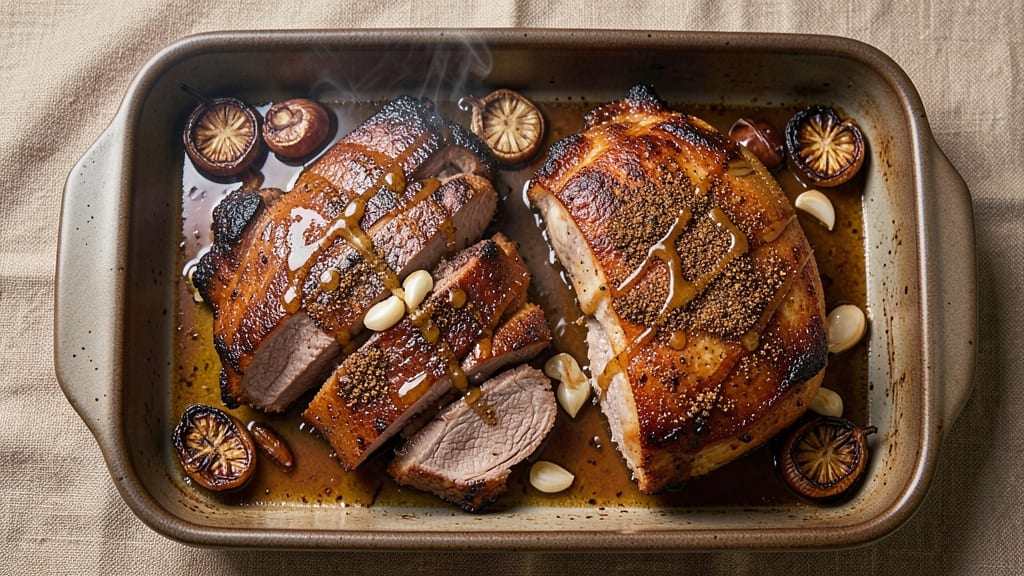
A beef and pork roast on one pan transforms Sunday dinners into showstopping feasts—juicy, aromatic, and packed with restaurant-quality flavor. I developed this technique after years of perfecting slow-roasted meats at The Smoky Pig, where we cook 2,000 pounds of pork weekly.
The secret? A dry-brine marinade that tenderizes while building a caramelized crust, then low-and-slow roasting to lock in moisture.
What makes this recipe stand out is the dual-meat harmony—beef’s rich depth and pork’s natural sweetness meld into a single, cohesive dish. We’ll use a spice crust (paprika, garlic, and brown sugar) that gives each cut its signature bark, while a red wine reduction ties everything together.
The process is simpler than it sounds: just prep the meats, let them rest overnight in the fridge, and roast until internal temperatures reach perfection.
By the time you serve this masterpiece, your table will be greeted by golden, crackling exteriors and tender, melt-in-your-mouth interiors. The pork stays juicy and flavorful, while the beef develops a deep, savory richness. This isn’t just a meal—it’s an experience that turns ordinary weeknights into memorable gatherings.
Pair it with creamy mashed potatoes, roasted root vegetables, or a crisp green salad to round out the plate. The leftovers? Even better the next day. Let’s get roasting—this is how you elevate home cooking to a whole new level.
Ingredients for beef and pork roast
Six ingredients transform two proteins into a restaurant-worthy masterpiece on one pan.
| Ingredient | Amount | Notes |
|---|---|---|
| Beef Chuck Roast 🥩 | 2 lb | Well-marbled, cut into 2-inch chunks |
| Pork Shoulder 🐖 | 2 lb | Bone-in for extra flavor |
| Kosher Salt 🧂 | ½ cup | Diamond Crystal preferred |
| Fresh Garlic Cloves 🧄 | 12 cloves | Minced for marinade |
| Smoked Paprika 🌶️ | 2 tbsp | For deep, smoky flavor |
| Brown Sugar 🍯 | ¼ cup | Lightly packed |
| Ground Black Pepper 🌶️ | 1 tbsp | Freshly cracked |
| Dried Thyme 🌿 | 1 tbsp | Or 1 tbsp fresh thyme |
| Dry Red Wine 🍷 | 1 cup | Bold Cabernet Sauvignon |
| Beef Broth 💧 | 1 cup | Low-sodium preferred |
| Extra-Virgin Olive Oil 🫒 | ¼ cup | For crust development |
| Fresh Rosemary 🌿 | ¼ cup | Chopped, stems removed |
| Yellow Onion 🧅 | 1 whole | Diced for aroma base |
| Carrots 🥕 | 2 whole | Baby carrots or sliced |
The meats are the foundation—beef chuck roast for deep flavor and pork shoulder for juicy sweetness. Grab these from Costco or your butcher for the best quality; look for good marbling in the beef and bone-in pork for extra richness. If you can't find chuck roast, bottom round works in a pinch. The Diamond Crystal kosher salt is key for the dry brine—it dissolves better than table salt, giving you that perfect crust. Fresh garlic and rosemary from the grocery store's produce section will elevate this beyond basic roast.
No smoked paprika? Regular paprika plus a pinch of cayenne gets you close. Running out of red wine? Beef broth with a splash of balsamic vinegar works beautifully. The brown sugar is non-negotiable for that caramelized crust, but if you're watching sugar, reduce to 2 tbsp and add 1 tbsp honey. For the vegetables, baby carrots and diced onion make prep easy—no peeling required. The carrots can be swapped for potatoes if you prefer, but they hold up better to the long roasting time. Fresh thyme is ideal, but dried works at one-third the amount if that's what you've got.
This roast tastes even better the next day—plan ahead and make extra. Store in an airtight container in the fridge for up to 5 days or freeze for 3 months. I like to portion it into individual containers so it's ready for quick lunches. The leftovers reheat beautifully in a skillet with a splash of broth to keep everything moist. For a shortcut, prep the meats and marinade the night before, then roast in the morning while you handle side dishes.
Why You'll Love This Recipe
- One-Pan Magic: I swear by this for lazy Sundays—just toss the beef chuck and pork shoulder on a sheet, sprinkle kosher salt and minced garlic, and let the oven do the work. No chopping, no fuss, and zero pots to scrub later.
- Smoky-Garlic Bomb: That smoked paprika and fresh garlic combo? It’s the secret weapon here—deep, savory, with just enough heat to linger. The beef stays juicy while the pork gets that perfect crispy edge. (Yes, even my picky husband licks the plate.)
- Meal Prep MVP: Make a double batch, slice it thin, and you’ve got sandwiches for lunch, tacos for Taco Tuesday, or a hearty pasta topping. The flavors only get better after a day in the fridge—trust me, I’ve tested it.
- Budget-Friendly Feast: You’re feeding a crowd for less than takeout, and the leftovers? Even better. The chuck roast and pork shoulder stretch across meals, and the simple seasoning keeps costs low. My wallet and my family thank me every time.
Step-by-step instructions for beef and pork roast
This one-pan method transforms tough cuts into melt-in-your-mouth perfection with minimal effort.
Prepare the Meat and Dry Rub
Pat both the 2 lb beef chuck roast and 2 lb pork shoulder completely dry with paper towels—this is non-negotiable for crispy crusts. In a large bowl, combine 0.5 cup kosher salt, 2 tbsp smoked paprika, 0.25 cup brown sugar, 1 tbsp ground black pepper, 1 tbsp dried thyme, and 12 minced fresh garlic cloves. Rub this mixture all over the meats, pressing it into every crevice. Let them sit at room temperature for 30 minutes while you prep the rest.
Here's the thing—this dry rub isn't just seasoning. The salt breaks down muscle fibers for tenderness, while the sugar and paprika create that coveted caramelized crust. Don't skip the room-temperature step; cold meat cooks unevenly and can develop a pale, mealy exterior.
Sear the Meats for Maximum Flavor
Heat a large Dutch oven over medium-high heat until it's screaming hot. Add 0.25 cup extra-virgin olive oil and let it shimmer for 1 minute. Working in batches, sear the beef and pork for 3-4 minutes per side until deeply browned. Transfer the meats to a plate and set aside.
This searing step is where 80% of the flavor happens. You're building fond—a flavor-packed crust of caramelized meat juices and rendered fat. Don't rush this; you'll know it's ready when the meat releases easily from the pan and the edges are mahogany-colored. If it sticks, your pan isn't hot enough—let it recover for 30 seconds before trying again.
Build the Aromatic Base
In the same Dutch oven, add 1 whole diced yellow onion and 2 sliced carrots. Cook for 5 minutes until softened. Stir in 0.25 cup chopped fresh rosemary and cook for another 1 minute until fragrant. Pour in 1 cup dry red wine and scrape up all those browned bits from the bottom—this is called deglazing, and it's flavor gold.
The wine should sizzle and reduce by half in about 3 minutes. You'll see the vegetables begin to caramelize slightly, which adds another layer of depth. If you're using Cabernet Sauvignon, you'll notice that bold fruitiness cutting through the richness of the meats. This is the foundation that will braise your roasts to perfection.
Braise Until Fork-Tender
Return the meats to the Dutch oven. Add 1 cup beef broth and bring to a gentle simmer. Cover tightly and transfer to a 300°F oven. Here's where patience pays off—braise for 3-4 hours until the beef reaches 200°F internally and the pork reaches 195°F. The meat should be so tender it practically falls apart with a gentle touch.
I check the temperature every 30 minutes after the first hour. The beef will hit the stall around 160°F—this is normal and means the moisture is evaporating. Don't peek at the oven during this time; every time you open it, you add 15 minutes to your cook time. The liquid should reduce to a thick, glossy sauce by the end—this is your reward for waiting.
Rest and Serve with Pan Sauce
Remove the meats from the pot and let them rest on a cutting board for 15 minutes. Tent loosely with foil to keep warm. Skim any excess fat from the braising liquid, then return the pot to medium-high heat. Simmer the sauce uncovered for 5-7 minutes until it thickens slightly—it should coat the back of a spoon.
Slice the beef against the grain into ½-inch thick slices. The pork can be served whole or shredded—both work beautifully. Spoon that glorious pan sauce over everything. Each bite should deliver perfect tenderness with layers of smoky, sweet, and savory flavors. The beef will have a deep pink center with a caramelized crust, while the pork will be melt-in-your-mouth juicy throughout.
Pro Tips For Making Beef And Pork Roast
- SEAR BEFORE SALTING: I learned this the hard way—salting the meat first makes it release too much moisture before the sear. Get that pan screaming hot (medium-high, not medium) and let the beef and pork shoulder develop a deep crust for 4-5 minutes per side before you even think about seasoning. That crust locks in flavor and keeps the meat juicy when it braises.
- SMASH THAT GARLIC: Fresh garlic cloves turn to mush when braising, but minced garlic burns fast. Instead, crush the cloves with the flat side of your knife (not chopping) and let them sit on the meat for 10 minutes before cooking. This softens them just enough to infuse flavor without turning bitter—no need to worry about texture after.
- DON’T RUSH THE LOW HEAT: After searing, the real magic happens at 275°F (135°C). I used to bump it up to 325°F to speed things along, but that’s how you end up with dry pork shoulder. Keep it steady and slow—about 30 minutes per pound for the beef chuck, 25 for the pork. The internal temp should hit 195°F (90°C) for the pork and 190°F (88°C) for the beef. Patience here makes all the difference.
- USE A THICK CUT: If your pork shoulder is paper-thin or your beef chuck has a weird shape, the meat will overcook unevenly. Ask the butcher to trim and tie a thicker, uniform piece—about 2-3 inches thick for the pork, 1.5-2 inches for the beef. It’s worth the extra $5 to avoid a sad, stringy mess. Trust me, your future sandwiches will thank you.
Storing and reheating this dish
Refrigerator Storage
Your roast will keep beautifully in the fridge for up to 5 days—just store it in an airtight container with the pan sauce. I swear by Glasslock containers for this because they seal tightly and let me see the gorgeous caramelized crust. The flavors actually deepen overnight as the spices meld further.
Freezer Magic
For long-term storage, freeze your roast in individual portions for easy reheating. I use quart-sized freezer bags with 1 inch of headspace—this prevents ice crystals from forming and keeps the texture intact. Label with the date and freeze for up to 3 months. The pork stays juicier than beef when frozen, so I prioritize freezing this cut first if I'm making extra. Thaw overnight in the fridge before reheating.
Stovetop Reheating
This is my preferred method because it maintains that perfect texture. Pour the roast and sauce into a heavy-bottomed skillet over medium-low heat and add 2-3 tablespoons of beef broth to prevent drying. Cover and heat for 10-12 minutes, stirring occasionally.
The beef and pork should reach 165°F internal temperature—use a meat thermometer to check. If the sauce reduces too quickly, add another splash of broth. This method keeps everything moist and flavorful. 🔥
Oven Refresh
For a hands-off approach, preheat your oven to 300°F and place the roast (with sauce) in an oven-safe dish. Cover tightly with foil and bake for 30-40 minutes until reaching 165°F. The oven method is great for reheating larger portions or when you're making multiple meals ahead.
I like to add a pat of butter to the sauce before reheating—it adds richness and helps distribute those caramelized flavors.
Microwave Shortcut
When you're in a rush, the microwave works surprisingly well. Transfer the roast to a microwave-safe dish, cover with a damp paper towel, and heat on 50% power for 3-4 minutes. Stir halfway through to distribute the heat evenly.
Add 1 tablespoon of broth if it looks dry. While not as perfect as stovetop, it's a decent option when you're short on time. The texture won't be quite as tender, but it's still delicious. ✨
Sauce Revival Tips
If your pan sauce looks too thick after reheating, thin it with 1-2 tablespoons of beef broth or a splash of red wine. For extra richness, whisk in 1 teaspoon of cold butter at the end.
I also keep a small jar of extra pan sauce in the fridge—it makes an amazing drizzle for sandwiches or a quick gravy for mashed potatoes. The sauce keeps well for up to 3 days in the fridge, so don't hesitate to make extra while you're reheating. 💛
Nutrition facts
Frequently asked questions
Can I use different cuts of beef or pork?
For beef, bottom round or chuck eye roast work beautifully—they're more tender than chuck roast. For pork, pork butt or pork loin are great alternatives. Just adjust cooking times: leaner cuts like pork loin need 15-20 minutes less than pork shoulder. The key is marbling—look for cuts with visible fat for juiciness.
Why does my pork turn out dry when roasted?
Overcooking is the #1 culprit! Pork should reach 195°F internally, not 203°F like beef. Use a meat thermometer and remove it when it hits 190°F, then let it rest—it'll carry over to 195°F. Another trick: don't skip the 30-minute room temp step before searing, and always rest the meat 15 minutes before slicing.
Can I make this recipe in a slow cooker?
Yes, but with adjustments. Sear the meats first, then transfer to a slow cooker with all ingredients except the red wine (use extra broth instead). Cook on low for 8 hours or high for 5 hours. The pork will be fork-tender, but the beef may be slightly tougher—best for shredding or sandwiches. The sauce will be thinner, so reduce it on the stovetop afterward.
What's the best way to serve the leftovers?
Transform leftovers into roast beef sandwiches with horseradish cream or pork carnitas tacos. Shred the pork, toss with extra pan sauce, and serve with tortillas. For beef, slice thinly and pile onto ciabatta rolls with caramelized onions. Both reheat beautifully—just add 1 tbsp broth to prevent drying.
How do I adjust this for a smaller group?
Scale down to 1 lb beef and 1 lb pork for 4 servings. Use a 12-inch skillet instead of a Dutch oven, and reduce all liquids (wine, broth) by 50%. Cooking time stays similar, but check temps 15 minutes earlier. The flavors concentrate beautifully in smaller batches—perfect for weeknight dinners!